The Secret to Creating an Outdoor Space That Feels Like a Vacation
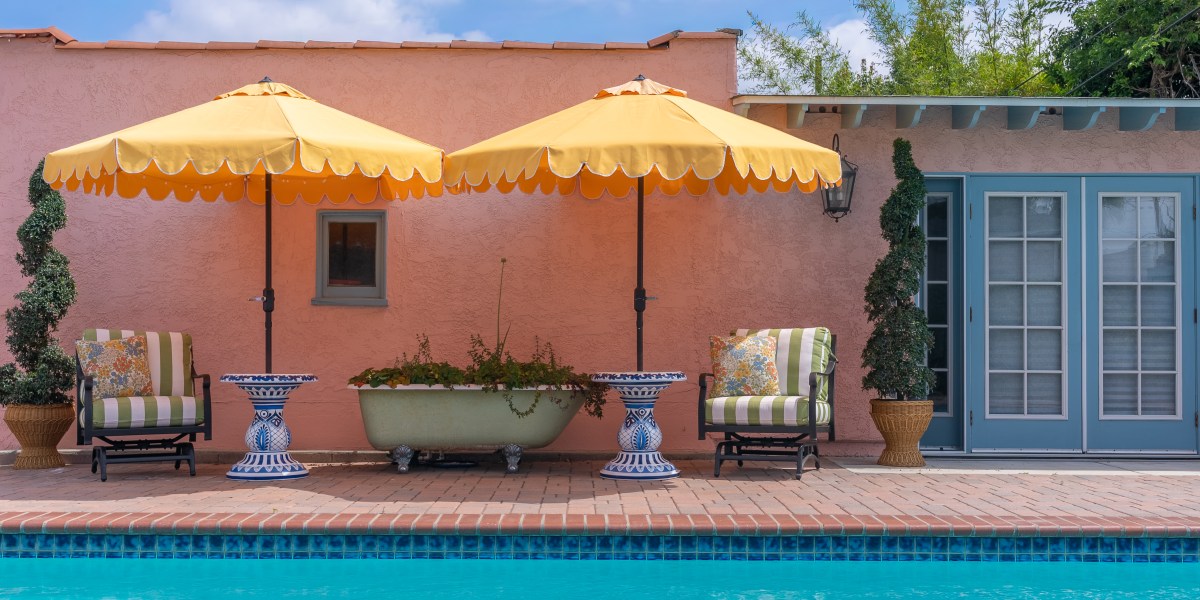
The secret to a memorable backyard isn’t a matching patio set. It’s creating an outdoor living space filled with atmosphere, personality, and places to linger.
Aaron Snyder
There’s a reason the most memorable vacations stay with us long after we’ve unpacked our bags. It isn’t just the destination, it’s the feeling. The quiet ritual of morning coffee beneath a canopy of trees. The sound of a fountain tucked into a courtyard. A shaded table where lunch stretches into the afternoon. The best outdoor spaces capture that same sense of escape, inviting us to slow down, gather, and linger.
For Los Angeles designer Meeshie Fahmy, founder and creative director of Haus of Meeshie, creating that feeling starts long before choosing outdoor furniture or planting a garden bed. With a background designing immersive hospitality experiences, Fahmy approaches every project with the same philosophy: The most memorable spaces tell a story.
Whether she’s transforming a backyard into a lush retreat or layering personality into one of her richly collected interiors, her goal remains the same. “When people enter one of my spaces I want them to be entertained and inspired.”
Here, Fahmy shares the design principles that help any outdoor space, whether it’s a sprawling backyard or a compact patio, feel like a destination of its own.
Aaron Snyder
Start with the Feeling, Not the Floor Plan
When planning an outdoor space, it’s easy to begin with measurements, furniture layouts, or a wishlist of plants. Fahmy recommends starting somewhere much simpler: emotion. Before making a single purchase, ask yourself how you want the space to make you feel. Should it become a peaceful retreat for slow mornings? A lively gathering place for friends? A garden that sparks creativity every time you step outside?
Those answers become the foundation for every design decision that follows, helping create a landscape that feels cohesive rather than pieced together over time.
Aaron Snyder
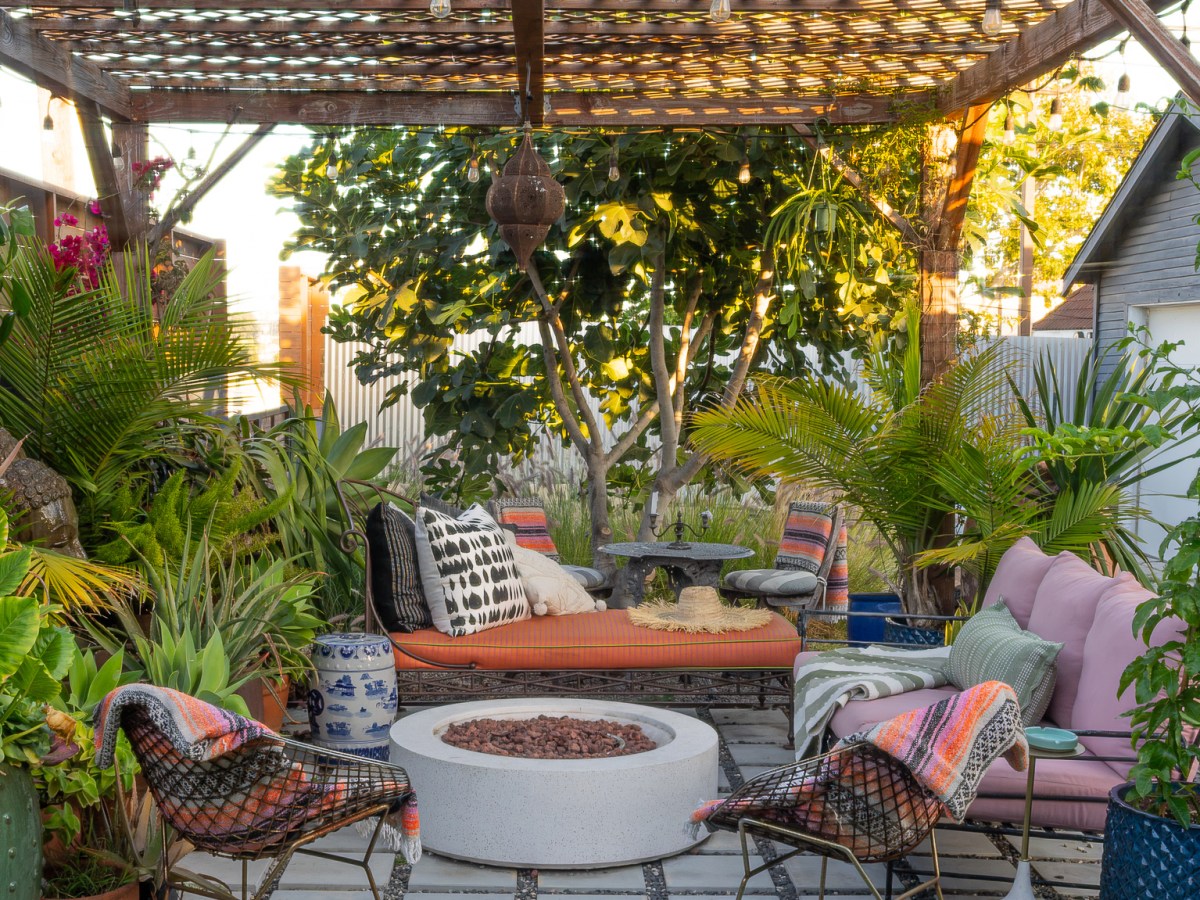
For Fahmy, every project begins with exactly that conversation. “When designing a space I always start with a feeling. I ask, what does the client want the space to feel like? Is it relaxing, invigorating, wild, or inspiring? Everything starts there.”
In her own backyard, that vision eventually centered around a single object—a Buddha fountain that became both the visual and emotional anchor of the garden. Rather than designing everything at once, she allowed one meaningful piece to guide the surrounding pergola, planting beds, and gathering spaces. It’s a reminder that the strongest landscapes often grow from one thoughtful focal point instead of a perfectly coordinated collection of outdoor furniture.
Aaron Snyder
Bring Your Interior Style Outdoors
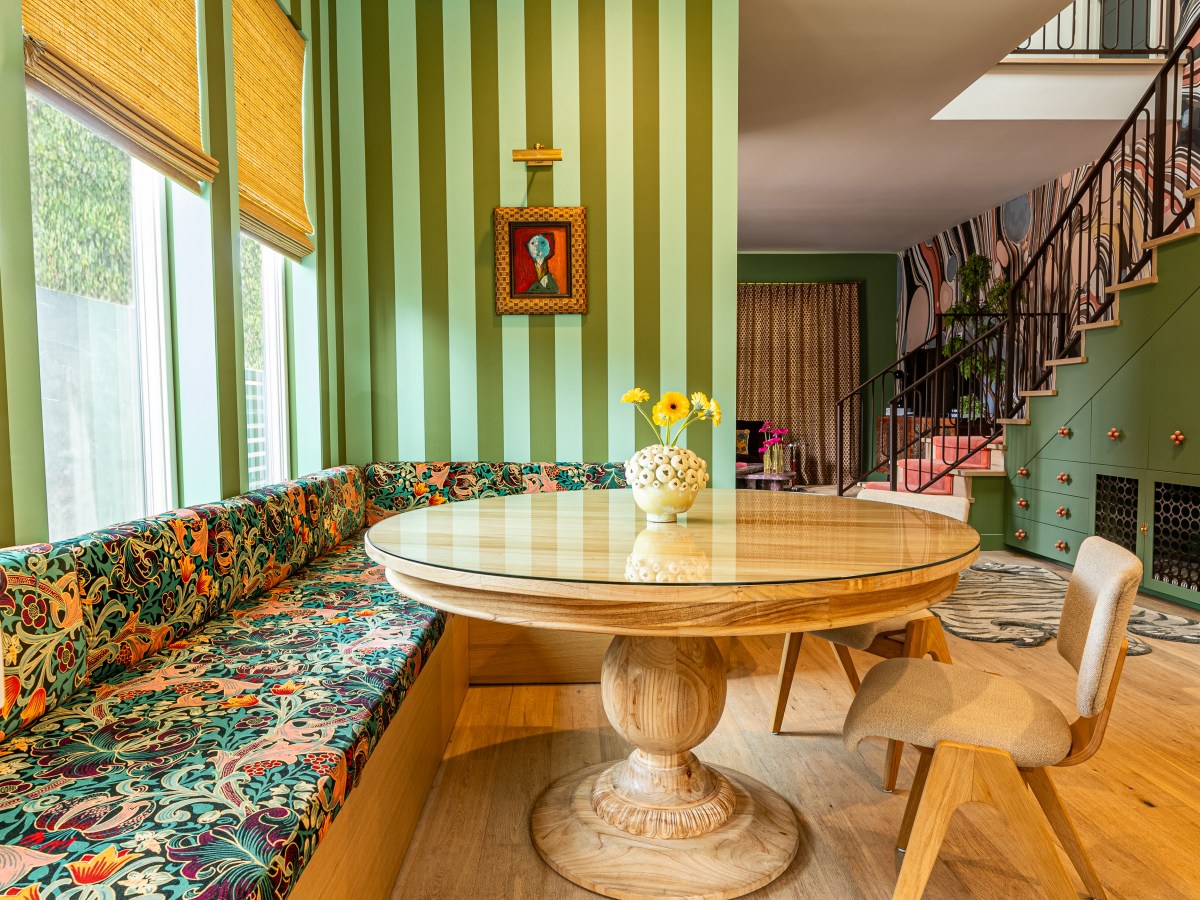
Some of the most inviting outdoor spaces feel like another room of the house. They have the same warmth, personality, and sense of discovery as the interiors they connect to, only softened by fresh air, natural light, and changing seasons.
That doesn’t mean everything needs to match. Instead, think about carrying over the elements that already define your home, whether that’s a love of vintage finds, bold color, layered textiles, or collected objects that tell a story. An outdoor room should feel familiar, but with a little more freedom to experiment.
Planning is just as important outside as it is indoors, even if the garden itself takes years to mature. “Space planning is number one. Whether you have a compact patio or a large backyard, having a plan makes all the difference.”
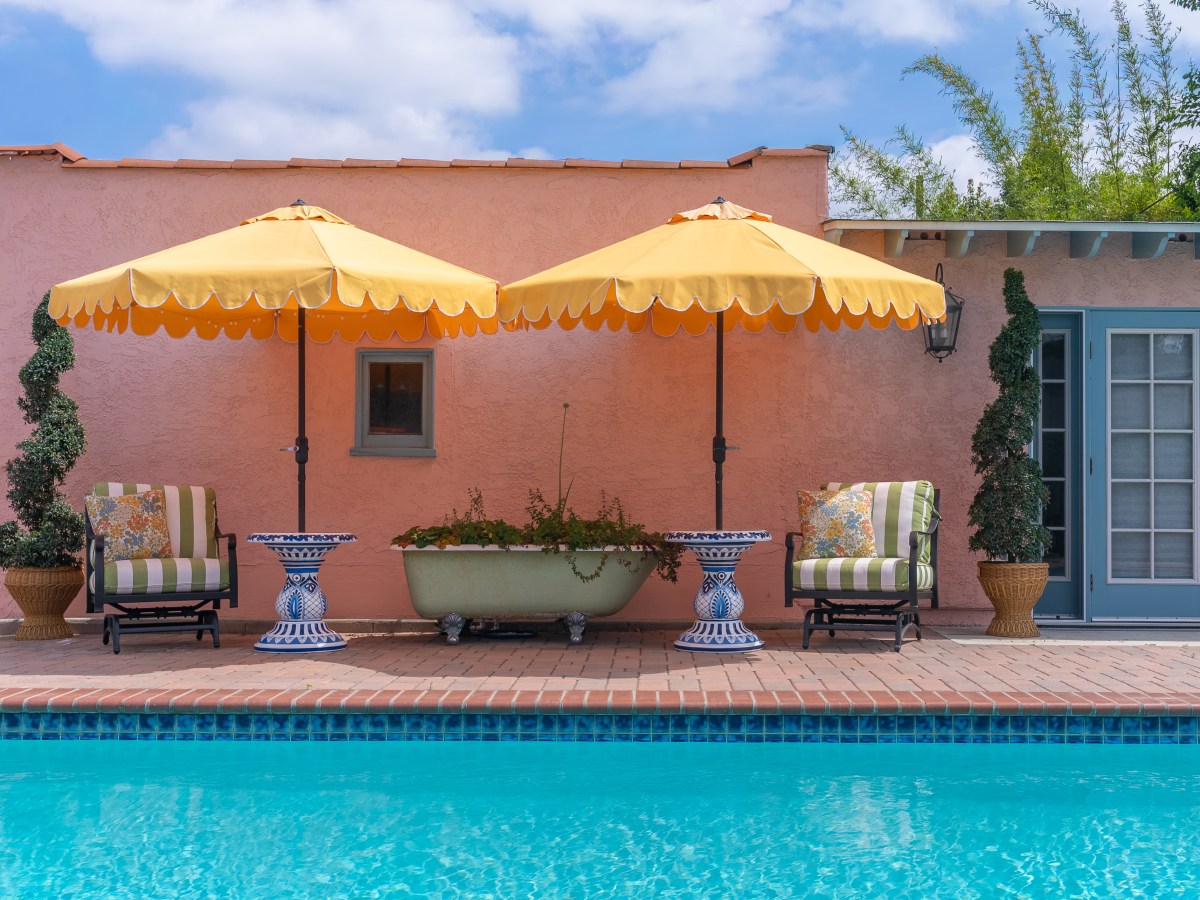
Rather than rushing to fill every empty corner, Fahmy encourages homeowners to embrace the slower pace of gardening. Leave room for plants to mature, collections to grow, and unexpected treasures to find their place. A vintage planter from a flea market, patterned outdoor cushions, or a sculptural piece of garden art can often have more impact than replacing every piece of furniture at once.
Aaron Snyder
Create Atmosphere, Not Just a Patio
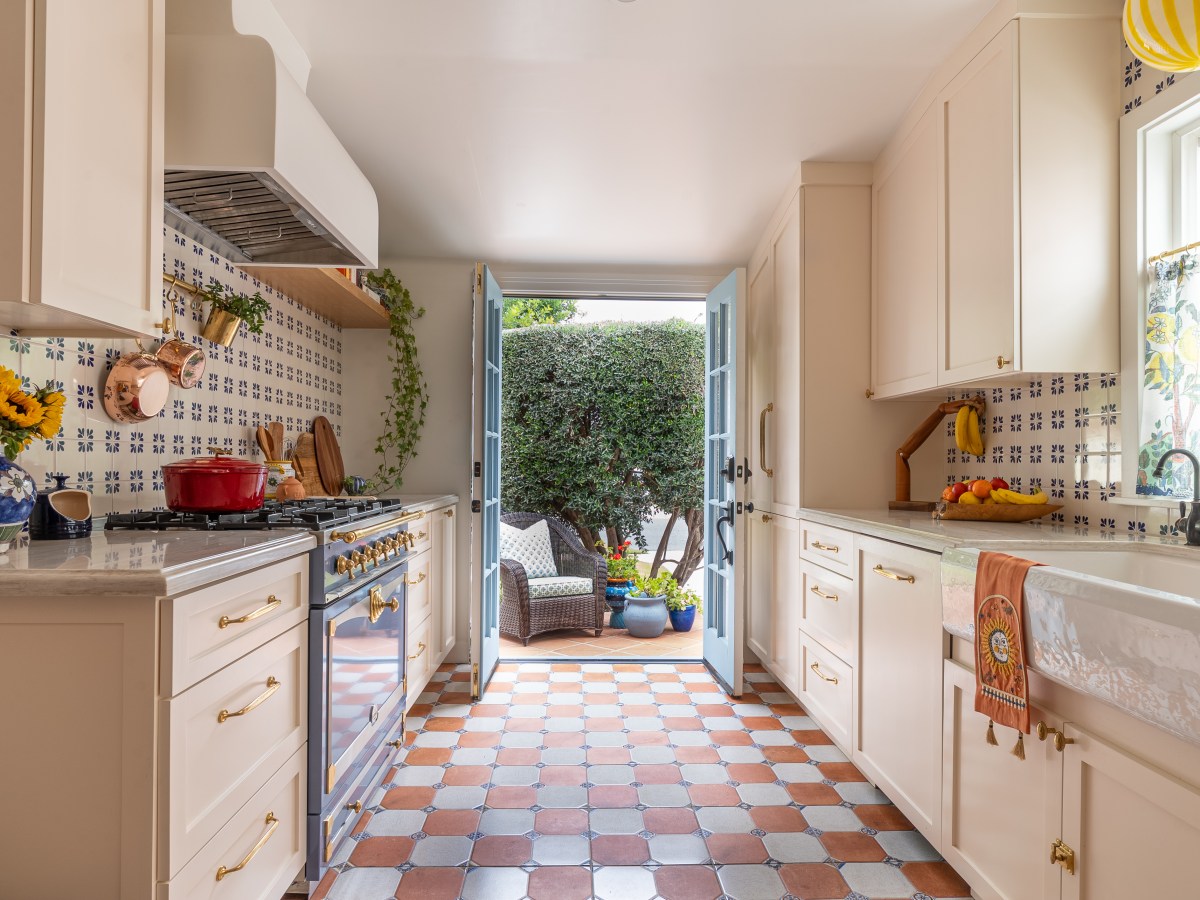
Think about your favorite boutique hotel or neighborhood restaurant. Chances are what made it memorable wasn’t one standout feature, but the way every element worked together. Soft lighting, layered textures, comfortable seating, and thoughtful landscaping create an atmosphere that encourages people to slow down and stay awhile.
That’s the same philosophy Fahmy brings to residential gardens. “Flow, layering, and atmosphere.”
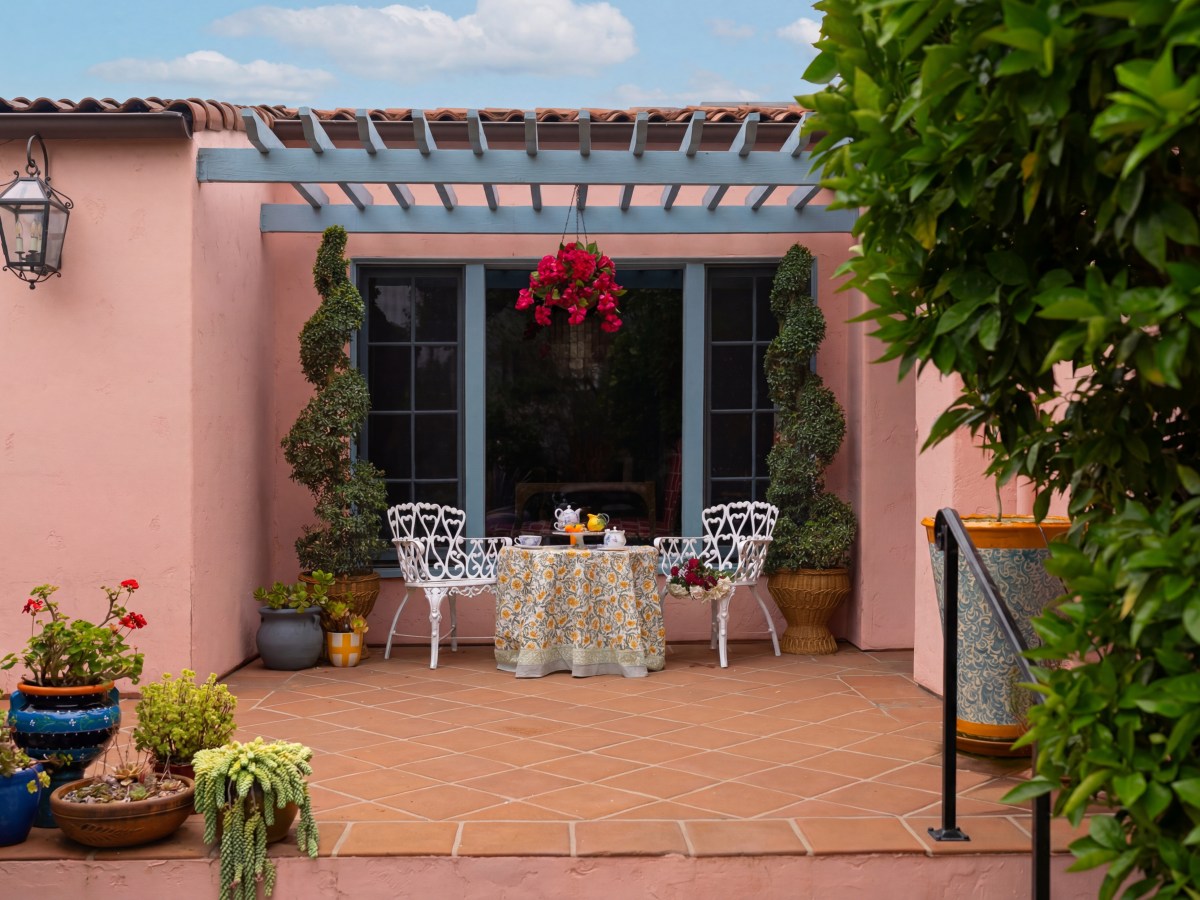
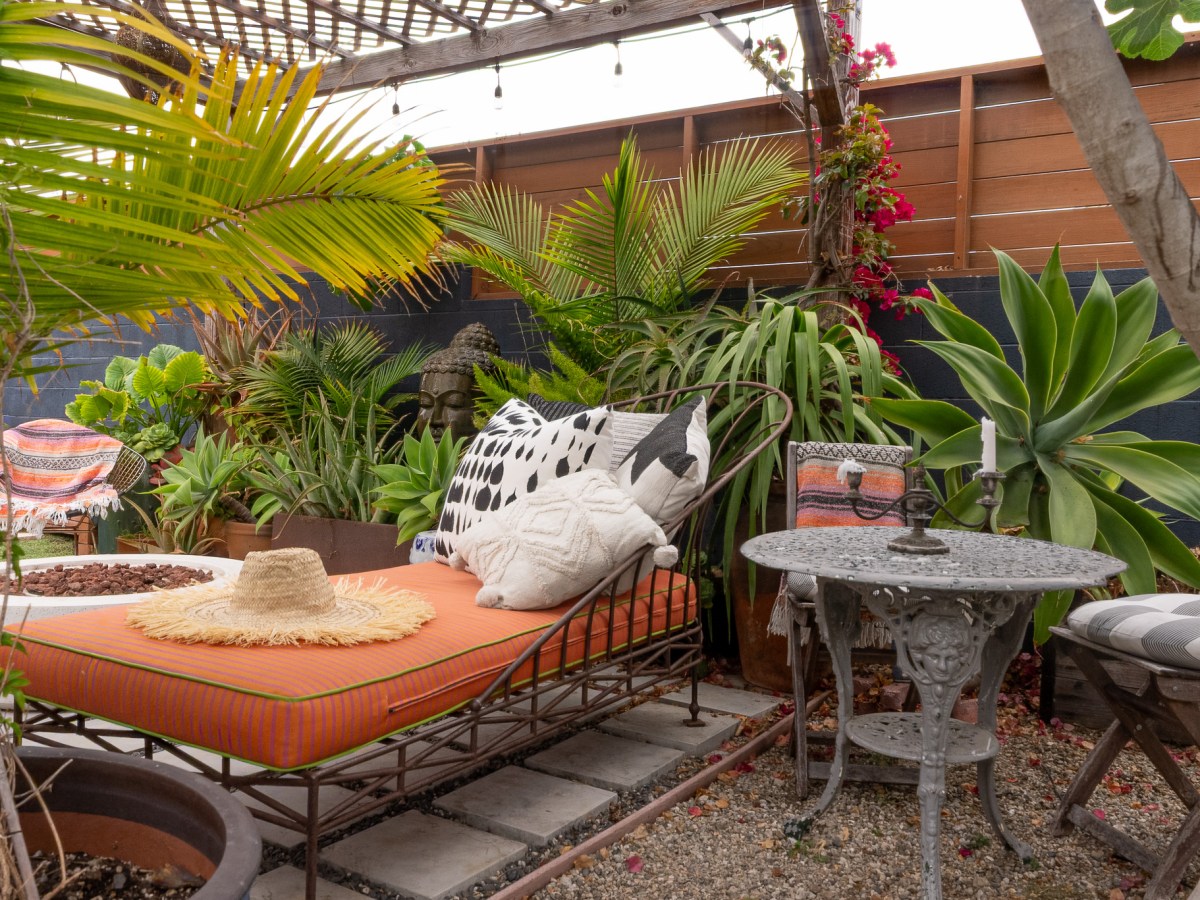
Instead of thinking about a backyard as one large open area, break it into experiences. A fountain tucked into a planting bed becomes a destination for morning coffee. A firepit naturally gathers people after dinner. A long dining table beneath a pergola encourages lingering conversations, while a quiet bench hidden beneath climbing vines creates space for a few moments alone.
Comfort matters just as much as aesthetics. Outdoor blankets within easy reach, warm lighting that extends evenings outdoors, and the gentle soundtrack of trickling water all contribute to a space that feels welcoming long after the sun goes down. Even small patios can benefit from this layered approach, proving that atmosphere isn’t measured in square footage.
Aaron Snyder
Let Your Garden Tell a Story
Unlike a freshly decorated room, gardens become more beautiful through time. Plants grow beyond their borders, wood develops a silvery patina, vines wander where they please, and meaningful objects slowly collect memories alongside the people who enjoy them.
Rather than resisting that evolution, Fahmy embraces it. “My garden has reinforced that I love creating spaces that transport people. I’m not trying to create perfection. I’m creating a world.”
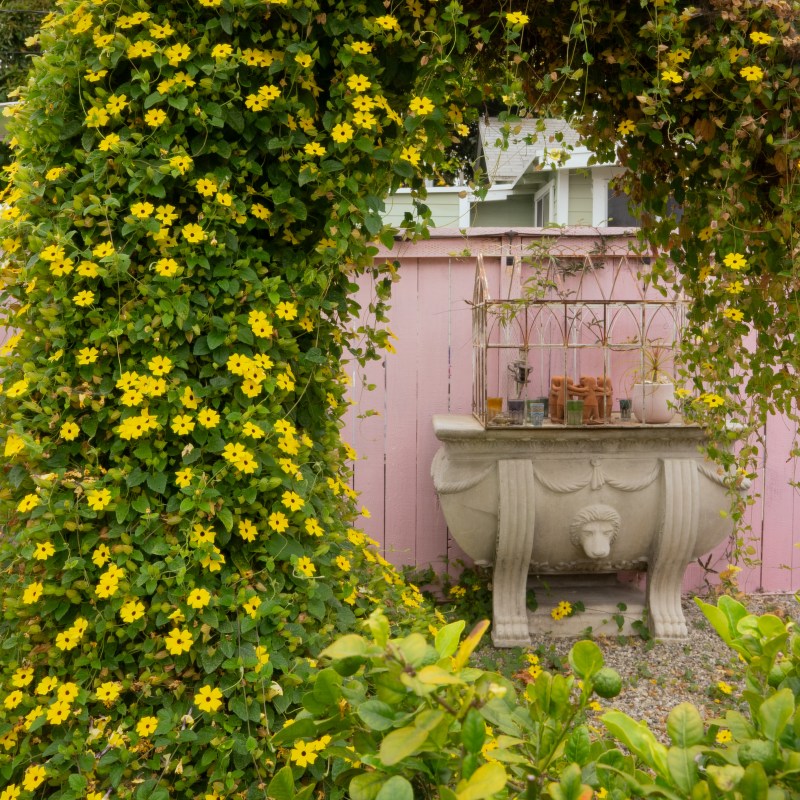
That philosophy is reflected throughout her own landscape, where every piece carries a story. Her Buddha fountain reminds her of the leap she took when leaving a corporate career to start her design firm. Black-eyed Susan vines, gifted by her husband, bring both color and sentiment to the garden, even when they require an occasional heavy pruning.
Instead of chasing perfection, look for opportunities to create curiosity. Hang artwork outdoors. Mix vintage garden pieces with new plantings. Leave room for weathered materials to age gracefully. The gardens with the most character are rarely the ones that look untouched—they’re the ones that reveal the lives lived within them.
Aaron Snyder
Give Your Garden Time to Become Itself
Perhaps the greatest lesson from Fahmy’s own backyard is that a meaningful outdoor space is never truly finished. Like any living landscape, it shifts with the seasons, changes alongside its owners, and continues revealing new possibilities over time.
That mindset also removes one of the biggest misconceptions about outdoor design—that you need an expansive backyard to create something special. Whether you’re working with a narrow side yard, a small patio, or a generous garden, the goal isn’t to fill every inch. It’s to make the space feel intentional.
Fahmy often looks to compact courtyards and urban gardens for inspiration, where layered planting, vertical greenery, and carefully placed seating create an immersive experience without requiring endless square footage.
Her advice is refreshingly simple. “Gardens have a soul and a heartbeat of their own, so give yourself grace, let them evolve, and don’t be afraid to move things around.”
It’s a philosophy that feels especially fitting for outdoor living. The best backyards aren’t finished in a weekend or defined by a single shopping trip. They’re built season by season, with collected objects, growing plants, and memories made around the table. And in the end, that’s what makes them feel like a place worth escaping to—even when it’s only steps from your back door.
Aaron Snyder
Meeshie Fahmy’s Five Secrets for an Outdoor Space That Feels Like a Vacation
- Start with a feeling. Decide how you want the space to make you feel before choosing furniture or plants.
- Create one strong focal point. A fountain, pergola, sculptural plant, or vintage garden piece can anchor the entire design.
- Layer for comfort. Cushions, blankets, lighting, and the sound of water encourage people to stay longer.
- Mix personality with practicality. Vintage planters, collected art, and meaningful objects make a space feel uniquely yours.
- Let the garden evolve. Resist the urge to finish everything at once—some of the best outdoor spaces become more beautiful with time.