Bored with Your Backyard? Here Are 4 Easy Ways to Add Personality to Your Landscape Design
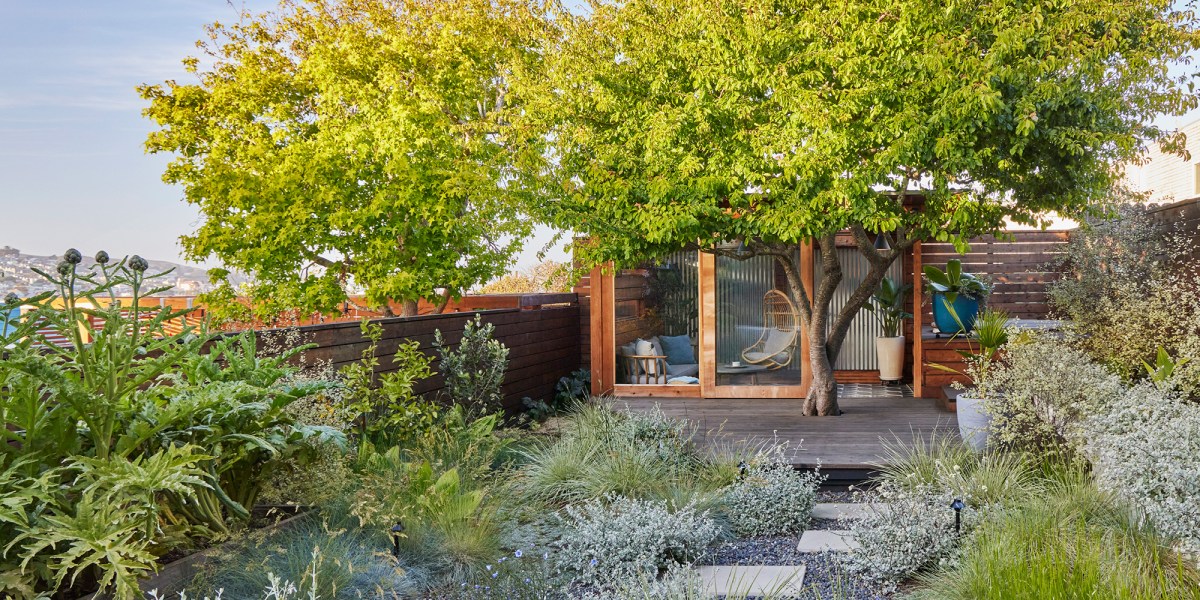
San Francisco design studio Friday Gardens is adding a pop of personality to the modern backyard.
Caitlin Atkinson
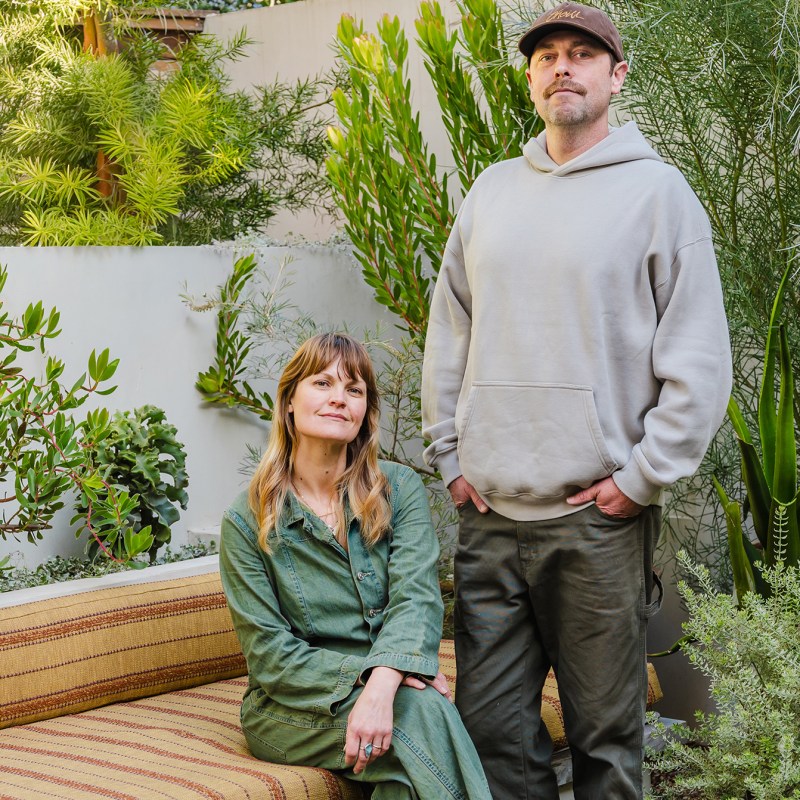
Friday Gardens isn’t afraid to push a backyard past the expected. Known for creating unique, inviting outdoor spaces and for bringing the fun back to the garden, San Francisco designers Dani Coulter and Johnny Keegan approach every project with an easy, breezy sense of joy. Founded in 2017, the studio grew from Dani’s interior design roots and Johnny’s background as a visual artist and contractor, a pairing that naturally blends lived-in comfort with bold creativity.
Christine Ciszczon
With playful materials, thoughtful planting, and an eclectic mix of textures and color, they blur the lines between landscape and hardscape to craft spaces that feel modern, warm, and completely their own. As they put it: “Easy-breezy and fun! Delightful and lived-in. Creating joyful spaces for our clients to relax, unwind, play, and party is our main objective at Friday Gardens. The garden is the perfect place to blur the lines, soften the hardscape, bring in the wabi-sabi, unconventional shapes, and color to create an effortless flow, ensuring your new space feels cozy and warm, has history, and most importantly, is a place that you can’t wait to come home to.”
Not only do their gardens feel like little worlds of their own, layered, textural, and humming with personality, but every material choice is softened by movement, and every corner invites you to settle in. It is design with a sense of joy, built for real life.
Here’s how Dani and Johnny are turning ordinary yards into unforgettable fun-scapes.
1. Rethink Your Layout: Elevation & Outdoor Rooms
Caitlin Atkinson
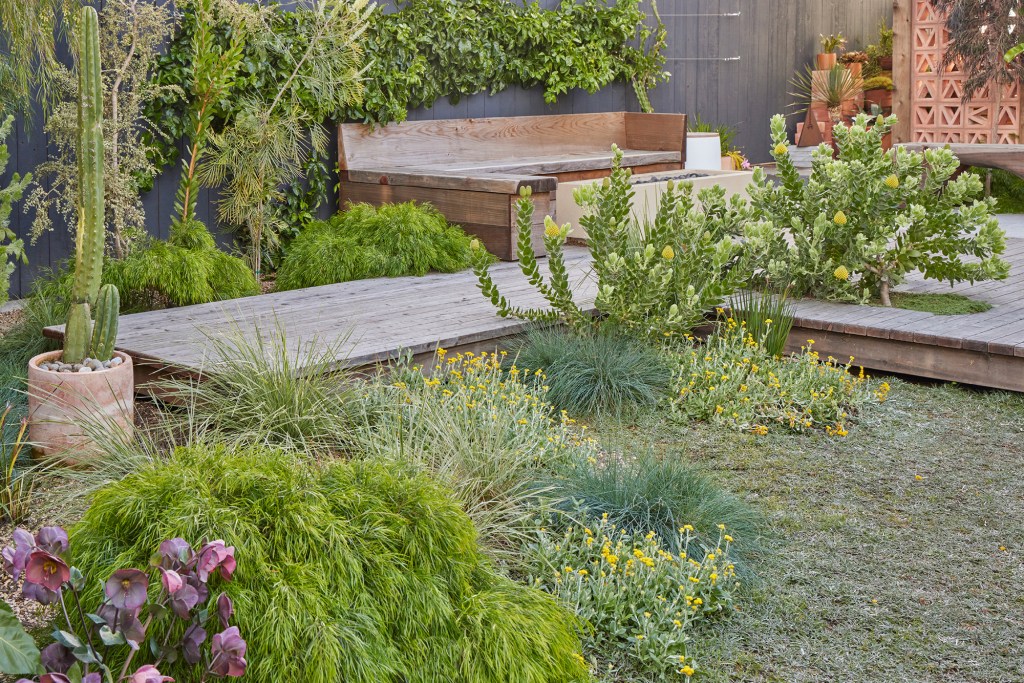
Instead of defaulting to a single patio or one open lawn, Friday Gardens designs with flow in mind, creating distinct zones that encourage lingering and exploration. “We want our clients to live in their gardens. That means making sure all members of the house have a space of their own and to share that feels comfy and inviting, an effortless drift from one zone to the next,” Dani says.
They start with the sun, shade, and natural “problems” of a yard, transforming them into design opportunities. A chilly corner might become a cozy firepit nook; a sunny, south-facing space could hold kids’ play zones or veggie boxes. By shifting just a few steps in elevation, they create intimacy and interest: “By raising a space or lowering an area to create a recessed zone, you have taken the living space off the main level, and just like that, there’s a new exciting destination in the garden.”
PRO TIP: Try a simple DIY elevation: Build a small redwood or cedar platform in a shady corner, cushion it with mid-height and groundcover plantings, and add a sofa or chairs. Instant new favorite spot.
2. Material Magic: Fluted Wood
Caitlin Atkinson
Texture transforms a backyard from flat to fascinating, and for Friday Gardens, fluted wood is the ultimate tool. “Oh, the softness and texture for sure! The way the light moves along the dowels beautifully, plants notch into them just right,” Dani says. It’s a material that adds visual depth without shouting—perfect for walls, screens, or planters.
The team often turns ordinary retaining walls into points of intrigue. “Retaining walls are abundant in our spaces, and making them feel interesting and cool rather than a necessity is a huge part of my job. Cladding a cold concrete wall with vibey, delicate fluted Western red cedar is the most fun. The change is just so dramatic; rather than rebuilding a utilitarian wall that is doing its job perfectly well, we clad it,” the two explain.
Fluted wood works brilliantly when layered with other textures. Think smooth stones, patterned tiles, or rough-hewn pavers. The repetition of rounded dowels creates rhythm, a subtle sculptural quality that complements asymmetrical garden layouts. It’s a way to inject personality while maintaining a calm, cohesive feel.
PRO TIP: Highlight fluted wood with mid-height textural shrubs or tall grasses. The material itself is sculptural, so let it peek through plantings or partner with rough stone for contrast. Even a single accent wall can instantly transform a previously “boring” backyard.
3. Retro Meets Modern: Breeze Blocks
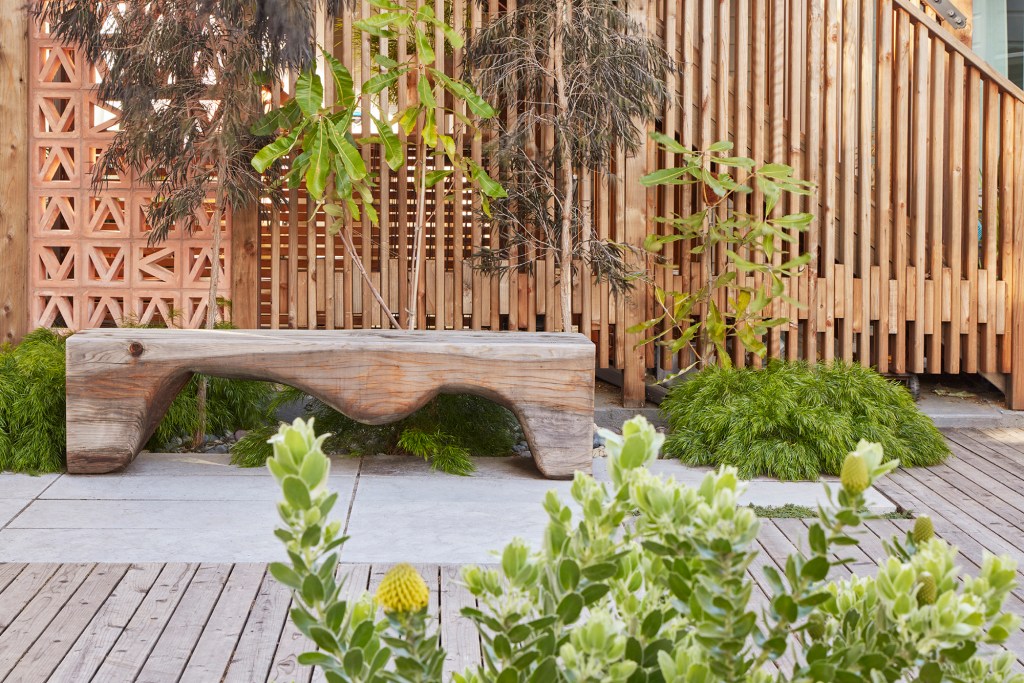
Breeze blocks are equal parts function and flair. “Fun and functionality! We often work in jewel box gardens where we want to create unique zones and possibly a private space without the feeling of being closed in. That’s where breeze block becomes the star,” Dani says. The designers love the way the geometric patterns provide structure while keeping a space airy and light.
Breeze blocks’ versatility is part of the appeal. Use them as partition walls that allow sunlight and breeze through, or stack them as bases for coffee tables or benches. “If you don’t have space for planting on one side, install a flexible plant on the other and let it grow through—voila! Now you have greenery on both sides of the hardscape,” Dani says. It’s all about playful problem-solving.
For small yards, breeze blocks are a dream. Elevate a planter, create a bench base, or form a simple focal point—their weighty presence grounds the space without overwhelming it. The designers also enjoy pairing them with warm wood elements, integrating a natural softness with their hard-edged geometry: “Warm cedar wood looks gorgeous paired with breeze block. We love it in the form of an organic bench or decking.”
PRO TIP: Consider using breeze blocks for both function and movement. A screen in a sunny spot can become a vertical support for vines, while a stack near seating transforms the backyard into a layered, sculptural retreat.
4. Personality Underfoot: Colorful Tile Patios
Christine Ciszczon
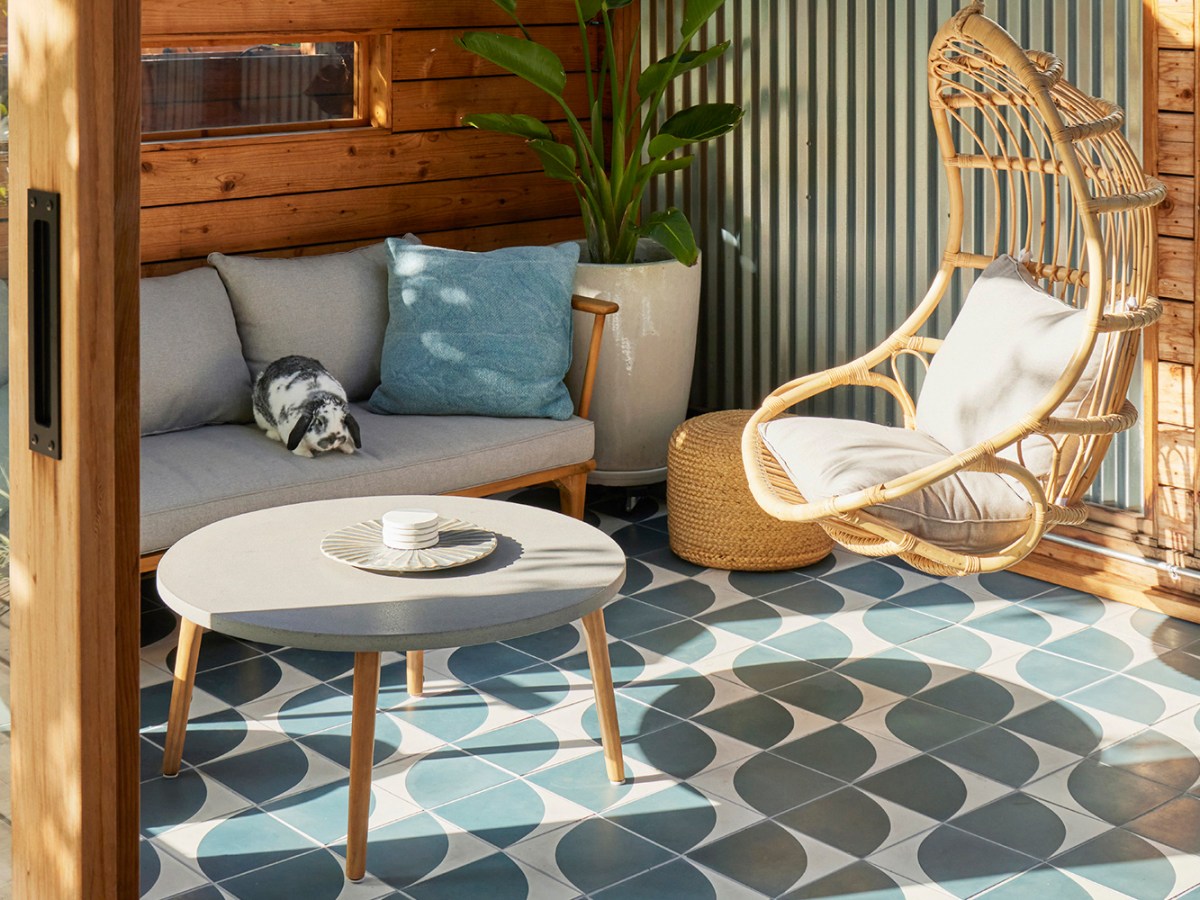
Nothing says “fun backyard” like a bold tile pattern. Dani and Johnny select tiles not just for beauty, but for how they define a space and interact with its natural light. “Well, since we easily fall in love with most tiles we meet … We assess what our clients and the space are asking for. A foggy or shady garden is usually in need of a brighter, more exciting patterned tile, while a bright, open space with a view that already has a lot going on would benefit from a calmer cotto or Moroccan zellige,” they explain.
Tiles are also a way to establish hierarchy in a garden. Large field tiles act as a neutral base, while patterned or small-format tiles can punctuate seating areas, outdoor kitchens, or sun traps. The designers emphasize scale and balance: “Consider scale—things often look chaotic when there are too many elements that are different but the same size. We want to make sure we have a large shape like rough-cut limestone, a smaller, more intricate shape, possibly with a busy pattern like a small, bold tile, a large expanse of decking with 4-inch boards installed with regular seams.”
Transitions between materials are key. Whether moving from decking to tile or gravel to pavers, a thoughtful edge or a strip of neutral tile can unify the space while keeping it dynamic. The result is a patio that feels intentional, cohesive, and full of personality.
PRO TIP: Break up bold tile areas with simpler surfaces to prevent visual chaos. Think of your patterned tile as punctuation—dramatic but balanced by more subdued surroundings. Small spaces can benefit from a single accent tile installation paired with large neutral tiles to expand the feeling of openness.