Why Just About Everyone Is Obsessed with ‘Lasagna Gardening’ Right Now
The low-effort, high-reward method turning stubborn soil into something worth planting in.
Thomas J. Story
If your garden soil has ever felt more like pottery clay than something you’d willingly grow dinner in, you’re not alone—and you’re exactly why lasagna gardening is having a moment. Across the West, from coastal fog belts to high-desert backyards, gardeners are skipping the tiller and reaching for cardboard instead.
Blame TikTok if you want, but this isn’t just another fleeting garden trend. Lasagna gardening (a no-dig method built on layering organic materials) is quietly solving some of our region’s biggest challenges: compacted soil, water retention, and the general exhaustion of trying to “fix” dirt that fights back.
The appeal? You build it right on top of whatever you’ve got (yes, even that sad patch of hardpan), and in about six weeks, you’ve got a plantable, nutrient-rich bed. No double digging. No hauling away soil. No drama.
More Videos From Sunset
Here’s how to make it work beautifully in any Western garden.
Thomas J. Story
1. Start Where You Are (No Soil Rehab Required)
Forget ripping everything out. Lasagna gardening works because you don’t disturb the soil underneath—and that’s not just a convenience. It’s the whole point.
Research from the Rodale Institute and USDA Natural Resources Conservation Service consistently shows that tilling destroys fungal networks and disrupts beneficial microbial colonies that have taken years to establish. Specifically, mechanical tillage can reduce soil fungal biomass by up to 90% in a single pass. When you skip it entirely, those networks stay intact and become part of your team.
What to do:
- Mow or knock down weeds (no need to remove roots)
- Water the area well before you start layering
- Lay down plain cardboard (remove tape and labels) to smother what’s below
The cardboard isn’t just a weed barrier—it’s a fast-track invitation for earthworms. Studies from Cornell and the University of Vermont have shown that earthworm density significantly increases under sheet mulching systems, and earthworm castings contain up to 5 times more nitrogen, 7 times more phosphorus, and 11 times more potassium than surrounding soil. Basically, you’re building a worm farm before you even plant anything.
Thomas J. Story
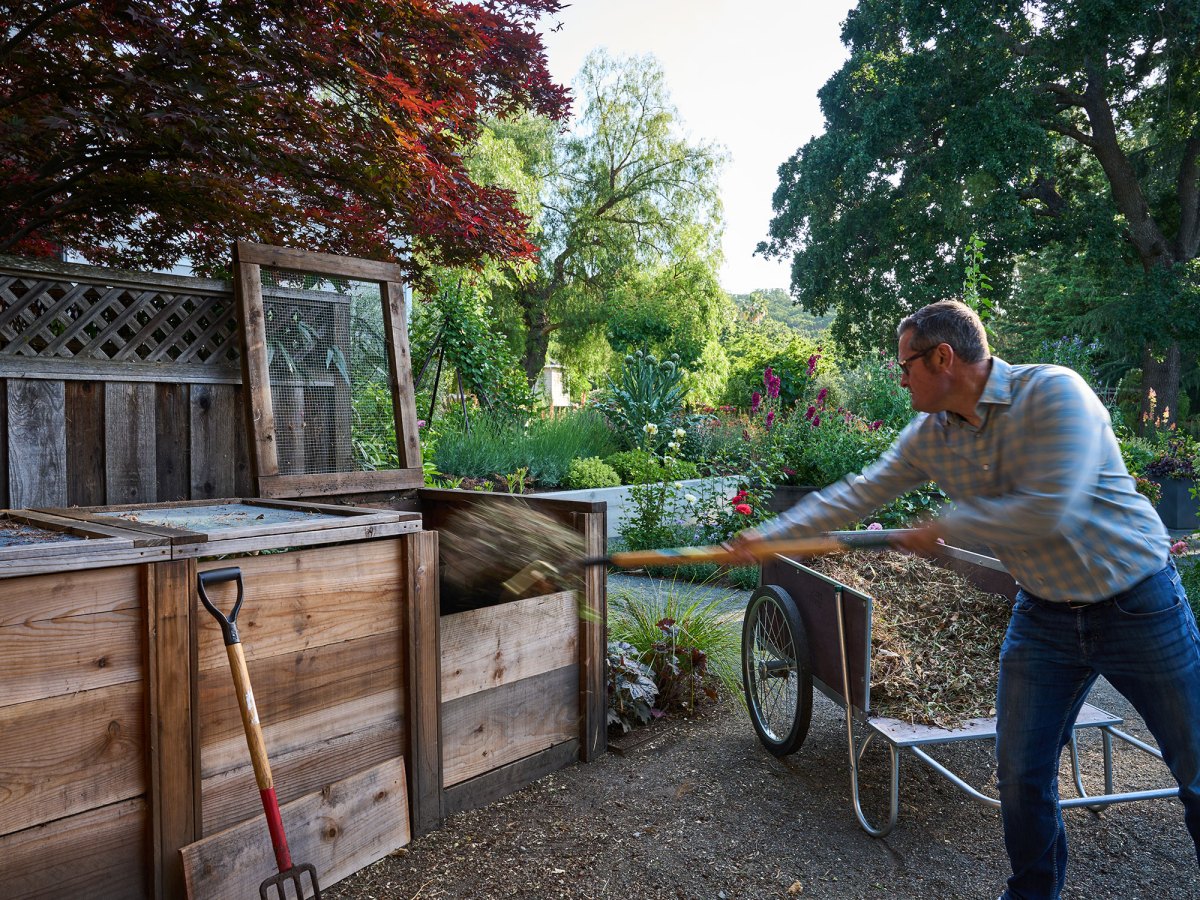
2. Think Browns and Greens (Like a Compost Pile You Don’t Turn)
The magic is in the layering—alternating carbon-rich “browns” with nitrogen-rich “greens.” If you’ve ever made a compost pile, this will feel familiar. If you haven’t, don’t worry—it’s more forgiving.
Your go-to layers:
- Browns: dried leaves, shredded paper, straw, wood chips
- Greens: kitchen scraps, grass clippings, coffee grounds, fresh plant trimmings
The rhythm:
- Start with cardboard (your weed barrier)
- Add a thick brown layer
- Follow with a thinner green layer
- Repeat until you’ve got a bed 12–24 inches tall
The science behind this ratio: You’re aiming for a carbon-to-nitrogen (C:N) ratio of roughly between 25:1 and 30:1, which is the sweet spot where microbes decompose material most efficiently without producing ammonia (too much nitrogen) or stalling out (too much carbon). Browns like dried leaves run around 60:1; greens like grass clippings come in around 20:1—so alternating them in roughly 2:1 layering by volume hits the target naturally.
Pro tip: Finish with compost or good garden soil on top so it looks (and plants) like a finished bed from day one.
3. Water Like You Mean It
This is where Western gardeners get strategic.
Each layer should be damp, like a wrung-out sponge, as you build. This jumpstarts decomposition and helps the whole stack settle into something cohesive instead of crunchy.
Moisture is the rate-limiting factor in microbial activity. Research published in Soil Biology and Biochemistry found that microbial respiration rates (a measure of decomposition activity) drop sharply when soil moisture falls below 40–60% water-holding capacity. In dry climates, an under-watered lasagna bed isn’t just slow—it can essentially pause. Aim for that damp-sponge feel at every layer, and consider giving the whole bed a deep soak before you walk away.
The good news: Once it’s built and settled, lasagna beds are significantly better at retaining that moisture than native soil. More on that below.
Thomas J. Story
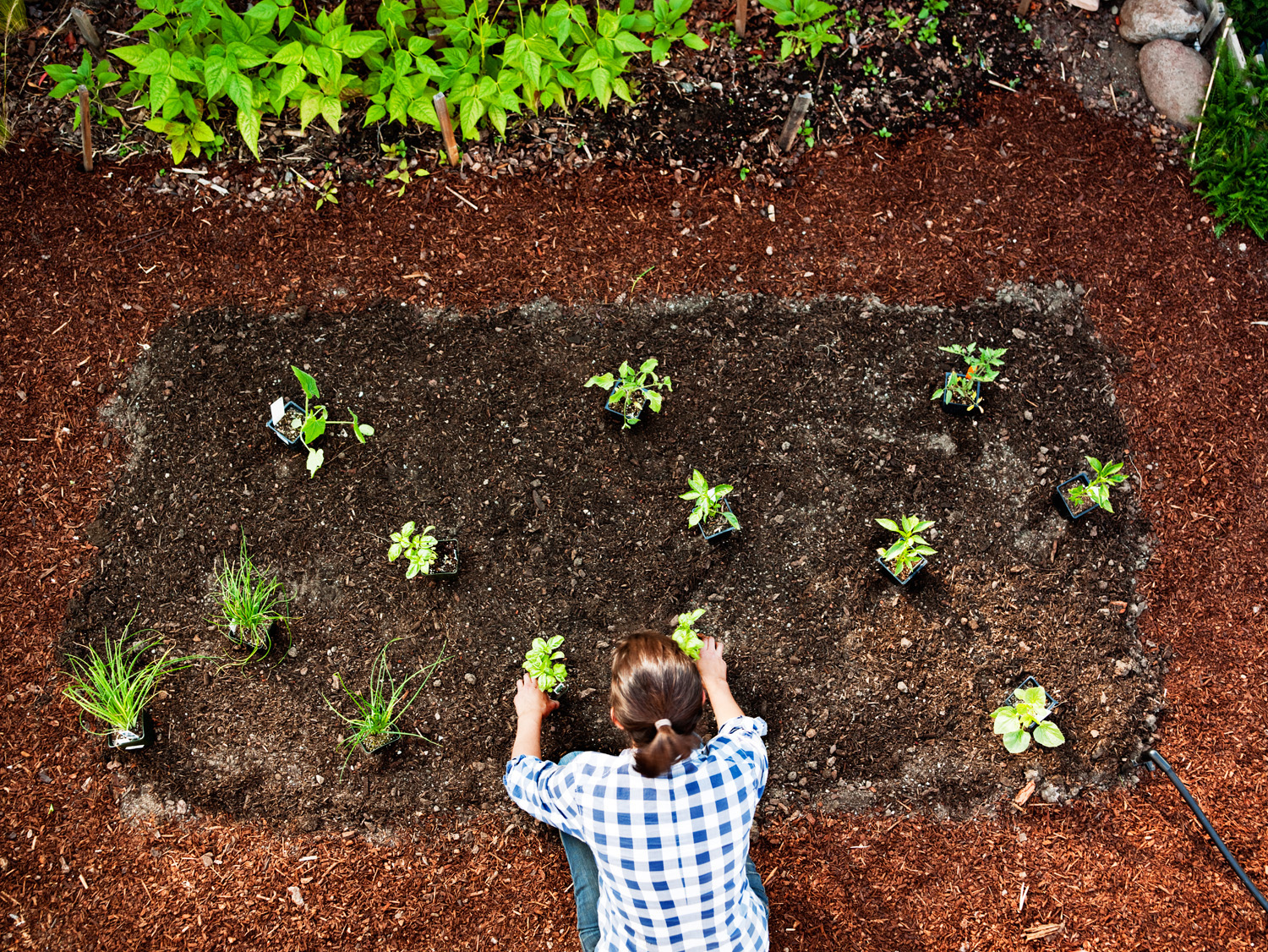
4. Build Now, Plant Soon (Yes, Really)
Unlike traditional composting, you don’t have to wait months.
Timeline:
- Week 0: Build your bed
- Weeks 2–3: Layers begin to soften and settle
- Weeks 4–6: Ready for planting (especially transplants)
This works because you’re layering, not composting in a pile. The organic material doesn’t need to fully break down before it becomes hospitable to roots, it just needs to begin. Deep-rooted plants like tomatoes and squash will push down through partially decomposed layers with ease, and research on no-till systems shows that plant roots actually benefit from the varied structure, using air pockets between layers to expand faster than in compacted native soil.
What to plant first:
- Tomatoes, squash, peppers
- Herbs like basil and parsley
- Fast-growing greens (arugula, lettuce)
Seeds can work too, but transplants give you a head start while the lower layers finish breaking down.
Thomas J. Story
5. It’s a Water-Wise Dream (And the West Needs This)
Lasagna beds act like a sponge, holding moisture far better than native soil. This isn’t a casual claim.
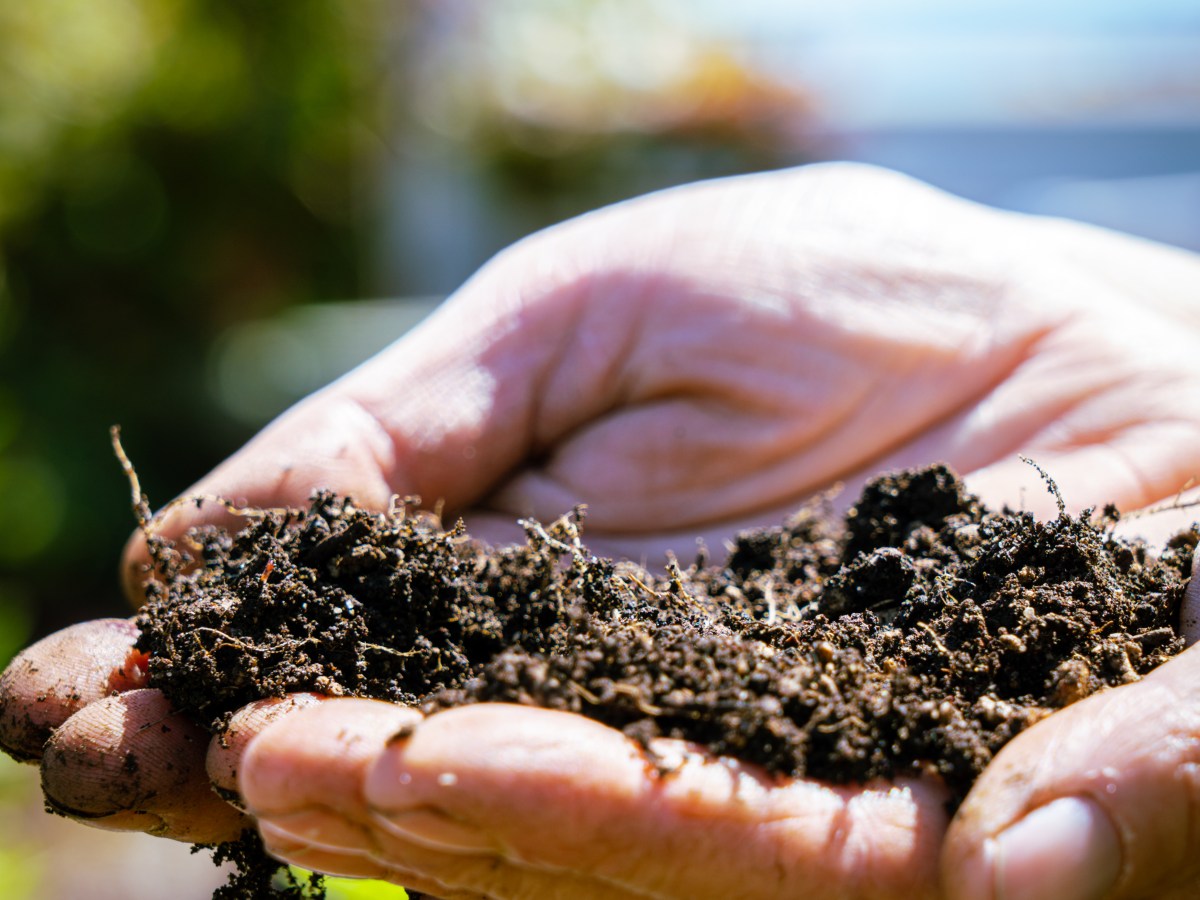
A study from Oregon State University Extension found that soil amended with organic matter retains 20 times more water per pound than unamended soil. As your layers break down into humus, they form aggregates—clumps of soil particles held together by microbial secretions and fungal threads—that create pore spaces where water collects instead of draining away or evaporating.
Translation for Western gardens:
- Less frequent watering
- Better drought resilience
- Happier roots during heat waves
Mulch-heavy top layers also shade the soil surface, reducing evaporation significantly—some research cites up to 70% reduction in soil moisture loss under thick mulch versus bare ground. In a region where every drop counts, that’s not a quiet win. That’s a game changer.
6. It’s Also a Design Move
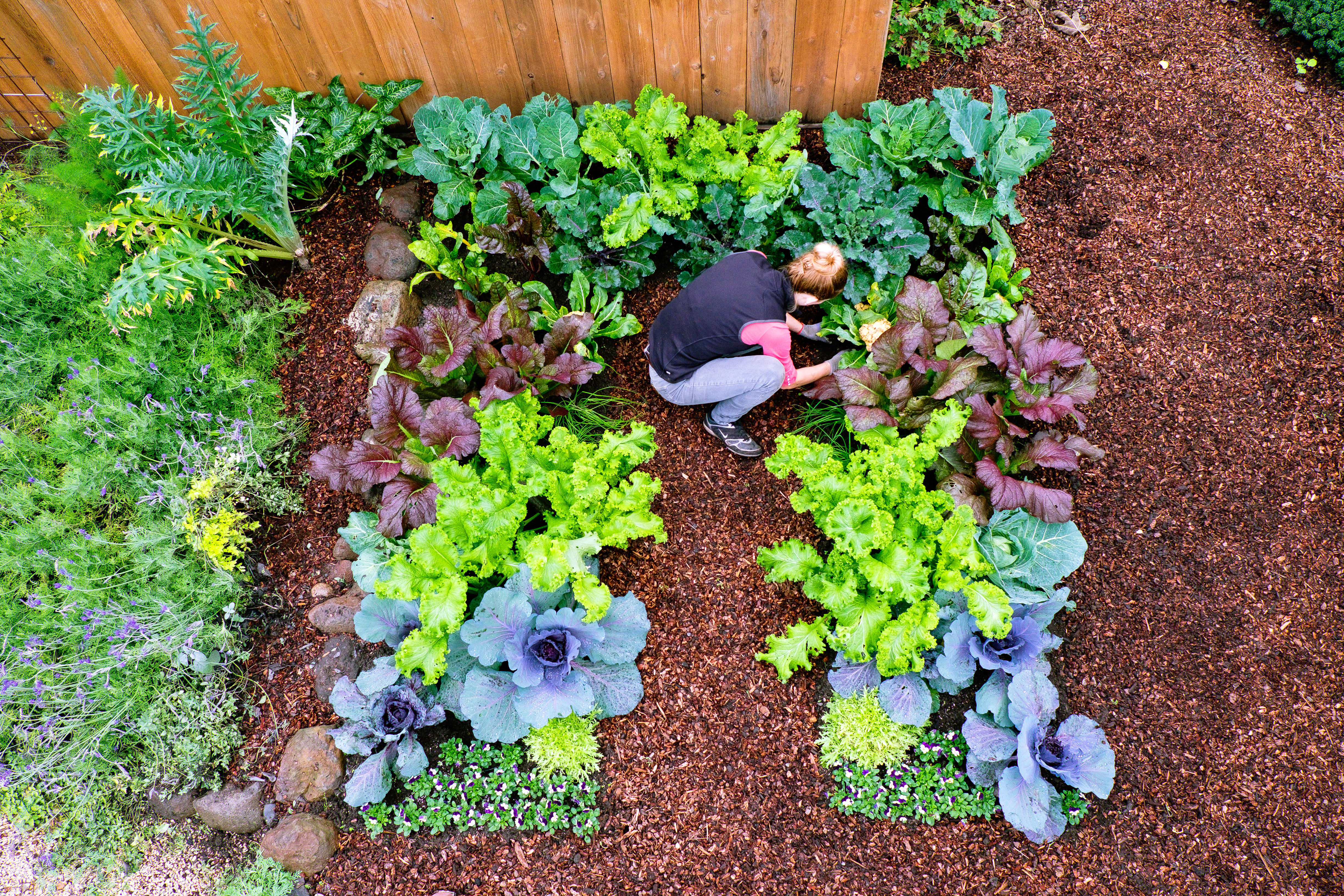
This method isn’t just practical, it’s visually soft and inviting. And for those of us who spend as much time thinking about how a garden looks as how it performs, that matters.
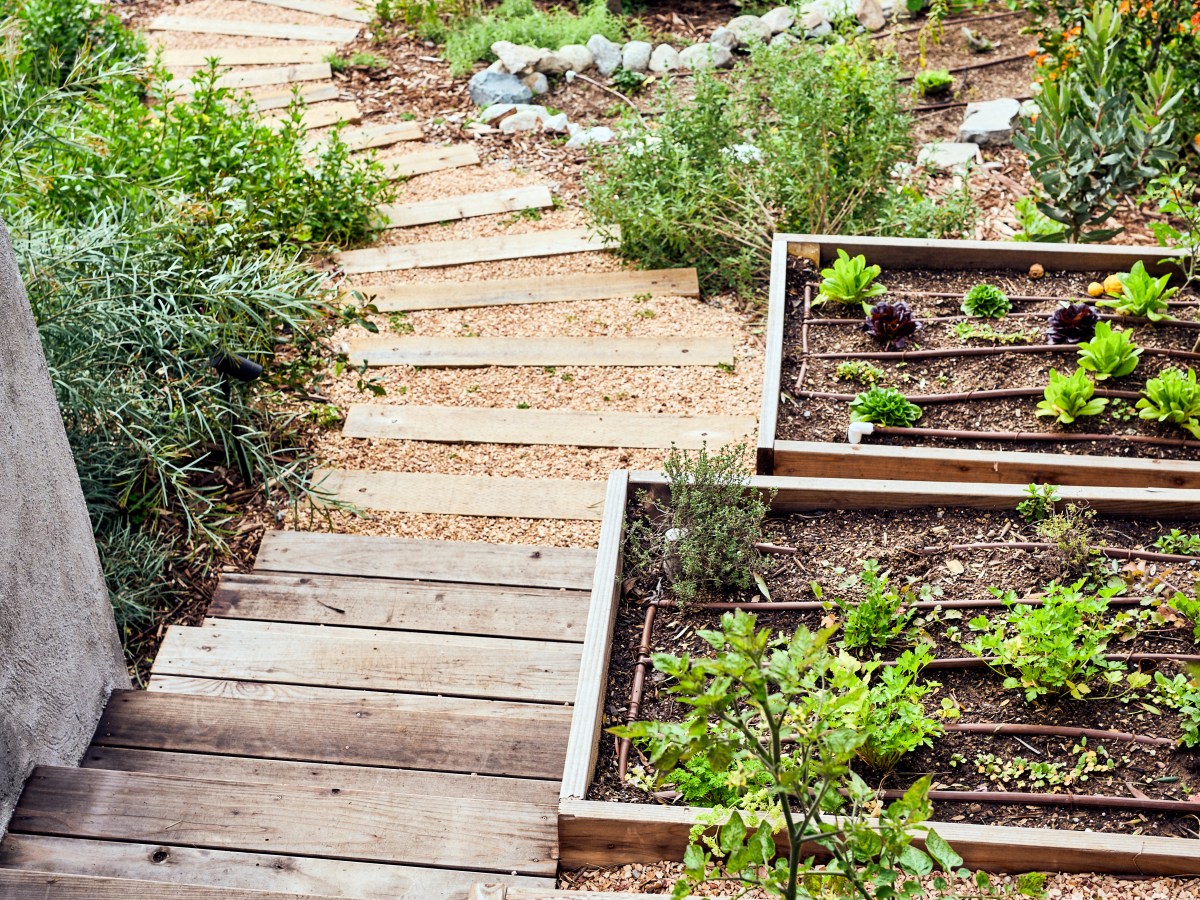
Freshly built lasagna beds have a gently mounded, organic quality that feels intentional rather than improvised. The layered textures—straw, leaves, dark compost—create visual interest before a single plant goes in. Edge with stone or salvaged wood for definition, let it spill naturally for a wilder feel, or stack multiple beds into a terraced form for slopes.
As the seasons pass and the layers break down, that mounded profile softens and settles into the landscape in a way that raked, tilled beds never quite do.
Thomas J. Story
7. It Gets Better Every Season
The first year is just the beginning—and this is where the long game really pays off.
As layers decompose, they build what soil scientists call stable organic matter, which is the backbone of long-term soil health. A landmark 30-year study by the Rodale Institute compared no-till organic systems to conventional tillage and found that after three years, the no-till plots matched conventional yields and after a decade, significantly exceeded them, while requiring fewer inputs. Lasagna gardening is essentially the backyard version of that research in action.
As layers break down:
- Soil structure improves season after season
- Microbial life diversifies and deepens
- You’ll need fewer added materials to maintain the bed
Top it off seasonally with compost and mulch, and it becomes a self-sustaining system that improves whether you’re paying attention or not.
Remember, It’s not about perfection. It’s about stacking the odds (and the layers) in your favor. And if your garden has been giving you a hard time? This might be the season you stop fighting it—and start layering instead.