
The 4 Design Flaws That Make Airports Way More Stressful
And no, it’s not just the endlessly long TSA line.
baona/Getty Images
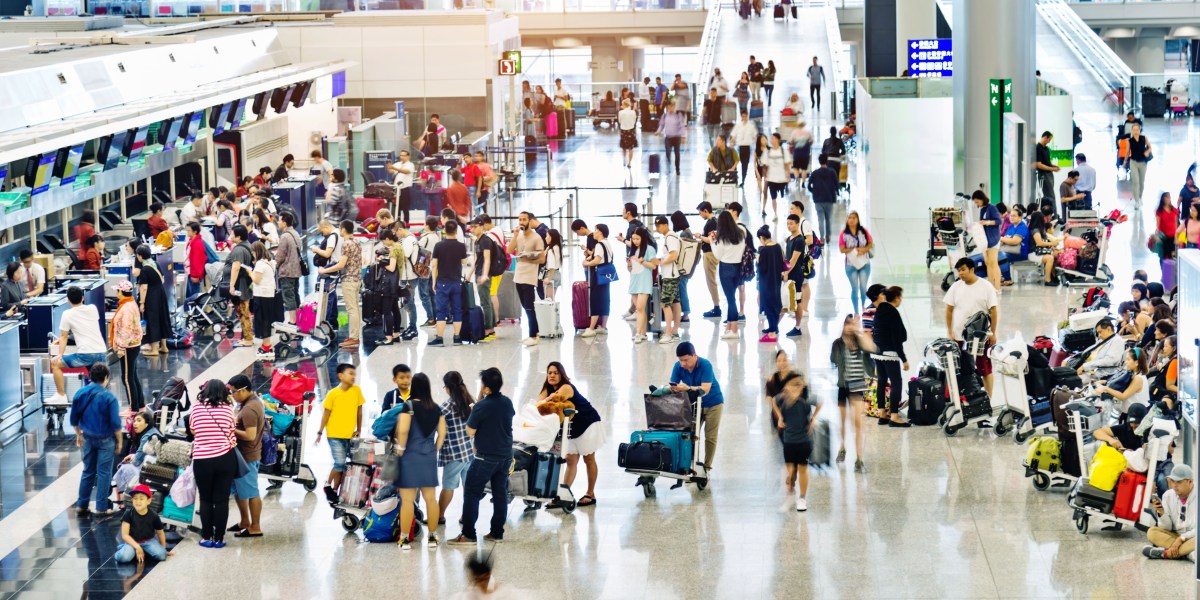
Double- and triple-checking you have your phone, wallet, keys, and ID. Pacing in the unbearably long TSA lines. Rushing to the gate as the agent calls your name on the intercom. While your destination might supply you with tons of rest and relaxation, the travel days before and after a vacation are far from pleasant.
Sam Allen, managing director at Noisy&Co, a UK-based creative agency that specializes in brand experience and exhibition design, has noticed that travel isn’t necessarily difficult because of those longer-than-expected TSA lines and flight delays or cancellations. He argues the poor spatial design of the airports themselves could be the underlying cause of your pre-flight anxiety.
“Experiential design in exhibitions and retail environments is built around one principle: Guide people intuitively through a space so they always know where they are and what comes next,” Allen explains. “That clarity reduces stress and increases engagement. Airports, which handle some of the most anxious audiences of any public environment, don’t apply that thinking consistently.”
Below, see the key reasons why you might see a heart-rate spike on your Oura ring or Apple Watch, and learn what airports could do to improve a typically chaotic environment.
1. Directions Are Difficult to Understand (or Non-Existent)
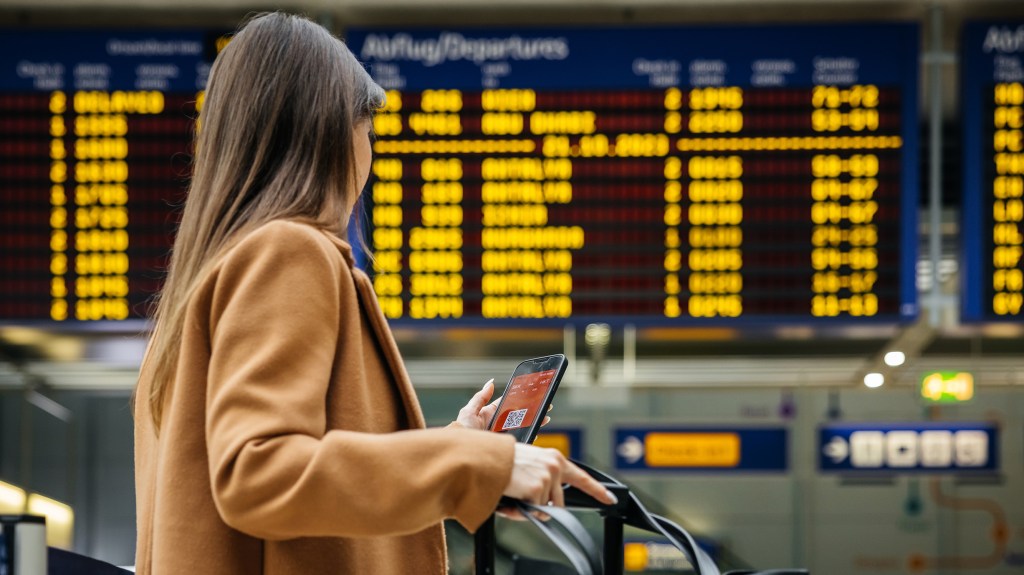
You likely know your local airport well, but navigating a new-to-you hub can be a nightmare. Allen notes that signage is often confusing and inconsistent, which complicates your process of getting to the right gate, grabbing a snack, or finding the closest restroom.
“Good wayfinding is about anticipating where someone’s eyes will be, what information they need at exactly that moment, and removing everything that isn’t relevant,” Allen says. “In airports, that logic is often missing entirely.”
Hunterhaus Productions/Getty Images
2. Airports Are Overstimulating
It’s not only the rush of feeling like you’re swimming against a current on your way to the gate. “The sensory experience of an airport is rarely considered holistically,” Allen adds. “Lighting, acoustics, and visual noise are usually handled by different teams with different briefs, and the result is an environment that feels chaotic rather than controlled.”
3. The ‘Hurry up and Wait’ Structure Is Taxing
Airports are lacking a properly paced flow, like one you’d experience in a restorative yoga class or multi-course meal. “There’s almost no rhythm to the airport experience,” Allen says. “You’re hurried through certain points and then left in a holding pattern with nowhere comfortable to decompress. That stop-start dynamic is stressful for people.”
4. Line Design Can Alter Your Brain Chemistry
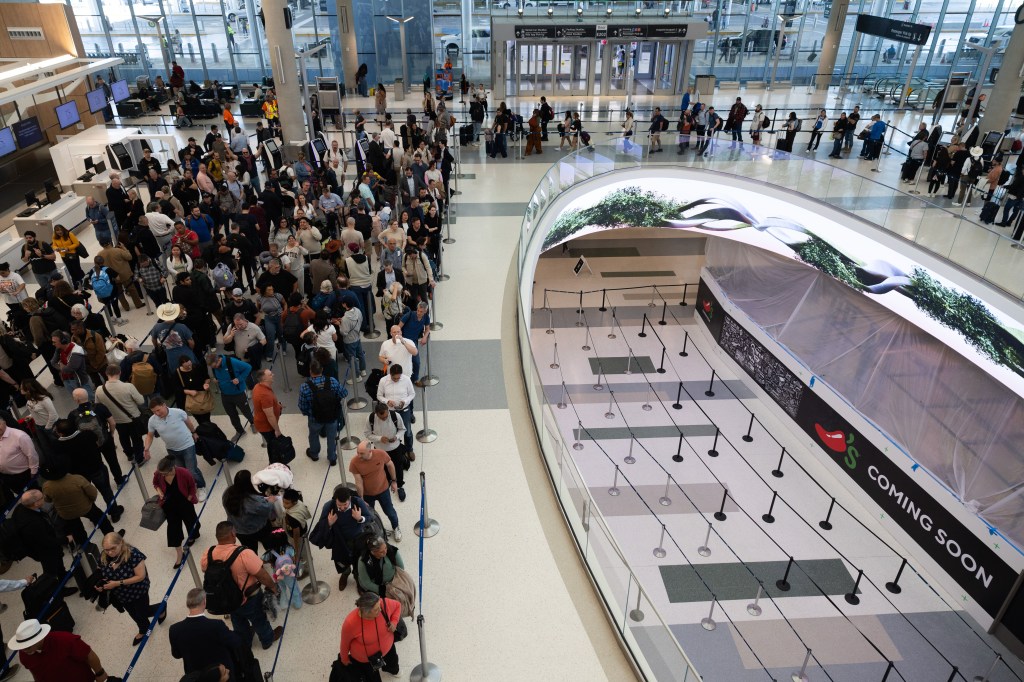
As Allen notes, “queue design” is crucial, and lines that are winding and show no end in sight are troubling for airport visitors. Same goes for the long, linear layout of most terminals. Those seemingly endless walks from A to B are exhausting, both mentally and physically.
Antranik Tavitian/Getty Images
Allen sees airports as stress-inducing sites, of course, but also as spaces demanding a more thoughtful, community-centered experience.
“Airports are some of the most complex public spaces in the world, but they don’t need to feel chaotic,” Allen says. “Better zoning, considered lighting, cleaner wayfinding hierarchies, and dedicated decompression spaces would make a measurable difference to how passengers experience them.”