I’m Tired of Ordering the Same $40 Branzino. Let the Chef Drive.
At Jacaranda and Lielle, two veteran chefs make the case for surrendering dinner to someone who knows exactly where it should go.
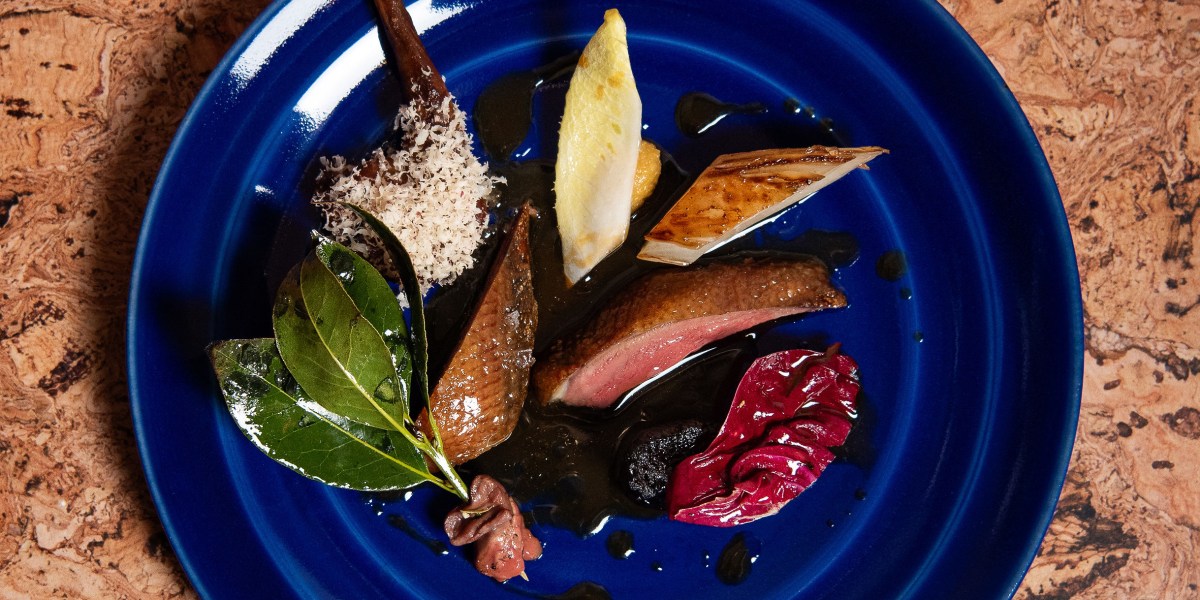
Aged Californian Squab at Lielle. Photo by Andrea Jernmark.
Earlier this year, two restaurants from veteran fine-dining chefs arrived in Los Angeles with bold, exclusive commitments to tasting menus—a format that has fallen out of vogue in a world of shared plates, comfort-food reboots, gastropubby revivals, Iberian fantasias of cost-conscious tinned fish, familiar French cooking tweaked just so, and always, always, so much Italian.
Daniel Patterson’s Jacaranda opened just as Los Angeles was redolent with night-blooming jasmine, California poppies blazed orange in freeway medians, pepper trees hung heavy with magenta fruit, and nasturtiums brightened front yards across the city. Some of that springtime abundance ends up on the plates at Jacaranda. The restaurant takes its name from the trees that line Los Angeles boulevards with fierce lavender blooms each spring, visible from the hills as they spread across the city grid and make a mess of more than a few parked cars along the way.
Wonho Frank Lee
Ask a chef what their dream restaurant would be and chances are you’ll hear some version of the same answer: Thirty seats. A personal menu. One seating a night. Great ingredients. Great music. And so that’s what Patterson offers on a food-world stretch of Melrose Avenue not far from Mozza and Petit Trois, in a comfortable little room stylishly imagined by the design firm Preen. The mood here is less hushed temple of gastronomy than party at a tasteful rich friend’s house—one who loves rock and roll. Jacaranda is, above all, a restaurant about California. That’s a cliché, of course, but it feels truer here than at many restaurants currently grappling with the question of what California cuisine actually means, or at the very least what a Los Angeles restaurant should be.
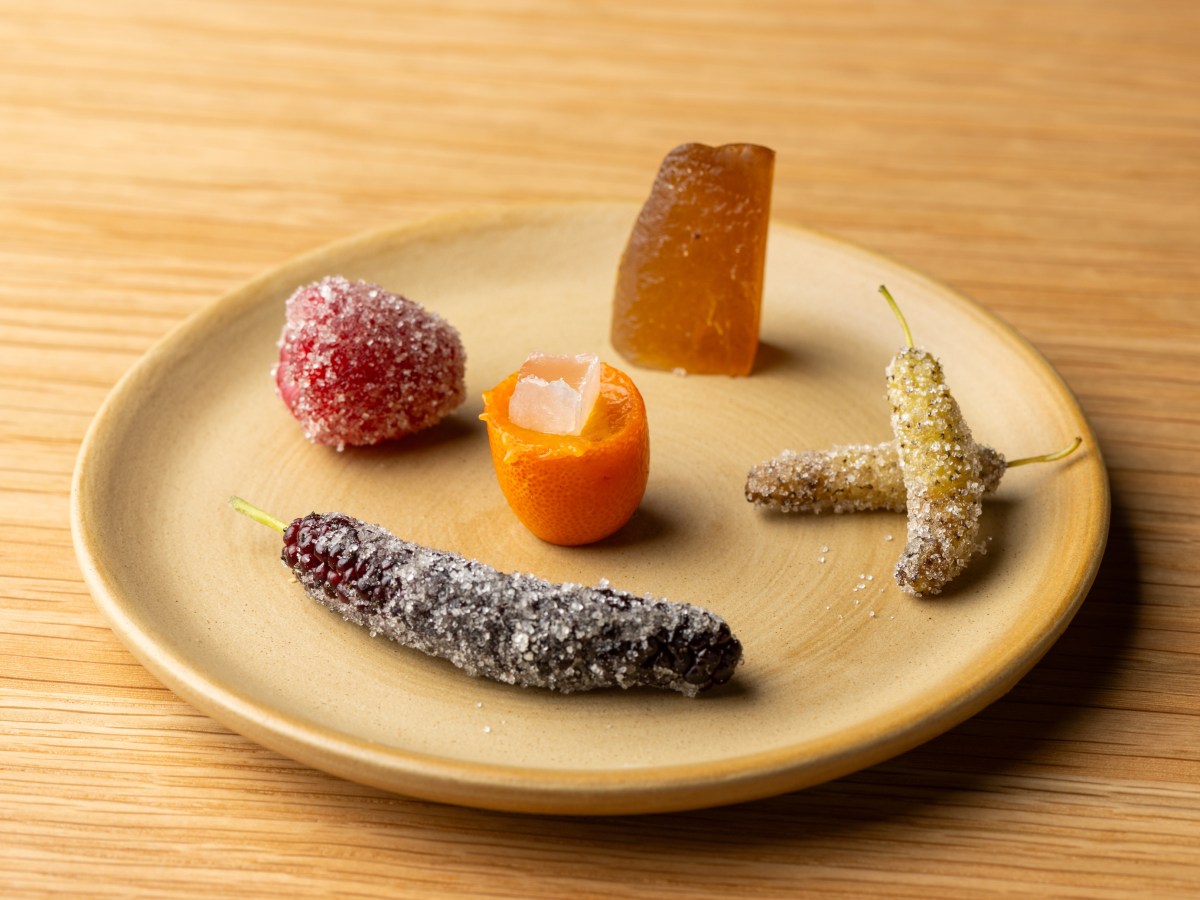
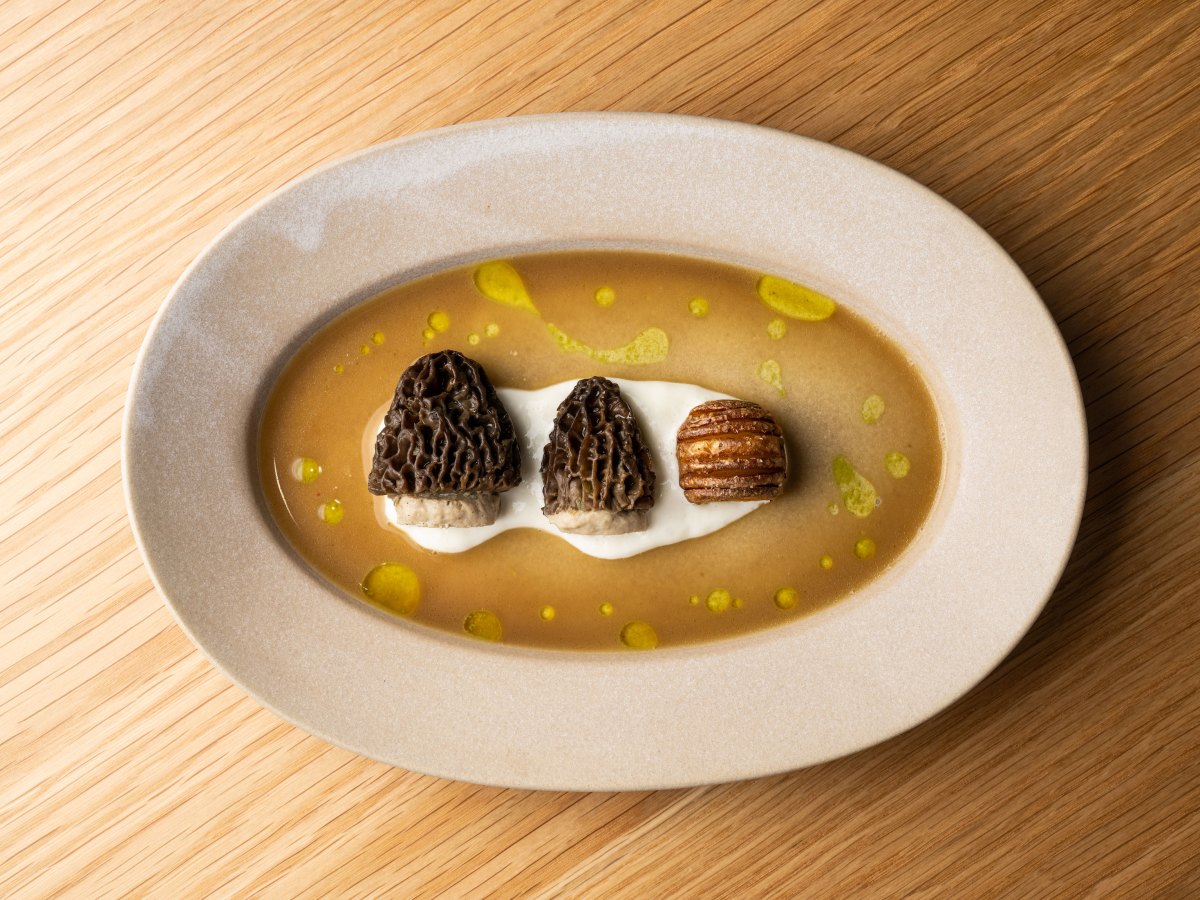
At a recent long Sunday lunch—an unsung and fantastic way to spend a weekend afternoon—the meal opened with a brown rice puff topped with avocado, watermelon radish, and serrano chile. A delicate nasturtium sandwich followed. Then yuba skin and mushrooms. The menu expanded into a tour of California’s landscapes: nopales and yerba santa sourced from the desert near Indio; Monterey seaweed paired with tofu and caviar; artichoke hearts surrounded by spring vegetables; vermilion rock cod scented with saffron and served alongside sweet shrimp; lamb perfumed with wild California bay leaf; a Pinot Noir from Reeves in Sonoma’s Dry Creek Valley; Raj Parr Chardonnay.
If you have any working knowledge of the aforementioned, you’ll get this: It was like an exceptionally well-plotted California culinary road trip in tasting-menu form. And if you’ve been around fine dining for more than a decade, you’ll get this too: The comparison that came to mind was Michel Bras, the legendary French chef whose cooking has long been inspired by the landscapes around him.
Wonho Frank Lee
That shouldn’t come as a surprise. Long before local sourcing became restaurant boilerplate, Patterson helped define modern California fine dining at Coi in San Francisco, where he became the first chef in the city to earn two Michelin stars. The restaurant influenced a generation of chefs. Anthony Bourdain famously admired his cooking. Yet Patterson’s career has always been about more than accolades. Through projects like Locol, his partnership with Roy Choi aimed at bringing chef-driven food to underserved neighborhoods, he consistently asked bigger questions than most chefs. The sense of purpose still feels present at Jacaranda, though it wears its values lightly. While Patterson continues to limn the boundaries of regional modern California cooking, he also employs people who came through the career-development arm of the Locol operation. What lingers most isn’t ideology but hospitality. Servers wear suits despite the raucous soundtrack. There’s a welcome formality layered over all the fun.
Across town, another accomplished chef is making a surprisingly similar argument. Marcus Jernmark’s Lielle, named after his daughter, arrives in Los Angeles after a career spent leading some of the world’s most celebrated kitchens. The Swedish chef’s résumé includes Stockholm’s Frantzén, Singapore’s Zén, and New York’s Aquavit—restaurants that helped define modern Nordic fine dining. Yet rather than opening a luxury showcase, Jernmark has chosen something more personal. Like Jacaranda, Lielle asks diners to trust the chef. Like Jacaranda, it is rooted in a singular point of view. And like Jacaranda, it arrives at a moment when conventional wisdom suggests tasting menus are becoming relics. Maybe that wisdom is wrong.
Andrea Jernmark
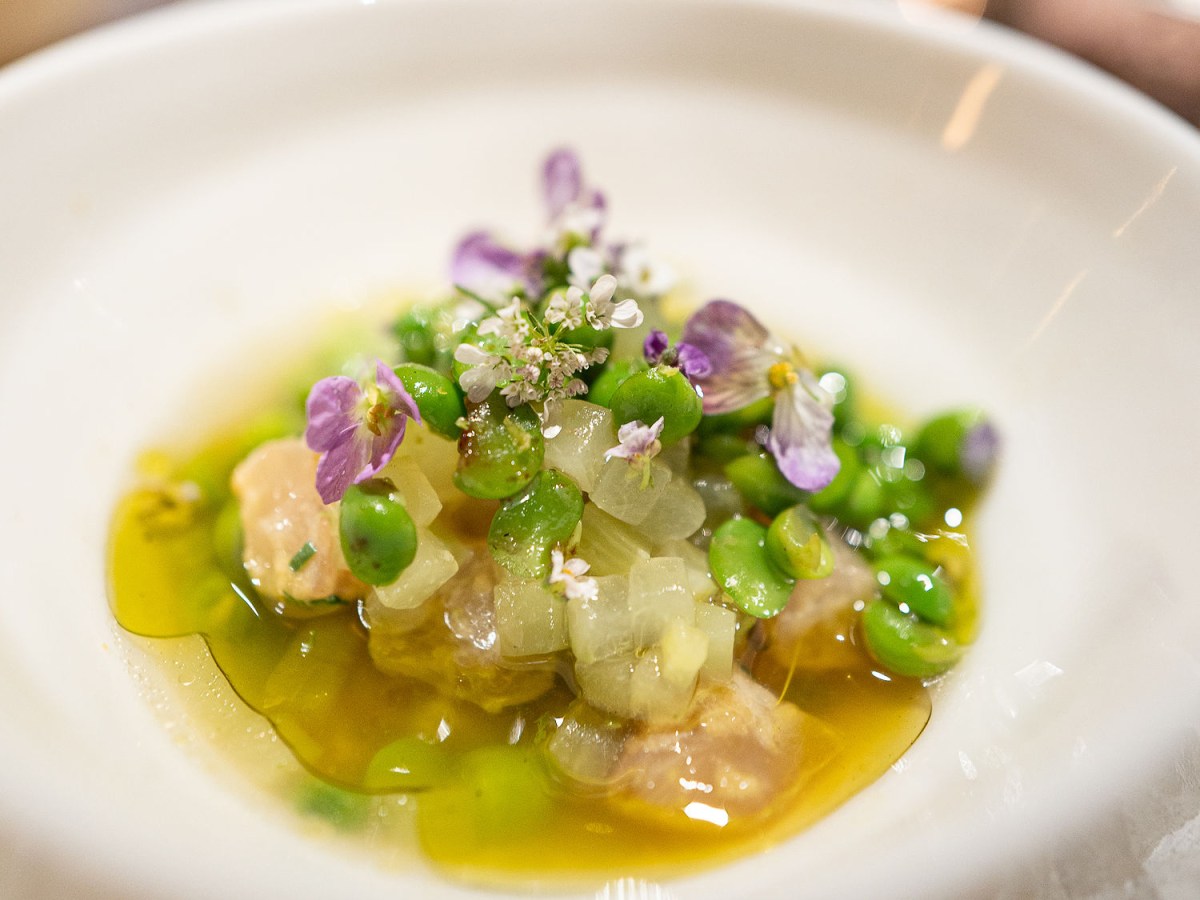
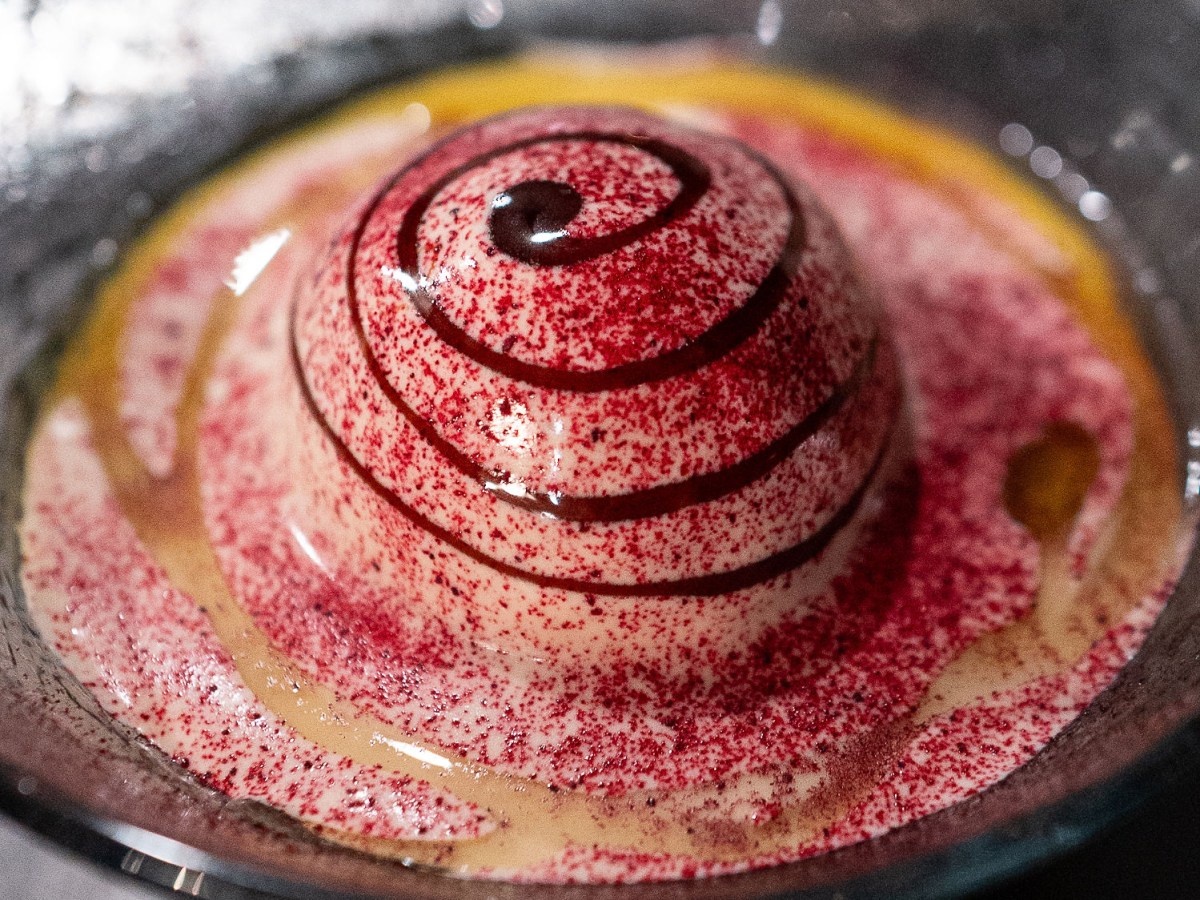
The dark, brooding room felt energetic on a weekday night, filled with couples and groups of young diners eating anything but branzino. The staff wore dark clothes in the shadowy space but were warm and effusive at every turn, making you feel hugged in a way that is too rare in the make-it-up-as-you-go-along service culture of many Los Angeles restaurants. The dishes weren’t twee or tiny, as tasting-menu clichés go, but served in vessels large enough to allow for a good six or seven bites of dishes like aged striped jack with kombu, peas, fresh wasabi, and gooseberry. Abalone and Delta asparagus with fermented white asparagus sauce dotted with caviar added up to a fleeting seasonal coastal indulgence. As at Jacaranda, where the lamb was earthy and deeply flavored, Lielle offered its own resonant meat course: pine-grilled squab with hazelnut miso, smoked matcha butter, and black truffle jus. Pillowy bread. Cultured butter. Nothing obvious. Everything comforting and deeply satisfying.
Of course, the tasting menu has become an easy target. Too expensive. Too precious. Too long. Sometimes those criticisms are deserved. Yet I wonder if we’ve confused dislike of bad tasting menus with dislike of the format itself. After all, people still spend hundreds of dollars on concert tickets, sporting events, theater performances, and ballet. Nobody expects those experiences to be customized around individual preferences. We attend because we trust talented people to create something worth experiencing.
Judging from the past 15 or so meals I’ve had in Los Angeles and other cities throughout the West, I’ve been offered variations of branzino, roasted chicken, crudo, Little Gem and radicchio salads, and toasted bread topped with things at Italian, Portuguese, French, and other restaurants, because those dishes are the kinds of foods people, including me, want to eat. That is lovely, and most often exactly what I want. Still, the sameness can become a bit boring, albeit serviceable, and honestly close to the kind of food I can make myself within about 10 percent of the quality and for three-quarters less money.
Yes, I’ve been transported and nourished and tended to for 90 minutes to two hours at around $140 a pop for the appetizer, entrée, drinks, and dessert formula. So when tasting-menu restaurants open in this economic, cost-of-living, zeitgeist-y moment charging $150 to $300 per person before tax, tip, and drinks, one tends to calculate the value of the meal: culinarily, culturally, emotionally, and from a time-spent perspective, not to mention factoring in the satisfaction quotient. Menu math, like so much other lifestyle math, is expensive math these days.
Andrea Jernmark
These are not Noma prices, nor FIFA prices, nor Knicks playoff-ticket prices, for that matter. But as a once-in-a-lifetime, or at least once-in-a-quarter-lifetime, experience, is a tasting menu of some cost worth it? Ask yourself: Do you do it for sustenance? Or do you do it for the memories? For having the definition of food explored intellectually and deliciously? Deliciously is non-negotiable at these prices. A casual dinner with appetizers, entrées, dessert, and drinks at a quality restaurant can easily approach half the cost of a tasting menu, once you figure in supplements and alcohol. The difference is that one is designed to feed you, while the other is designed to transport you. And if price truly is an object, does anyone really need to order an essentially forgettable $40 branzino for the seventh time?
At a moment when so much of life is fragmented, customized, and optimized, there remains something deeply appealing about sitting down, relinquishing choice, paying attention, and allowing someone else to tell a story from beginning to end. Back in 2009, Patterson wrote an essay for Bon Appétit that included one of the best descriptions of cooks I’ve ever read. “Cooks are not complicated creatures,” he wrote. “A steady stream of articles, books, and television shows have attempted to ferret out our secrets, which is a little like using quantum physics to understand a transistor radio. We like food, dive bars, and loud music, basically in that order.”
Maybe it’s the same for diners, regardless of the years of scholarship and training that go into putting together a tasting menu that hits, course after course. In the final analysis, Jacaranda and Lielle are both exceptionally delicious, eliciting more sustained yums, affirming nods, and more-ish plate cleaning—all without the palate exhaustion and rich-food fatigue that often accompany such meals—than most restaurants I’ve visited this year.
And what do I gain from these meals? A reset of my ability to understand and process food. In the beautiful plating, the considered exploration of texture and sourcing, and the sustained attention the format asks of you, there is novelty—a hard-to-find sensation in this overly stimulating virtual and actual world. It slows me down, grounds me, connects me to my senses, and deepens the pleasure of sharing a meal with a friend. Unlike many of the meals I have in the course of my job, or simply while living and enjoying the company of others around the table, at Jacaranda and Lielle, I remember nearly every bite.