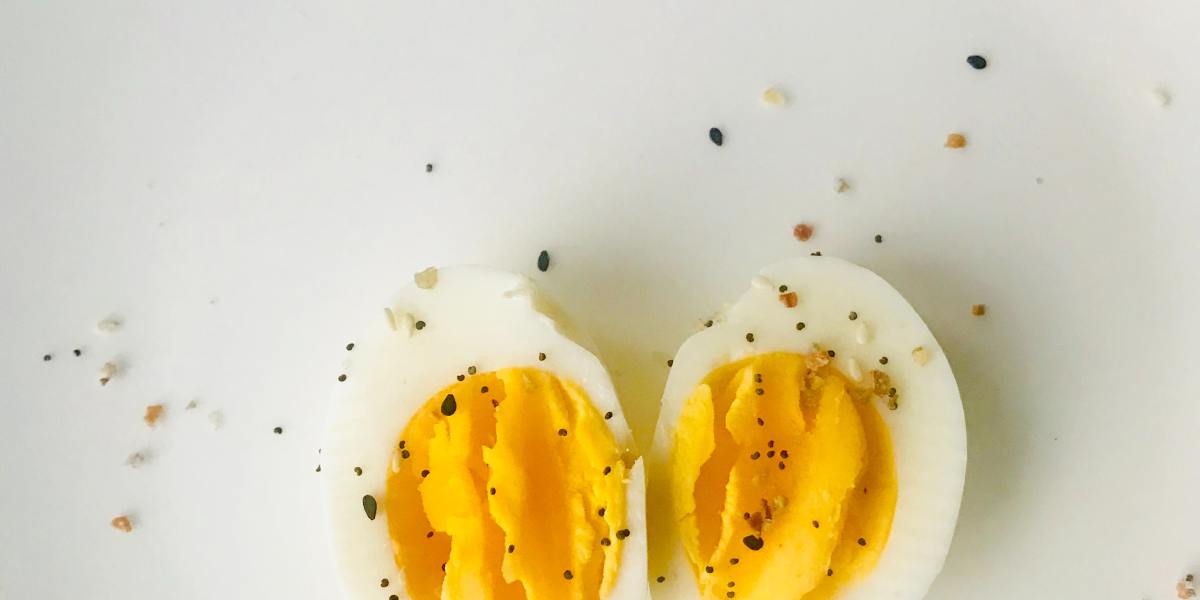
The internet has convinced you that in order to make a good hard-boiled egg, you need to “hack” it. You probably have terrible memories of green-ringed, black yolked eggs from your childhood, and want to avoid the same mistakes as your parents. Know why their hard-boiled eggs sucked so bad? Because they were listening to the “hacks” of their day! Seriously! IRL, hard-boiled eggs are so unbelievably, ridiculously simple to make that once you’re done reading this article, you’re going to be embarrassed. That’s just a friendly warning that you can either run away to spare yourself the shame, or hitch up your big-boy panties and charge ahead. I’m here to boil eggs and chew bubblegum, and I am all out of bubblegum.
Step 1: Gather your equipment
Eggs
Pot, preferably with lid
Water
Slotted spoon
Mesh strainer or colander
A whole bunch of ice cubes (optional)
Step 2: Boil water
Since you honest to God need help with this, I’ll break it down further. If you’re cooking a lot of eggs at once, you need a big pot with enough water that it will cover the eggs once they’re in the pool. If you’re only doing one or two, a small pot is fine.
Step 3: Boil an egg
Using a slotted spoon (for a few) or a wire mesh strainer (for a lot), gently lower the eggs into the boiling water. Back away from the pot. Do not lower the heat, do not stir, do not add baking soda or salt or any doodads the internet has told you to. Hands up, walk away, and set your timer for exactly 10 minutes. This would be a nice time to iron your clothes, or go do your morning business.
Step 4: Stop boiling that egg
This is where all the badassery happens, and by that I mean the 15 seconds of actual work you have to do.
First, start running cold water. Then grab the pot and drain the eggs into your strainer under the cold water because you want to get those cooling down ASAP. Put the pot in the sink, toss the eggs back in, throw the ice cubes on top, then add more cold water to cover the ice. This will stop the eggs from cooking immediately, meaning creamy yolks with no sulfur rings. Shocking (that’s what this process is called) makes up 98 percent of the success level in the egg game.
If you don’t have ice cubes, it’s OK. Just keep running the eggs under the cold tap for a full minute, then put them into the pot and let water continuously run over them for a minute or two.
Step 5: Peel said egg
Depending on the age of your egg, it will either slip off easily (older), or hold on so tightly that you’ll consider breaking out the sandblaster (fresher). Here’s how you do this painlessly.
First, drain most of the water from the pot, then put the lid on. Shake the bejesus out of it, so the eggs end up cracked all over, then fill the pot with water again. Start peeling them underwater and if you can’t find a good starting point, just gently rub them back and forth between your hands until you create something to grab onto. What you’re doing is slowly forcing water between the egg and the shell, which is going to loosen it considerably. Then, once the shell starts coming off, the water will easily wash it away.