This Backyard Proves Concrete Can Actually Be Chic
Concrete Collaborative co-founder Kate Balsis brings life and personality into her outdoor space through tonal hardscaping, playful pattern, and lush plant palettes designed to soften every edge.
Aaron Bengochea
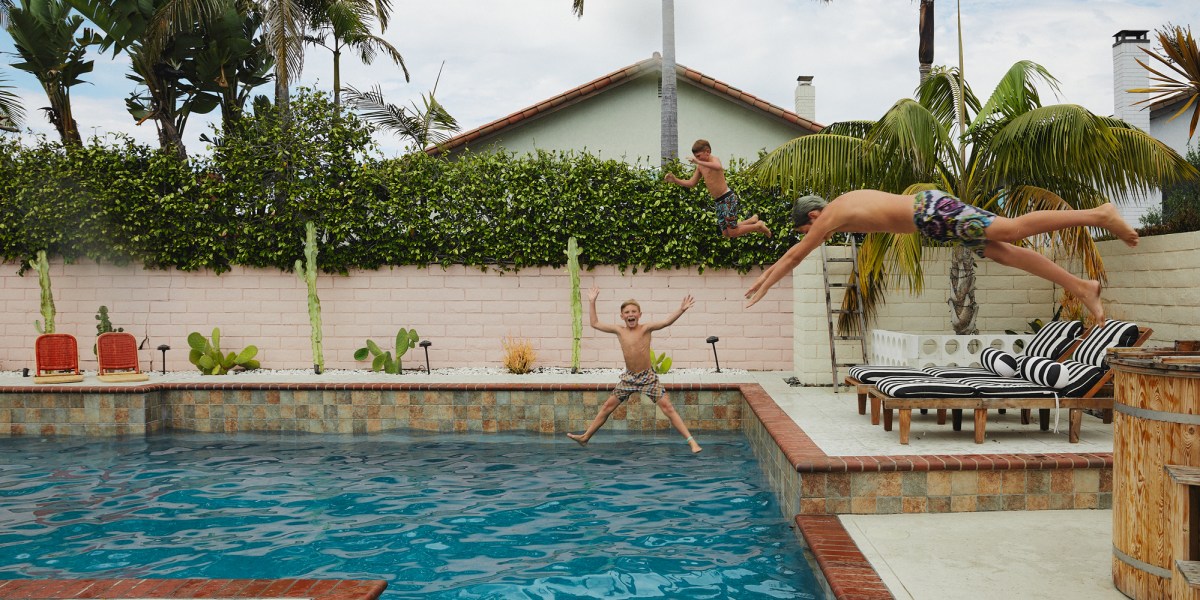
Set just above the coast in Dana Point, this 1970s home unfolds as both a personal retreat and a living design manifesto. For Kate and Chad Balsis—co-founders of Concrete Collaborative—their reimagined property goes beyond renovation, exploring how concrete, when handled with nuance, can feel as warm and inviting as sun-washed wood or linen. The outdoor spaces strike a careful balance: relaxed and a little transportive, with subtle nods to Palm Springs layered into a distinctly Southern California beach town sensibility—where playfulness and restraint coexist, and every detail is designed to feel lived-in and easy to move through.
Aaron Bengochea
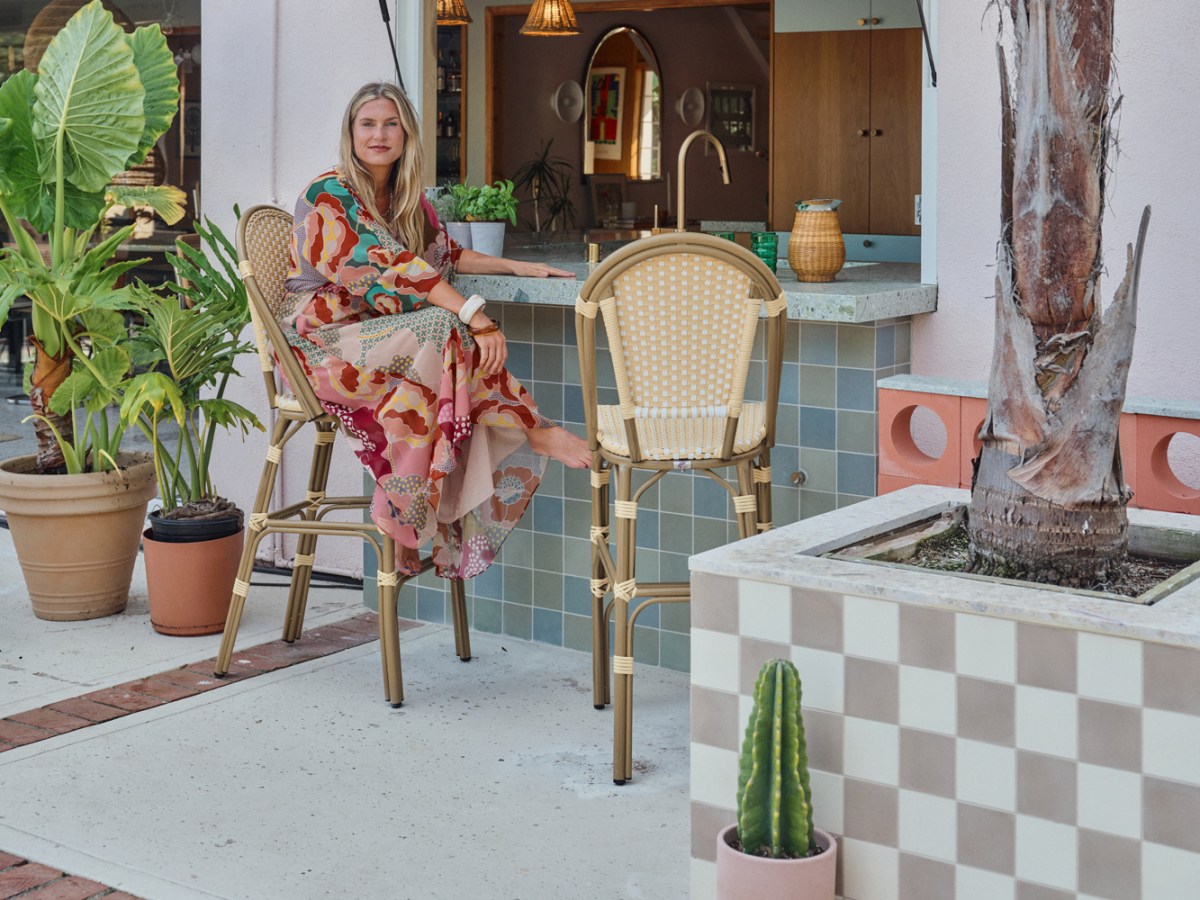
At the Balsis residence, pathways, patios, and planters unfold in a palette that feels equal parts sun-washed and playful—creamy terrazzo underfoot, soft blush tones guiding movement, and patterned tile moments that catch you slightly off guard in the best way. There’s a tactile quality to everything: surfaces you want to run your hand across, edges softened by planting, color layered in a way that feels collected rather than composed.
It’s a space that challenges the long-held idea that hard materials have to feel rigid or restrained. Instead, concrete becomes expressive. Grounding the garden while allowing it to feel dynamic, even a little transportive. The effect is subtle but powerful: outdoor rooms that feel designed for gathering, lingering, and living fully, where texture and tone do as much of the talking as the view beyond.
A Front Yard That Sets the Tone
Aaron Bengochea
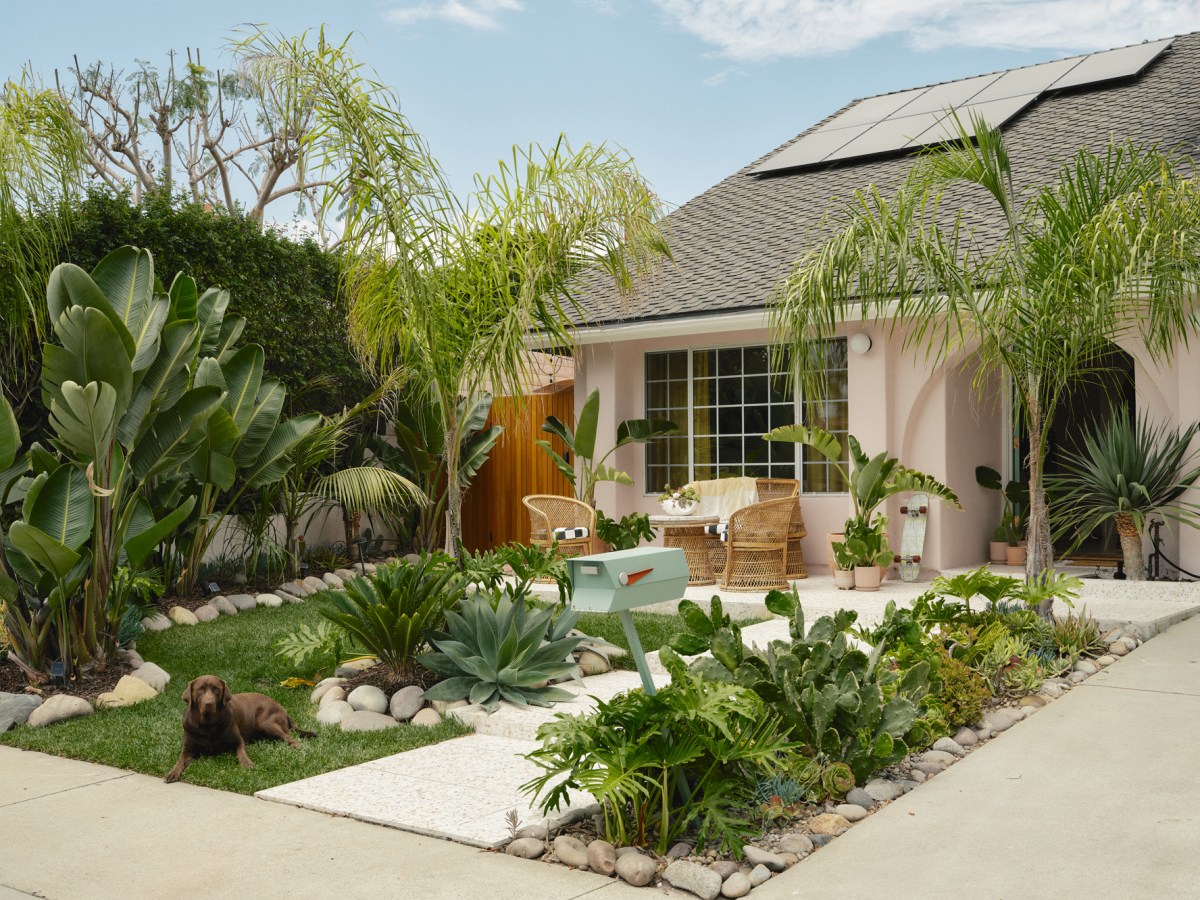
The entry garden does what the best front yards do: It hints at what’s to come without giving everything away. In place of turf, a patio now anchors the space, finished in terrazzo tile that extends directly from the interior, a subtle but effective move that immediately blurs the line between indoors and out. A curved garden bed softens the geometry, filled with river stones, palms, and sculptural succulents.
The palette stays relatively restrained here—creamy alabaster tones underfoot, muted greens overhead—creating a calm, welcoming threshold before the home reveals its more playful side.
The Side Yard, Reimagined as a Working Garden
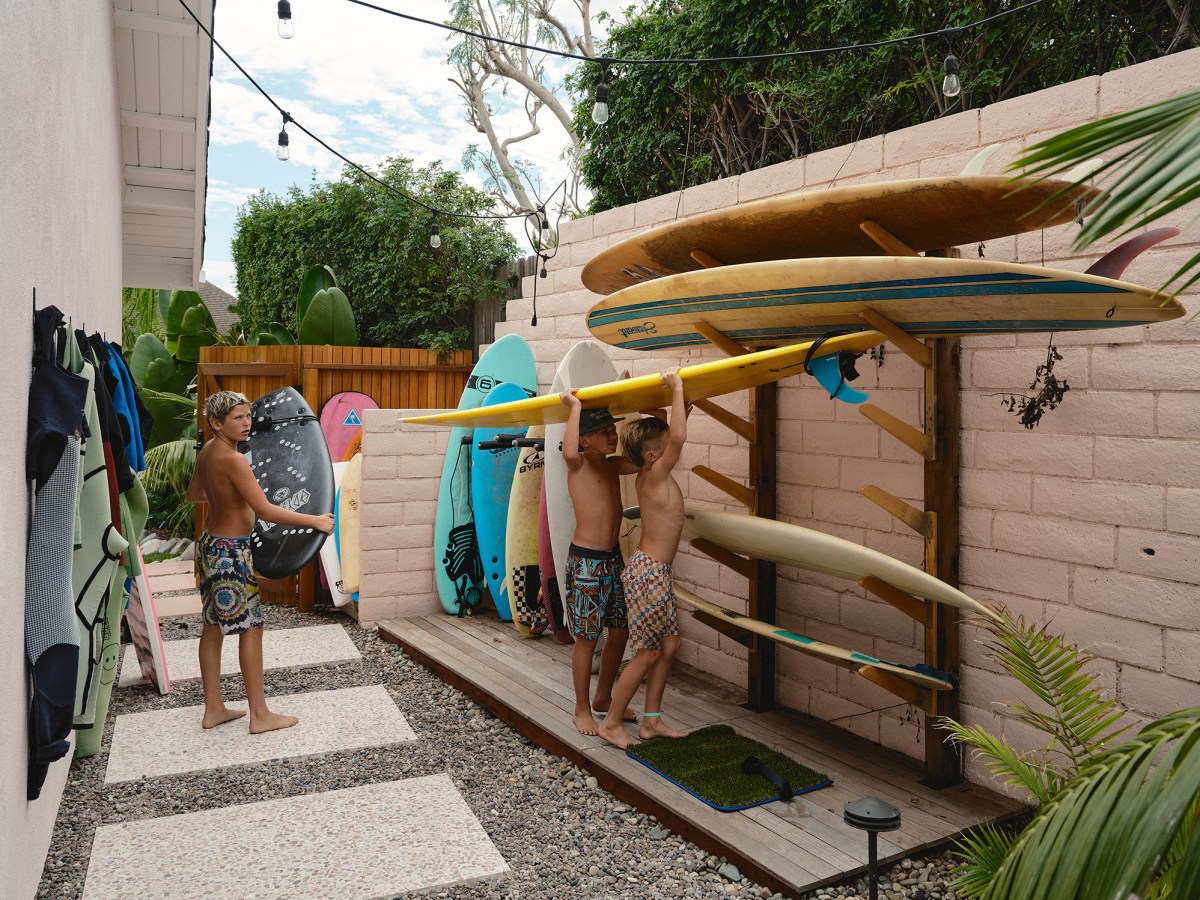
Often overlooked, the side yard becomes one of the most thoughtful zones on the property. “That area is really about transition and utility. It connects the front yard to the pool while also functioning as a place to store boards and rinse off,” Balsis explains.
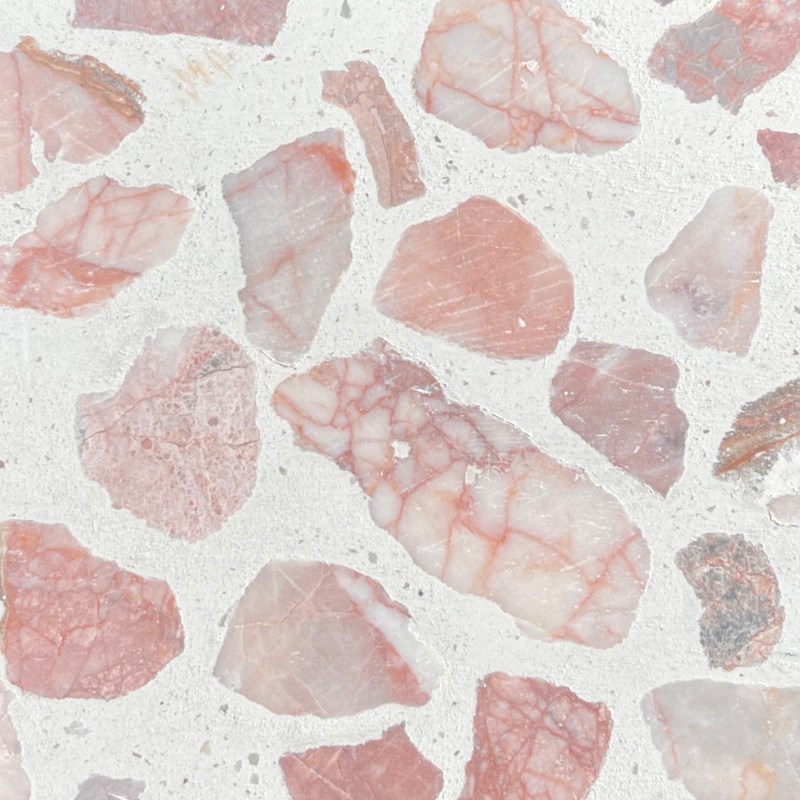
A streamlined potting bench, framed in warm ipe wood, introduces a tactile counterpoint to the surrounding concrete. Underfoot, pink terrazzo pavers guide movement through the space, turning what could have been a pass-through into a deliberate pathway.
Planting plays a supporting role here, softening edges and adding just enough density to keep the space from feeling purely functional.
An Outdoor Shower with Personality
Aaron Bengochea
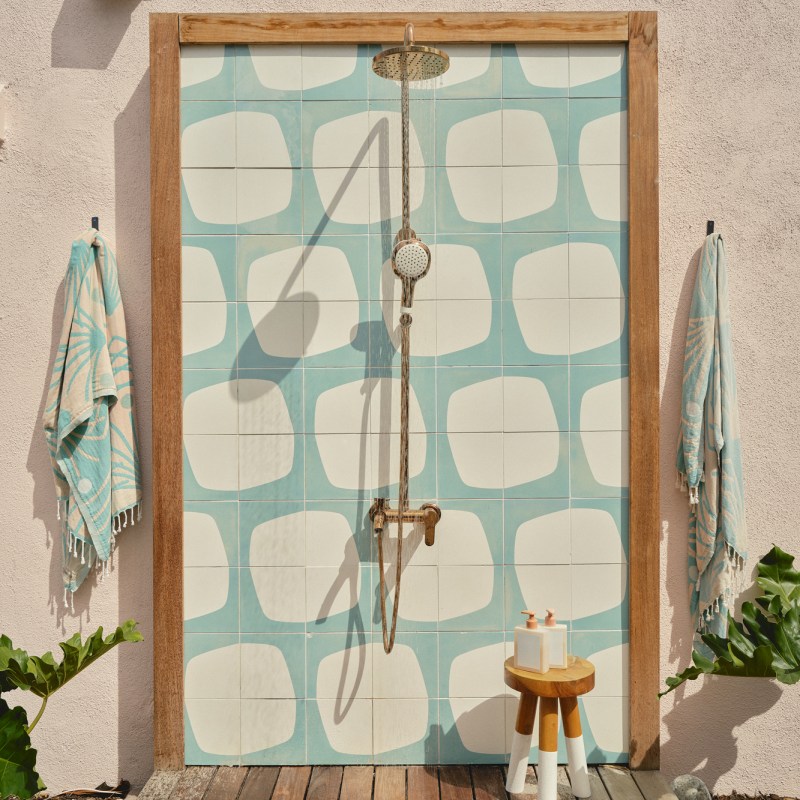
Just beyond, a quintessential California outdoor shower gets a thoughtful upgrade. “It’s usually in the material choices,” says Balsis. “We kept the structure simple with ipe, but added a layer of interest through the tile.”
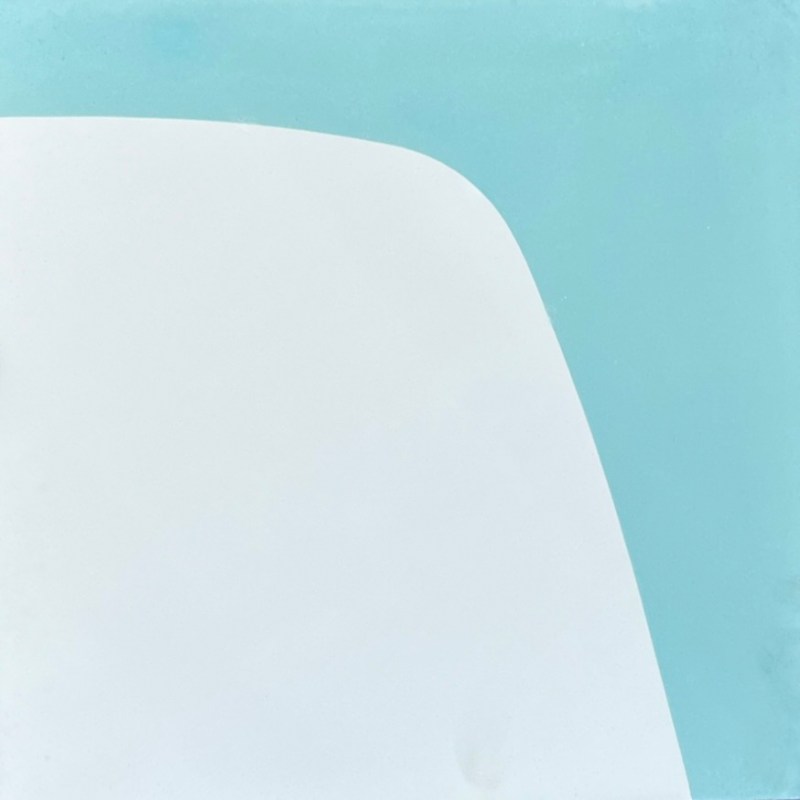
That tile, a soft blue patterned design, brings a sense of play without overwhelming the space. It’s a reminder that even the most practical corners of a garden can hold a bit of delight, especially when texture and color are used with intention.
Planters That Do More Than Hold Plants
Throughout the garden, custom concrete planters act as quiet organizers of space. “Planters help define space in a subtle way,” says Balsis. “They act almost like anchors within the landscape, helping organize different areas without needing walls or barriers.”
Simple in form but finished to match the home’s broader material palette, they ground seating areas, frame pathways, and create moments of pause. Filled with a mix of native palms and sculptural succulents, they strike a balance between structure and movement, softening the harder edges of the hardscape.
A Backyard Designed for Gathering

Charlotte Lea Photography
In the backyard, the energy shifts. The palette deepens, the layout opens, and the home’s entertaining spirit comes into focus. A series of zones—dining area, bar, and conversation pit—unfold across the yard, each defined by subtle shifts in layout and material. Overhead, trellises introduce height and dappled shade, guiding movement from one space to the next while reinforcing a sense of progression. “It’s really about comfort and flow,” Balsis adds. “When a space feels easy to move through and offers a few different ways to gather, it naturally draws people in.” Underfoot, concrete pavers provide continuity, while layered furnishings including woven textures and low-slung seating echo the ease of indoor living.
Softening the Edges: A Plant Palette with Purpose
Aaron Bengochea
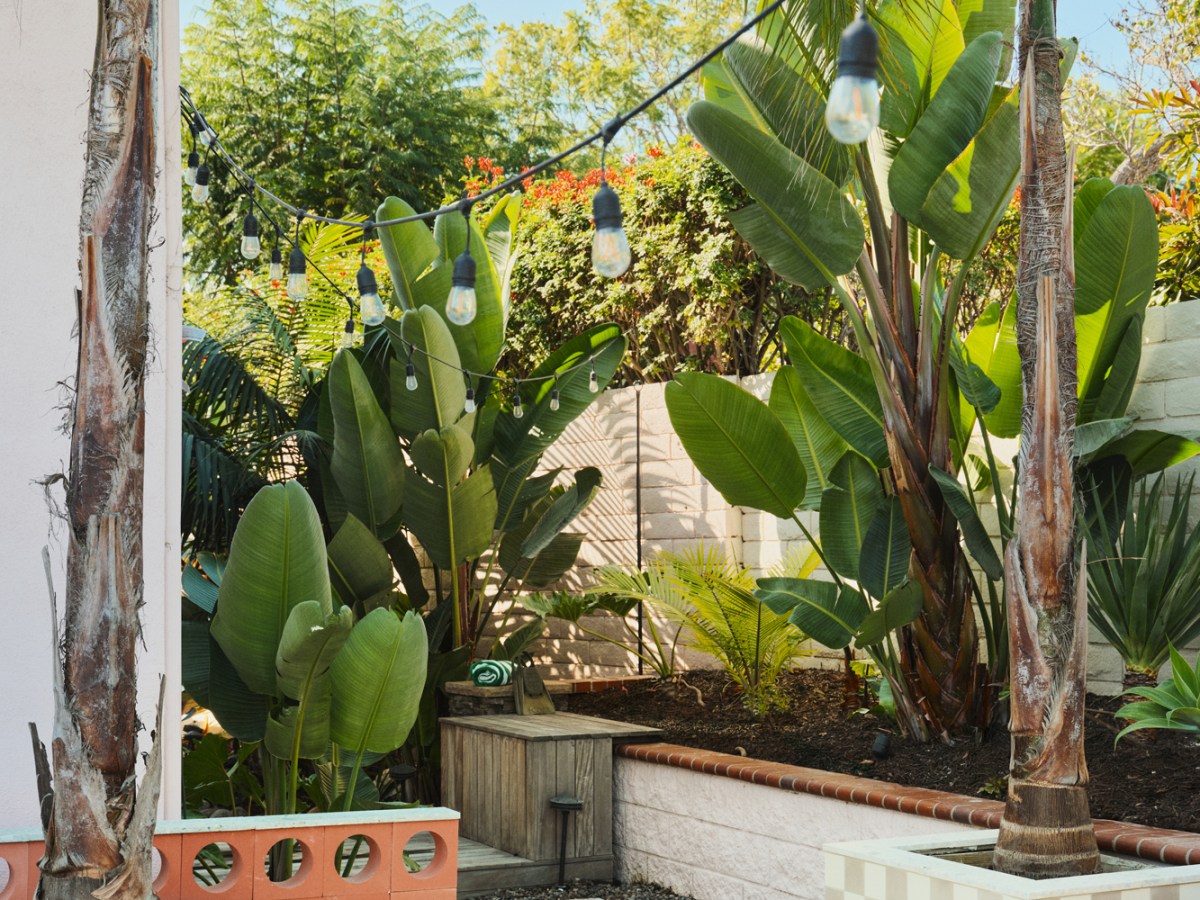
With so much hardscape, planting becomes essential, not as decoration, but as counterbalance. “We leaned into native palms and more sculptural succulents to contrast the cream-toned hardscape,” says Balsis. “The planting adds movement and variation, which helps balance out the more structured materials.” Palms, in particular, play a starring role, their fronds catching ocean breezes and casting shifting shadows across the pale concrete. Succulents introduce color and texture at a lower level, creating a layered effect that feels both intentional and relaxed.
Designing with Confidence
At the heart of it all is a quiet shift in perspective: concrete not as backdrop, but as personality. Here, it takes on a softer, more expressive role: warming in the sun, catching color in unexpected ways, and grounding each space without ever weighing it down. The result feels equal parts playful and polished, where terrazzo glints underfoot, planting spills gently over clean edges, and every surface invites a second look. It’s a reminder that even the most familiar materials can surprise you—especially when they’re layered with intention, a sense of ease, and just enough confidence to keep things interesting.
Material Matters
Aaron Bengochea
Master the softer side of hardscaping.
Start with One Strong Move
Courtesy of Concrete Collaborative
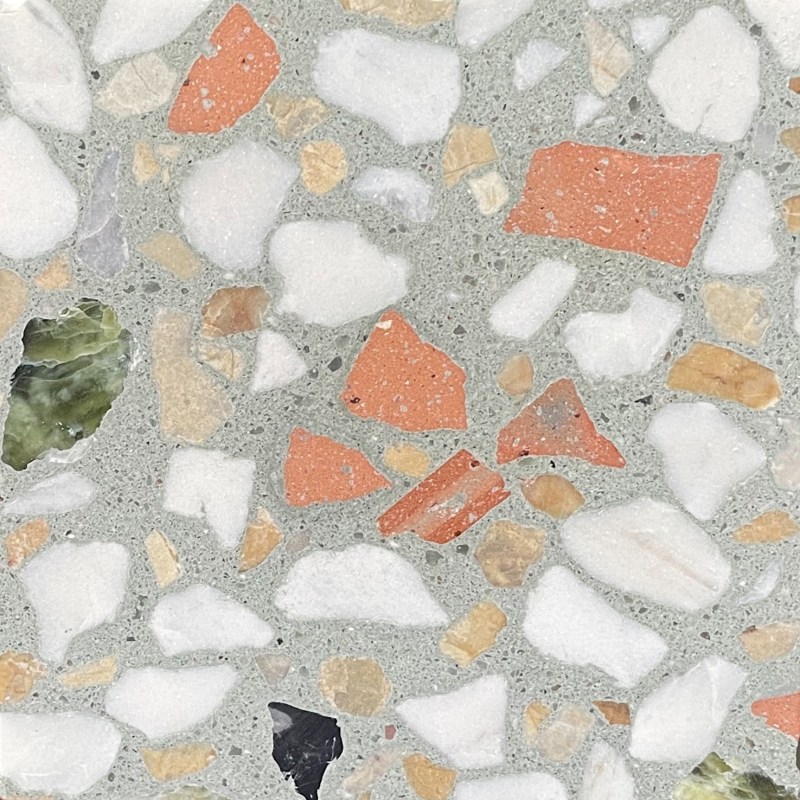
Choose a single application—a patio, pathway, or feature wall—and let it anchor the space. From there, extend that same material or tone to create an easy sense of flow.
Stick to a Grounding Palette

Courtesy of Concrete Collaborative
Build your design around one core hue (like warm alabaster) and repeat it across surfaces. This keeps even bold moments feeling cohesive rather than chaotic.
Layer in Warmth
Courtesy of Concrete Collaborative
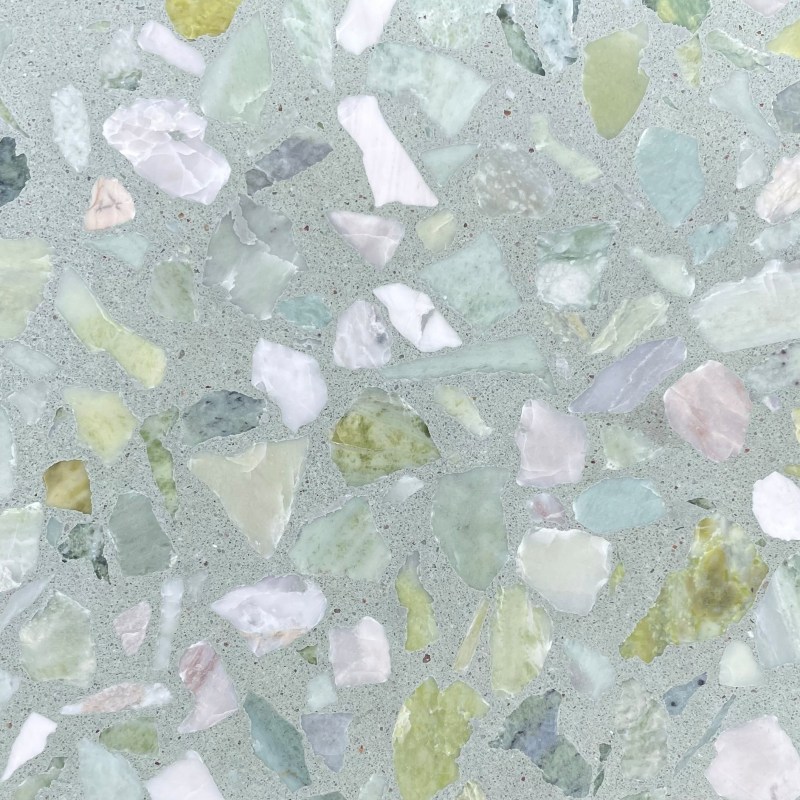
Concrete feels softer when paired with natural elements. Mix in wood, woven textures, and planting to balance out harder edges and add depth.
Play with Pattern (Then Pause)

Courtesy of Concrete Collaborative
Let pattern shine in one or two key areas—underfoot or on a vertical surface—then pull back with solids to give the eye a place to rest.
Use Color with Confidence
Courtesy of Concrete Collaborative
Don’t shy away from saturation. Even a single bold tile moment can transform a space—especially when it echoes tones found in the surrounding landscape.
Blur the Lines

Courtesy of Concrete Collaborative
Carry materials from indoors to out whenever possible. Repetition creates that seamless, indoor-outdoor California flow.
Keep It Edited
Courtesy of Concrete Collaborative
Resist the urge to do too much. A tight material palette and a few well-executed ideas will always feel more timeless than a mix of competing elements.