Chamomile and Colorful Tile, Birds of Paradise and Breeze Blocks, and More Perfect Plant Pairings You Need to Know
Northern California landscape design firm Friday Gardens’ go-to pairings for balancing bold materials in any landscape.
Caitlin Atkinson
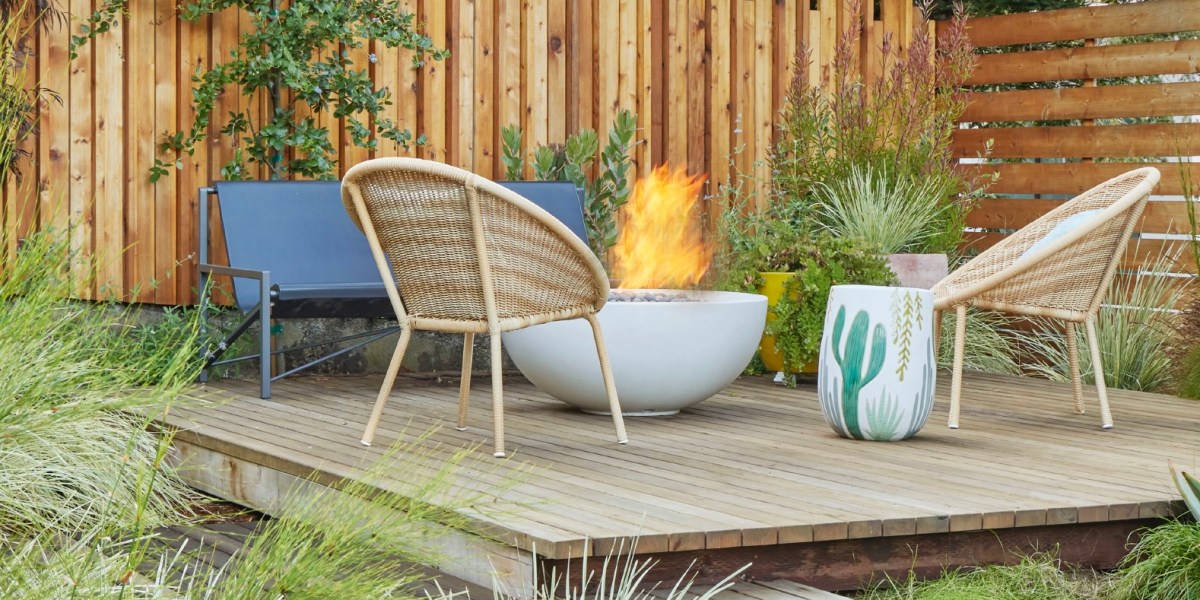
Attention-grabbing elements like dramatic fencing and colorful tile are fun ways to make a space your own, but you don’t want to overshadow the true stars of your garden. Here’s how to achieve the perfect interplay of hardscape and greenery.
Fluted Wood
What to Pair: Lomandra longifolia, Azara microphylla, or a trailing Senecio ‘string-of-pearls.’
Why It Works: Fluted wood already has movement in its vertical rhythm—pair it with plants that echo that softness. Friday Gardens loves “something that flows, that isn’t static,” so tall, wispy grasses or lightweight shrubs help the wall feel alive. On still days, the open form keeps the texture readable; on breezy ones, everything sways together. A cascading string-of-pearls adds a delicate drape that highlights the grooves without hiding them.
Breeze Blocks
What to Pair: Passionflower vine, Ficus pumila, Acacia vestita, or giant bird of paradise.
Why It Works: Breeze blocks bring strong lines and graphic geometry. To complement that structure without competing, Friday Gardens leans toward vines and upright but fluid silhouettes. Passionflower or creeping fig add softness and movement right across the surface, while plants like weeping acacia or Strelitzia nicolai match the blocks’ visual weight but keep things loose and organic.
Colorful Tile Patios
Christine Ciszczon
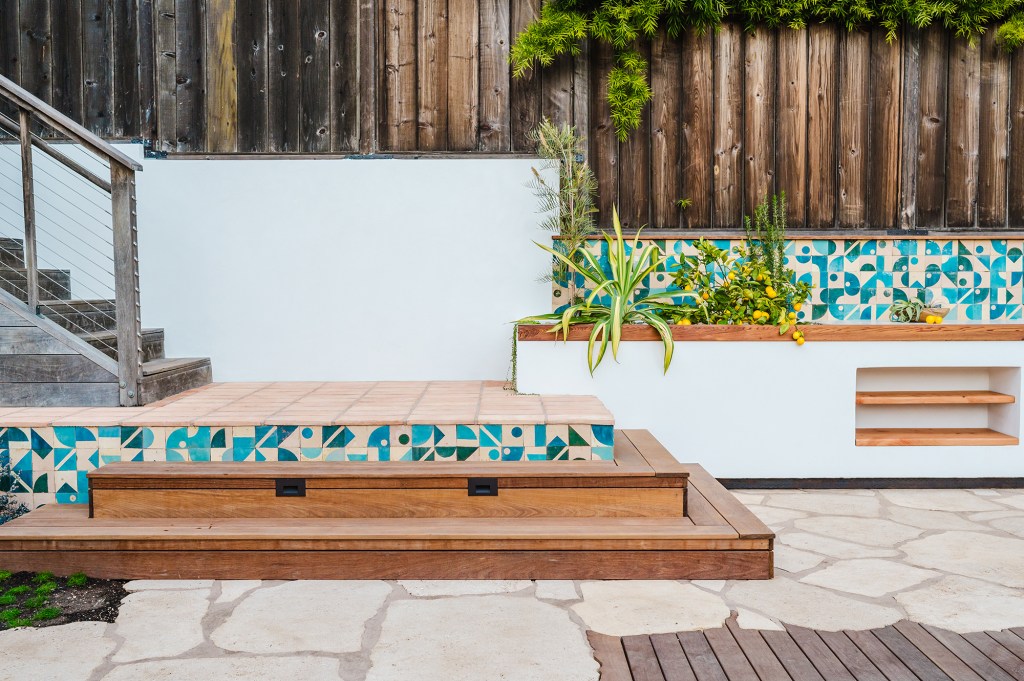
What to Pair: Casuarina glauca ‘Cousin Itt,’ Irish moss, and chamomile.
Why It Works: Patterned tiles do the talking—your plants should do the supporting. Low, draping forms soften crisp edges and visually settle the patio into the surrounding garden. Friday Gardens loves how Cousin Itt “makes the tile look like it’s been there forever,” adding instant patina. Layer in plush groundcovers to blur transitions and pull your eye straight to the color and pattern underfoot.
Slatted Wood
What to Pair: Broad-leafed palms or cactus mixed with slender foliage like Acacia ‘Cousin Itt’ and dwarf conifers.
Why It Works: When boards shift in width or tone, the trick is balancing heft with contrast. Substantial plants ground narrow boards, while fine-textured, flexible foliage keeps the overall look airy as the board size increases. The contrast mirrors the layered woodwork, making the planting feel intentional and textural, rather than busy.
Elevation Changes
What to Pair: Any plant with a cascading or draping habit. Think trailing rosemary, lyrical grasses, or spilling perennials.
Why It Works: Friday Gardens often staggers boards and steps specifically to “notch plants into the negative space.” Instead of treating elevation as a barrier, they use it as a stage. Plants that break the line—softening corners, blurring edges, or tumbling between levels— turn stairs and decks into green-wrapped moments.