
The Drought-Tolerant Garden That Actually Looks Lush All Summer
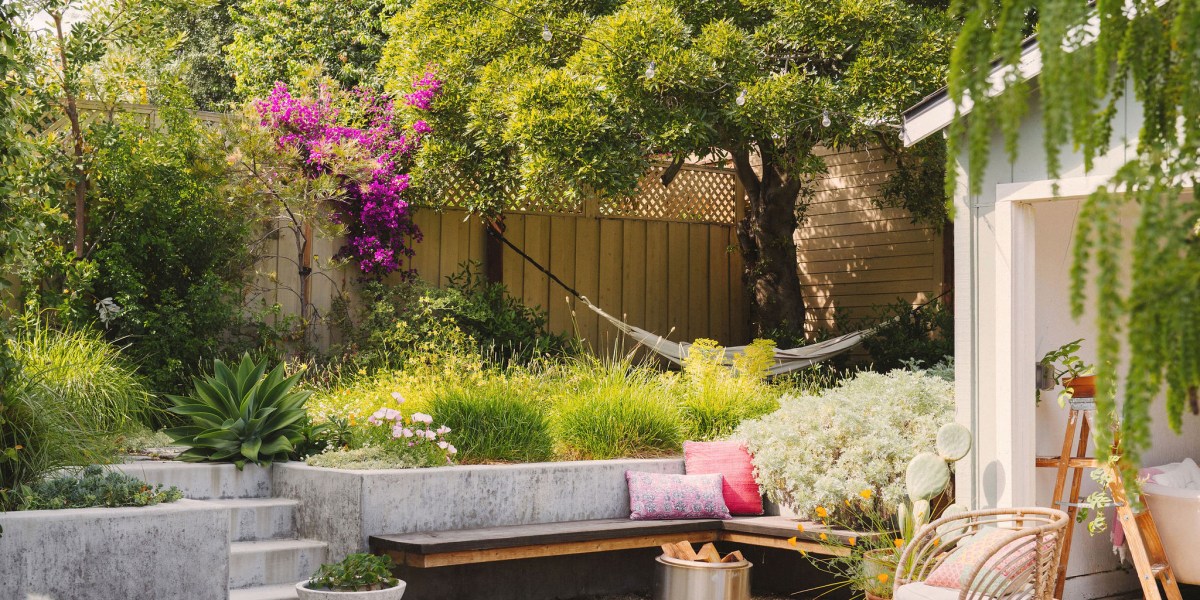
This Oakland garden shows how drought-tolerant plants, layered landscape design, and California natives can create a lush, inviting outdoor space.
Photographer: Bénédicte Lassalle / Stylist: Philippine Scali
For years, drought-conscious gardens were often treated as a compromise: fewer flowers, more gravel, and a palette of plants that prioritized survival over beauty. Not anymore.
In Oakland, homeowner Ariana Wolf partnered with the female-led designers at Talc Studio to create a landscape that feels anything but restrained. Native plants mingle with ornamental grasses, salvaged treasures become gathering spaces, and every corner invites both pollinators and neighbors to linger. The result is a garden that embraces California’s climate without sacrificing softness, color, or joy.
Here are six ideas worth borrowing for your own backyard.
Photographer: Bénédicte Lassalle / Stylist: Philippine Scali
1. Design for Life, Not Perfection
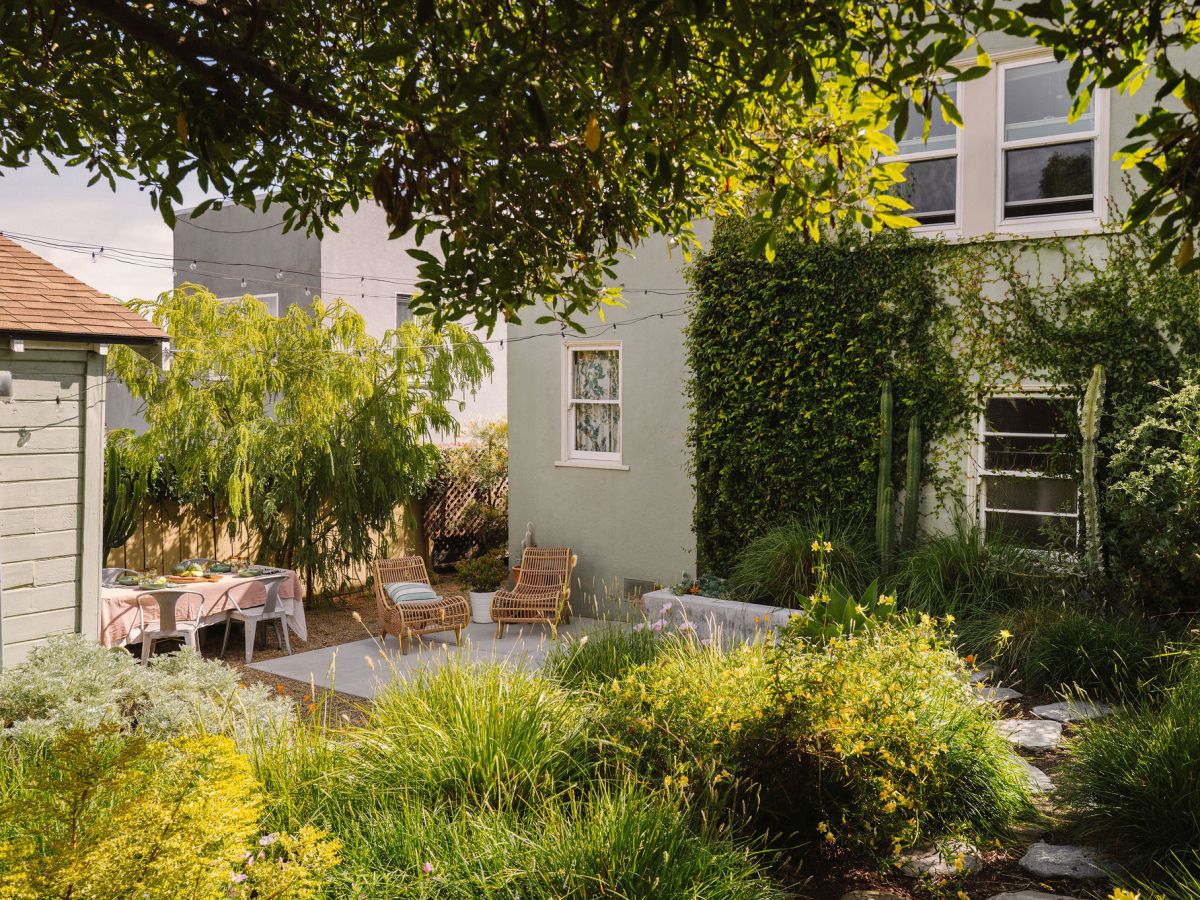
Rather than filling every inch of the yard, Talc Studio focused on creating breathing room alongside purposeful destinations.
“We wanted to make sure there was plenty of space in the garden to roam free and moments of pause,” says Talc Studio. “The space itself isn’t huge, so we had to be mindful and intentional about where we had seating, patio, and garden moments.” That philosophy transformed a modest lot into a series of outdoor “rooms” that feel effortless instead of overcrowded.
Tip: Resist the urge to plant wall-to-wall. A simple bench, gravel path, or open patch of lawn can make surrounding plantings feel even more lush.
Photographer: Bénédicte Lassalle / Stylist: Philippine Scali
2. Layer Low-Water Plants for Maximum Abundance
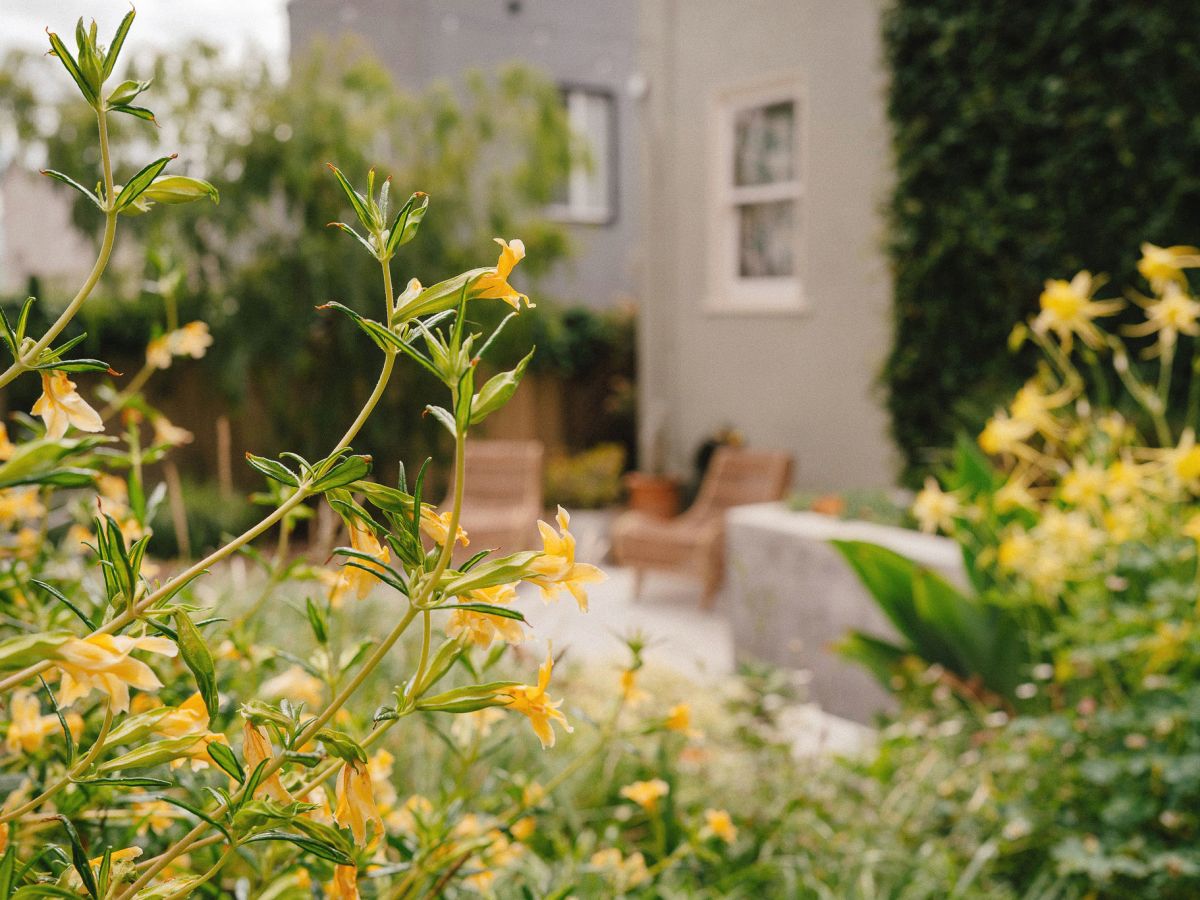
The secret to a full-looking drought-smart garden isn’t extra irrigation—it’s texture. “For us, the defining lush in a drought-tolerant framework is about the overall visual experience,” Talc Studio explains, adding that it’s all about “the layers and textures that different plant combinations bring and evoke.”
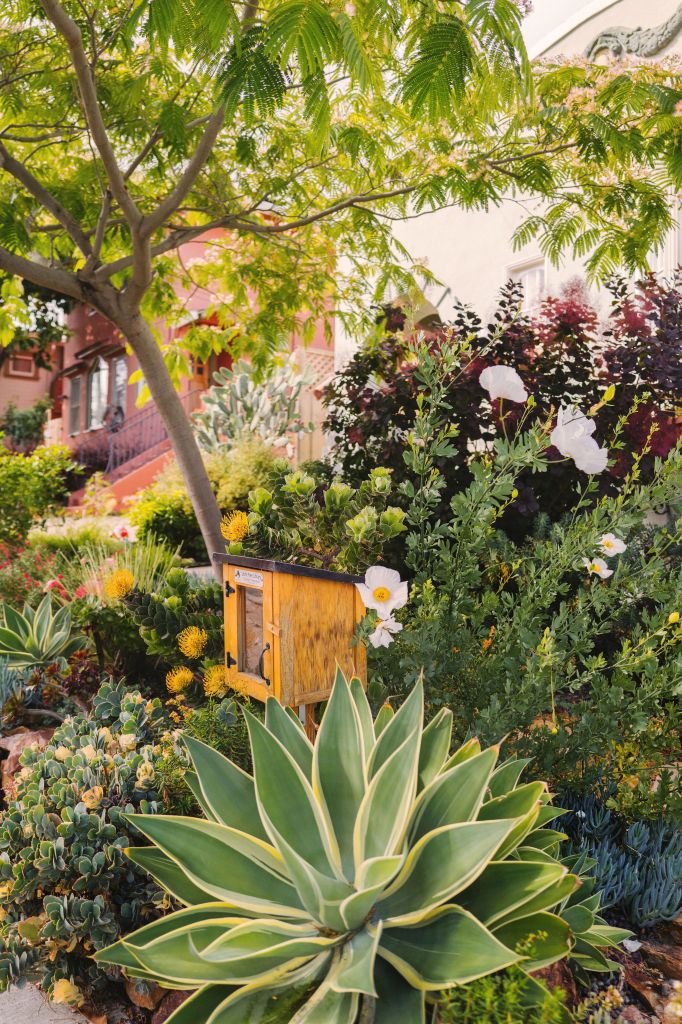
Here, airy Acacia vestita, sculptural euphorbia, and flowing Pennisetum spathiolatum create movement throughout the seasons, while California natives like sticky monkey flower, hummingbird mint, calendula, and towering Matilija poppies weave bursts of color through the meadow.
“We create gardens that feel abundant and layered while remaining well suited to each local climate and long-term water conservation goals.”
Plant Palette to Try:
- Matilija poppy—The iconic “fried egg” flower delivers oversized summer blooms and unmistakable California character.
- Sticky monkey flower—A native favorite that brings vibrant color while attracting hummingbirds and beneficial pollinators.
- Hummingbird mint (Agastache)—Long-blooming flower spikes provide nectar for hummingbirds and add movement throughout the garden.
- Calendula—Easy-to-grow annuals weave cheerful pops of gold through meadow-style plantings.
- Acacia vestita—Soft, feathery foliage adds texture and filtered shade while anchoring the planting design.
- Euphorbia—Evergreen structure and sculptural form provide year-round contrast between flowering plants.
- Pennisetum spathiolatum (Slender Veldt Grass)—Graceful, fountain-like grasses create the movement and layered texture that make low-water gardens feel full rather than sparse.
- California wildflower seed mix—Scatter into open pockets to encourage seasonal blooms that evolve naturally from year to year.
Tip: The secret to a lush-looking drought-smart garden isn’t packing in more plants—it’s combining contrasting heights, textures, and bloom times so something is always catching the light, swaying in the breeze, or coming into flower.
Photographer: Bénédicte Lassalle / Stylist: Philippine Scali
3. Let Found Objects Tell the Story
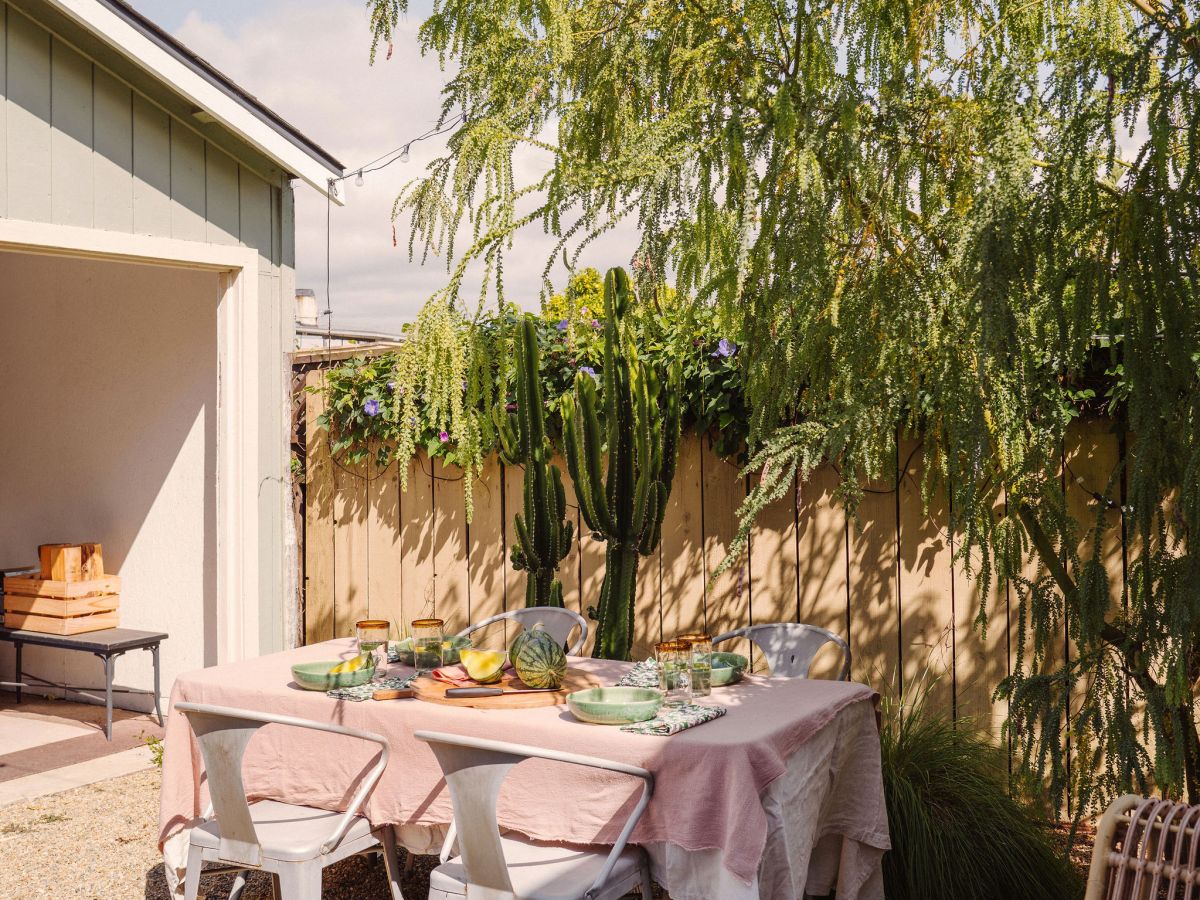
Not every design element needs to come from a showroom. Wolf filled her garden with curb-found succulents, neighborhood cuttings, estate-sale glassware, and an aging garage that became an outdoor living room instead of demolition debris.
“That’s the beauty of creative reimagining,” she says. “You don’t need a budget or a plan. You need vision and a willingness to see possibilities where others see junk.” The result feels collected over time rather than decorated all at once.
Tip: Before buying something new, look for opportunities to repurpose existing structures or incorporate salvaged pieces that already carry history.
Photographer: Bénédicte Lassalle / Stylist: Philippine Scali
4. Build Spaces That Invite Community
Beautiful gardens shouldn’t only be admired—they should be used.
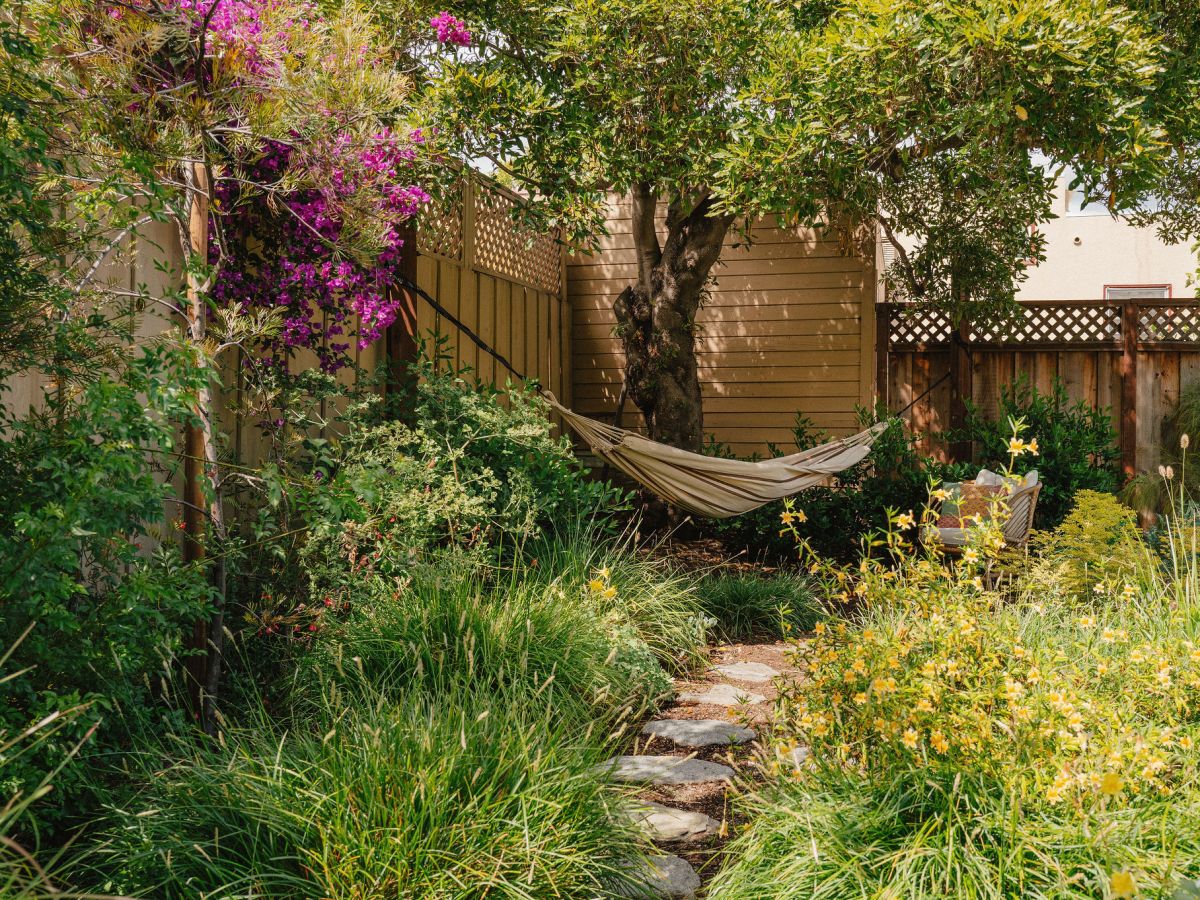
Talc Studio intentionally designed intimate seating alongside flexible gathering areas that can easily shift from quiet mornings to lively evenings. “The goal is to make gardens feel welcoming, usable, and engaging,” the designers say. “The garden becomes an extension of the home and a place to seek refuge and relaxation, as well as a place for play.”
That flexibility has already paid off. “Last year I hosted a backyard concert under the twinkle lights and Oakland night sky,” says Wolf. “A neglected yard turned into a room full of people I love, sharing music and food and each other.”
Tip: Design for your biggest gathering—but make sure the space feels equally comfortable with just one cup of coffee.
Photographer: Bénédicte Lassalle / Stylist: Philippine Scali
5. Leave Room for the Garden to Surprise You
One of the most memorable parts of Wolf’s landscape wasn’t planted intentionally at all.
“When I first moved into the house the morning glories had taken over the yard,” she says. “As I’ve learned to tame them to grow just on one fence top, I’ve grown to love their beautiful blooms.”
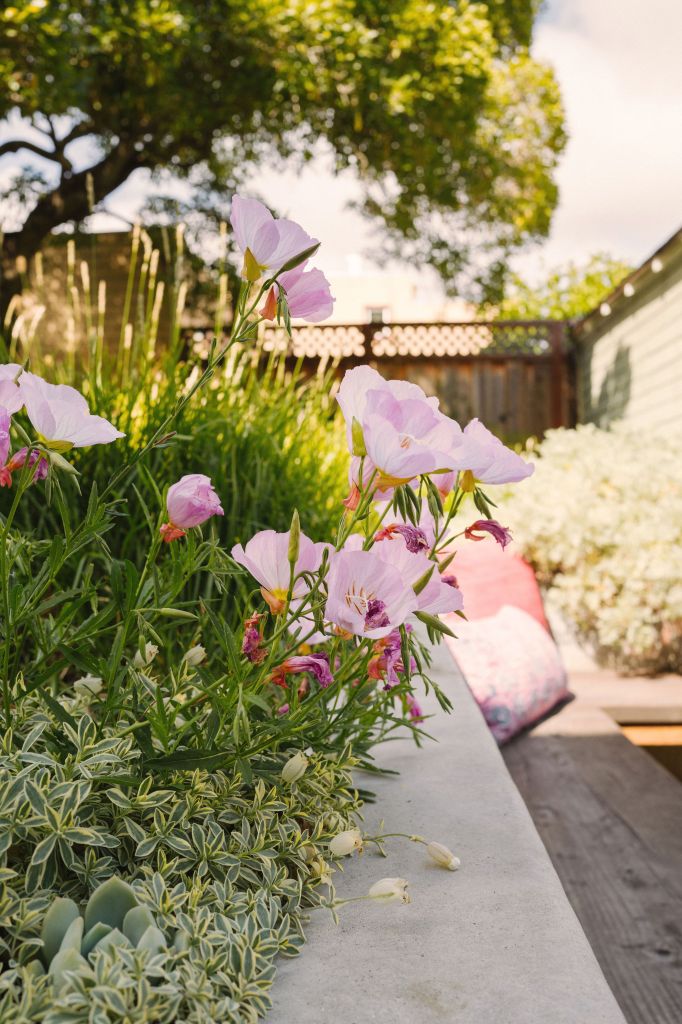
Talc Studio shares that same philosophy. “A garden is not stagnant—nor is ever finished. It is truly an ongoing process that evolves with time.”
Instead of chasing perfection, allow your landscape to evolve season after season.
Photographer: Bénédicte Lassalle / Stylist: Philippine Scali
6. Make Maintenance Part of the Ritual
Perhaps the biggest lesson isn’t about plants at all.
Wolf intentionally skipped an irrigation system, choosing to hand-water instead. “People thought I was crazy. But hand-watering is meditation for me. A ritual. A moment to connect to the plants and the space.”
Today, weekly watering, occasional deadheading, and seasonal editing feel less like chores and more like creative practice. “I bought this house after a divorce and my garden has been a place of healing,” she says. “It is a sanctuary where I slow down, remember who I am, and leave all regrets and loss in the earth.”
In a region learning to garden with less water, that may be the most valuable reminder of all: The richest landscapes aren’t defined by how much they consume, but by how deeply they connect us—to place, to community, and to the rhythms of the seasons.