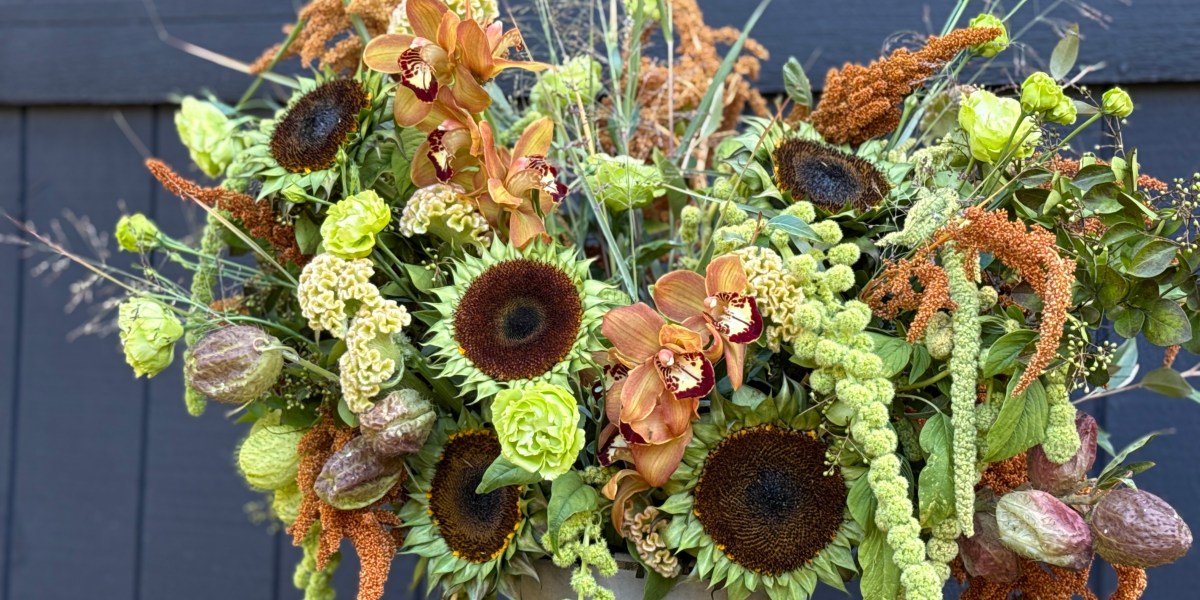
You Need to Be Making Birding Bouquets This Autumn
Bring the garden’s autumn bounty to your outdoor table with arrangements designed to look beautiful and give backyard birds a reason to linger.
Michael Martin | Blossom Bar PDX
Fall may be the garden’s most generous season for floral design. Late-season blooms are still putting on a show, grasses are at their peak, and spent flowers are transforming into sculptural seed heads that look just as good in a vase as they do in the landscape. For Portland floral designer and landscape designer Michael Martin, founder of Blossom Bar PDX, it’s the perfect moment to bring a little of that abundance to the table.
After training at McQueens Flower School in London and working on high-profile weddings and events, Martin brings a polished eye to arrangements that still feel rooted in the garden. His fall bouquets are intentionally loose, textural, and a little wild, using the very plants that can also give backyard birds something to forage. Here, he gives us some tips for creating an arrangement that looks good, feeds the birds, and gets a second life in the garden.
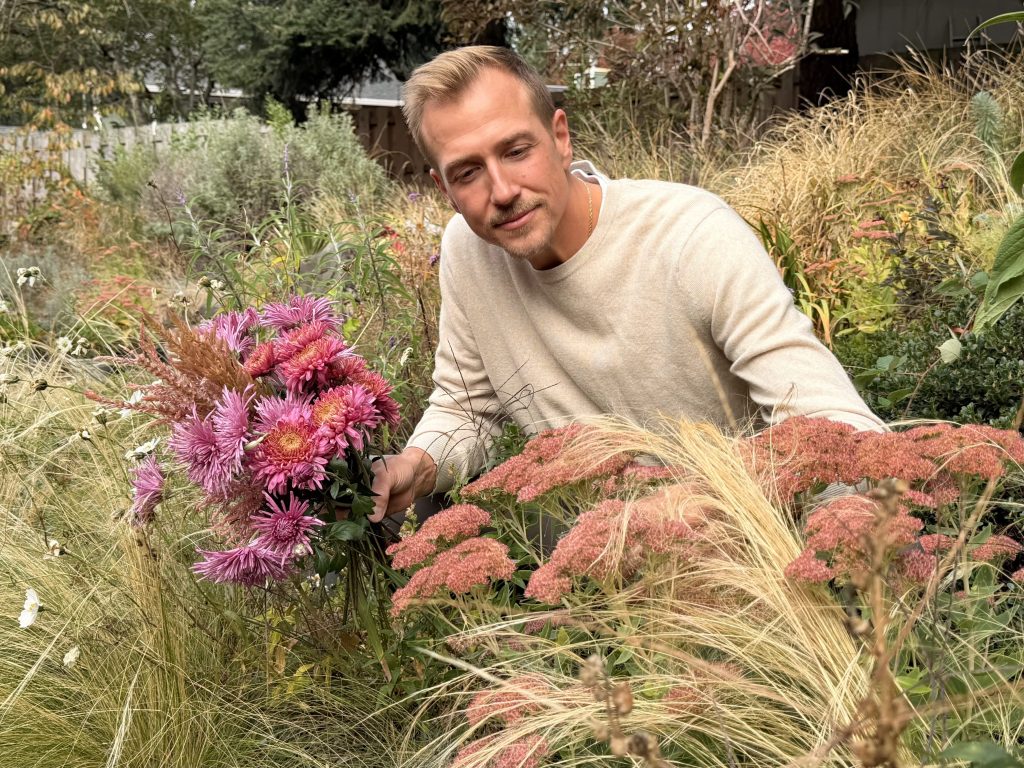
Michael Martin | Blossom Bar PDX
1. Let the Garden Be Your Muse
Before reaching for the shears, take a walk through your garden. Martin looks for the late-season combination of blooms, grasses, fading flowers, and emerging seed heads that gives autumn its particular sense of movement.
“For me, fall is the best time to design,” he says. “My garden is still full of late-season blooms, the grasses are at their peak, and all of those spring and summer flowers have started producing these amazing seed heads.”
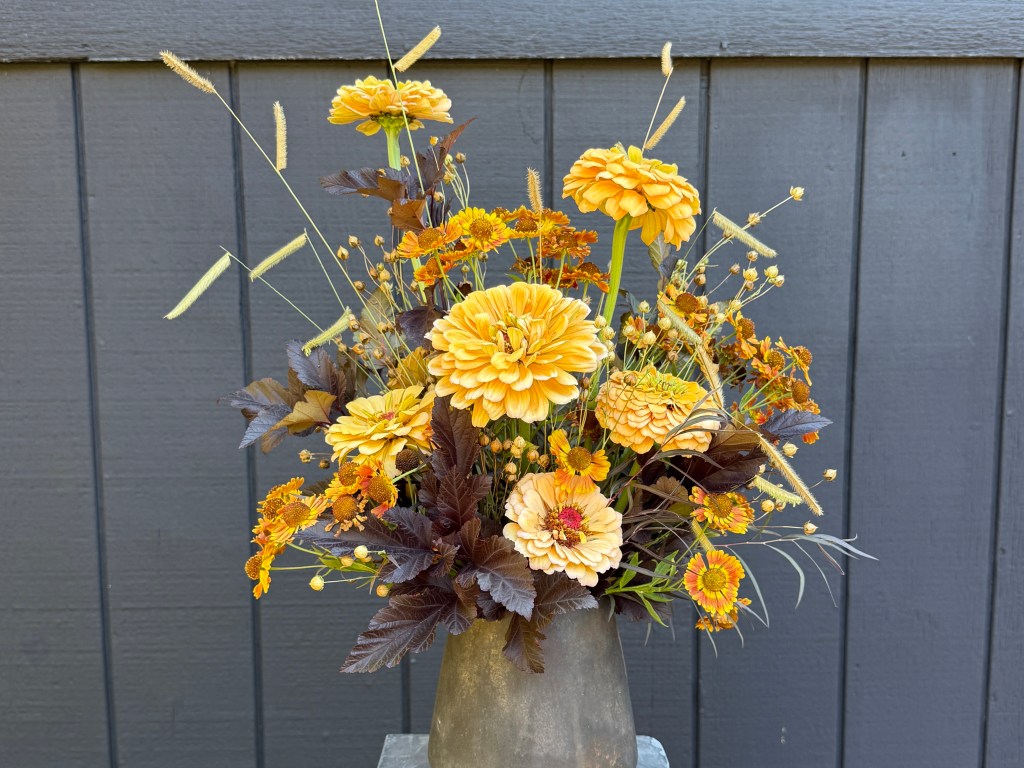
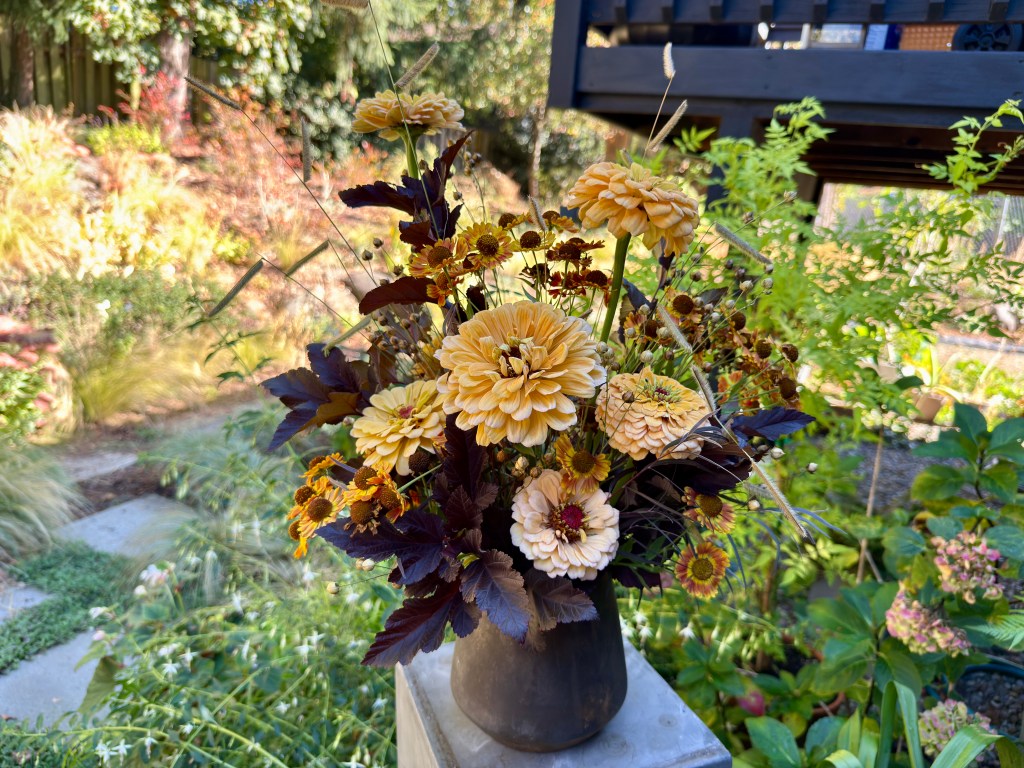
Rather than making everything perfectly symmetrical, gather materials as if you were clipping them on a morning garden walk. Martin favors moody shades of apricot, rusty brown, burgundy, and deep purple, mixed with contrasting textures. Try pairing a substantial spent sunflower with delicate grasses such as grama grass ‘Blonde Ambition’ or panicum. And don’t be afraid of stems that bend, trail, or stick out at unexpected angles. “Movement is so important in a floral arrangement,” he says.
Michael Martin | Blossom Bar PDX
2. Choose Stems with a Second Job
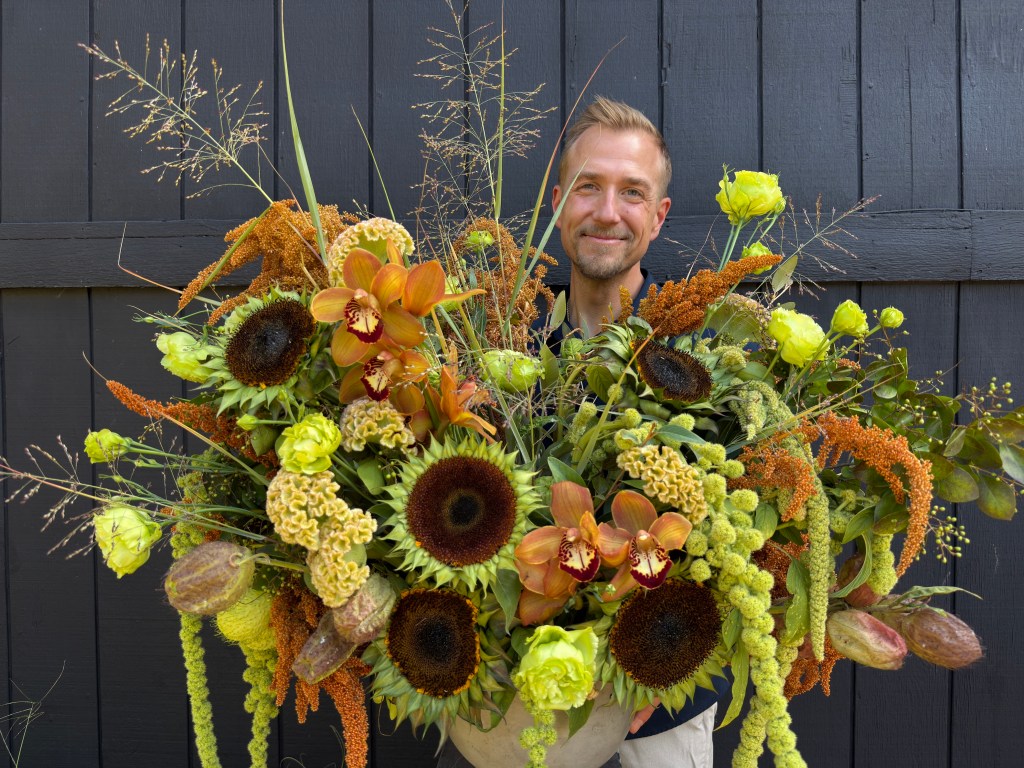
The secret to a birding bouquet? Leave some of the garden’s seed-producing plants intact. Martin especially likes flowers that offer both a beautiful bloom and a mature seed head, including cosmos, echinacea, and helenium.
Spent sunflowers are another favorite, thanks to their sculptural form and abundance of seeds. Amaranth, panicum, and flax add additional shapes and textures.
The bigger shift is in how you see a fading flower. “Instead of cutting everything back as soon as the flowers fade, you start appreciating how beautiful those plants can be in the next stage of their life,” Martin says.
Michael Martin | Blossom Bar PDX
3. Embrace the Wild, Then Edit It
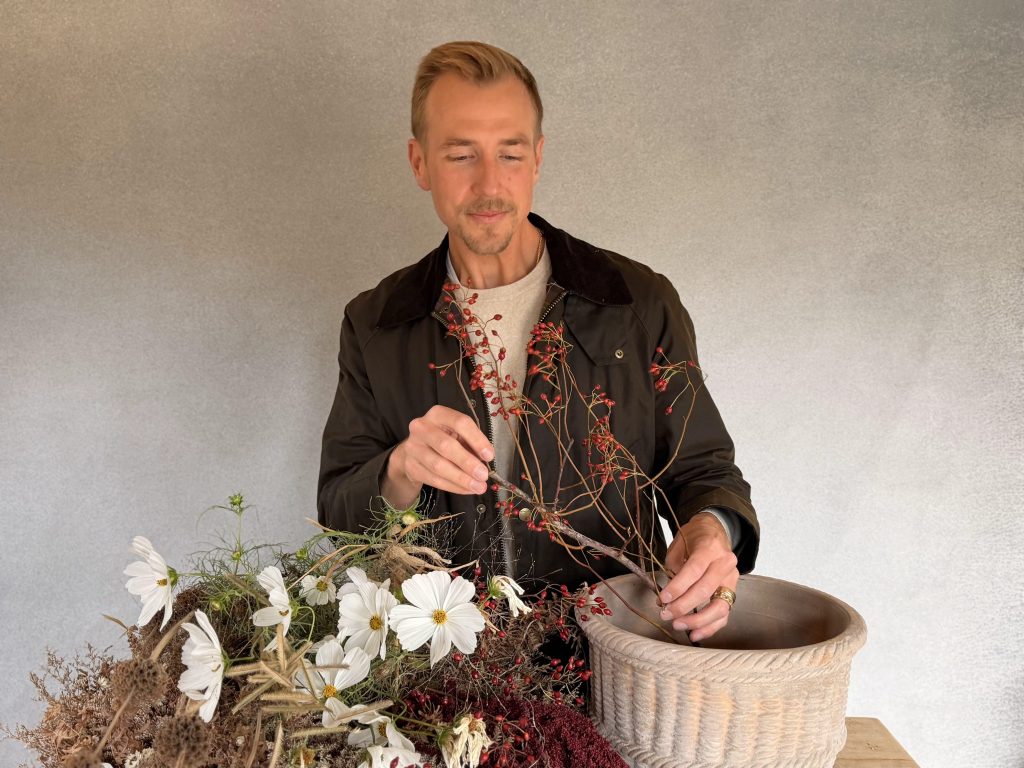
Naturalistic doesn’t have to mean chaotic. Martin approaches a bouquet much like he approaches a garden: with repetition and restraint. “If I’m using a grass, I’ll repeat that same grass throughout the arrangement instead of using several different varieties,” he says. With flowers, he recommends choosing two or three colors and grouping them together to create visual blocks.
Then let the wild stuff happen. Place larger focal blooms on different planes, allowing some to sit deeper in the arrangement and others to project outward. Use grasses and seed heads to bridge those layers and create movement.
For a little extra structure, Martin has a surprising favorite: sedum, or Hylotelephium. Varieties such as ‘Autumn Joy’ and ‘Matrona’ can act as a natural framework for holding stems in place. Even better, the plant can eventually be composted. A good pair of Felco garden pruners, he says, is another non-negotiable.
Michael Martin | Blossom Bar PDX
4. Bring the Bouquet into the Garden
A birding bouquet doesn’t have to live on the dining table. Martin likes placing arrangements where they feel like an extension of the surrounding landscape, whether that’s an outdoor dining table, a side table, or a pedestal tucked into a planting bed.
At his own home, a three-foot-tall pedestal sits within a border of Stipa tenuissima, cosmos, salvias, Verbena bonariensis, and echinacea. The arrangement becomes part of the planting rather than a separate decorative object.
For birds, keep the design open and airy enough that they can land and move through the grasses and seed heads. For people, place it somewhere you can actually enjoy the show. “I love placing arrangements somewhere I can see and enjoy them from inside the house,” Martin says.
Michael Martin | Blossom Bar PDX
5. Let It Fade in Place
The bouquet’s best trick may be what happens after the party. Martin typically keeps a birding bouquet indoors for just two or three days before moving it outside, where the natural drying and shedding process can happen without making a mess of the house.
Celosia, rudbeckia, tall verbena, and echinacea can be left to dry and develop mature seed heads for birds to forage. Once the arrangement has completely finished, break it apart and return the materials to the landscape. Tuck seed heads into different areas of the garden or leave them where birds can continue picking through them, then compost the rest.
“I love the idea of an arrangement having a full life cycle instead of just ending up in the trash,” Martin says.
And that might be the most beautiful part of a birding bouquet: It doesn’t really end. It simply moves from garden, to table, to garden again.
The Latest