This Is the Secret to a Better Backyard
Try these 10 practical tips for designing hillside landscapes that work with terrain.
Madeline Tolle
Designer Aimee Kirby of Ferox Studio approaches landscape the way some designers approach interiors: through atmosphere, material, and narrative. Her work sits at the intersection of site, structure, and emotion, where landscapes are treated not as static ground planes but as living compositions.
In this project, she was tasked with transforming a steep, overgrown hillside—once difficult to access and even harder to use—into a sequence of functional outdoor spaces. The client had ample square footage on paper, but little that felt usable in daily life. There was also a desire for wellness programming: places to rest, reset, and move through the landscape as part of a daily ritual.
What emerged is a terraced environment of “outdoor rooms,” each shaped by the slope itself and connected through a slow, intuitive descent. A site once defined by fragmentation now reads as layered continuity. Read on for Aimee’s approach to harnessing steep terrain and turning constraint into layered, livable design.

Madeline Tolle
1. Begin by Reading the Land, Not Reshaping It
Every decision in this project started with observation. The hillside was initially dense with overgrowth and invasive plant material, which obscured its structure and made movement unclear. But once cleared, its natural logic began to surface.
Kirby describes that shift as a kind of revelation: “What had once felt obscured and uncertain became legible, almost as if the site was exhaling after being held too tightly for too long.” From that moment forward, the design direction became less about correction and more about amplification—revealing what was already there rather than imposing something new.
Existing gestures on the site, including an unfinished staircase and an underutilized patio, were not erased but reinterpreted as part of a larger system.
Design takeaway: Start with restraint. Clear, observe, and let the site define its own starting point before introducing structure.
Madeline Tolle
2. Follow the Hidden Logic of Circulation
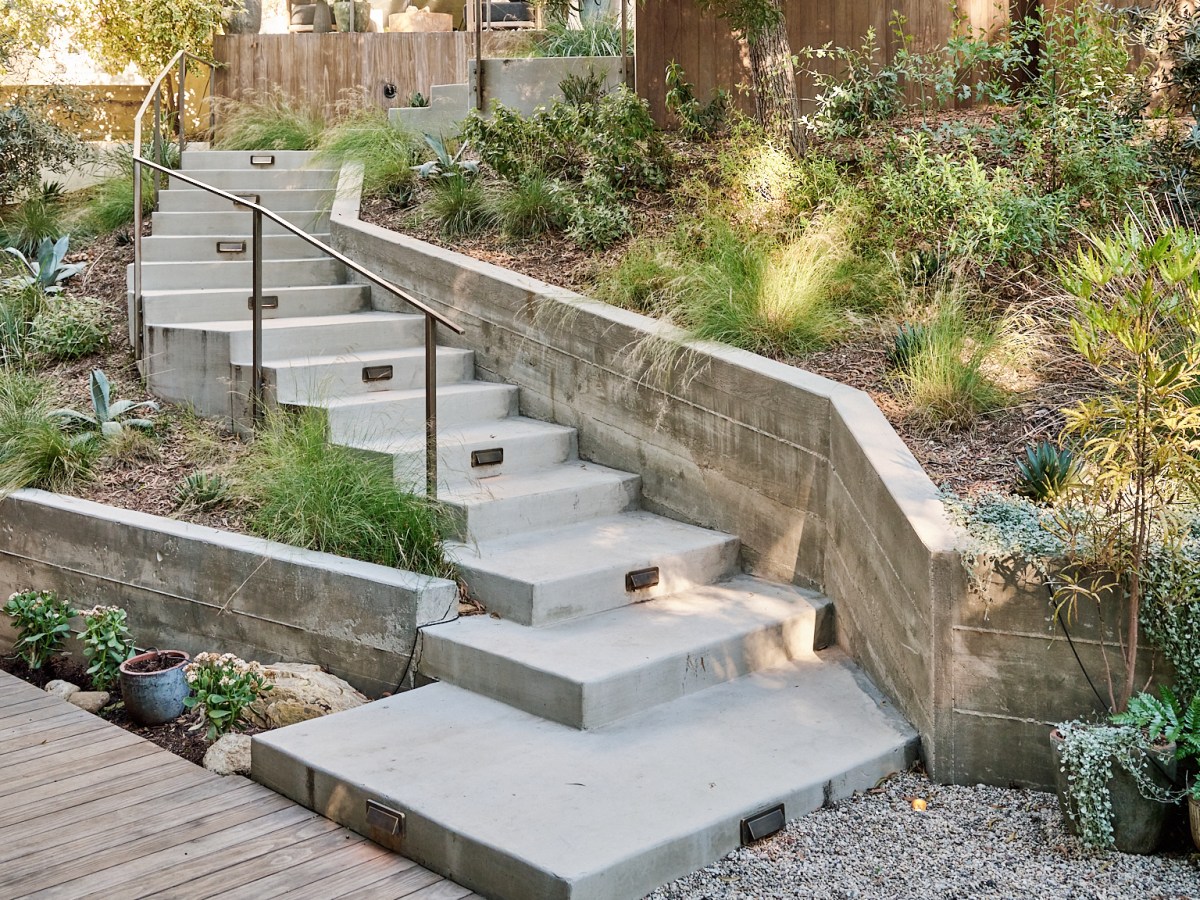
One of the earliest misconceptions about the site was that it lacked a natural path. But through careful study, Kirby found that movement already existed—it simply wasn’t being honored.
As she explains, “I felt the site already held a kind of natural path, it simply wasn’t immediately visible.” Rather than forcing a new circulation system, the design followed the slope’s inherent rhythm, allowing movement to align with grade instead of resisting it.
This approach also reduced disruption to soil and ecology, reinforcing a broader philosophy of working with terrain rather than against it.
Design takeaway: Let circulation emerge from slope and terrain. Paths should feel discovered, not imposed.

Madeline Tolle
3. Think in Terms of Outdoor Rooms
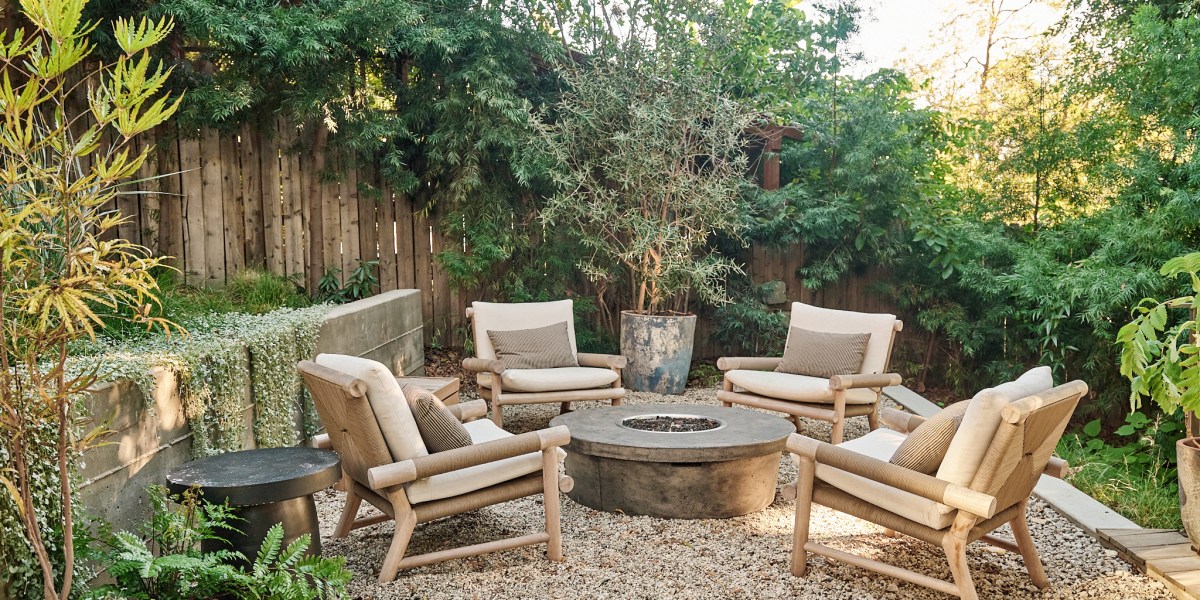
The concept of “outdoor rooms” emerged from both site conditions and lifestyle programming. The client’s needs included wellness elements—sauna, hot tub, cold plunge, outdoor shower—as well as spaces for gathering and retreat.
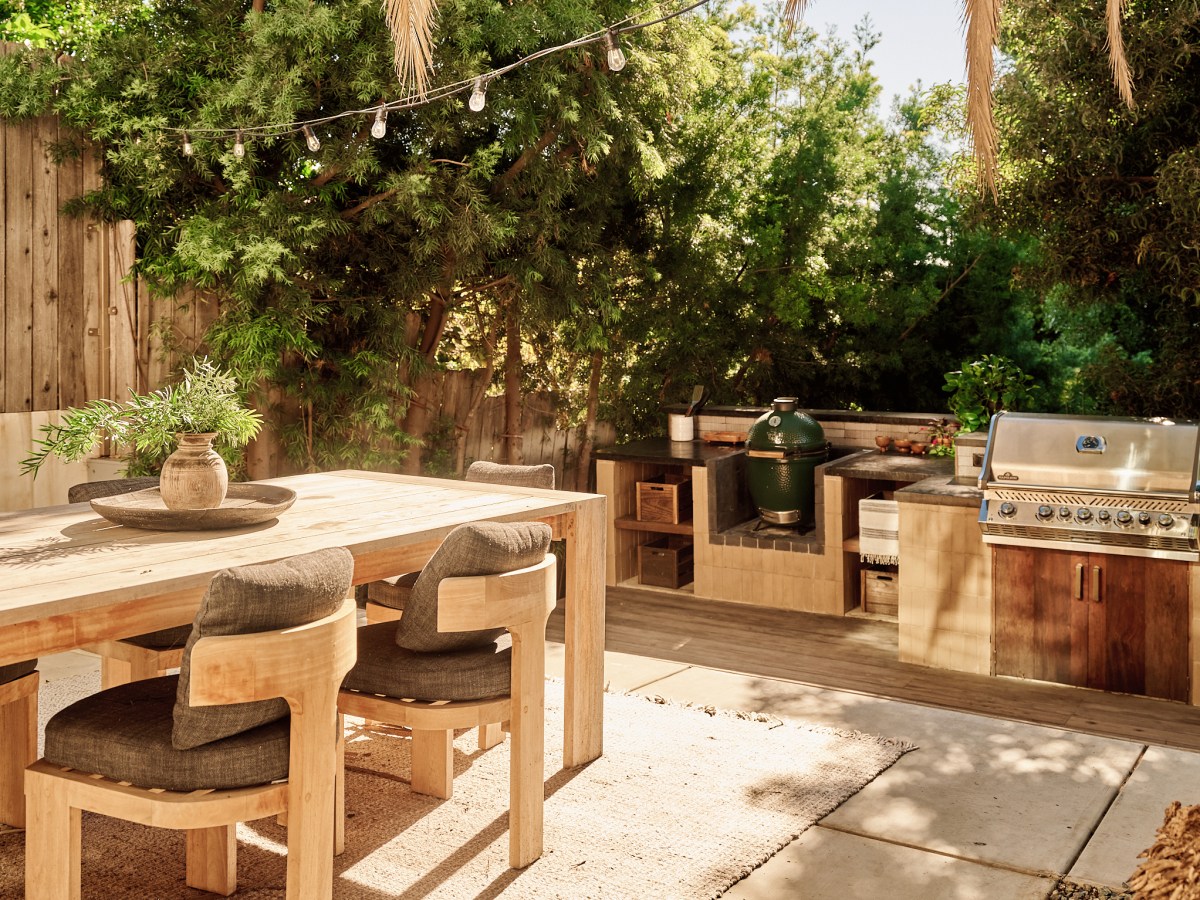
Kirby approached these not as isolated features, but as experiences shaped by context. A shaded pocket beneath mature trees became a site for restoration and intimacy, while more open areas supported dining and social use.
As she notes, “Each space revealed its purpose through the physical character of the site.” The hillside itself became the organizing structure, guiding how each room would feel and function.
Design takeaway: Assign function based on microclimate, enclosure, and light—not just program lists.
Madeline Tolle
4. Maximize Usability Through Section, Not Expansion
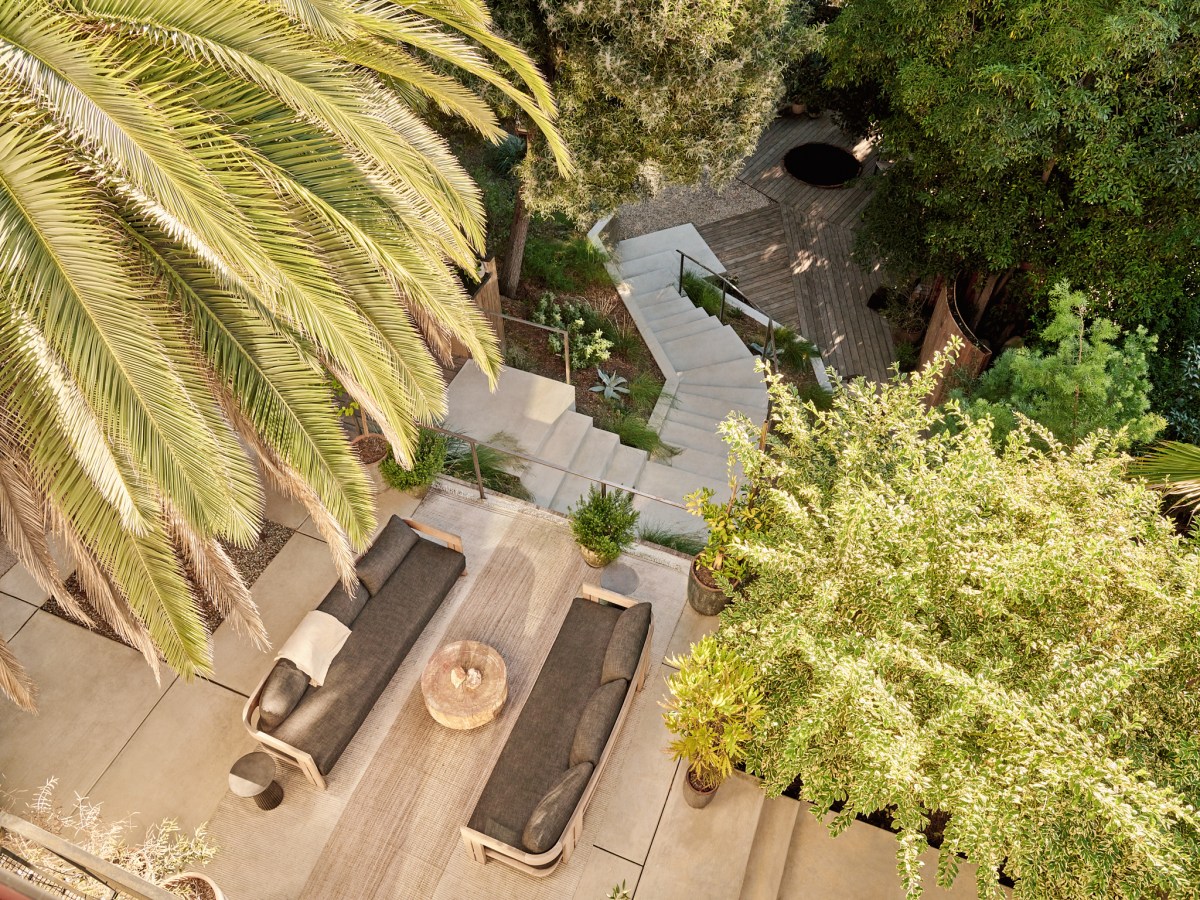
On steep terrain, usability is less about adding square footage and more about understanding how to activate what already exists. Kirby’s approach relied heavily on sectional thinking—stacking experiences vertically along the slope.
“Naturally level areas were prioritized for program, while steeper portions were preserved or stabilized rather than regraded,” she explains. This allowed multiple functional zones to coexist within a compact footprint.
By working with grade rather than flattening it, the design preserved the integrity of the hillside while expanding how it could be used.
Design takeaway: Work in section. Vertical layering creates more opportunity than horizontal expansion.
Madeline Tolle
5. Borrow Space Instead of Building It
A key moment in the project came through restraint rather than addition. Instead of heavily grading the lower site, a deck was extended outward, lightly hovering over the slope. This strategy allowed the design to “borrow” usable space without disturbing the landform beneath it.
Kirby describes a similar philosophy in other interventions: “Sometimes a simple lounging area may be enough to meaningfully connect you to your landscape.”
The result is a landscape that feels expansive without feeling overbuilt.
Design takeaway: Extend lightly when possible. Small structural gestures can unlock large spatial gains.

Madeline Tolle
6. Let Materials Shape Atmosphere
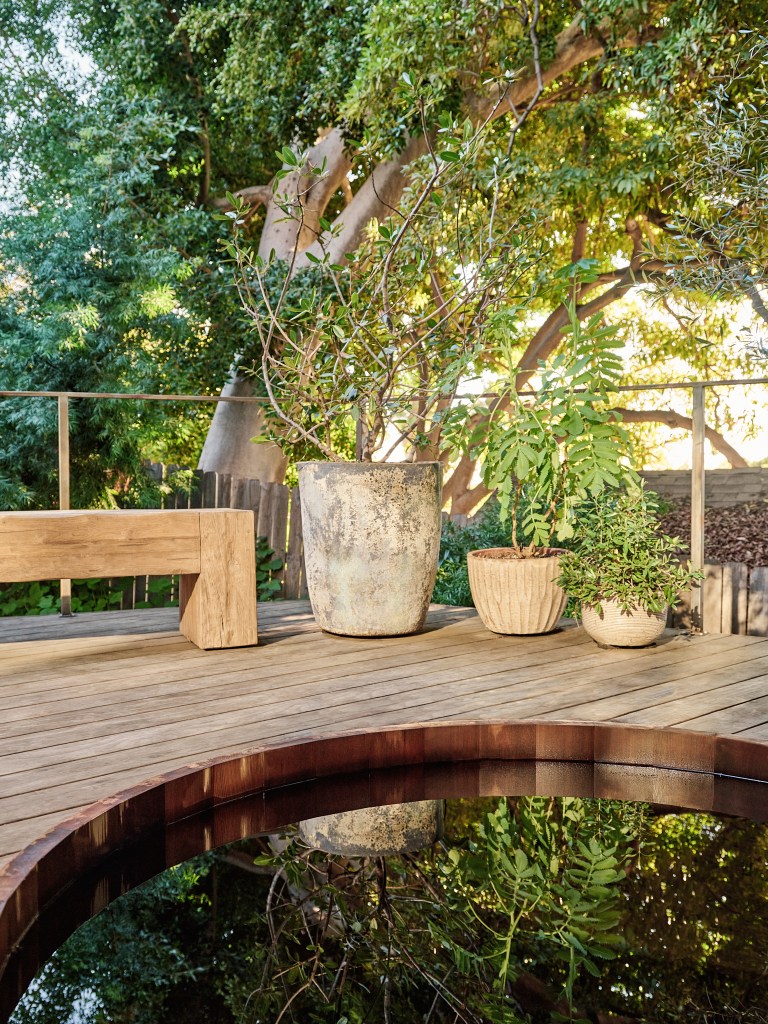
Materiality is central to Ferox Studio’s practice, and this project becomes a study in tactile contrast—wood, stone, clay, tile, and water all working in dialogue.
Kirby often returns to wood as a grounding element. It appears throughout the site in custom furnishings and structural moments, chosen for its ability to weather and evolve. “I’m drawn to how wood evolves over time, how it weathers, softens, and records its environment,” she explains.
The palette is intentional but restrained, allowing texture and imperfection to carry emotional weight.
Design takeaway: Choose materials that age well and carry sensory depth. Let imperfection be part of the composition.

Madeline Tolle
7. Integrate Wellness as Part of the Landscape
Wellness programming was central to the client’s vision, but the goal was integration, not emphasis. Each element—sauna, hot tub, cold plunge, outdoor shower—was placed where the landscape naturally supported it.
Kirby describes the intention clearly: “Each element was positioned where it felt most natural… so the features don’t read as additions, but as parts of the site.”
Rather than clustering amenities, they are dispersed across the slope, encouraging movement and slowing the experience of arrival.
Design takeaway: Wellness spaces should feel embedded in terrain, not layered on top of it.
8. Design Flow as an Invisible Experience
Movement through the site is intended to feel gradual and almost subconscious. At the top, the landscape is open and social; as one moves downward, it becomes quieter, more enclosed, and more reflective.
Kirby describes this progression as “a gradual exhale.” The upper level supports gathering, while lower zones support retreat and restoration.
Flow is achieved through repetition of materials, shifting light conditions, and subtle changes in grade rather than explicit barriers.
Design takeaway: Design transitions, not boundaries. Let experience shift over time and movement.
9. Prioritize Circulation Above All Else
If there is a single principle that underpins the entire project, it is circulation. When movement is intuitive, everything else follows.
As Kirby puts it, “If movement through the space feels intuitive… the entire landscape becomes more functional.”
Paths aligned with grade, carefully placed stairs, and clear connections between zones ensure that the landscape feels coherent even as it changes character from one space to the next.
Design takeaway: Resolve movement first. It is the foundation of usability.
Madeline Tolle
10. Design for Alignment Between Human and Land
The most successful landscapes don’t feel designed so much as revealed. In this project, the hillside wasn’t overwritten or reshaped into something unrecognizable—it was allowed to clarify itself through careful intervention and restraint.
Kirby often returns to the idea that landscape design is a dual responsibility. “I often think of myself as serving two clients simultaneously: the human and the land,” she explains.
That mindset shows up in every decision here—from preserving natural slope and stabilizing it with thoughtful planting, to placing gathering and wellness spaces only where the terrain already supported them. The result is not a singular statement, but a layered response—one that respects ecology while still supporting daily life.
Design takeaway: The goal is not control, but alignment. When both land and lifestyle are honored equally, the landscape becomes something you don’t just use—but live within, intuitively and completely.