Stop Cubing Your Cheese—and Other Tips for Building the Perfect Cheese Board
Follow these rules for building a better cheese board.
alvarez/Getty Images
Dominick DiBartolomeo has a few opinions about cheese boards. Don’t cube your cheese. Skip the unnecessary edible flowers. Don’t serve everything right from the fridge. And most importantly, don’t skimp on the cheese itself.
“I want to eat cheese,” he says. “Nine times out of ten, these cheeses are expensive. So I don’t need anything hiding the flavor of them.”
As owner of The Cheese Store of Beverly Hills, it’s clear he knows his way around the cheese counter. This nearly 60-year-old Los Angeles landmark offers more than 600 cheeses from around the world, alongside various charcuterie and other specialty foods. DiBartolomeo became the shop’s owner in 2022 after 20 years working there.
However, despite seemingly endless combinations of cheeses and sides you can serve on your board, DiBartolomeo doesn’t believe there’s a specific formula for getting it right.
“I like to think the perfect cheese boards are like snowflakes,” he says. “No two are alike.”
Still, he believes every good cheese board should have some things—and a couple he’d happily leave off. From choosing the right mix to figuring out how much you need, here’s how to build a better cheese board.
bhofack2/Getty Images
Start With Variety
Before thinking about the aesthetics of your board, start with what you want to eat.
“I think what makes a great cheese is, first of all, what you’re in the mood for,” says DiBartolomeo.
This can be anything from creamy and buttery to something hard and salty. The kind of milk—cow, sheep, goat, or even water buffalo—can also introduce new flavors to your board. When building his boards, DiBartolomeo prefers assortment over a pre-defined formula, regardless of how many are eating.
“I’m always a fan of variety. Even if it’s just my wife and I, I’ll put out five cheeses,” he says. “They might not be big, but I put out five cheeses.”
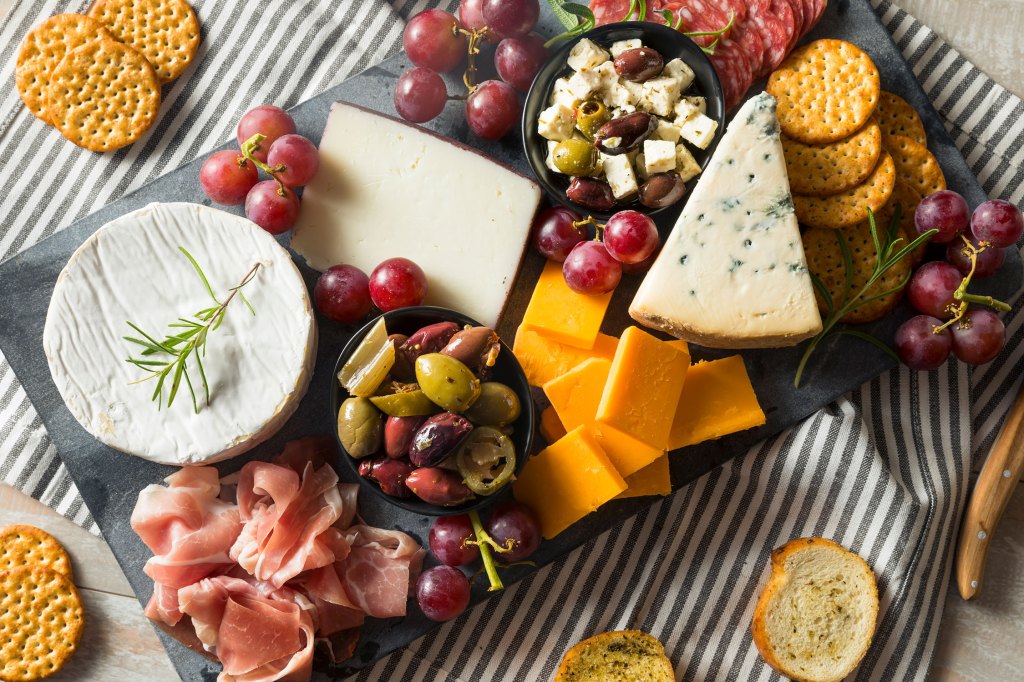
His go-to combo? Normally a mix of a sheep, a cow, a goat, a blue, and a triple crème. But that lineup is more of a starting point. The mix ultimately comes down to the occasion—and those eating it.
“I love to know some of the cheeses that they like, what they are having it with, anything we should not put there,” DiBartolomeo says of the questions he’ll ask customers before giving suggestions. “It depends on if they want to be adventurous and stuff like that.”
How Much Cheese Do You Actually Need?
After you’ve decided your lineup, your next step is determining how much cheese to serve.
“Is this the only thing you’re having?” DiBartolomeo asks. “Because there are a lot of times that people come in and they’re only putting out a cheeseboard.”
If that’s the case, he recommends getting larger quantities than you’d usually get for a board served before dinner, for instance.
For a more concrete answer, Saxelby Cheesemongers suggests three to four ounces per person if cheese is the main meal. Otherwise, they recommend two ounces. Regardless of how much you buy, DiBartolomeo’s advice for variety is a no-brainer. So instead of reducing the number of cheeses, consider buying smaller portions of different kinds.
“People do love variety,” he says. “You’ll get all these different flavors and textures, and you want to try the cheeses, how they compare to one another.”
Olga Peshkova/Getty Images
Don’t Stop at Cheese
Cheese is clearly the star of the board, but it doesn’t have to do all the work. Add-ons can introduce contrasting or complementary flavors and textures, making each bite unique. Wisconsin Cheese, run by the Dairy Farmers of Wisconsin, says that “accompaniments elevate the tasting experience by adding flavors, colors, and textures.” Take it to the next level by incorporating seasonal flavors such as berries in summer and chutney in winter.
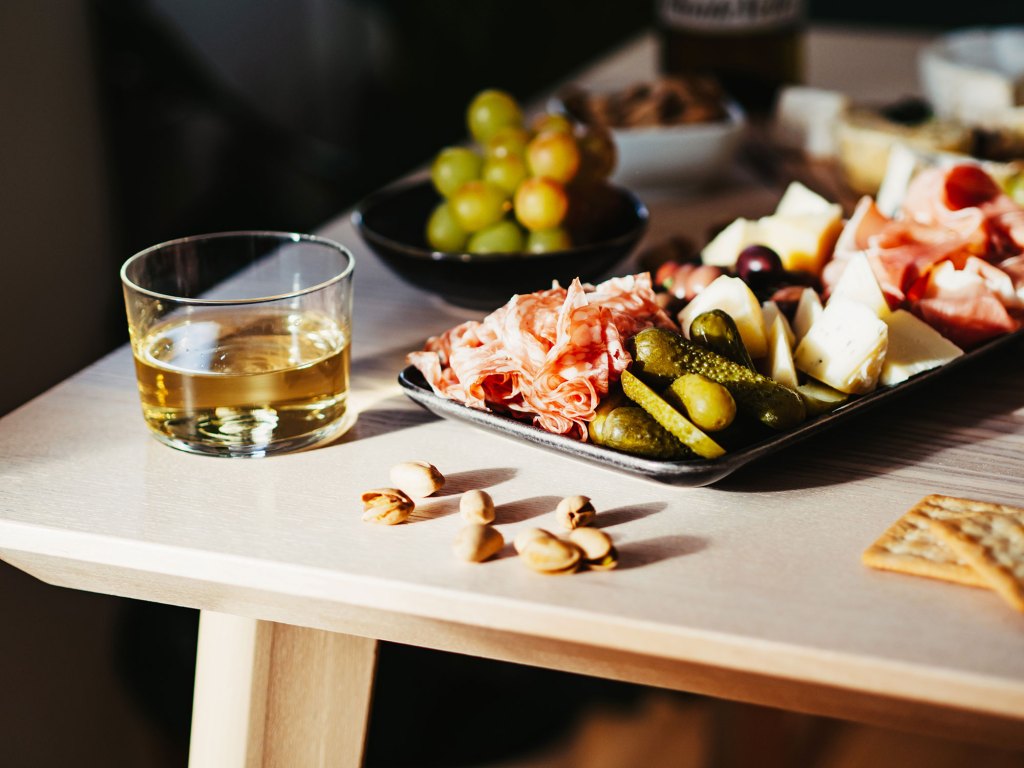
For DiBartolomeo, the first addition is charcuterie. “Cheese and meat for me is like my go-to,” he says. “I’m really big into the cured meats, the salamis, the pâtés.”
Some of his favorites include a 24-Month Prosciutto di Parma, Pata Negra Jamón Ibérico, and Jambon De Bayonne Agour. Afterwards, he reaches for condiments; he prefers something sweet with cheese, like honey, jam, or a chutney. For meats, he likes to add mustard and cornichons since they cut through the fat and salt. Nuts, fruits, and tapenade are other great additions. Regarding fruits, however, he prefers dried over freshly sliced.
“Chances are I’m going to use dried fruit, because not only does it look better, but you’re going to get a better quality product,” he says.
Finish off with bread and crackers. While DiBartolomeo enjoys a traditional baguette, he also suggests using grissini or charcoal crackers to add more shapes and colors.
Make Everything Worth Eating
“The camera eats first,” DiBartolomeo says. “We feast first with our eyes; that’s just the bottom line.”
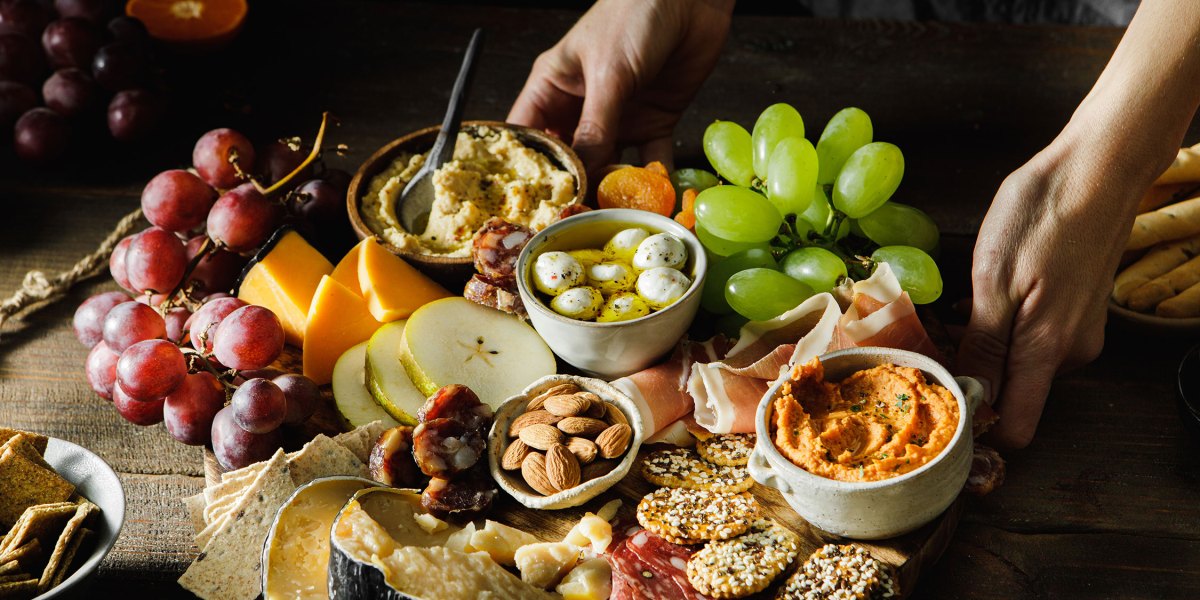
While looks do matter, making a board visually pleasing doesn’t mean covering it with garnishes. DiBartolomeo would rather get color from the food itself—dried apricots for an orange hue, for instance—than fill the board with edible flowers or sprigs of rosemary that will go untouched and inevitably get tossed.
“If you buy a board from us, you’re going to be able to eat everything on that board,” he says. “That’s the whole purpose of it.”
What would he exclude from his perfect spread? Chocolate. He’d rather get that sweetness from a jam or chutney, better complements for cheese, and save the chocolate for later. And please, please don’t leave any empty spaces.
“The biggest thing is you never want to see the bottom of the board unless you’re finishing something,” says DiBartolomeo.
Choose a board that fits the amount of cheese you’re serving, and use those meats, fruits, nuts, crackers, and condiments to make it pop.
Cut It Up the Right Way, Please!
How you cut everything on the board also makes a difference. Rather than cutting each ingredient the same, consider varying the shape of your cheeses and charcuterie to create a spread that is more visually appealing.
“Earn style points by chunking hard cheeses and cutting softer ones into small wedges, triangles, and batons,” Wisconsin Cheese recommends. “Charcuterie can be cut into rounds or ribbons. Thin slices can be made into roses, shingled like cards, or folded and stacked.”
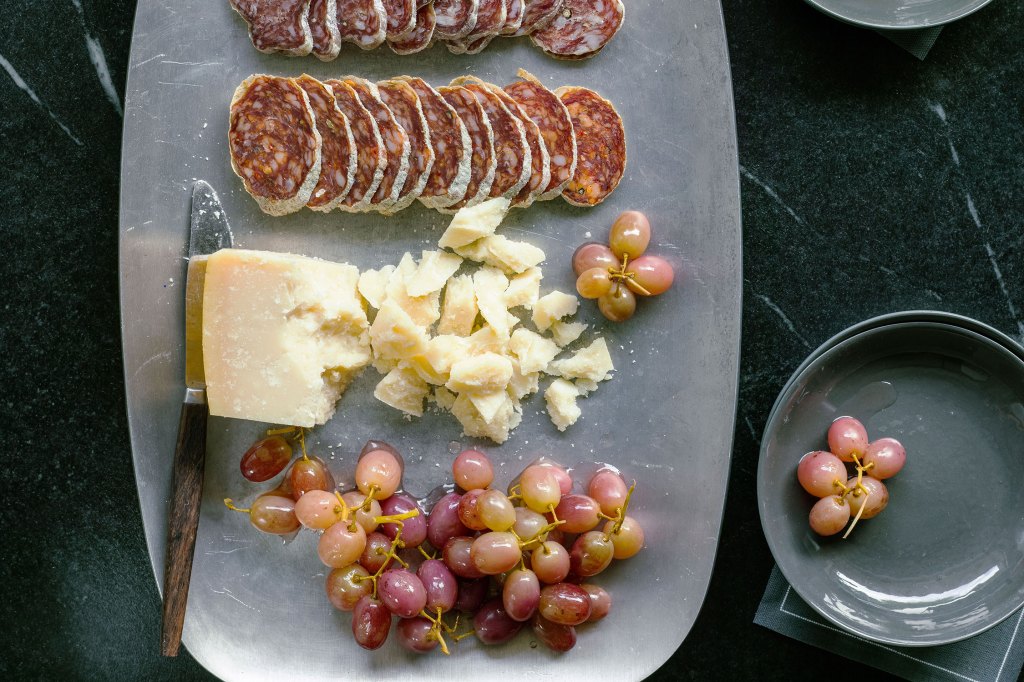
DiBartolomeo showcases this approach when it comes to Parmesan, a hard cheese. He likes to serve it in chunks rather than cubes as he says it tastes better. In fact, cubed cheese in general is one presentation style he’d forget about completely.
“I personally don’t like cubing cheese,” says DiBartolomeo. “I think that just looks cheap and generic, even if it’s a great cheese.”
He likes to vary the shapes across the board, cutting some into different triangles while leaving softer cheeses whole. Different cuts, shapes, and sizes give the board dimension without relying on decorative fillers.
Iain Bagwell
Let Your Cheese Warm Up Before Serving
Don’t go through all that trouble just to serve your cheese right out of the fridge!
“Always serve cheese at room temperature; that’s the rule of thumb for us,” says DiBartolomeo. “That’s when you get the most flavor out of the cheese.”
For a typical board, he recommends taking your cheese from the fridge 30 minutes before serving. But there are a few exceptions. If your cheese is particularly soft and runny, it may not need the full 30. For example, an Époisses might need less time since it becomes particularly runny as it warms. Remember that your goal isn’t to warm the cheese but to take it off the refrigerator chill and allow some of its flavors to start coming through.
Replenish As You Go
If guests will be around for hours, don’t put everything out at the same time.
“You don’t want to just put everything out all at once,” DiBartolomeo says. “You want to kind of pace yourself and have backups.”
For longer events, DiBartolomeo and his team will replenish as guests eat instead of leaving all the cheese and charcuterie out from the very beginning. For outdoor parties, he suggests chilling the board from the bottom using non-condensing ice packs.
Food safety comes into play at this point as well. According to the USDA, perishable food shouldn’t be left at room temperature for more than two hours—or an hour if the temperature is above 90 degrees. For long parties, they suggest putting out smaller servings and replacing them with chilled ones, rather than setting large amounts of food out at once.

Iain Bagwell
Don’t Be Afraid to Try Something New
You don’t have to fill your board with the same cheeses you already know and love. The Cheese Store directly imports many of its products, allowing DiBartolomeo to introduce customers to cheeses and producers they might not otherwise come across.
“Our job really is to tell the story of these artisans making these incredible cheeses,” he says.
One of his picks is De’Magi Buhaiolo with Fennel, a Tuscan sheep’s milk pecorino made with wild fennel pollen. He also suggests the Brie Donge Triple Cream for those looking to explore beyond familiar Brie options.
However, this doesn’t mean filling your board with cheeses guests won’t recognize. DiBartolomeo suggests starting with something you already enjoy as a jumping-off point.
“I don’t want you to come into our store and buy something you always have,” he says. “Maybe we can turn you on to something that’s along the lines of what you like, except maybe it’s a different style of cheese, made by a different producer.”
And perhaps that’s the simplest rule for creating a great cheese board: Find what you love, then make room for something new.