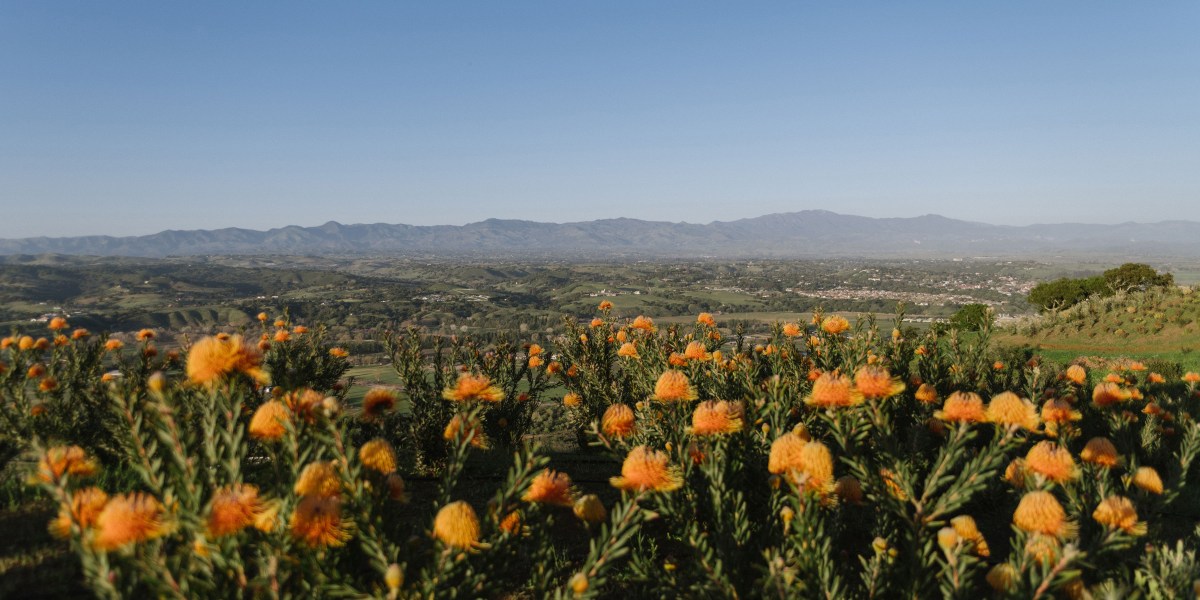
This Historic Beverly Hills Estate Is the Ultimate Maximalist Fantasy
The legendary Beverly Hills home of Tony Duquette remains a labyrinth of baroque fantasy—where designer Hutton Wilkinson has pushed an already extravagant vision to operatic heights.
Thomas J. Story
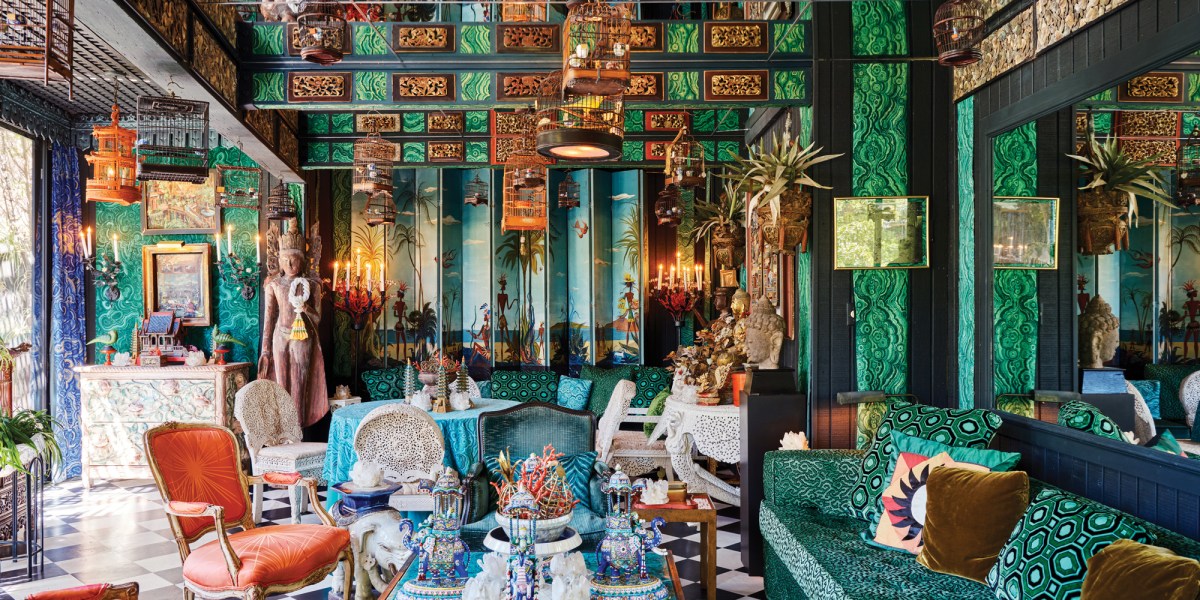
Tucked up in the hills of 90210 sits one of the most creatively designed private homes in America. Even though the exterior is deceptively nondescript, something spellbinding is going on inside. Once you enter, you step down into a double-height room so exotic you might expect to see a wild animal. It’s called Dawnridge, and it is perhaps the most extravagant, idiosyncratic, and exotically visionary piece of design in Beverly Hills. Equal parts museum, homage, and inspiration to countless top designers, it is one of the great hidden treasures of Los Angeles.
Thomas J. Story
This was the home of multihyphenate designer Tony Duquette, a prolific creator of maximalist fantasy who took his tireless and theatrical can-do spirit to multiple worlds: He designed costumes and stage sets. He dressed up ballrooms and fashion shows for films in the ‘50s. He made jewelry for the Duchess of Windsor. He also designed houses that were a baroque yet unpretentious mixture of everything he had seen on his travels in Europe and the Far East. He designed furniture, fixtures, and fabrics, and even painted murals himself. His clients were a mix of the movie world—David O. Selznick, for example—as well as the extremely rich: Doris Duke, J. Paul Getty, and Elizabeth Arden. In 1949, Duquette married artist Elizabeth “Beegle” Johnstone at a private ceremony at Beverly Hills estate Pickfair, with Mary Pickford as matron of honor and Buddy Rogers as best man. The reception that followed was attended by Hollywood celebrities, including Gloria Swanson, Greta Garbo, Fred Astaire, Vincente Minnelli, Louella Parsons, Hedda Hopper, Oscar Levant, and Marion Davies. In addition, he had always given parties that were spectacles, showing his uncanny ability to create a mood.
Thomas J. Story
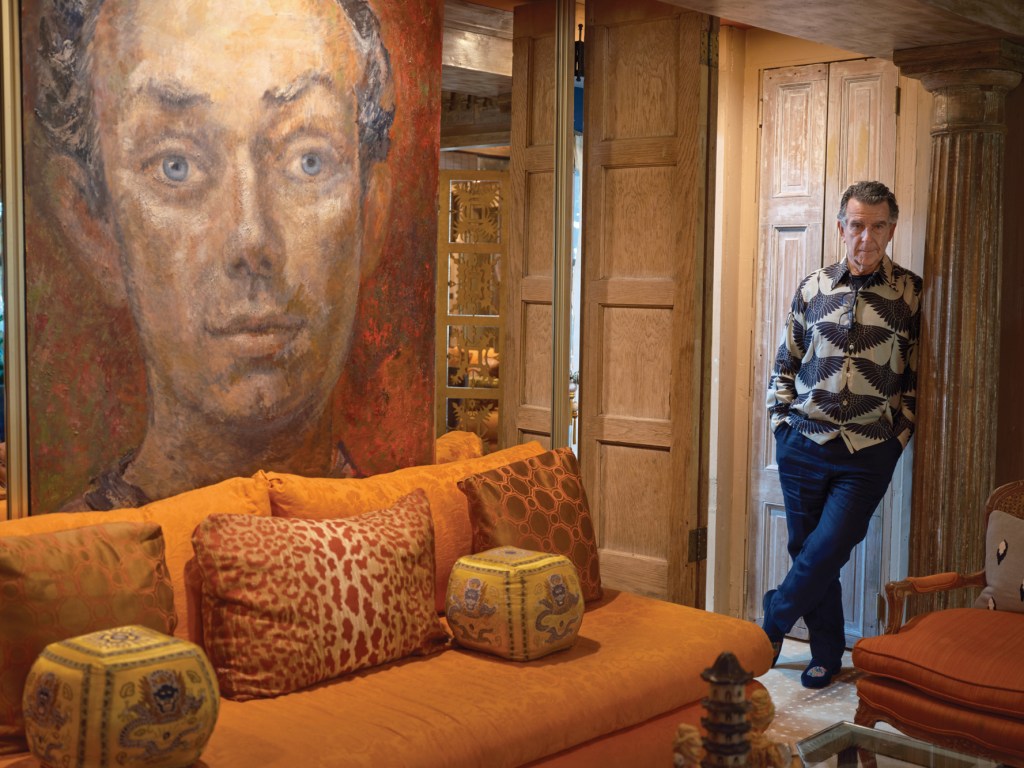
Duquette’s home in Beverly Hills was built in 1949 by Duquette and his wife. The original structure was a modest 30-by-30-foot box. But over the next 50 years of his life, Duquette transformed Dawnridge, expanding and redecorating the home, building fantastical structures in the garden, and adding antiques and his own creations to each room. Duquette finished his final projects with the assistance of his business partner of 30 years, Hutton Wilkinson. While still a teenager, Wilkinson became entranced by the fairytale world of the designer. As he was reading an article in the Los Angeles Times, his eyes fell upon the fantastical interiors of Duquette’s studio-residence on North Robertson Boulevard, and he began to explore the designer’s life and career from the unique perspective of being his protege. He’s not just observing the work, but stepping inside and expanding the mythology of it.
Thomas J. Story
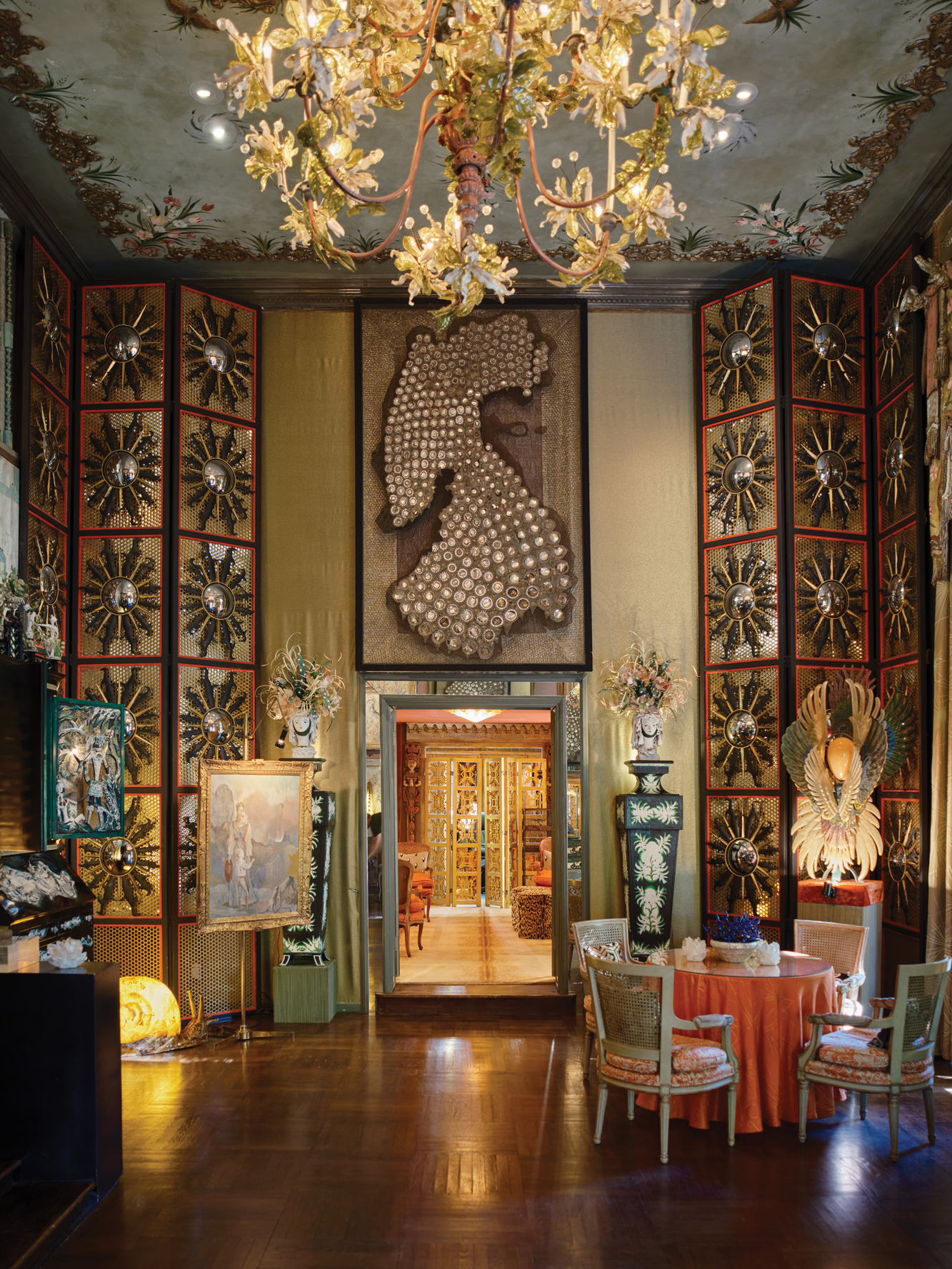
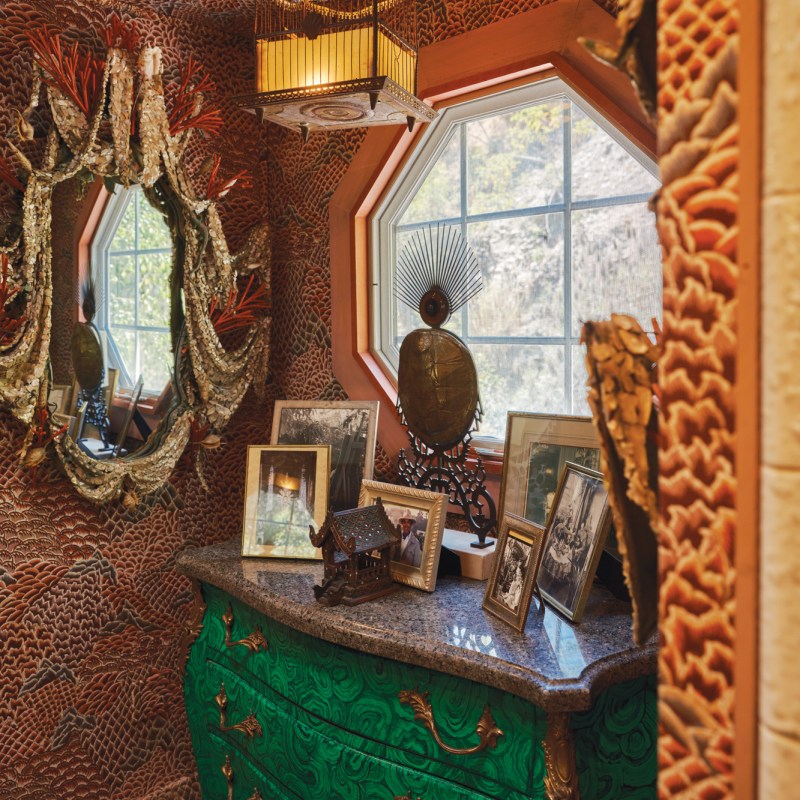
Wilkinson purchased the home following Duquette’s death in 1999 and has continued expanding it from a tiny box house to an expansive estate, filled with unique baroque-style treasures picked and created by Wilkinson, original art, and unorthodox materials like takeout containers, vintage hubcaps, and trellises made of old wiring and screens. It’s a philosophy of beauty that collapses hierarchy between the precious and the discarded. The iron sunburst by Poillerat was discovered at a Paris flea market, and Wilkinson had 100 copied in Bali.
Thomas J. Story
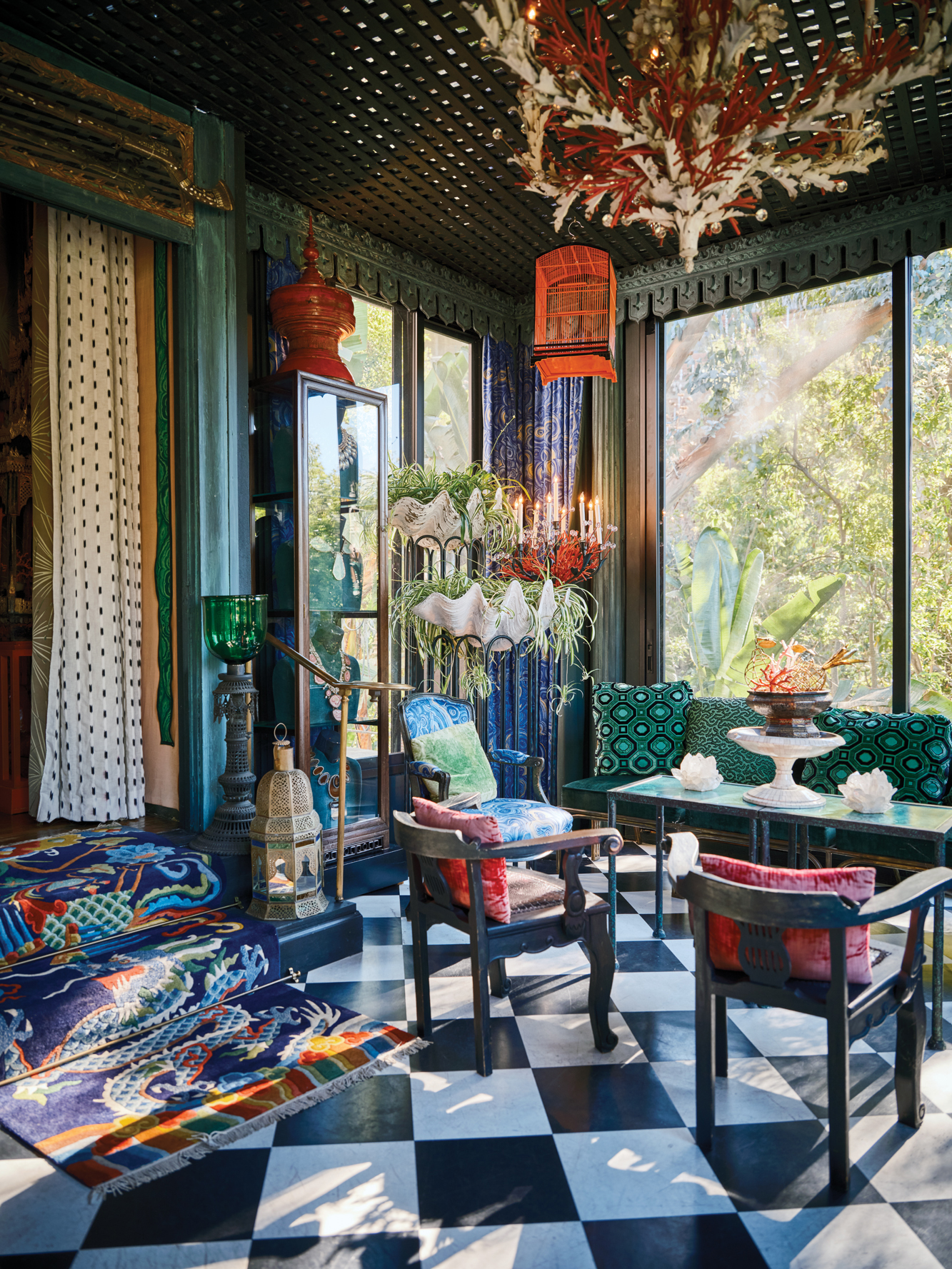
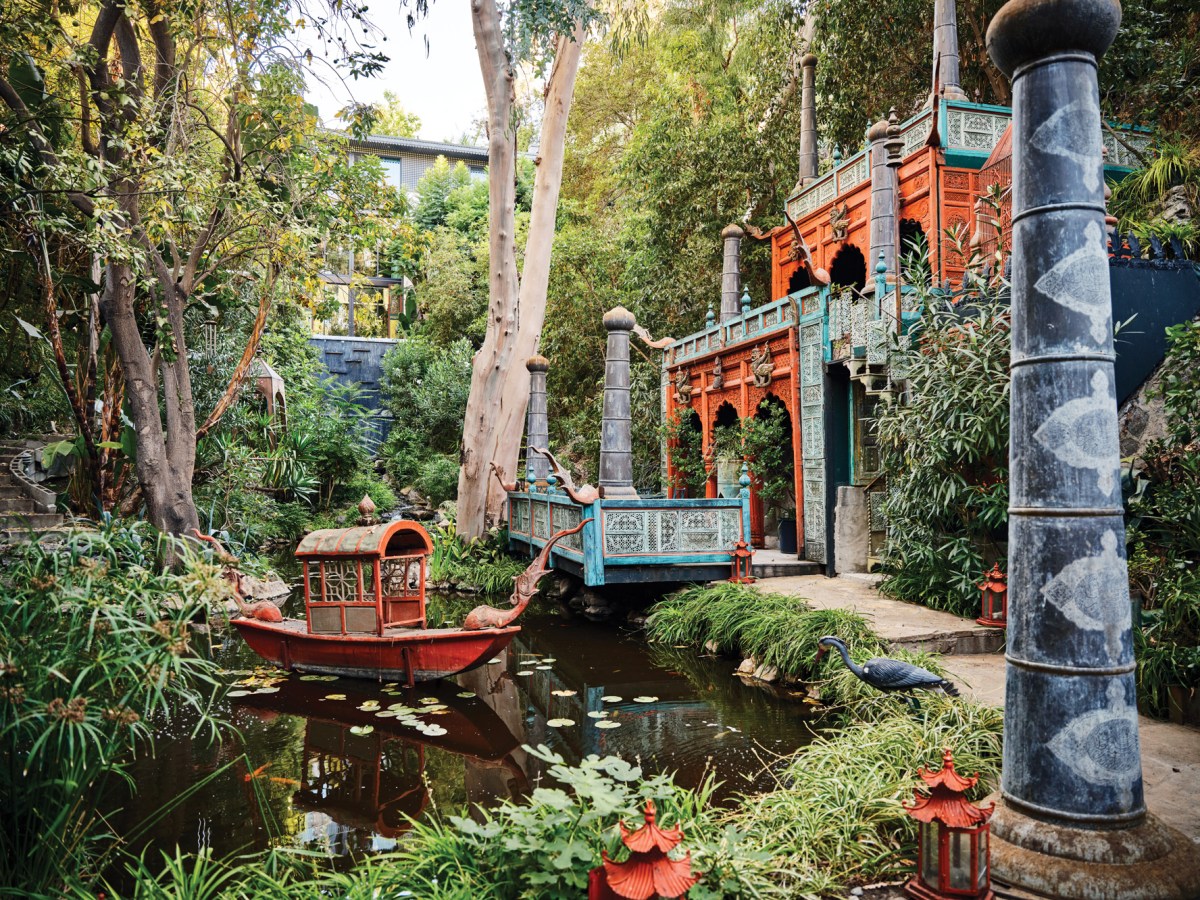
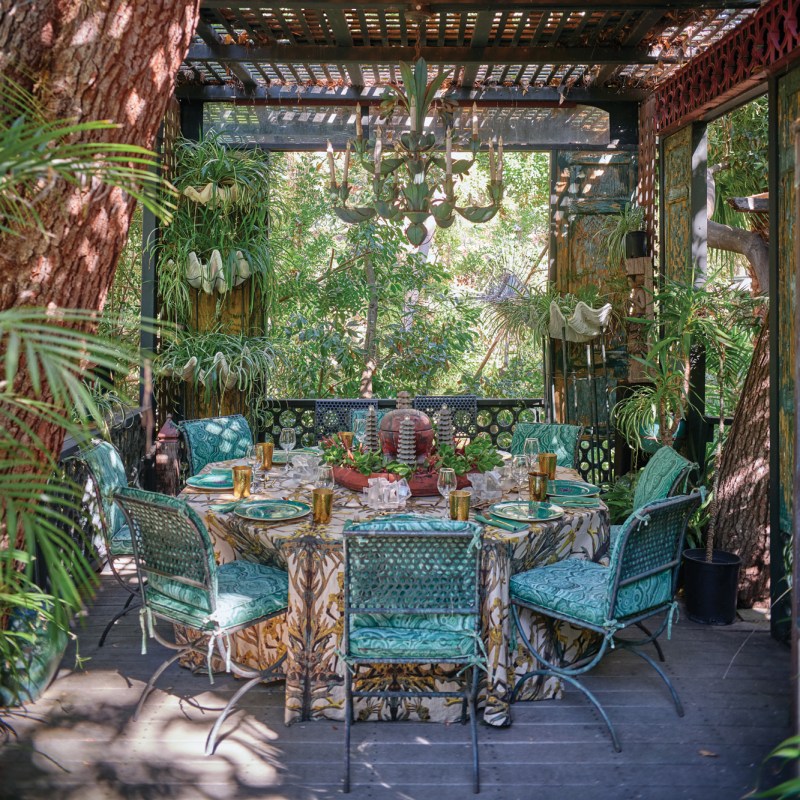
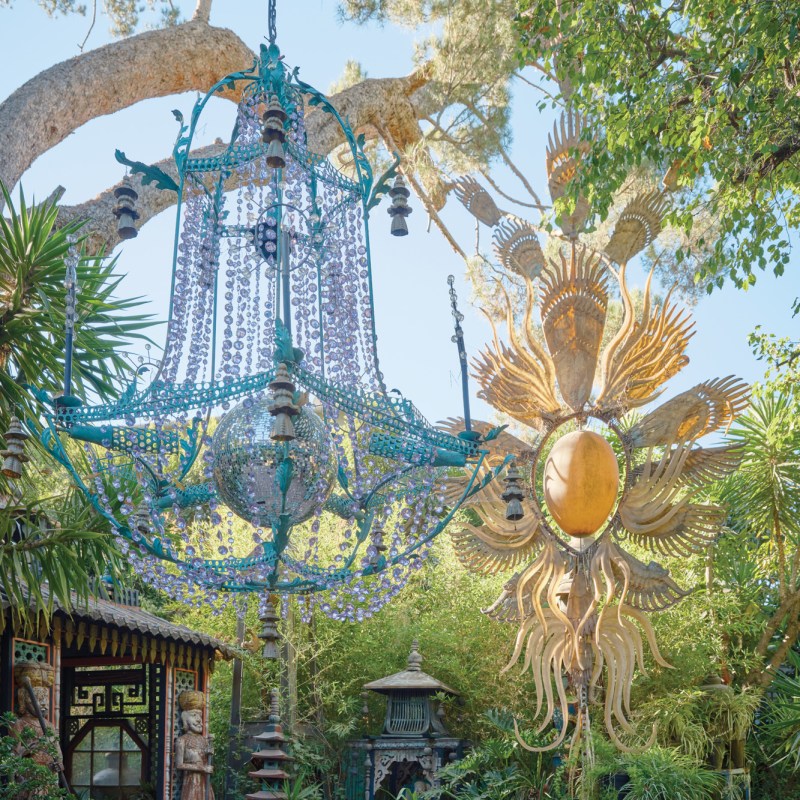
Leaving the garden room, you cross a terrace with a roof of lattice forming a shadowed checkerboard on the floor. The lattice ceiling is held up by old Los Angeles verdigris copper streetlights. The staircase leads down to the middle terrace, where a series of pavilions lead to secret gardens and places to dine, and then more stairs lead down into the canyon (which is the only canyon left on the street). Other properties nearby have filled in the canyon to create swimming pools and tennis courts, but Dawnridge’s original canyon has a manmade lagoon at the bottom with koi fish, an Indian pavilion, and a waterfall, with an old Vietnamese wedding boat painted red and green floating in the middle. The ornate garden is full of grown eucalyptuses, terraces, outdoor chandeliers, and pavilions. Beegle’s painting studio is off to one side and made to look like a Chinese house, with pagoda-style roofs and red- and green-painted architectural elements. This labyrinthian wilderness of pathways, bridges, and waterfalls is as close to an exotic vacation as you can find in Los Angeles, a private world that unfolds not so much room by room, but scene by scene.
Thomas J. Story
Every area is eclectic, chic, and spectacular, such as the dining room dotted with monkey head sculptures. The ceiling is covered in embroidered Indian tent panels. The frieze of monkeys around the room still has the $1.50 price tags on them from when he purchased them at, wait for it, Cost Plus. High-low has never been so haute, a wink that keeps the grandeur from ever taking itself too seriously.
Thomas J. Story
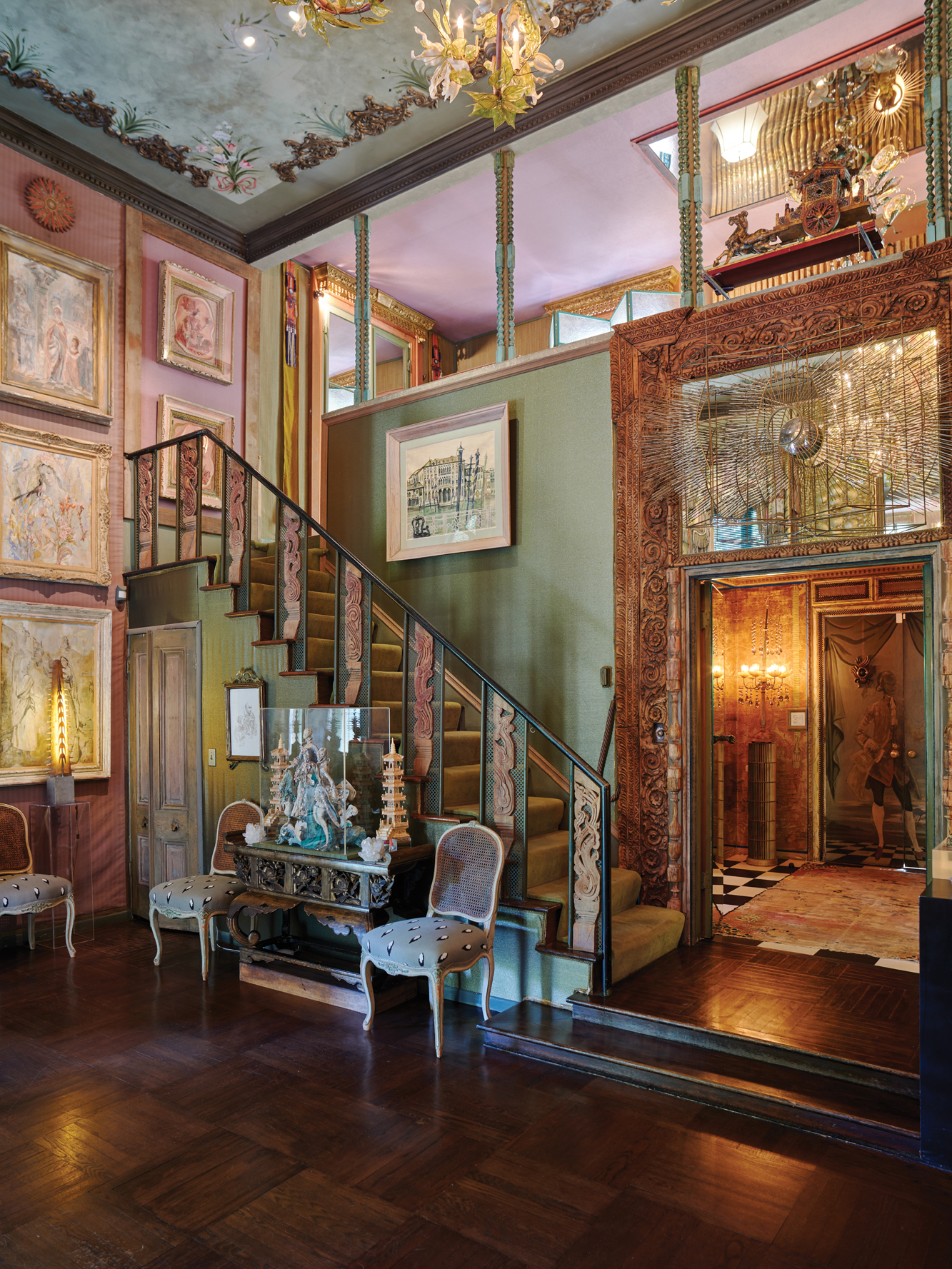
Other astounding features include paint-dipped plaster lambrequins over the windows, which are original to the house from 1949. The ceiling was painted by Tony and Elizabeth Duquette and is original to the house. The chandelier, by Tony, has Venetian glass flowers blown to look like pimento lilies. The artwork over the door leading into the library is called A Fragment of a Priestess’ Robe or, as Tony joked, A Specimen of Rhinestone Disease, from Tony’s 1972 exhibition at the municipal art gallery at Barnsdall Park. The curtains are Jim Thompson fireworks fabric, a Duquette-Wilkinson design. All of the paintings in the room are by Elizabeth Duquette, and the maquettes for the San Francisco Opera’s production of Der Rosenkavalier were designed by Tony Duquette and made in 1952 for that production. The carved 16th-century Spanish doorway leading into the entrance hall was a wedding present from the Hellis sisters, who were the daughters of a Greek shipping tycoon. Wilkinson replaced the original Old Master painting overdoor with a sheet of mirror and Tony Duquette’s three-dimensional, 3/8 -inch scale model of his Primal Sun sculpture, which was at the University of California, Los Angeles, yet another layering of artifact and reinterpretation.
Thomas J. Story
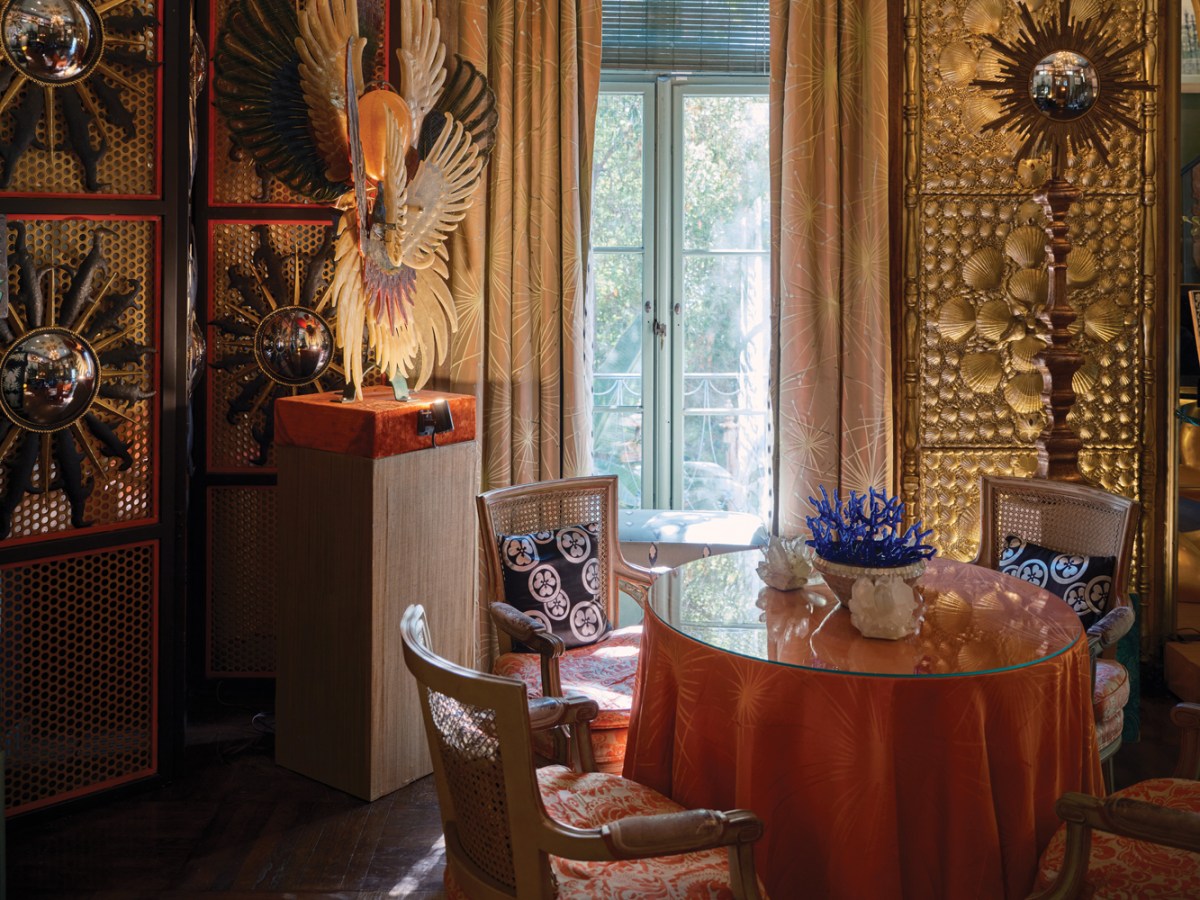
The garden room was actually a one-car garage in 1949. The sofa was repurchased from the Doris Duke estate Falcon Lair, which Tony decorated in the 1950s. And the folding screen showing Island People was from his first exhibition in 1947 at the Mitch Leisen Gallery, purchased by Elizabeth Arden’s niece and given back to Dawnridge in her will. These are objects circulating through time, only to return to their origin point.
Thomas J. Story
Wilkinson uses the house as his headquarters for Tony Duquette Inc., where he meets clients, lays out projects, and displays designer jewelry. The house and garden can also be rented for special events, photoshoots, or filming. The property is a magical place by day and night, lending itself to any number of imaginative party themes—still functioning, as it always has, as a stage set for living. Since Wilkinson has no heirs, his dream is to leave the property to a museum, foundation, or university that will preserve it like a house museum.
Thomas J. Story
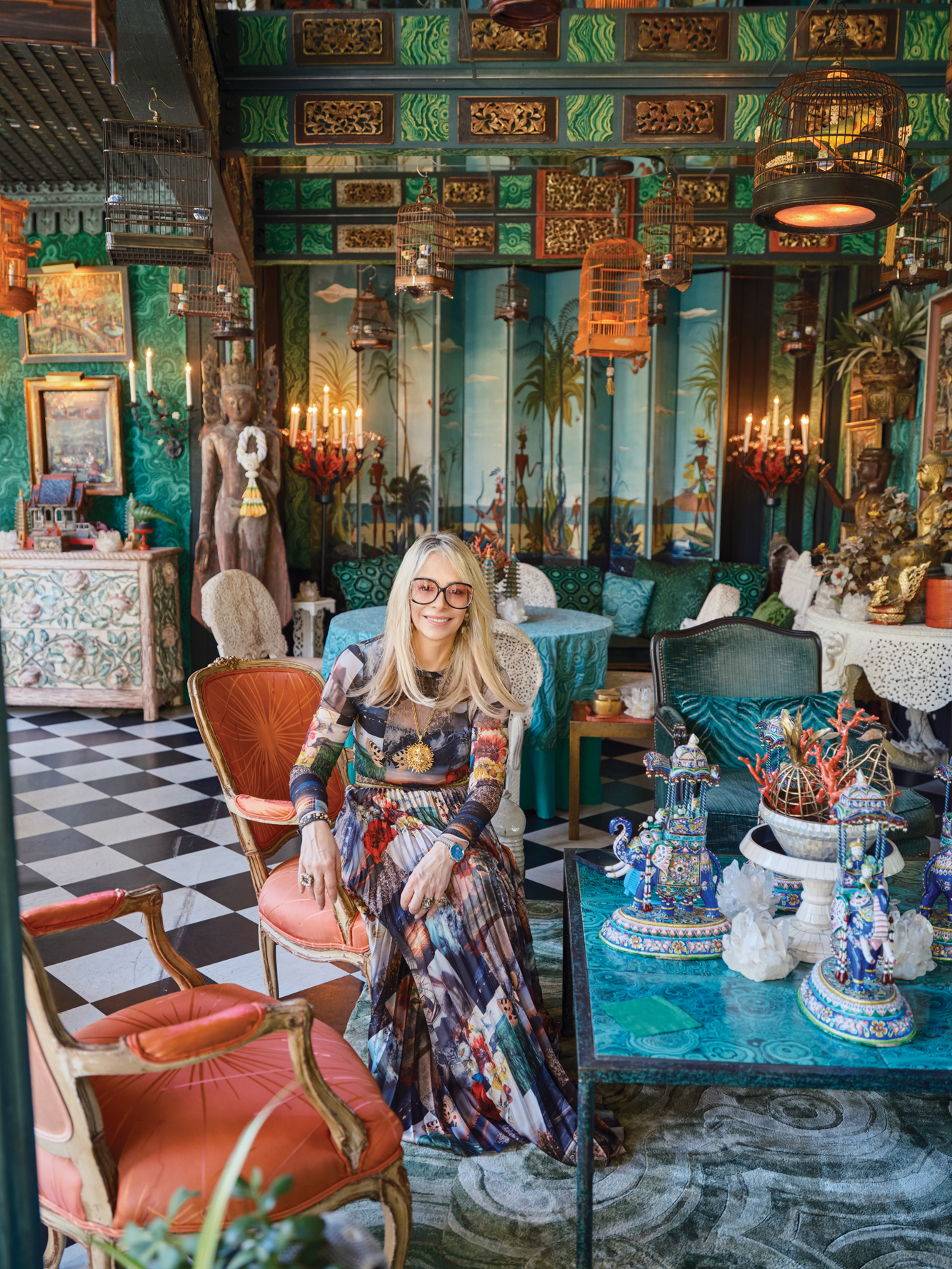
There is no question that Wilkinson has brought Dawnridge to maximalist levels and is the keeper of the Duquette legacy. Without missing a beat, Wilkinson says, “More is more, as opposed to less is more.” There’s no surface left unembellished, making it nearly impossible to focus on just one object, and nearly impossible to recall all of it. And that may be the point. Dawnridge resists being fully seen, fully catalogued, or fully understood in a single visit. It is an environment built on accumulation, imagination, and continuation. It’s where Duquette’s original vision doesn’t end, but is expanded in the hands of Wilkinson. The result is not just a masterpiece of maximalism, but a rare continuity of creative authorship: teacher to student, fantasy to reality, past to present.
One might wonder whether the student has surpassed the master.
Thomas J. Story
Author Alison Martino is a writer, producer, historian, and regular contributor to Sunset. She is the creator of Vintage Los Angeles and host of The SoCal Scene on Spectrum News.