I Went West to Ride Horses. I Came Back with an Unexpected Lesson.
At a men’s retreat in the Arizona desert, a skeptical rider finds that the hardest part isn’t staying in the saddle—it’s learning when to stop pushing.
Courtesy of Rancho de los Caballeros
I’d like to think I have a healthy fear of things that are bigger than me, such as the ocean, mountains, and horses. While I’ve briefly dabbled in surfing, whenever I’m in the waves I can’t shake the thought that in the murky water just beyond the break there might be a too-curious shark looking to take that fateful exploratory bite. I used to faux rock climb regularly in the gym, but I’m too cautious to trust ropes and carabiners on the sheer face of an actual granite cliff. And apart from the occasional adult-pony-ride of a trail trot at dude ranches on the way to a pancake breakfast, I’ve never been much of a rider.
So when presented with the opportunity to attend a men’s equine retreat for life coaching, riding, and hanging out with these beautiful half-ton beasts to explore my place in life with a few other trusting souls, I can’t say I was champing at the bit. But at 56 years of age, with an exceptional job, a happy family, and all the good things being good by every standard measure, there was that classic middle-age lingering question: Am I doing this right? Why doesn’t this all always feel as great as it sounds on paper? Admittedly, I can lean toward a glass-half-empty attitude that, fortunately, I can tactically flip into a “how do we fill this up?” accomplishment mode. I’m a natural-born pessimist who often presents as an optimist, can see the problems on the horizon, anticipate them and, so far, mostly fix them, which has served me well in work and in life.
Courtesy of Fearless Photography
The retreat was halfway to a location I needed to visit for a story for the magazine, so it was an efficient stop on the way. It was being run by Devon Combs, whom Sunset had featured a few years back and who has built a career around equine coaching and retreats. A lifelong horsewoman and founder of Unbridled Retreats, she uses horses as partners in exercises around communication, relationships, purpose, leadership, and the difficulty many of us have getting out of our heads and into our actual emotional lives. Her retreats had mostly drawn women in the past, but she expanded the concept to include men with a program that mixes riding and horsemanship with small-group coaching and conversation. The premise is that horses, as highly perceptive social animals, respond to the body language, tension, and energy of the people around them and can act as a kind of living mirror to what we may otherwise guard or intellectualize.
I’ve done enough work to know I’m more comfortable as a thinker than a feeler, and the idea had just enough logic beneath the woo-woo factor for me to give it a shot. Horses are prey animals, which makes them highly alert to changes in their environment and to the state of the herd around them. You can tell yourself you’re perfectly calm, but the animal standing next to you may react to something your conscious mind has already edited out. Comforted by Devon’s reputation, and despite my healthy fear of things bigger than me, I decided to saddle up and go.
Courtesy of Rancho de los Caballeros
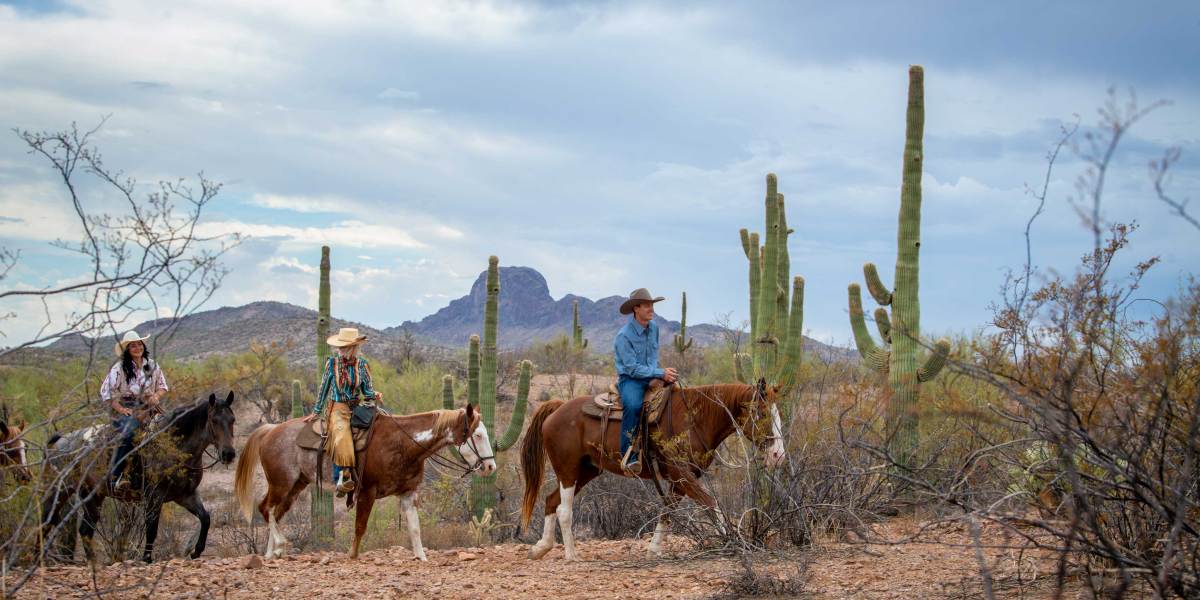
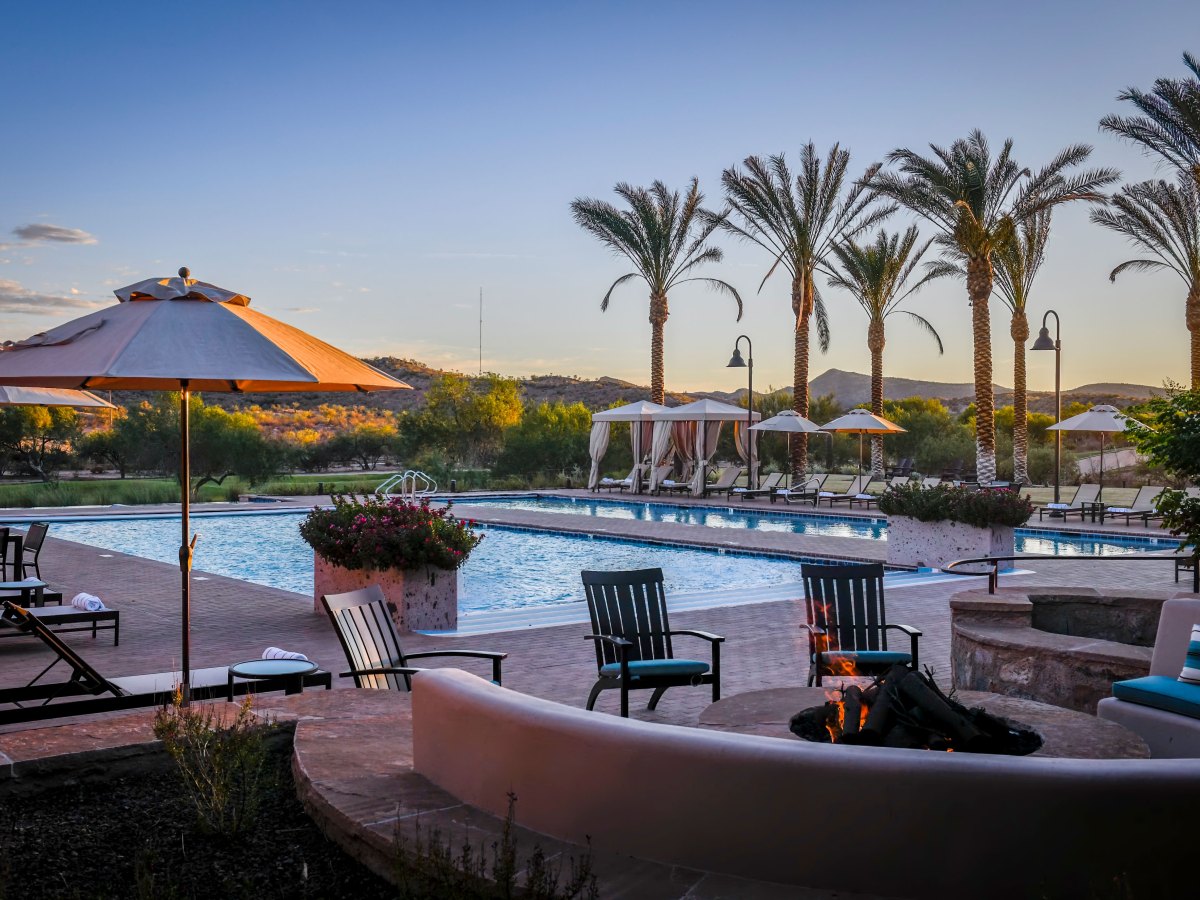
The retreat took place at Rancho de los Caballeros in Wickenburg, Arizona, once known as the dude-ranch capital of the West. The historic ranch spreads across a vast expanse of Sonoran Desert and has been updated with renovated accommodations, a handsome golf clubhouse, a pool, villas, and other amenities, without losing its basic character. Saguaros rise from rolling high-desert terrain, the buildings sit low against the landscape, and denim-clad, cowboy-hat-wearing staff move through the property without seeming remotely self-conscious about it. It’s an ideal modern version of a form of Western leisure the region has always excelled at: low-key, outdoorsy, comfortable, a little dusty, and luxurious without trying too hard. At night the sky opens up above you, and after a day or two the quiet begins to get into your system.
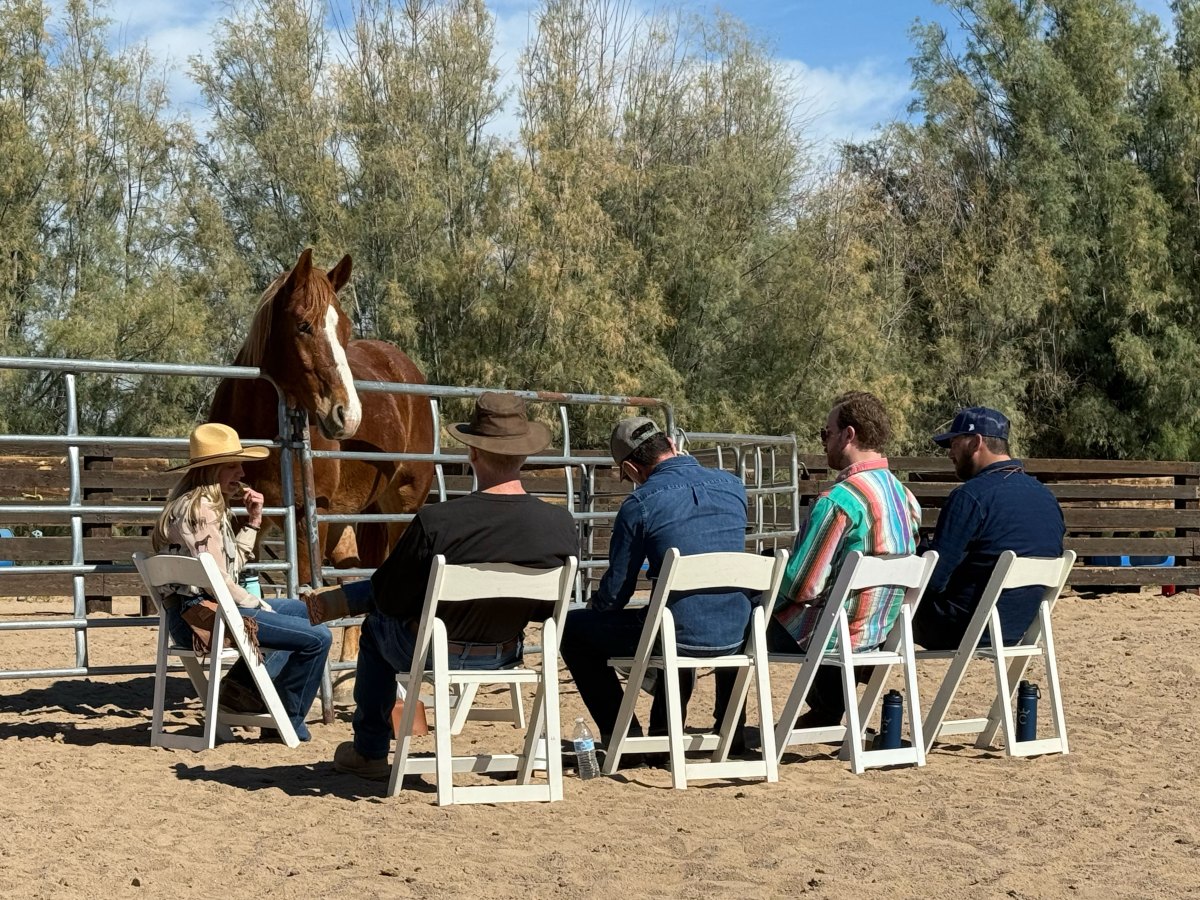
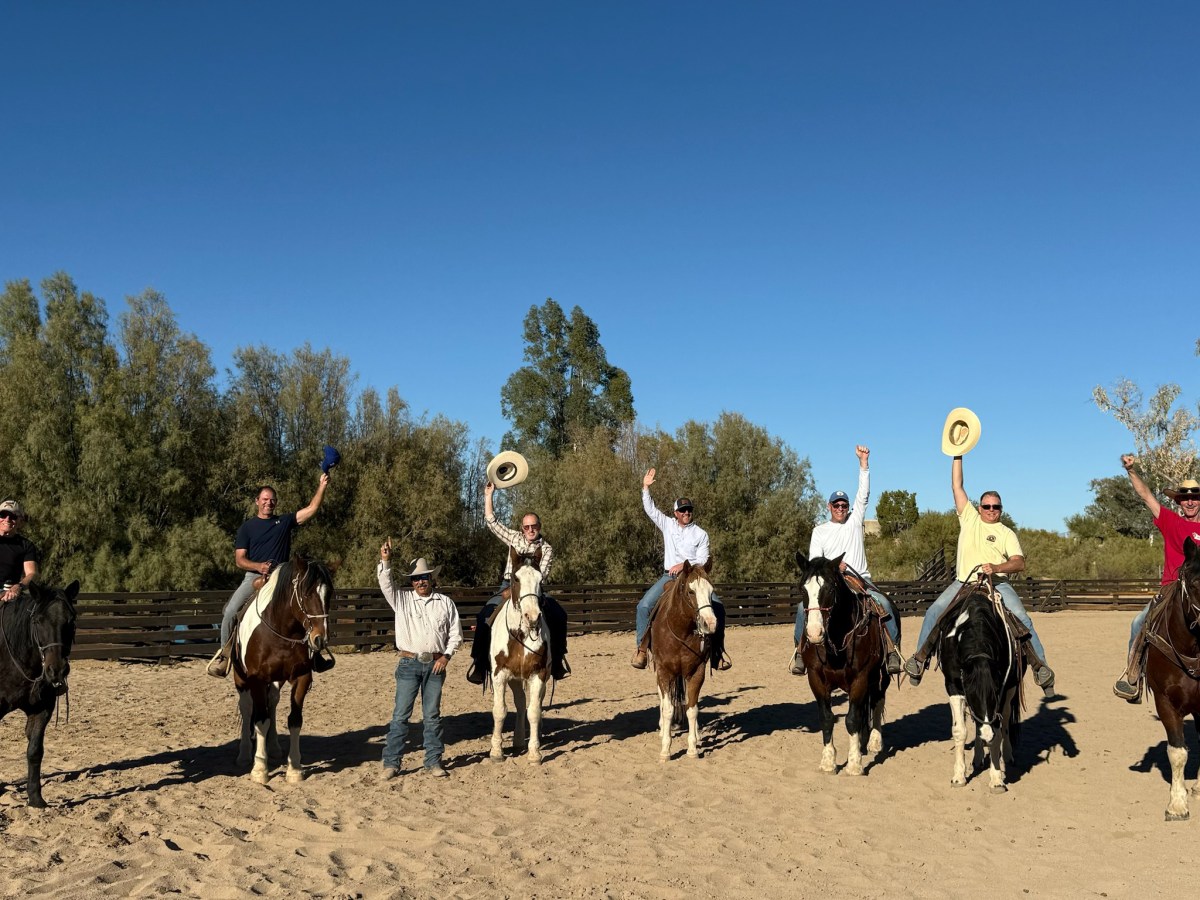
Devon is a charming and relaxed presence, grounded and very much the picture of a Western equestrian in fringe jackets, wide-brimmed hats, and fancy tooled boots. I was there with three other men who, like men, did their best at first to keep the eye contact, be present, and not let things get too raw too quickly. We represented a useful spread of ages: a twenty-something, a thirty-something, me in my fifties, and a sixty-something. At the opening session, held in a corral beside some of the ranch’s horses, we got to know one another. Men don’t let their guard down easily and will joke to keep the raw truth at bay, and that’s essentially what we all did as Devon kindly guided us through introductions.
Courtesy of Hugh Garvey
I’m not going to betray any confidences, but as the men opened up, the horses next to us seemed to change with the emotional temperature. Animals that had been tense or distracted settled. Others moved closer when the conversation became more intense. Yes, this sounds woo-woo, I realize, and I kept trying to explain it away. But standing there it was hard not to see them as barometers of what was happening around us.
The other guys had more horse experience than I did, so when it came time to pick our horses for the session, I knew to go for a smaller one on the bigger-than-me spectrum. His name was Old Fashioned, and he calmed me like a good cocktail.
Courtesy of Hugh Garvey
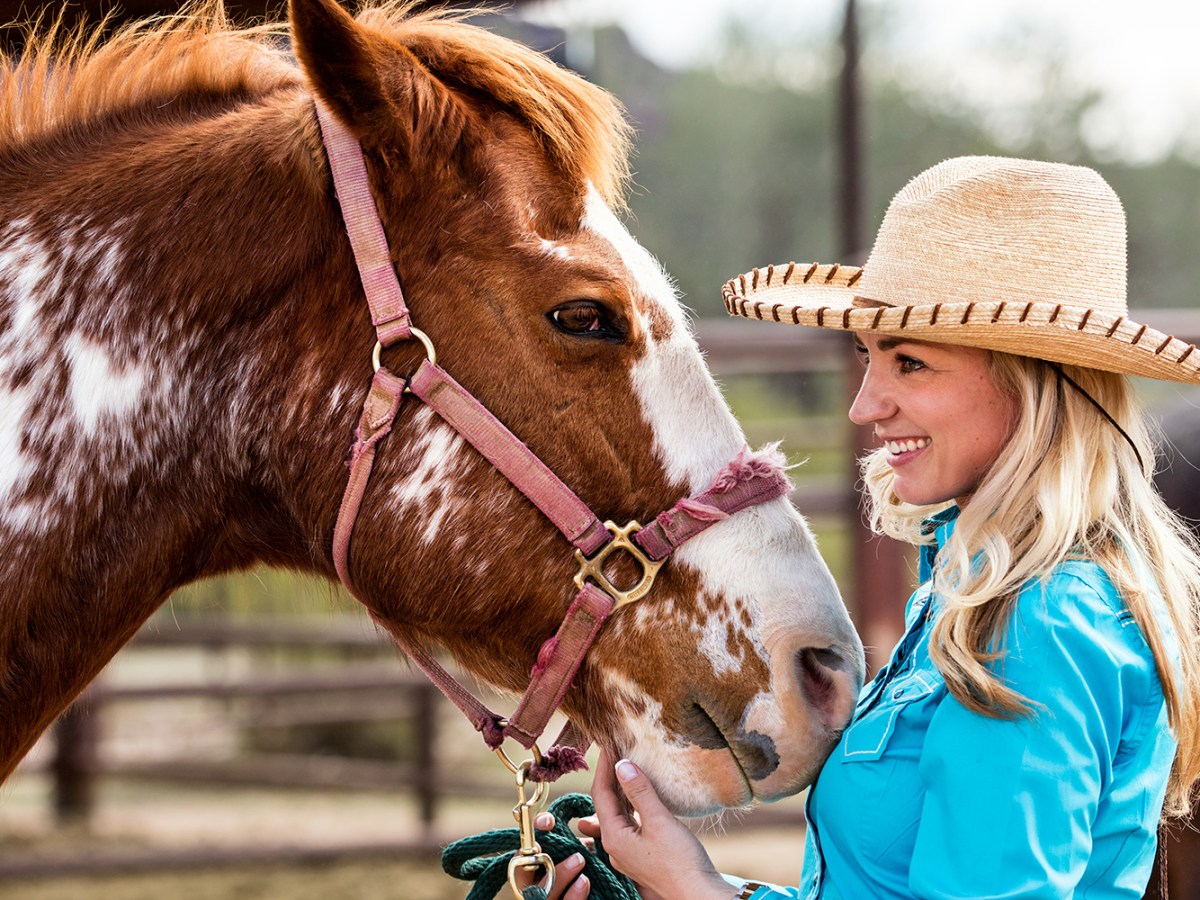
Every day we’d groom our horses, lead them around the corral, and spend time simply learning how to be around them. At first it felt like straightforward horsemanship, but the exercises quickly exposed habits that had very little to do with horses. Asking a 1,200-pound animal to move forward, backward, or to one side requires clarity. You can’t think your way through it. If you are tentative, the horse may ignore you. If you push too hard, it may resist. The animal responds less to the story in your head than to what you are actually doing.
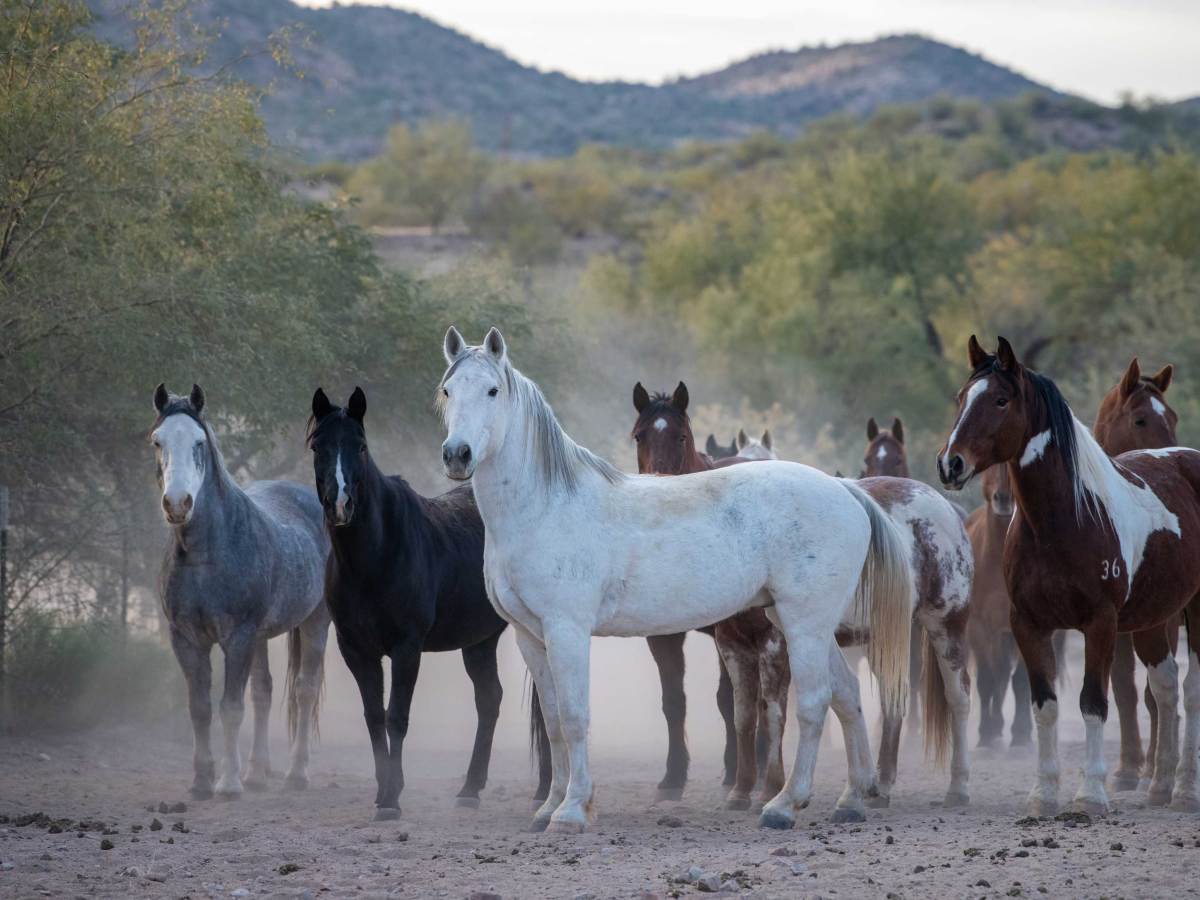
Over the next few days we fell into a rhythm of sharing, facing our fears, and, most critically, hanging out with and connecting with these beasts that are so much bigger than us. Some of the men were more open than others at the beginning. By the end, everyone was sharing and supporting each other without the jokes doing quite so much defensive work. Meanwhile, the horses were always there, often reacting in ways that felt almost improbably well timed. During some of the more emotional moments, one of the horses would come close and press its head into a chest or shoulder and simply stand there with the full force of its 1,200 pounds.
Courtesy of Rancho de los Caballeros
We also got dusty, and a little sunburned, and hung out with real cowboys. One of them was Tony, a wrangler I’d crossed paths with years earlier at another ranch, who had the kind of understated Western wisdom that sounds almost too simple until you realize you’re still thinking about it later. “The best things in life aren’t things,” he told us. He talked about the younger wranglers who work for him and how mentoring them had become part of his calling, putting his hand over his heart as he said it. He also explained that matching horses and riders was, after years of experience, basically a gut thing.
The horseshoer contributed another line that stuck with me: “Not everything is downhill and shady.” Sometimes the trail is uphill and exposed. You still have to ride it.
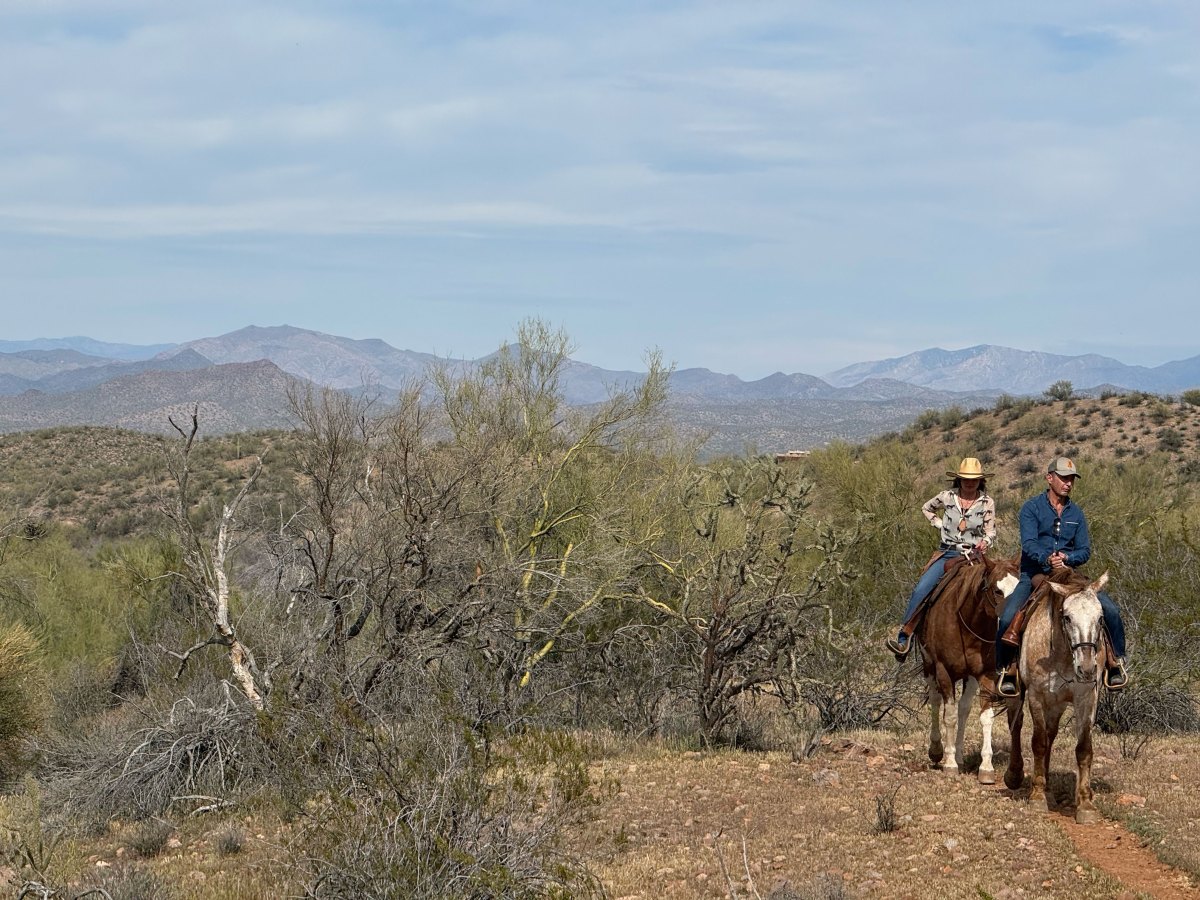
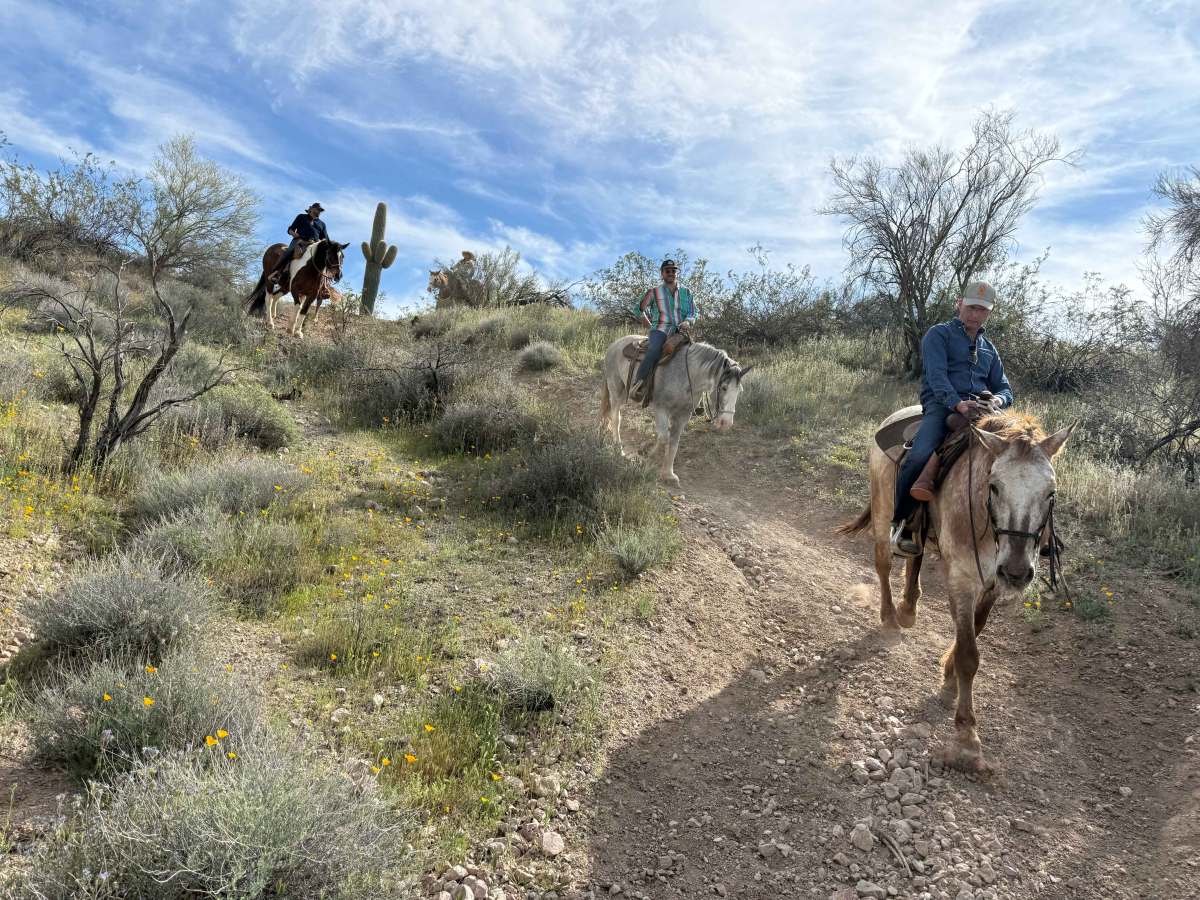
And yes, we did the chill trail rides. Then we did team penning: corralling cattle and learning to move with the horse instead of simply sitting on top of it. This was where my usual operating system kicked in. When Old Fashioned didn’t do what I wanted, I pushed harder. Then harder still. “Keep it fun,” Tony called out.
Courtesy of Hugh Garvey
That line landed harder than it probably should have. My instinct when something isn’t working is to identify the problem, increase the effort, and solve it. But pushing Old Fashioned harder didn’t make him cooperate more. If anything, it made the communication worse. When I relaxed, got clear about what I wanted, and stopped trying to force the outcome, we worked better together.
The most profound thing about the experience was how physical the whole idea became. We talk all the time about centering yourself, regulating your nervous system, listening to your gut, leading from the heart. I understand all of that intellectually. But with a thousand-pound-plus animal next to you, it becomes harder to keep it abstract. Horses are social animals that pay very close attention to one another because a threat to one can become a threat to the herd. They are built to notice changes in tension and mood. You bring yours down and the horse may respond. You tense up and that can register too. The gut and the heart, whatever they are, are pre-language and pre-thought. That was the part of me being activated. Was it going to stick? Ever skeptical, I wondered.
Courtesy of Rancho de los Caballeros
At the end we brought horseshoes, dirt, and leather-worked pendants home with us. It all felt profound there in the desert. Then I returned home and the normal routine came back: work, family, email, deadlines, and the constant scanning for whatever problem might be approaching over the horizon. Was I different? I’d like to think so. I catch myself now focusing on the beat of my heart, tuning in the way Tony did when he talked about the people he cared about mentoring. It sounds earnest because it is. But the lesson I brought home wasn’t that horses possess some mystical ability to solve your problems. Old Fashioned didn’t tell me to quit my job or radically reinvent my life. What he did was remind me to pay attention to the state I bring into a room. Not unlike horses, people feel your energy and often amplify it back to you. Pressure can create resistance. Anxiety can be contagious. Calm can be too. For someone who has spent much of his life scanning the horizon, anticipating problems, and trying to fix them before they arrive, there was something useful in realizing that sometimes the next move isn’t to push harder. Sometimes it’s to notice what you’re bringing into the corral.
The next Unbridled Men’s Retreat is November 12-15 at Rancho De Los Caballeros.