A New Kind of DIY Is Taking Hold in the West
Lovable is making it easier for people without coding backgrounds to turn their expertise into websites, apps, and businesses—a shift that could have big implications for the entrepreneurs, makers, and experts we cover across the West.

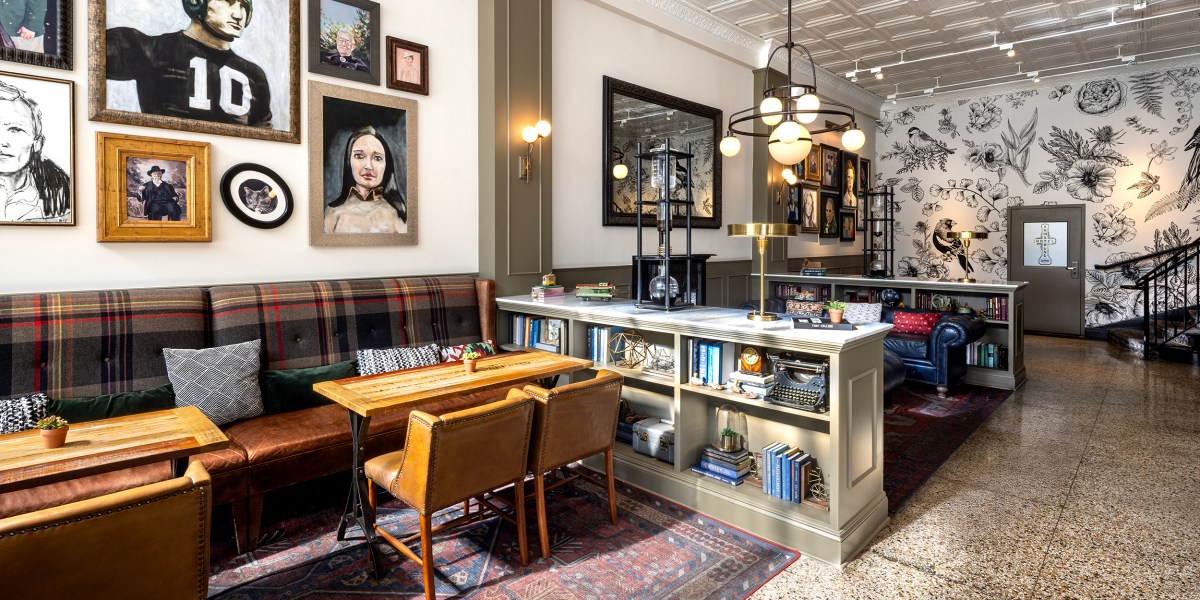
The Lovable platform can widen horizons for any business owner, even those who live outside of tech hubs. Photo by Jose Rago for Unsplash.
At Sunset, we spend a lot of time around people who build things. Sometimes that means a house, a garden, a restaurant, a winery, a hotel, or a small business. Sometimes it means turning a very specific obsession into something other people suddenly want too. What connects many of those people is a willingness to look at a problem and make the thing they wish already existed.
That is one reason Regent—the global investment firm founded by investor and Sunset publisher Michael Reinstein with holdings across media, technology, and industrials, including Sunset—has invested in Lovable, an AI platform designed to let people create websites and software by describing what they want in ordinary language. The investment is part of Lovable’s latest funding round, and the premise behind it is straightforward: Software creation is beginning to move beyond programmers.
Lovable says four out of five of its users work in nontechnical roles, two-thirds come from outside the technology industry, and what people build is often closely related to the work they already do. In other words, a designer builds around design problems, an operator around operational problems, and a small-business owner around the particular frustrations of running that business. That is the part that interests us.
Courtesy of Lovable
For years, a small business that wanted custom software generally had two choices: Hire someone to build it or adapt the business to whatever off-the-shelf tool already existed. Now, platforms such as Lovable are beginning to offer a third option: Build something yourself, even if you don’t know how to code. The possibilities in the Sunset world are easy to imagine. A nursery owner could create a plant-selection tool tailored to a specific climate. A guide could build a custom client portal. A small inn could make a digital concierge based on the owners’ actual knowledge of the surrounding area. A farmer could create a CSA ordering system that works exactly the way the farm does.
One of Lovable’s most compelling examples already comes from California. After the 2025 Los Angeles wildfires, San Francisco-based AI researcher Shalini Ananda built Fire Fairness, a tool intended to help legal-aid organizations evaluate disputed wildfire insurance claims. Ananda understood the underlying problem and technology but lacked experience creating the kind of user-friendly interface attorneys could easily use. Lovable helped her turn that work into a functioning web application.
That example gets at the larger investment thesis: The person closest to a problem may increasingly be able to build the solution herself. Other Lovable users have applied the same idea in very different fields. Los Angeles filmmaker and music producer Mike Burns used it to create a filmmaking platform despite having no traditional coding background. A nutrition expert used the platform to build a health product, while a former fashion designer has used it to rapidly turn ideas into working digital tools.
More than 60 million projects have already been created on Lovable, with another 1.2 million being built each week. Nearly eight in 10 surveyed users say they are building a business or side project they hope to monetize, and more than a third say they are already generating revenue. Those numbers help explain Regent’s confidence in the company. But for Sunset, the more interesting question is: What happens as building software becomes accessible to people whose primary expertise is something else entirely?
Of course, AI does not magically give someone good judgment, and that’s the beauty of having a tool that meets the creator more than halfway. You still need to understand the customer, recognize what works, have good ideas, and know what is worth building. In that sense, this technology may make expertise more valuable rather than less. The gardener knows what grows in Fresno. The guide knows the trail. The shopkeeper knows her customers. The designer knows what looks right. The obsessive knows the 200 details about a subject that a generic software company never will. For a long time, those people could possess the expertise without possessing the means to turn it into software. Now the distance between the two is getting dramatically shorter. There’s something very Western about that: See a problem, figure out what ought to exist, and make it yourself.
Disclosure: One of Lovable’s new Series C investors is Regent, Sunset’s parent company.
Click here to read the full announcement from Regent.
Read Lovable’s announcement here.