What Most People Get Wrong After Downsizing to a Smaller Closet, According to a Pro
You have way more room than you probably think.
Kostikova/Getty Images
Over the past 20 years, professional organizer Amanda Titchenal has moved near-countless clients into smaller homes. And while there’s certainly more freedom that comes with a downsize, some find themselves wondering how to adapt to new, slightly tighter quarters. Maybe your walk-in closet is now half the size with one hanging bar and one shelf, or perhaps you’re considering moving most of your belongings into a dresser.
Whatever your decluttering debacle, check out the common mistakes to avoid—and Titchenal’s small closet organization ideas to copy instead—before making your next move.
Hanging Foldable Items
While hanging is usually Titchenal’s go-to strategy, folding could be the secret to securing more closet space. “Canvas hanging bags might hold 12 shirts when you’re hanging them, but you could put 60 shirts if you’re folding them,” she says.
Bulky items typically include garments like hoodies, denim, and sweaters. If you can, Titchenal says it’s best to fold those and put them on a shelf, in a drawer, or in a hanging closet organizer. As for hanging, that precious real estate should be reserved for more delicate, wrinkle-prone items such as blouses, dresses, slacks, and business attire.
Using Mismatched Hangers
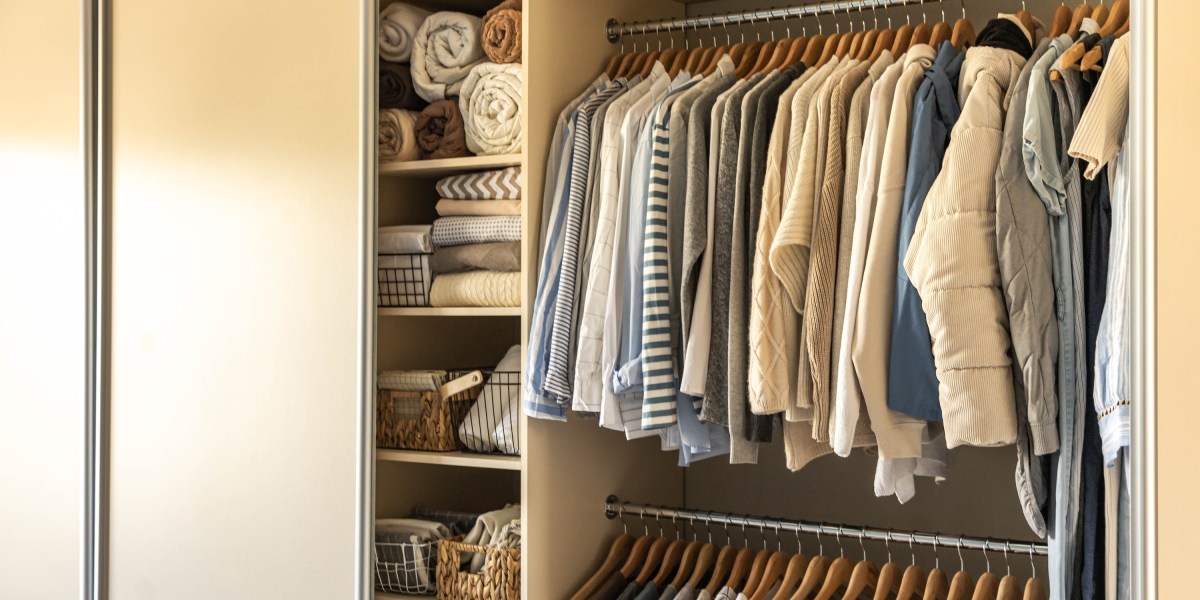
Having a variety of hangers doesn’t just look disorganized, but it can contribute to the clutter in your closet. Investing in slim, uniform hangers will free up more room in a small closet. “When you have mismatching hangers, they’re different thicknesses and sizes, so they don’t fit nicely in a closet,” Titchenal explains.
Amazon, Target, and The Container Store all sell slim hangers in various materials, so you can choose from plastic, metal, velvet, or wood options.
Only Stacking Vertically and Horizontally—Not Diagonally
It’s easy to think about closet organization in two sections: hanging and taking up horizontal space, or folding and stacking vertically. But there’s a little-known third option: tiered hangers. Though these aren’t Titchenal’s favorite organizing hack, they can offer a solution for people who want to hang more garments. “Instead of having five shirts hanging next to each other, these hangers allow you to maximize vertical space because they drop down in a tier.”
Leaving Walls Empty
“Any dead wall space you can find to hang a hook will be super helpful, too,” Titchenal adds. “Use hooks to hang a handbag, robe, jacket, backpack, or hats.”
Only Putting Shoes in Shoe Storage
Over-the-door organizers, stacking shelves, and hanging shoe bags are all possible storage solutions for small closets. Another pro tip? Just because a product is promoted as “shoe storage” doesn’t mean it’s limited to performing that specific function. “Sometimes, I’ll take stacking shoe shelves and put them on the top shelf, and then that acts as more storage,” Titchenal says. “The items don’t necessarily have to be shoes.”
Placing Seasonal Garments in Your Closet or Dresser
Titchenal says if your closet is filled to the brim, categorize your garments by what you wear regularly and what you wear seasonally or occasionally. The items in the latter bucket can go in under-the-bed storage or a separate closet in a different room.
“Your main closet in your bedroom should be the things you use the most, and then the secondary spaces should hold other things,” she says. “A lot of people tend to use a dresser for stuff they don’t ever wear, like beanies, scarves, and swimsuits—and we try to avoid that. It should really be daily garments, like pajamas, workout wear, underwear, and socks.”
We only recommend things we love. If you buy something through our site, we might earn a commission.