How to Turn Wasted Space into Curb Appeal Gold
Front yard landscaping ideas that create a softer, more functional outdoor flow.
Karen Santos
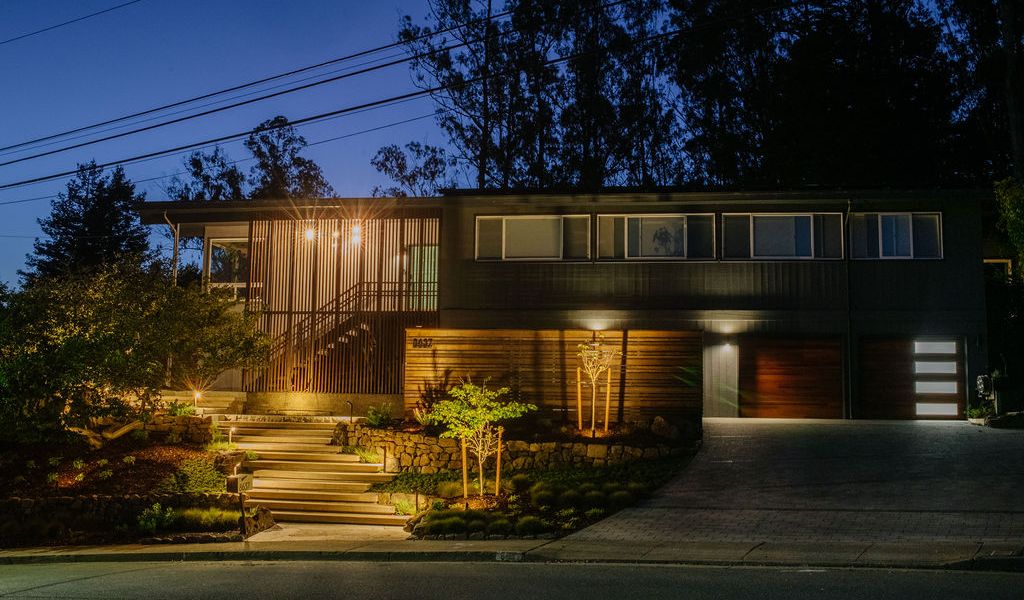
There’s a certain kind of front yard that quietly disappears into the background. The stairs feel awkward, the path unclear, the planting beds disconnected from the home itself. You move through it quickly instead of wanting to stay awhile. But when landscape designer Lupe Monroy of GOZO Spaces first visited this property, she saw something else entirely: possibility.
Despite uneven paths and a confusing split staircase, Monroy immediately recognized the site’s potential. What followed was a thoughtful redesign that transformed a neglected front yard into a warm, layered outdoor space designed for slowing down, gathering, and actually being lived in.
Here’s how she did it.
Karen Santos
1. Start with Feeling, not Just Function
Before materials or plants entered the conversation, Monroy focused on how the space should feel. Her goal was to create a front yard that felt calm, playful, and welcoming—a garden that invited people to slow down rather than simply pass through.
That perspective comes from her upbringing in a traditional Mexican household, where outdoor spaces naturally functioned as extensions of the home. Some of her earliest memories involve gardening alongside her father after long workdays. “Our most meaningful conversations often took place while gardening together,” she says.
That sense of warmth and connection became the emotional foundation of the redesign.
Karen Santos
2. Fix the Flow First
The original landscape wasn’t just visually disconnected—it was confusing to navigate. The split staircase made it unclear where guests should go, while uneven paths made the entrance feel awkward and unsafe.
Instead of jumping straight into cosmetic updates, Monroy focused first on circulation and usability. “Site analysis and inventory are fundamental steps in the design process,” she explains, noting that the principle of “form follows function” guided the redesign.
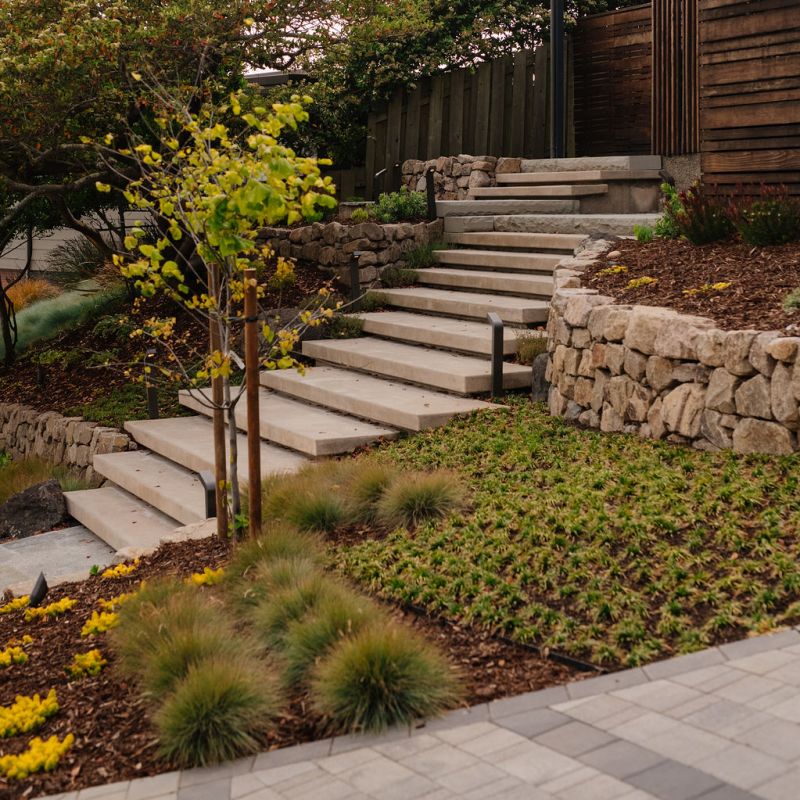
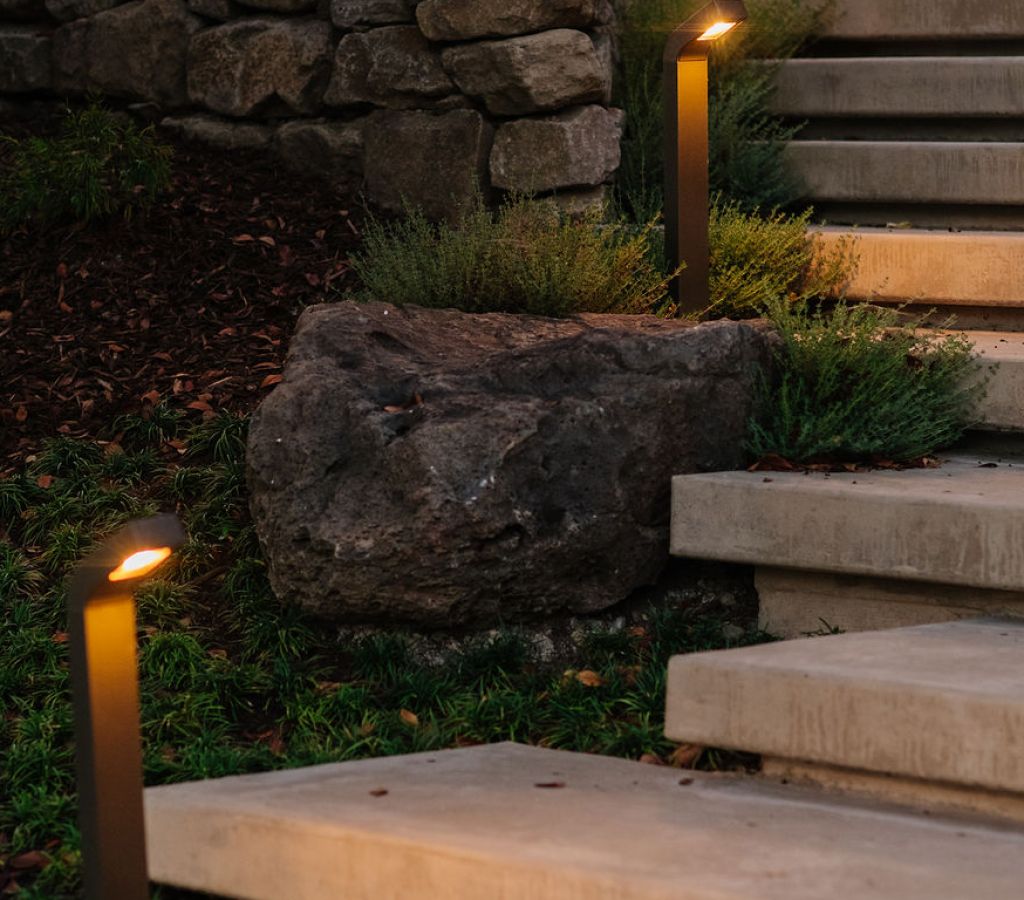
Today, layered stone landings, offset stairs, and concrete pathways create a much more intuitive journey through the space. Large plant groupings and thoughtful ground cover help organize the landscape while softening the hardscape elements around it.
Karen Santos
3. Use Texture to Warm up Modern Design
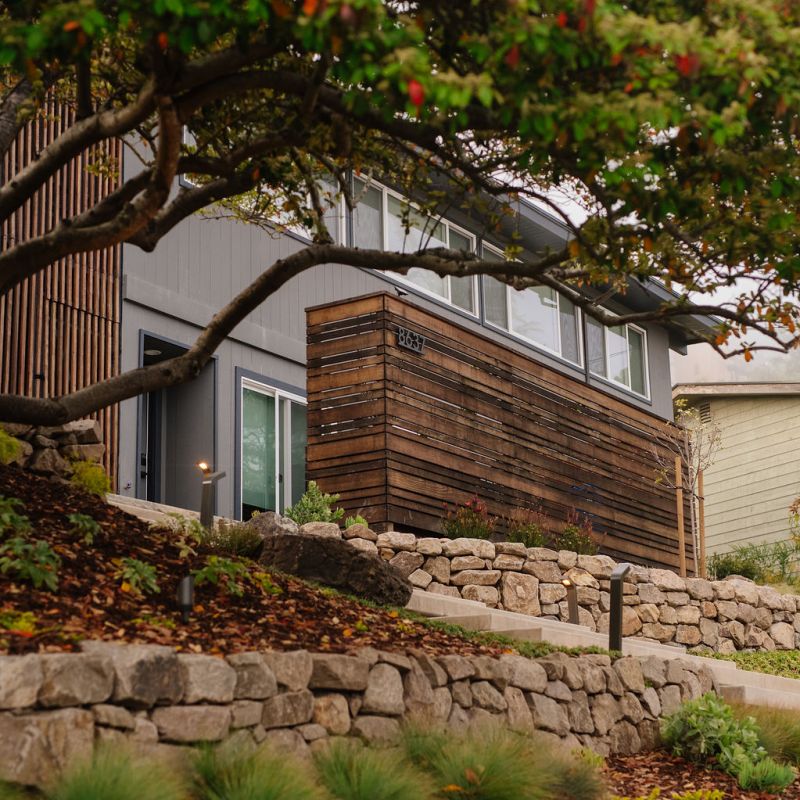
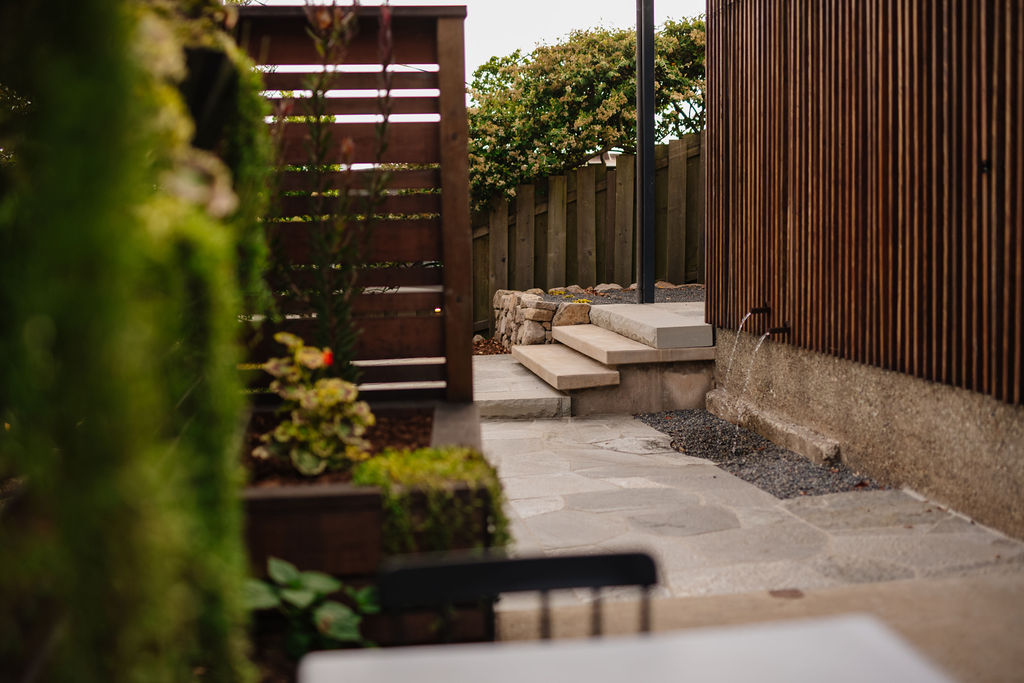
The homeowners’ initial instincts leaned heavily toward modern concrete, but Monroy knew the space needed balance to avoid feeling cold or overly stark. For her, hardscape should provide structure while allowing the landscape itself to shine. Natural stone walls now soften the clean lines of the concrete pathways, while gravel and steel edging create subtle transitions throughout the garden.
“The texture of a natural stone wall adjacent to a modern concrete path brings a sense of warmth and comfort,” she says. Some of the project’s best details were already hiding on site. Existing boulders, once overlooked, were carefully repositioned to define pathways and create moments of pause throughout the landscape. One large boulder beneath a mature tree has since become a favorite shaded seating spot for the homeowners—and their cats.
Karen Santos
4. Keep the Plant Palette Cohesive
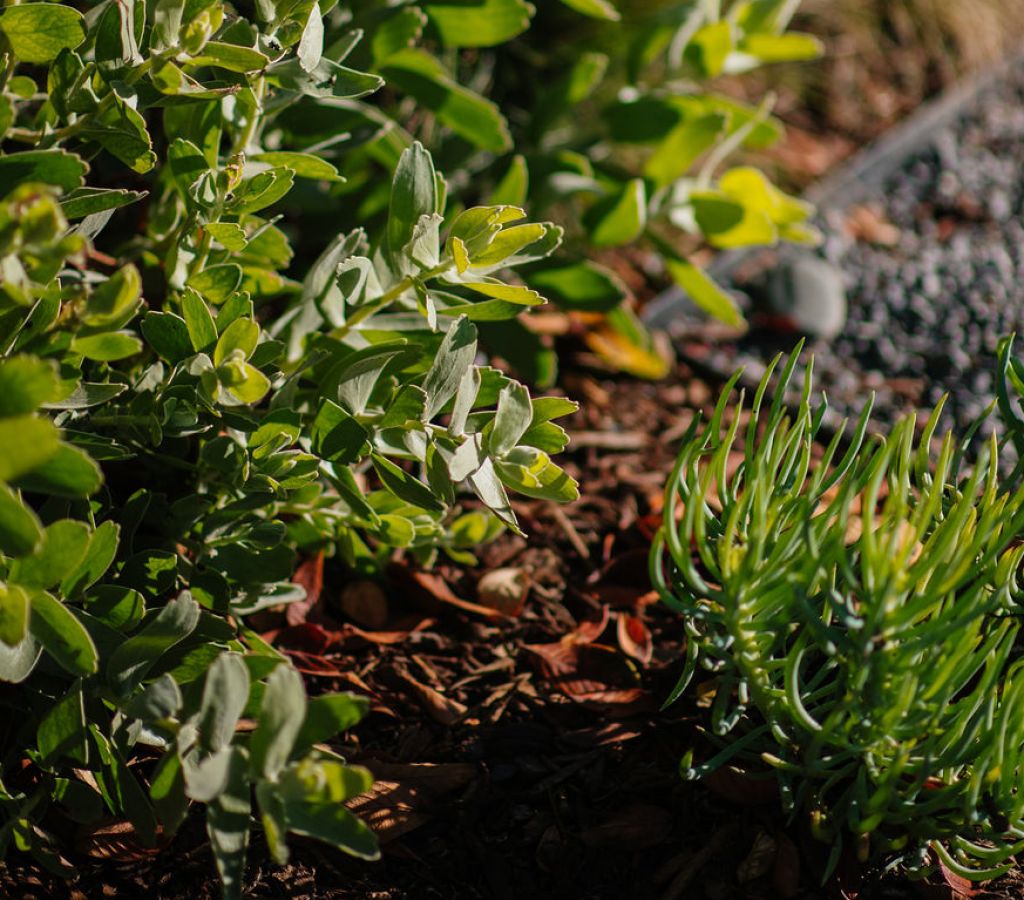
Rather than overcrowding the front yard with too many plant varieties, Monroy approached the planting design as a unified composition built around texture, movement, and year-round interest. Her California-friendly palette includes dogwoods, Cercis, Festuca, Helianthemum, Sedum rupestre ‘Angelina’, Leucospermums, and Leucadendron salignum ‘Blush.’
The key, she says, is restraint. Balancing evergreen and deciduous plants while leaving enough negative space keeps the garden from feeling chaotic. That same philosophy shaped one of the project’s biggest decisions: preserving the mature tree already on site. What was once viewed as an obstacle ultimately became the anchor of the entire landscape, adding shade, softness, and a sense of permanence to the front yard.
Karen Santos
5. Think Beyond Curb Appeal
For Monroy, the success of a front yard goes far beyond appearances. The real goal is creating a space that changes how people experience coming home. “The front yard is often seen merely as a passage from one point to another,” she says. “However, my aspiration is for it to become a joyful space where, after a long day, people instantly feel peaceful and welcome home.”
It’s a mindset she believes more homeowners are embracing as outdoor spaces become increasingly important extensions of daily life. Her advice for anyone staring at a neglected front yard? Start by thinking about movement and emotion first. An intentional path, balanced planting, and even a single focal point—a tree, boulder, or shaded nook—can completely transform the way a space feels.
Because sometimes the difference between overlooked and unforgettable is simply giving a space permission to be lived in.
Design: GOZO Spaces
Landscape Contractor: Rivera Landscape & Construction Inc.
Subcontractor (Concrete Work): Lara’s Concrete