This Sprawling La Quinta Property Is Mid-Century Modern at Its Best
Meet Sunrise, one of the historic hidden gems in The La Quinta Country Club.
Scott Pasfield
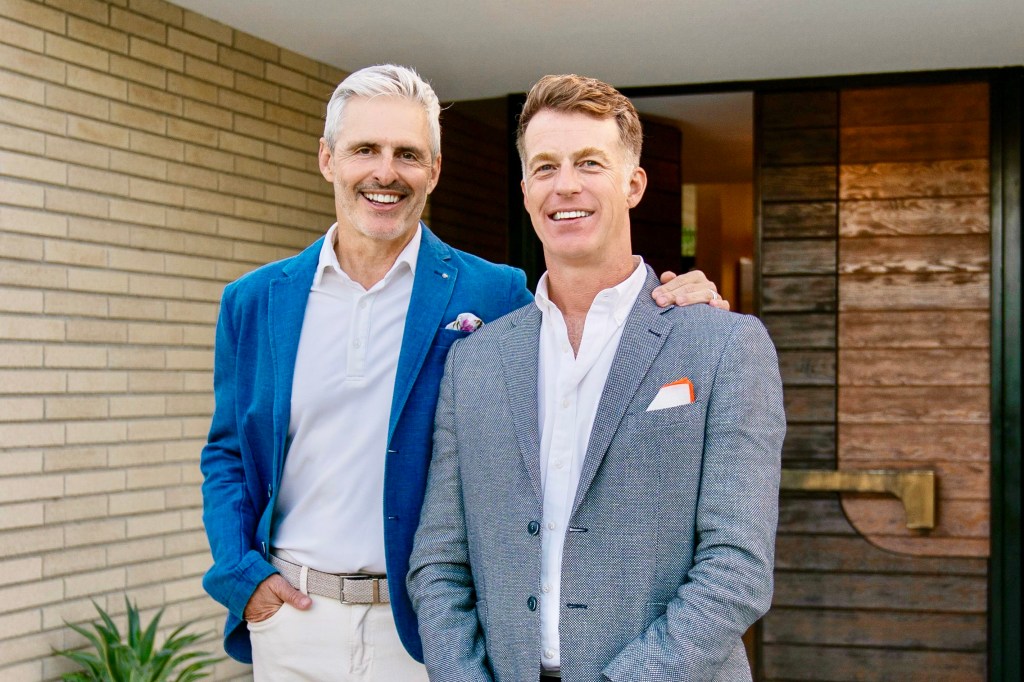
Palm Springs is synonymous with mid-century modern architecture, but this year’s Modernism Week is taking visitors about 20 miles southeast to the quieter corner of the Coachella Valley. Nestled near the base of the Santa Rosa Mountains, The La Quinta Country Club’s first-ever, sold-out tour will walk guests through six homes in the community. One of the properties, owned by Robert Millar and Mario Guariso, has affectionately adopted the nickname Sunrise.
“When you’re in the primary bedroom, floor-to-ceiling glass windows and doors open up to the pool, the spa, and the mountains,” says Guariso. “The first thing you see, though, is the sun rising in the morning. That’s why we call our house ‘Sunrise.’”
Guariso, who ran the Bay Area design business Seed Interiors for 17 years, has since turned his focus to personal projects. After purchasing Sunrise in 2023, the couple immediately started dreaming up significant upgrades for the four-bedroom, five-bathroom mid-century modern home.
“We did it all together,” Millar says. “I’m what you would call a ‘frustrated designer.’ I’m a retired lawyer, and I’m someone with a lot of opinions.”
Clark and Valentine
“He’s the most interesting client I’ve ever had,” Guariso adds. “Very demanding. But to be honest, it’s so much fun to have somebody that you share so much affinity with to design anything, but especially our home. It’s been a fun process.”
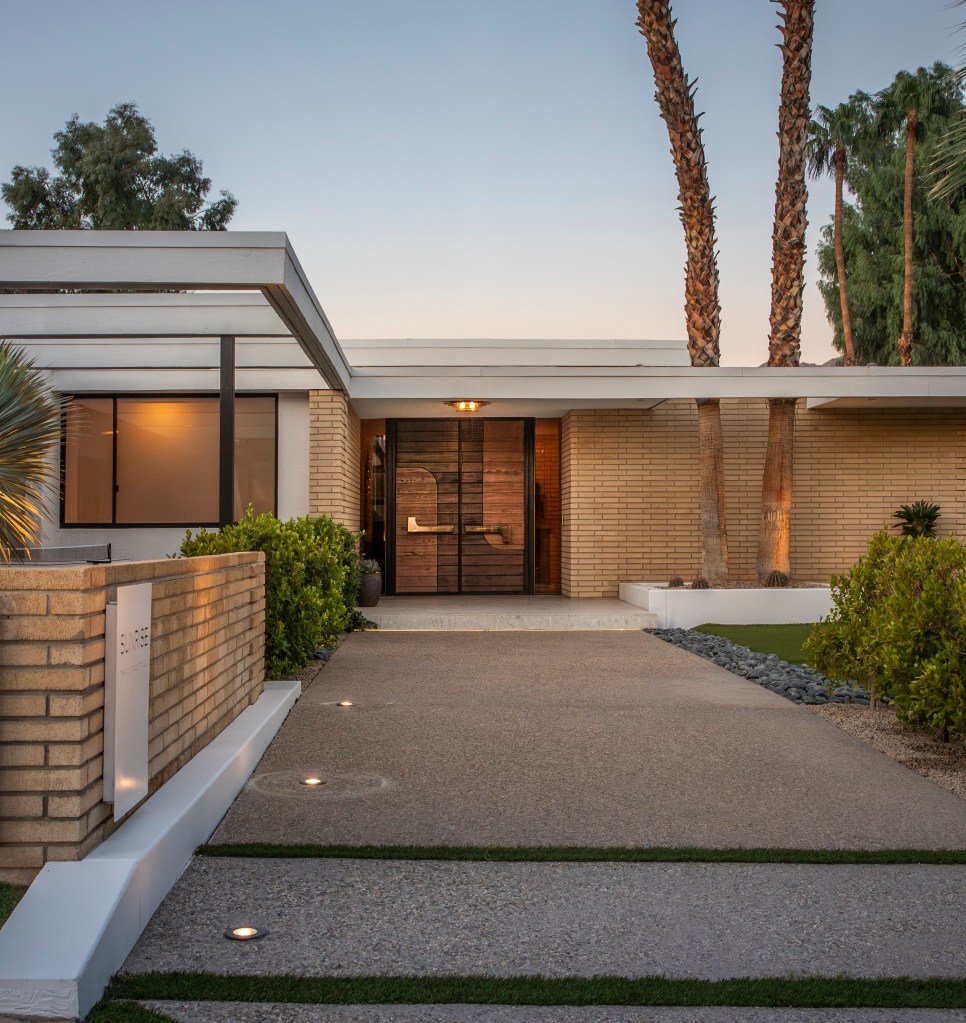
Guariso, an interior designer and architecture consultant with more than 30 years of experience, says they had two core priorities with the remodel: restoration and liveability. Modernized lighting, a new plumbing system, and smart home features were added. Wood panelings, which were stained in a golden-yellow tone, and the front door (painted in a punchy yellow and gray) were all returned to their original hues and finishes. The flooring was restored with a warm ivory-beige Italian marble terrazzo, and several changes were made to improve their kitchen’s cabinetry, countertops, and overall flow.
Scott Pasfield
“There’s a lovely pantry off the kitchen, but to get from the garage and bring groceries all the way into the pantry, it was a bit of a schlep,” explains Millar. “We opened the wall and made it into a butler’s pantry to improve the flow and create a passageway to the kitchen.”
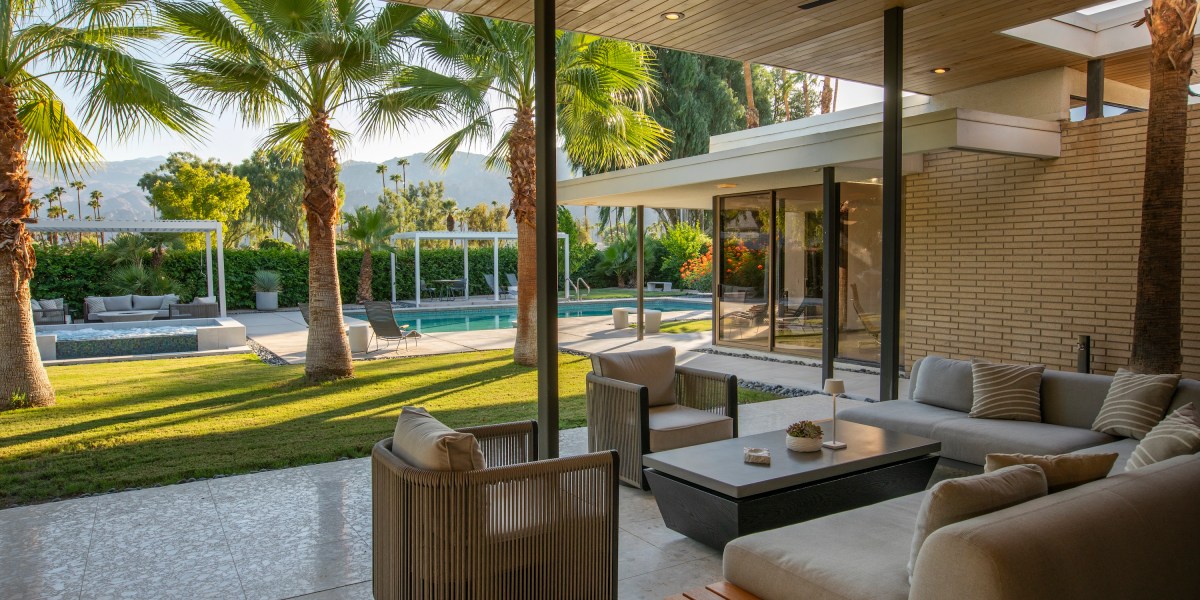
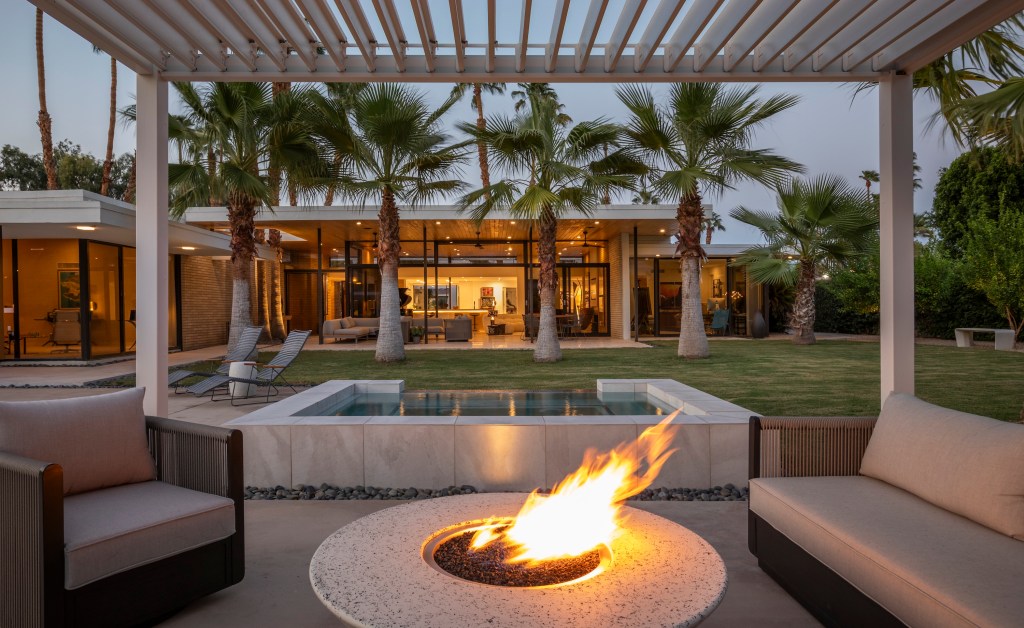
Perhaps the biggest undertaking, though, was the landscaping. They kept the 12 legacy palms, some of which are growing through apertures in the roofline, and redesigned everything else. The classic mid-century pool with a diving board felt isolated and disconnected from the home, so Millar and Guariso added a spa and fountain feature that aligned with the original architectural design.
To promote even more relaxation in their backyard oasis, they carved out several spaces for shaded areas with precast concrete benches by QCP and brought in two louvered pergolas and a fire pit. In the front yard, they removed the larger, more obtrusive driveway to create a more lush, relaxed entryway.
Scott Pasfield
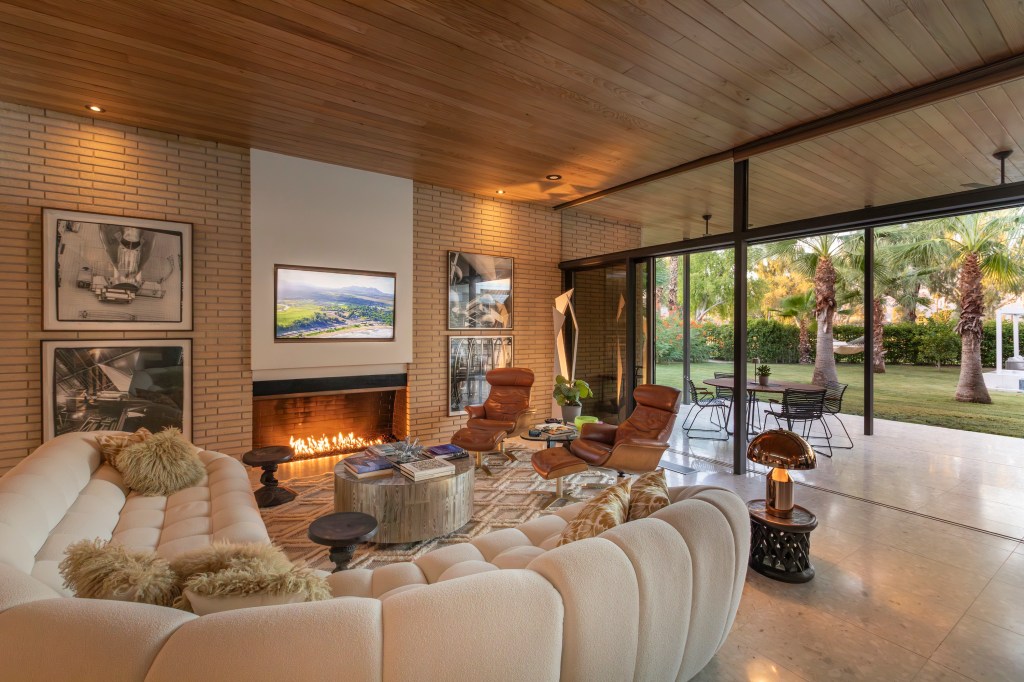
“Whenever I’m indoors, I feel like I’m also outdoors,” Guariso says. “We have views of the fairways, the mountains, we have beautiful trees and landscaping. It doesn’t matter where we are in the house; we’re always walking by walls made out of glass, and we’re able to live as if we were outside—and vice-versa.”
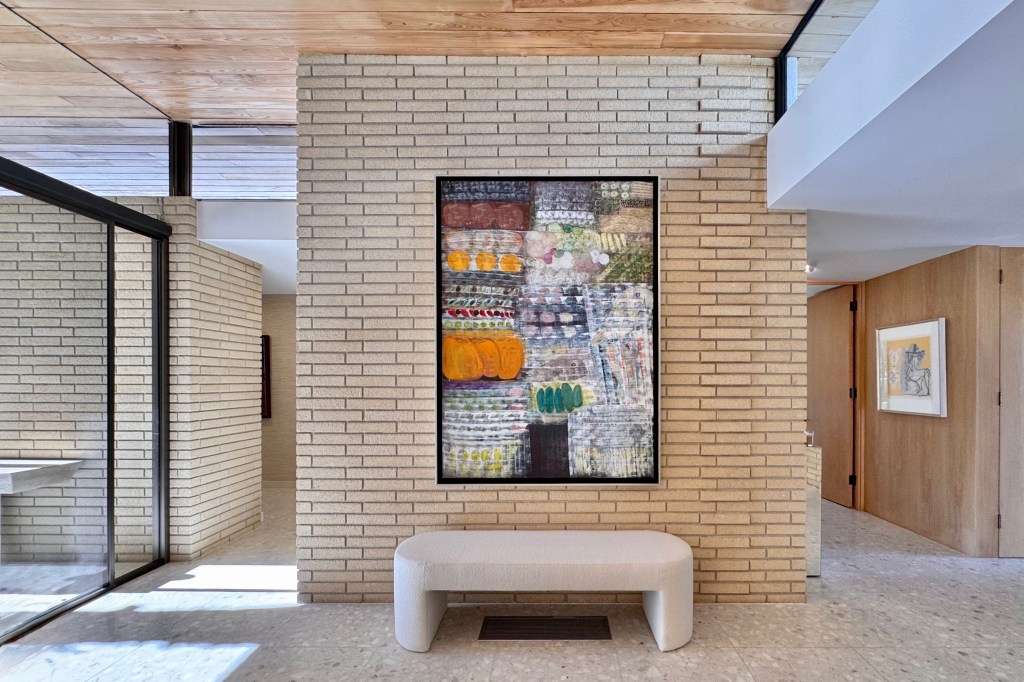
With the help of architectural historian Luke Leuschner, Guariso and Millar learned their home was designed by lauded architect Robert “Bob” Ricciardi in 1968. One of his early works in the Coachella Valley area, the 4,500-square-foot home reflects the mid-century modern style with clean lines, original exposed California Roman bricks, floor-to-ceiling glass windows, and one key departure from other historic homes in the desert: high ceilings.
Mario Guariso
“In the 1950s, homes were designed to incorporate the materials and the views, but for the most part, the ceilings in the desert were lower to mitigate extreme temperatures and keep construction costs low,” Guariso explains. “We were so excited to have a Ricciardi-designed home, because he not only utilized organic materials such as exposed bricks, stone, and wood, but he also incorporated generous overhang structures to open up the home to expansive views without compromising thermal efficiency.”
“After we restored all of that, it was way easier to create spaces where we could relax, and put our feet up on the table,” he continues. “We want to enjoy the house, not feel like it’s a museum.”
In 2009, the previous owner tapped Palm Springs modernist architect Lance O’Donnell to reconfigure the home, while preserving its architectural integrity. The six-car garage was transformed to make space for a new media room, Fleetwood doors were installed to reinforce the indoor-outdoor connection, and ceilings were reimagined with wood planks.
Scott Pasfield
When they first moved to La Quinta, Guariso and Millar recall walking the fairways in the community and looking at houses they could potentially purchase to lay down some roots.
“Robert would ask me what it would take for us to stay here, because he had already drunk the Kool-Aid,” Guariso recalls. “And my house, the house, was always Sunrise.”