
These Should Be Your Garden Resolutions in 2026
This year, resolve to reconnect—with your garden, your senses, and your wild self.
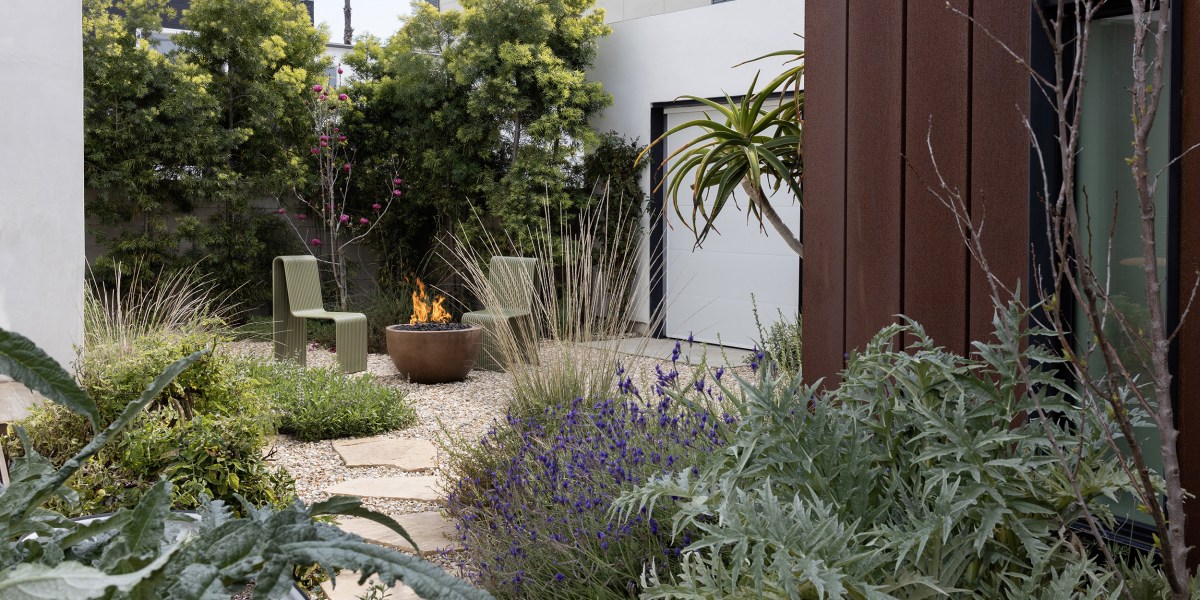
This firepit lounge, designed by Nectar Landscape Design, comes alive with silvery sages, feathery grasses, and artichoke foliage that create a calm, unified palette. A blossoming Magnolia soulangeana takes center stage, framed by LAUN chairs and grounded with flagstone and gravel from Sunburst Decorative Rock.
Photo by Sylvia Hardy.
In the quiet months of winter, when much of the garden is resting, there’s an unexpected richness just below the surface. It’s a time for reflection, small shifts, and sensory immersion—the kind of recalibration that doesn’t require a to-do list or a total renovation. For Neive Tierney and Stephanie Lin, the duo behind Los Angeles- and Santa Barbara-based firm Nectar Landscape Design, this slower season offers exactly what many of us crave: a chance to reconnect with intention. Think of this season as a poetic lens to look at the landscape—and a compelling argument for skipping the performative pressure of New Year’s resolutions in favor of mindful presence. With a restorative design philosophy rooted in ecology, balance, and beauty, Tierney and Lin invite us to treat our gardens as places of return, not reinvention. In the spirit of a more grounded start to gardening season, we asked them to guide us through a handful of intentional shifts—gentle, achievable ways to cultivate calm and connection, from the ground up.
Less Can Truly Be More
In the quiet of winter, it’s easy to feel pressured to overhaul your garden or your life. But for Tierney and Lin, this season is an invitation to listen instead of do. “We appreciate when clients already know their property,” Lin says. “There’s something to be said for experiencing how the seasons and light shift in a place.” Their work begins in the in-between, not with dramatic makeovers but with small shifts and intentional edits. A soft, restorative space might call for filtered light, grounding textures, and quiet corners. Making an oasis meant for gathering may prioritize openness and movement.
Designing for Emotion, Not Just Aesthetics
Before a single plant goes into the ground or hardships are considered, the designers begin by asking clients a deceptively simple question: How do you want to feel in your garden? “It always catches people a little off guard,” Tierney and Lin say. “But then they smile, take a deep breath, and answer clearly. It’s almost like their whole body already knows.”
More Videos From Sunset
Tapping into emotion first—rather than Pinterest boards or mood boards—creates a garden that’s more than a pretty picture. Clients share that they want a place for their morning coffee, reading, gathering monthly with friends, or letting their kids roam barefoot while the adults lounge nearby. The space begins to take shape not just visually, but experientially.
Another question Tierney and Lin often pose: What were your childhood memories of outdoor spaces? Most people recall a time when they were free to play, explore, and imagine without constraints. Designing from this emotional place means tuning into sensory cues that support those feelings. “We talk a lot about the green hug,” Lin says. “That feeling of being surrounded—softened—by planting.” Whether it’s a shady tree canopy overhead, layered textures along the path, or the gentle sound of trickling water to muffle city noise, sensory elements aren’t just decorative.
Listening to the Land
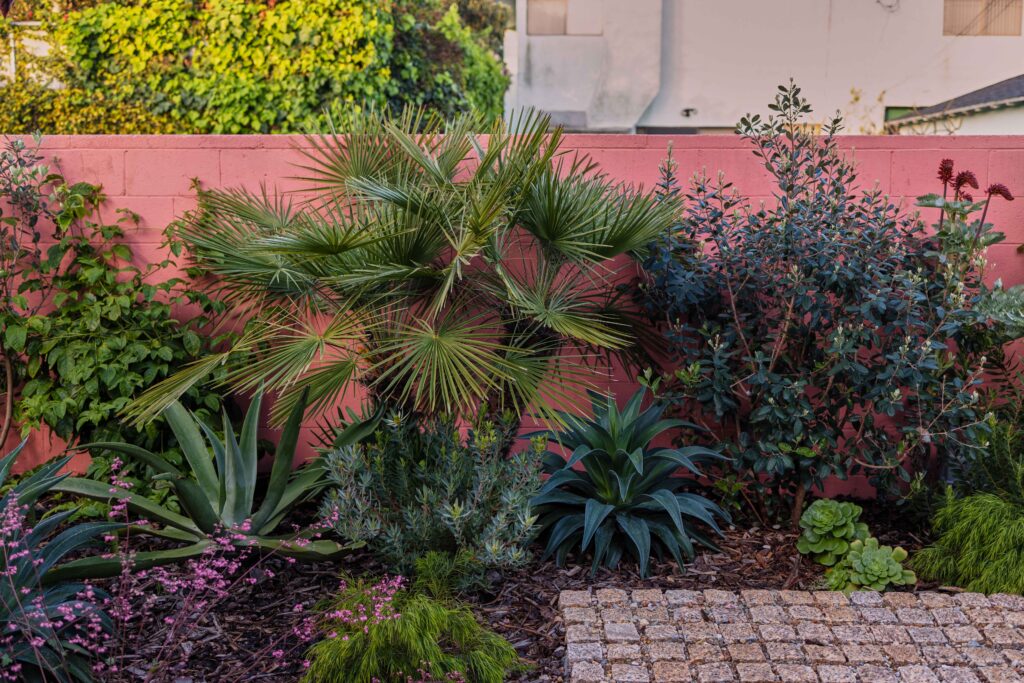
Sylvia Hardy
For Nectar, the starting point of any garden isn’t a wishlist—it’s the site itself. “The ideal design is already hidden in the land,” the team says. “Our job is to listen closely enough to find it.
This means reading the landscape like a map, decoding sun exposure, soil quality, and especially how water moves through the space. “There are always remnants—pooled areas where the soil stays heavy or dry slopes where topsoil is thin. These patterns guide grading decisions and planting strategy.”
By collaborating with the property rather than imposing on it, the team helps clients create landscapes that are more resilient and less resource-intensive over time. “Working with the land means honoring what’s already working—existing grade changes, natural drainage, light conditions. It results in gardens that require less maintenance, cost less to build, and feel more connected from the start.”
Building Ritual and Resilience
You don’t have to overhaul your yard to start tending it differently; you just have to show up. Whether it’s a morning watering routine or a quiet evening deadheading, these small gestures become rituals. Nectar recommends starting with something as simple as pruning: “Trimming is for everyone! You don’t need to know all about horticulture to start. Just go small. It’s meditative, and especially great for those of us who need to feel productive, even in downtime.”
And if you’re feeling stuck in a spiral of indecision about what to do next in your outdoor space, their advice is simple: Don’t wait for a master plan. Plant something. Start in a corner or an obvious blank space. The whole garden does not have to be thought out before you put your first plant in the ground.
Designing Around the Senses
Nectar believes the garden is one of the rare places where we can intentionally reconnect. “It’s a connection point to the natural world—and we can design for specific experiences. How cool is that?” That means creating space not just for beauty, but for how we feel. “Being in nature has the special ability to entice all of our senses in a way that is grounding,” the team says. “There aren’t that many opportunities to play with this sort of bodily relationship while making something beautiful that also benefits pollinator species… It’s magic-making!”
So what gets left out when people try to design their own sensory-rich spaces? Tierney and Lin don’t hesitate: Touch is the most overlooked sense in the garden. They often encourage clients to close their eyes and let themselves experience the temperature on their skin or the textures underfoot. “Intentionally touch a leaf or the bark of a tree. Feel the ground. Touch is such a powerful way to bring yourself into the present moment.”
When it comes to the plant palette, “We love California natives—they have so much seasonality, and that’s great—but we often pair them with plants that are more evergreen or consistent, like leucadendrons from South Africa or agaves from Mexico.” Nectar also folds in edible plants, fragrant herbs, fruit trees, and species that hold cultural meaning for her clients and project locations. The result? Gardens that grow with the seasons and keep inviting you back.