Buying a Rug? 4 Crucial Rules Designers Always Follow
Take your underfoot up a couple notches with these helpful tips.
Design by Re-Find; Photo by Syd Fuller
Want to style a space that feels equal parts cohesive and cozy? Turns out, the answer is lying right underneath you. There are so many items you need to fully furnish a space: Couches! Tables! Layered lighting!—so it can be easy to write off a rug as an afterthought. But if you ask us, it’s about time your carpet gets the main character energy it deserves. And rightfully so: This seemingly small feature can anchor your furniture, establish a comprehensive color palette, and deliver a cozy underfoot.
One caveat: With so many colorways, piles, and portions to choose from, finding the right rug can be a little bit of a doozy. Enter the pros, who are sharing the cardinal rules they always follow when selecting one.
Design by Re-Find; Photo by Syd Fuller
1. Find Your Balance
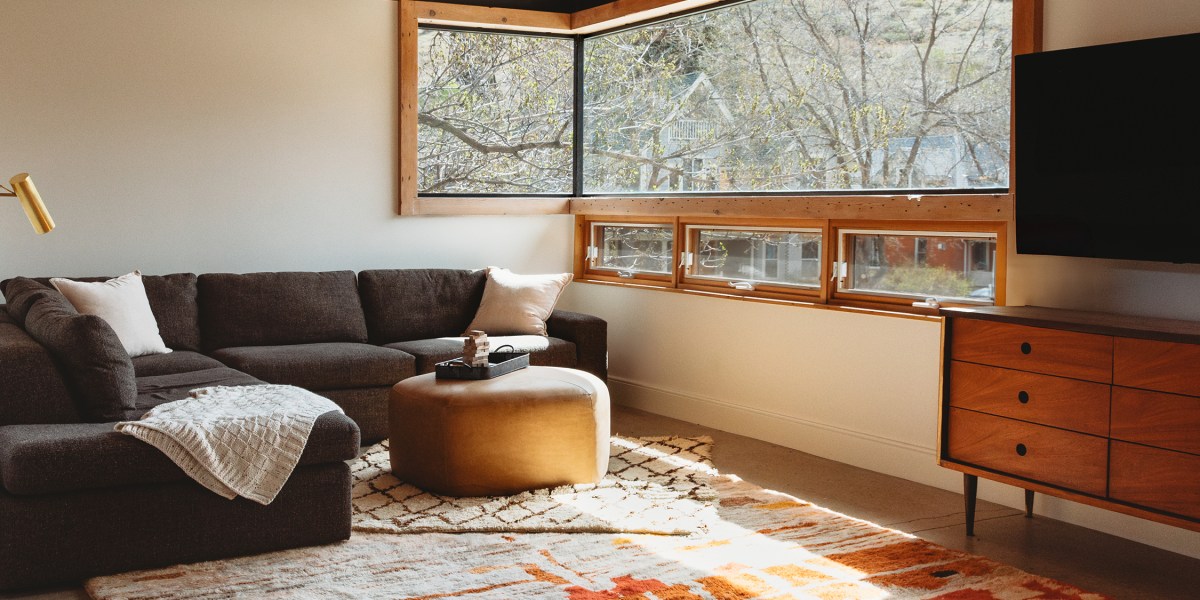
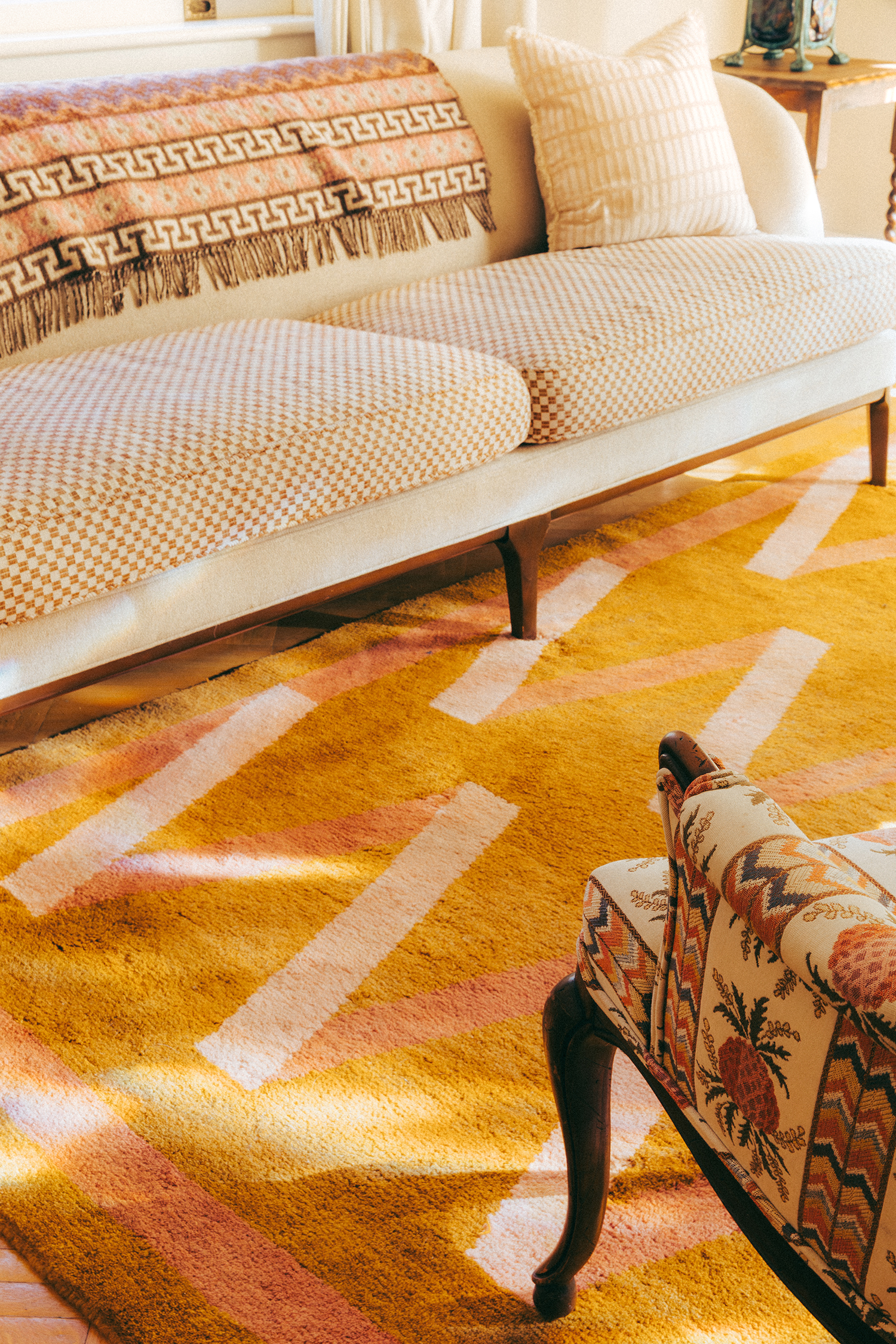
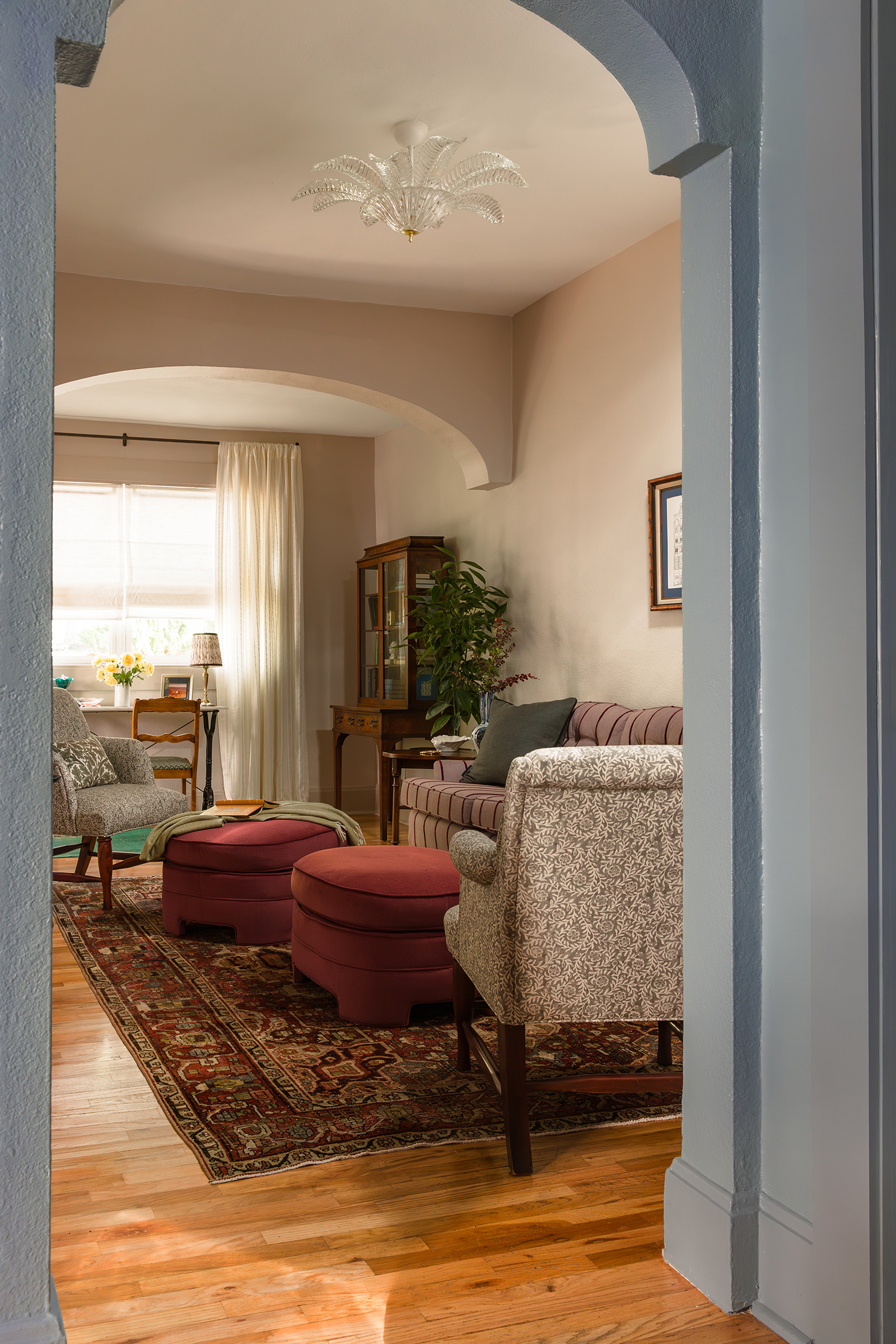
Nureed Saeed, an interior designer in the Bay Area, considers a great rug an artform that should gel well with the rest of your decor. To do, so it’s all about finding the balance. “If the room is more minimal in paint and furniture, I like to throw in a rug with a big personality: Think bold prints and colors,” she says. “If the room has a lot of decor, then I try to balance the rug to really ground the space more quietly.”
The perfect rug should look good with the rest of the space’s color palette, but it should also match the vibe. “Think calm, energetic, grounded, or airy, and choose accordingly,” adds Shweta Pathak of House of Suris in Seattle.
A rug that complements your space strengthens the atmosphere of the room, allowing every other element—furniture, light, texture—to feel more intentional and connected to a single emotional story.
Design by Re-Find; Photo by Syd Fuller
2. Prioritize Proportions
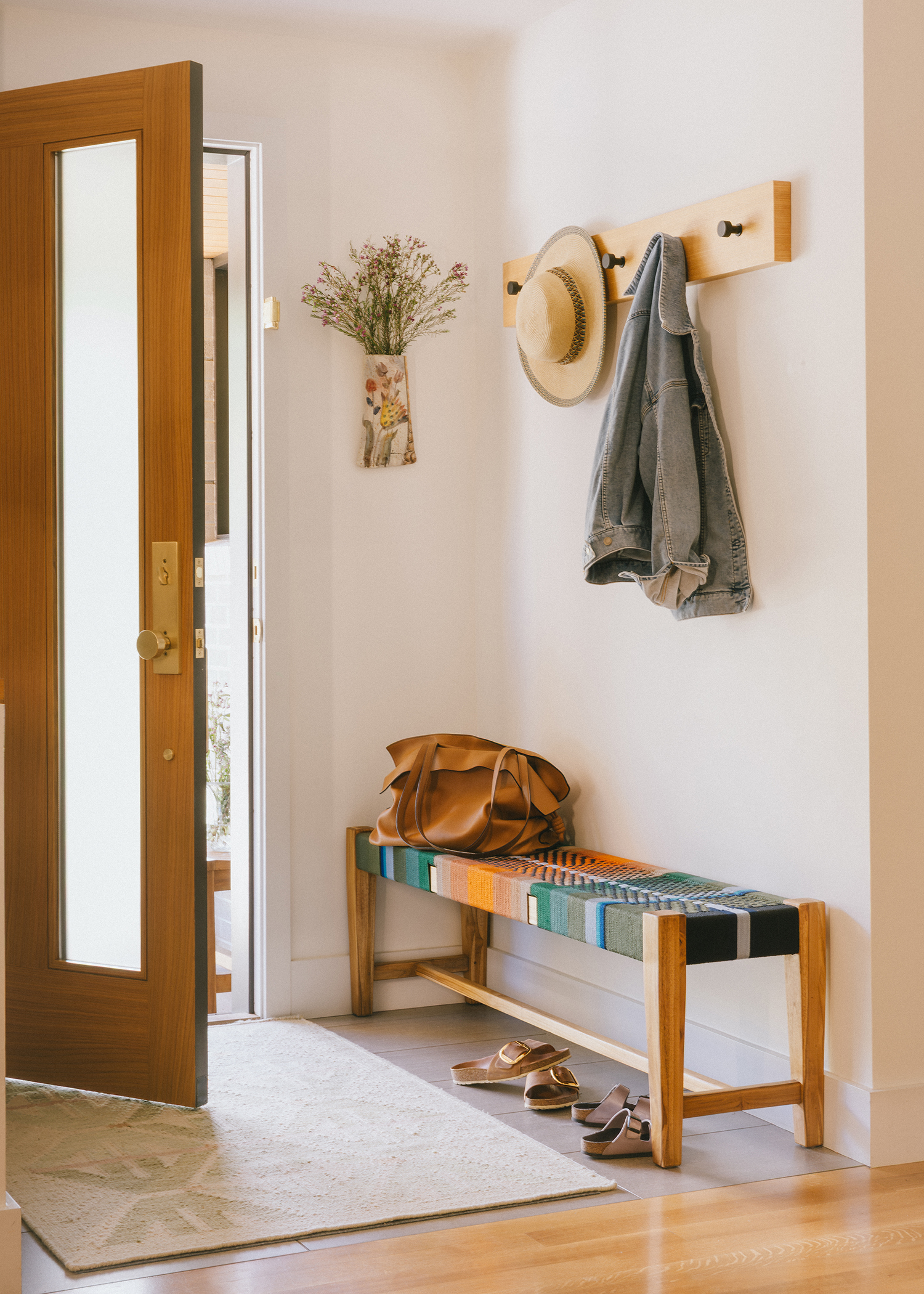
“Proportion is everything,” says Meridith Baer, an interior designer who services Northern and Southern California. “The rug should help define the room rather than feeling like a floating accent.” Ultimately, the right scale depends on the room. For example, Baer says at least the front legs of all living room furniture should sit on the rug, while a dining room requires a rug bigger than your table. “That way, the chairs remain on the rug even when pulled out,” she says.
Before shopping, she recommends marking the perfect rug’s dimensions on the floor with painter’s tape. However, if you’re torn between a few sizes, bigger is better. “Always go larger than you think you need,” Baer recommends. “An appropriately sized rug anchors the room, while a rug that’s too small can make even a beautifully furnished space feel disconnected.”
Design by Re-Find; Photo by Syd Fuller
3. Consider Durability
According to Sandy Baisley and Natasia Smith—co-owners and lead designers of Re-Find in Boulder, Colorado—a rug isn’t a one-style-fits-all situation. “Natasia and I are both mothers, pet owners, and wives, so we firmly believe in functional design,” Baisley says. “Your home is for living; we want our clients to fully use and enjoy their spaces.”
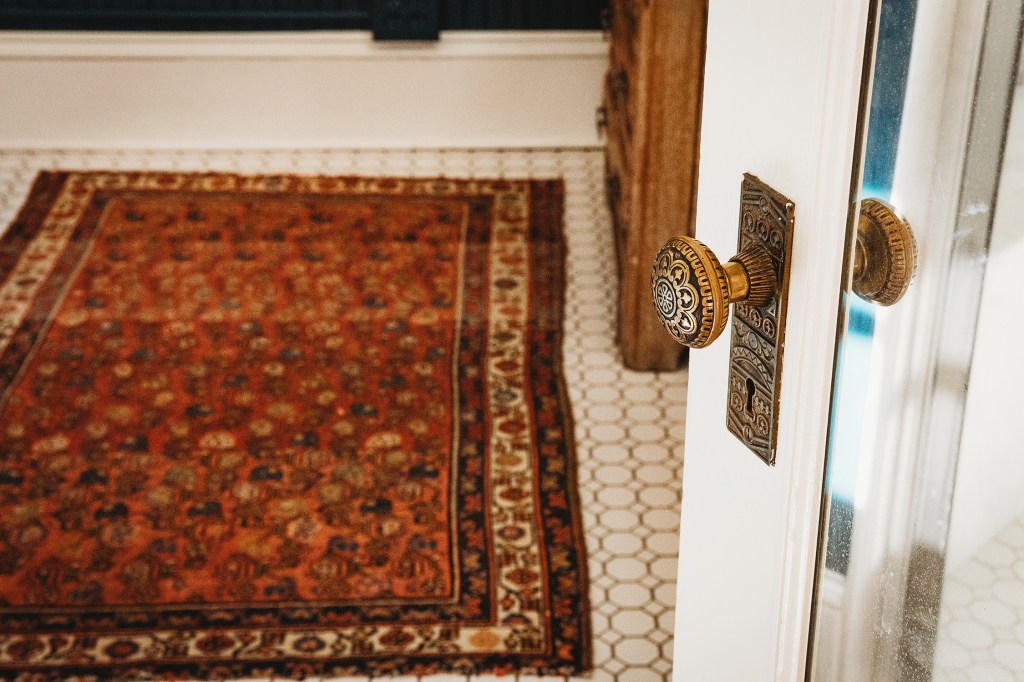
Whether you have pets and young children or are designing a high-trafficked area, look for rugs that are machine-washable or made with performance fibers. Or, at the very least, check the cleaning guidelines. “Making smart material choices upfront keeps your space looking fresh and helps your investments last much longer,” Smith adds.
Design by Re-Find; Photo by Syd Fuller
4. Pay Attention to Pile
Since a rug should look and feel good, don’t overlook the pile. Technically, pile refers to the length and density of the fibers used on a rug, but you can also think of it as plushness or thickness. If you’re debating between a fluffy shag rug or simple flatweave style, Baer encourages you to consider how the room is used as well as the atmosphere you’re hoping to create.
“High-pile rugs add softness, warmth, and a sense of luxury,” she explains. “Low-pile rugs tend to feel more tailored and refined, while flatweaves offer a casual, relaxed look that’s ideal for high-traffic areas.” Those who select a low-pile rug can always get that plush underfoot with a rug pad. In fact, Smith says this in-between is a smart move that can protect your floors and rug.
Pile is important, but so is texture. While most designers opt for wool rugs, Rebecca Letwin of Full Bloom Interior Design says you should always feel it first. “Having a rug that actually feels good can move the party to the floor,” says the Seattle-based designer. “Kids will play games, babies will crawl, and everyone will enjoy a comfy texture underfoot.”