A Wellness Expert Says Everyone Should Have a ‘Calm Corner’—Here’s How to Design One
Plus, a designer weighs in on the concept of combining creativity with self-care.
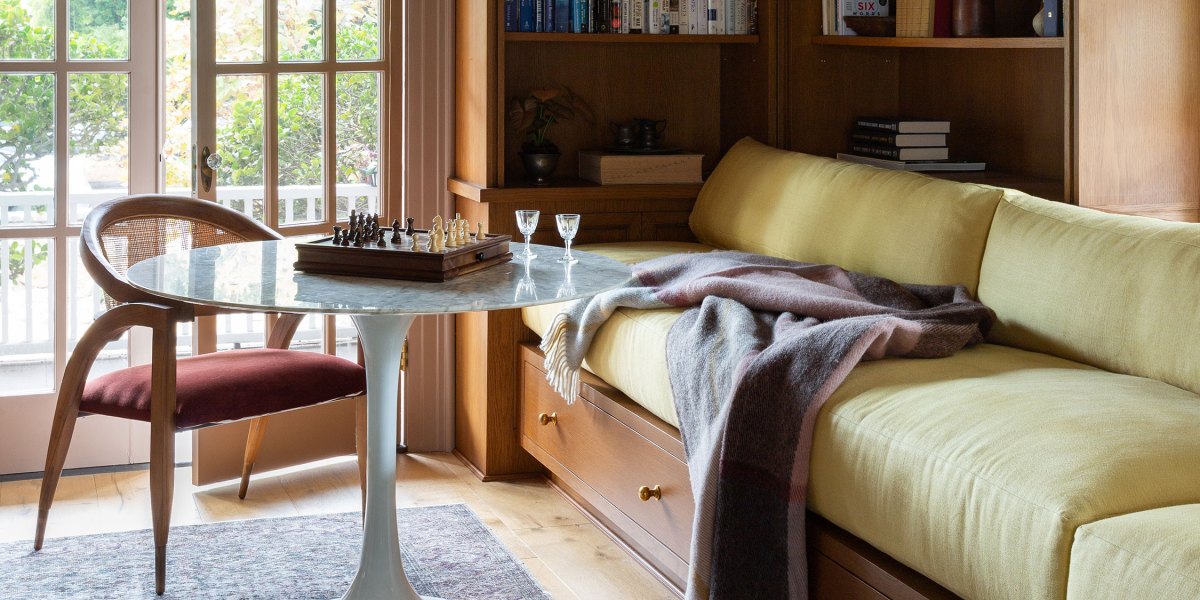
Amy Bartlam
Home is a retreat for so many of us, but there’s a growing trend of designing intentional spaces for self-care. Eleni Nicolaou, PhD, an art therapist and creative wellness expert at Davincified, is encouraging people to carve out these peaceful parts of their home, which she refers to as a “calm corner.” Similar to a rest corner, calm corners invite you to decompress—and eventually, they can become your destination for an emotional reset.
To round out my research, I also tapped Los Angeles-based interior design expert Alexandra Azat of Plaster & Patina. “Many of our clients are looking for intentional spaces within their homes where they can slow down, feel grounded, and find a sense of calm amid how chaotic the world can feel these days,” she explains. “Our goal is always to create homes that allow our clients to breathe deeply and feel at ease throughout, but clients have certainly asked for specific rooms that we might call a ‘cozy, curl-up’ space—a place to retreat, recharge, and simply be.”
Ahead, Dr. Nicolaou and Azat share the precise locations and products to incorporate into your calm corner for interior design that demands a restorative exhale.
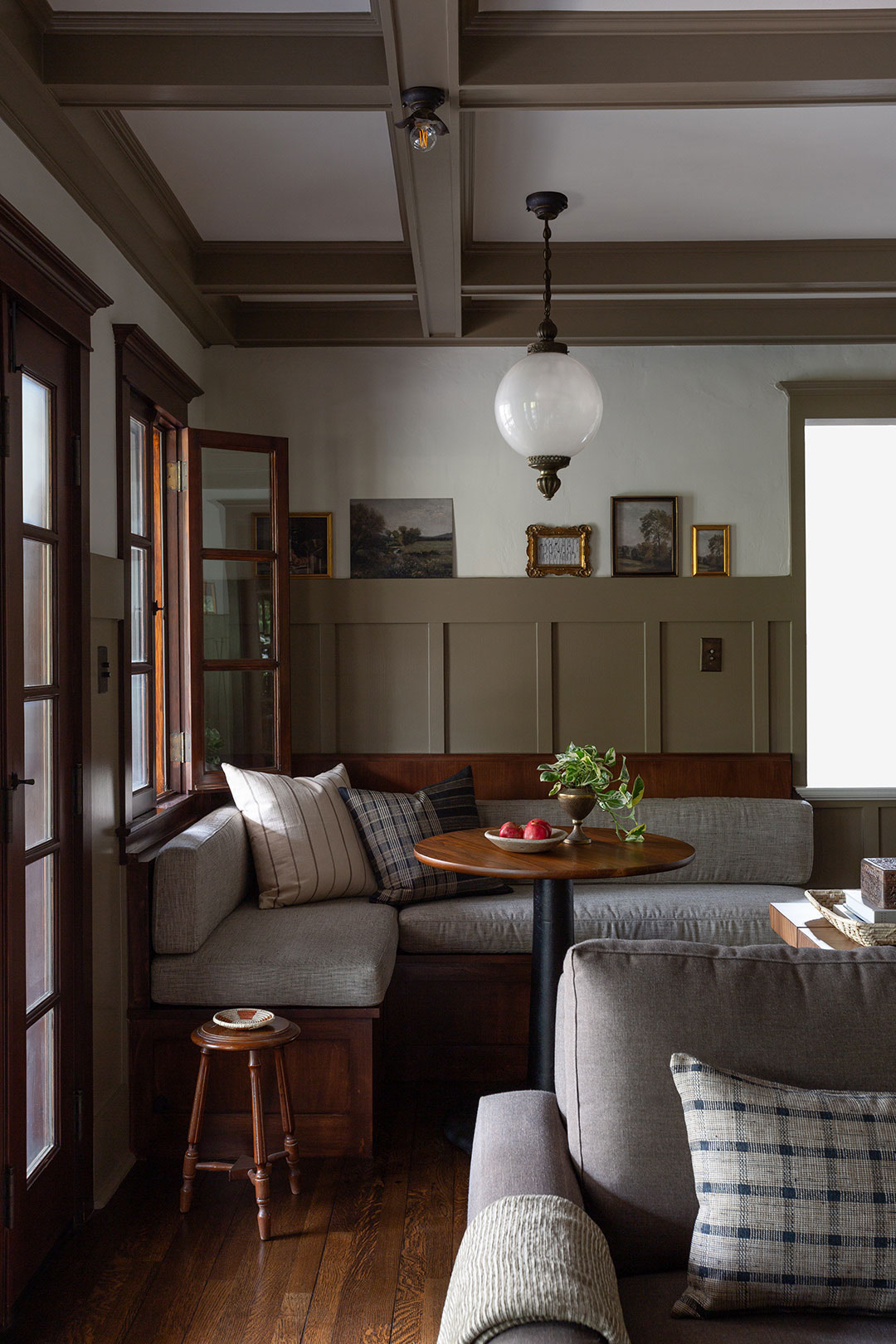
Design by Plaster & Patina; Photo by Amy Bartlam
1. Don’t Force a Calm Environment
Your chosen area for a calm corner requires a naturally quiet space in your home. If it’s competing with traffic outside or near your partner’s home office, consider another spot to find your center. “A corner near a window in the bedroom, or the quieter end of a living room, tends to work well,” suggests Dr. Nicolaou. Proximity to greenery is also a plus!
2. Keep It a Contrast- and Screen-Free Zone
Dr. Nicolaou says this isn’t the place for multi-tasking. With that in mind, you want to leave any electronics or unchecked items on your to-do list away from this cozy nook. “The calm corner should be somewhere the brain knows there’s nothing to do, check, or respond to,” she says. “A book, a journal, or a simple creative activity are all fine, anything that doesn’t signal unfinished business.”
You’ll also want to consider design distractions, Azat notes, adding, “Generally, the less contrast there is in a room, the more peaceful it can feel, as the eye isn’t continually drawn to or stopped by specific elements.”
3. Think Carefully About Furniture Placement
Azat says furniture placement is an equally important piece in this design concept. “We’re very conscious of arranging a room in a way that allows everyone within it to feel comfortable and secure,” she says. “Something as subtle as avoiding a seating position with its back to a large opening can have a real impact on how relaxed someone feels in a space.”
4. Layer Lighting
Both Dr. Nicolaou and Azat prefer natural light, but Azat says there are plenty of alternatives. “Layered lighting is always considered starting from the ceiling and working our way down,” she says. Plus, it’s possible there’s too much sunlight in your calm corner. If that’s the case, Azat recommends drapery to soften and diffuse direct sunlight.
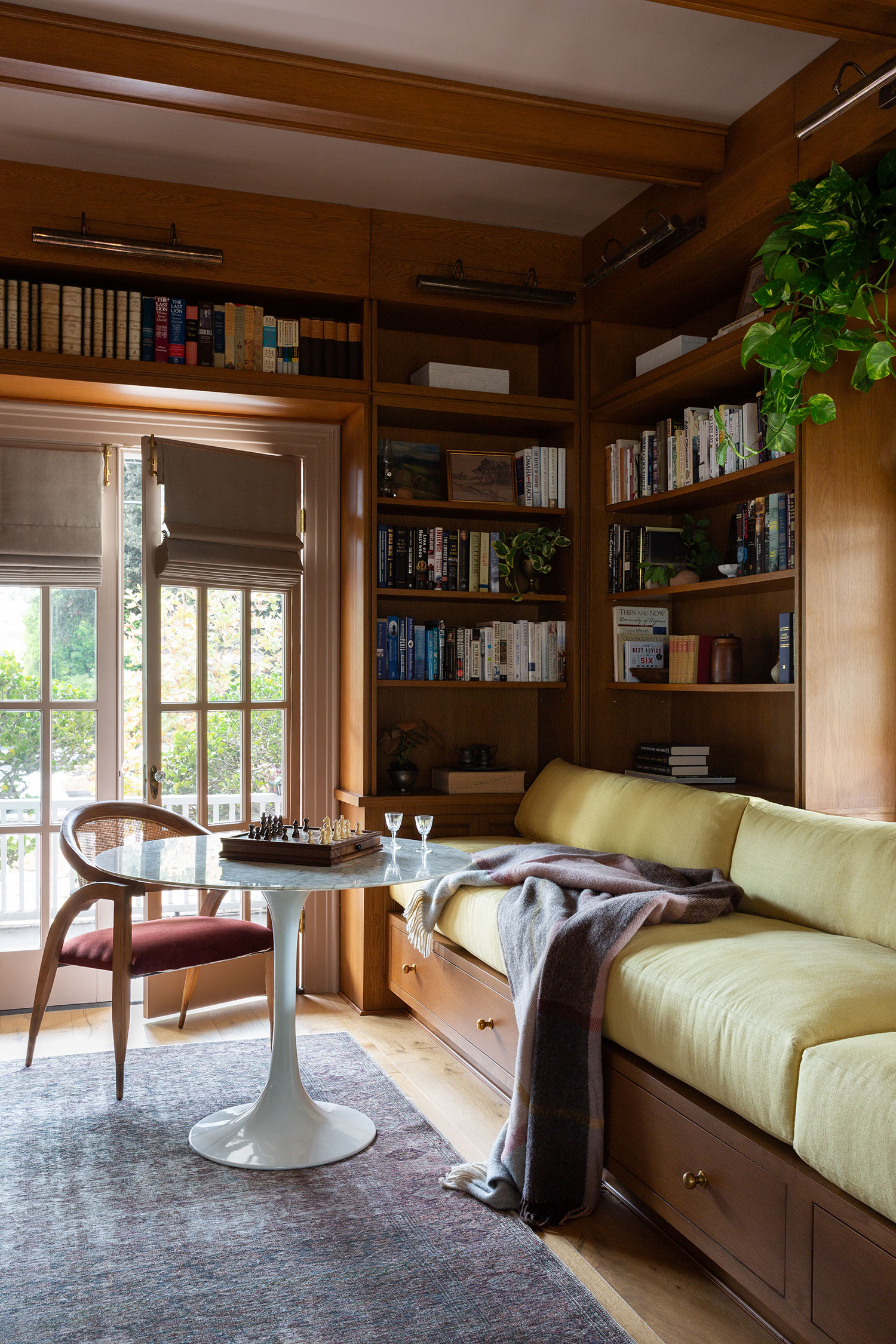
Design by Plaster & Patina; Photo by Amy Bartlam
5. Bring in Sensory Comforts
“Art therapy is rooted in the idea that what we see and touch affects how we feel,” says Dr. Nicolaou. “Something as simple as a soft blanket, a wooden surface, or a piece of artwork you find soothing can shift your physiological state quite quickly. It doesn’t need to be elaborate; it just needs to feel right to you.”
Azat agrees, reminding us to assess the number of soft surfaces in these spaces. “Upholstery, rugs, window treatments, and other tactile surfaces can help absorb both sound and visual noise,” she says.
6. Access Your Calm Corner Habitually
Regularly taking advantage of the calm corner can have a host of benefits, adds Dr. Nicolaou. “Consistency is what turns a nice spot into a genuinely therapeutic one,” she says. “Over time, sitting down in that space can begin to trigger a calming response almost automatically. Even five to 10 minutes a day is enough to start building that association, particularly when paired with something mindful, like breathing, journaling, or a creative practice.”