Honeysuckle (Lonicera)
Quick facts and care essentials
David Dixon / Getty Images
• Evergreen, semievergreen, or deciduous • Zones vary • Full sun or partial shade • Moderate watering • Climbs by: twining
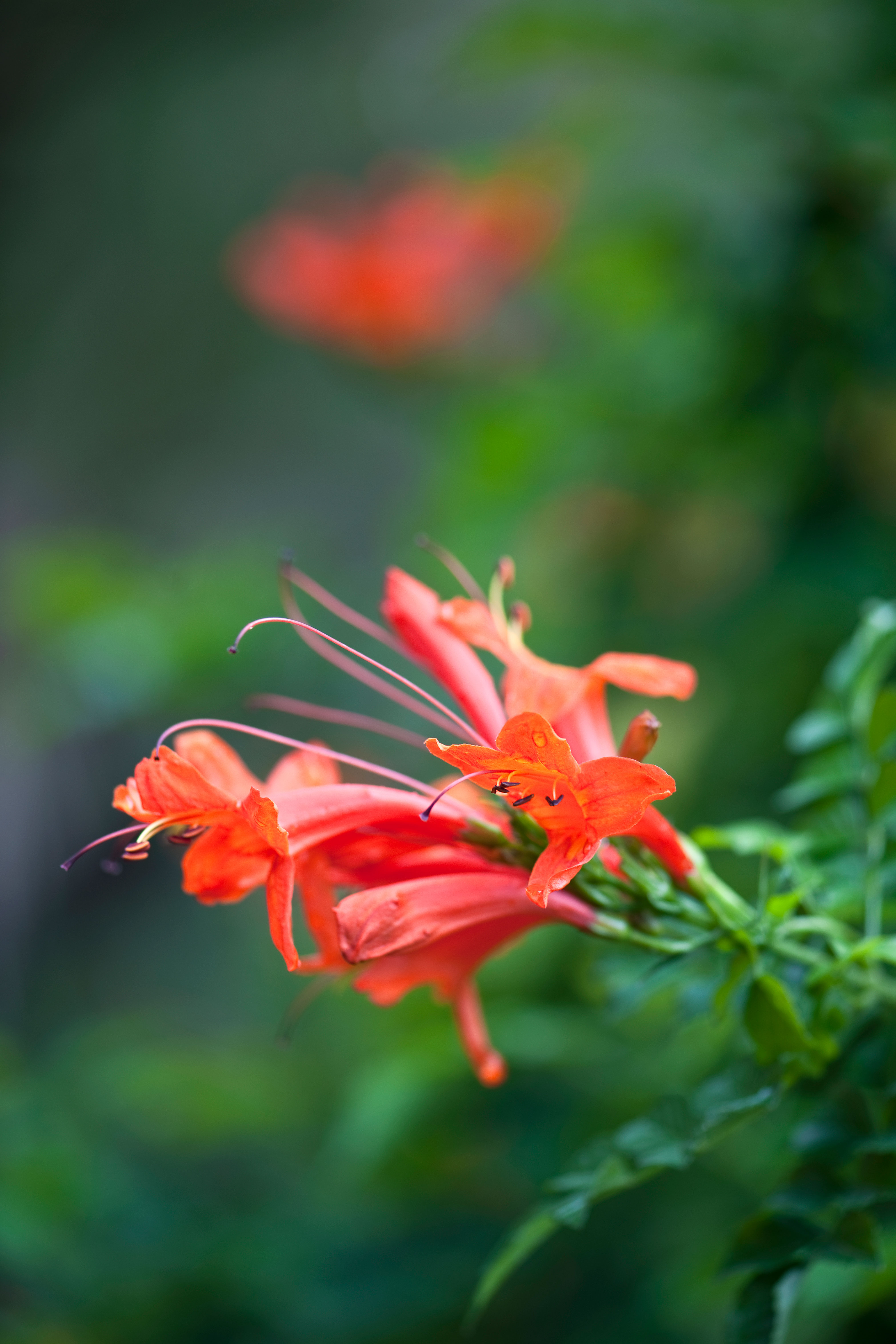
Honeysuckle is an old-fashioned favorite, beloved for its casual charm and (in many species) the sweet perfume of its tubular spring-to-summer blossoms. The twining stems are outfitted in oval, 2- to 3-inch long leaves in dark to bluish green. Give the vines support in the form of a trellis or a wall strung with wire. Prune as flowering tapers off (usually in late summer), cutting vines to a manageable size. Badly overgrown plants can be cut back to the ground any time; they’ll regrow rapidly.
Japanese honeysuckle, L. japonica, is the most commonly grown species ― but it has become an invasive pest in much of the Southeast, overrunning the native flora. To avoid contributing to its spread in the wild (its seeds spread from backyard gardens to cover an enormous radius), consider one of the other honeysuckles.