Why Some Restaurants Have Walk-Ins Only, According to a Restaurateur
Dishing on the latest dining trends.
Marc Fiorito
Picture this: It’s a Friday night, and you’re ready to get your grub on. However, when you and your inner circle enter that restaurant everyone’s talking about, you’re confronted with a long line and a 45-minute (or longer) wait. We know what you’re thinking, and you’re right: It’s a complete bummer.
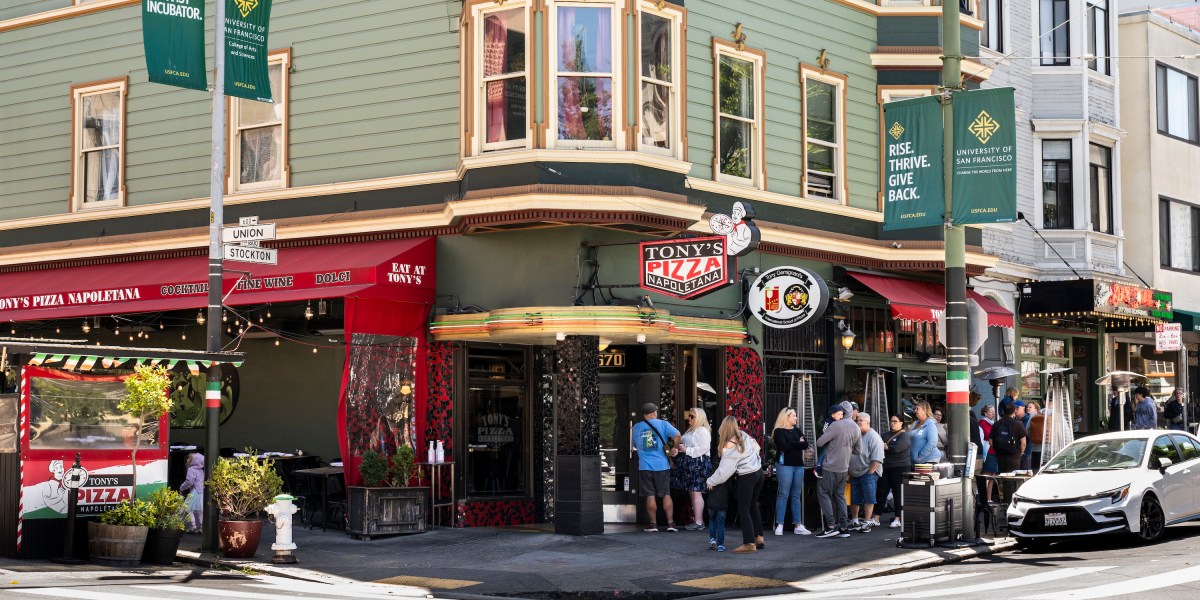
In a time when instant gratification reigns supreme, waiting for a meal feels not only archaic, but kind of a crapshoot: A walk-in can work wonders for an impromptu night out, but not always. So what gives? Why have some restaurants ditched the reservations completely? For Tony Gemignani of Tony’s Pizza Napoletana, the walk-in only strategy has been non-negotiable since he opened his San Francisco restaurant back in 2009.
“My goal was to make Tony’s a place where anyone could get a table, whether they traveled from Australia, Italy, Modesto, or just across San Francisco,” Gemignani explains. “I never wanted a customer to hear, ‘Sorry, we’re all booked for tonight.’”
To say Tony’s is busy is an understatement. Nestled in San Francisco’s North Beach neighborhood, the Italian restaurant’s wait time typically ranges from 45 minutes to an hour during prime time—though some diners have reportedly waited up to two hours. While Gemignani says a lack of reservations might cost the restaurant some guests, the policy “keeps the door open to everyone,” adding that, “by building something truly unique and creative, I knew people would be willing to wait for great food,” he adds.
Walk-ins might lay the foundation for a more democratic dining experience, but Gemignani says it also helps the staff. “Restaurants with reservations often face challenges when guests arrive early and see empty tables they technically can’t be seated at, or when tables need to be held for upcoming bookings,” he explains. “That can create frustration for both guests and staff.” Instead, he believes a reservation-free setup allows for “smoother pacing and faster table turns.”
Understandably, not everyone will want to wait for a yummy meal, so what can you do to get ahead of the rush? For starters, arrive early. Industry insiders agree off-peak times during the work week is a stealthy way to score a near-impossible reservation, but it’s also a smart strategy for walk-ins. “I’ve intentionally created a few limited menu items that sell out daily,” Gemignani says. “It gives guests an extra incentive to come in before the rush and helps spread traffic outside of peak dining hours.”
If you can’t score an earlybird table, opt for larger restaurants: Often, it’ll be more difficult to grab a spot at a small, 10-table eatery than a space with more capacity. Gemignani says outdoor dining and parklets have reduced wait times and improved the overall guest experience.
Sometimes, a wait is inevitable. However, thanks to virtual waitlists and text notifications, it’s possible to put your name down and stay in the loop without awkwardly lingering near the hostess stand. Tony’s has a Yelp waitlist, which Gemignani says has been particularly popular for local guests.
Of course, if you are going to a restaurant without a reservation, do your research. A quick scroll on sites like Yelp, TripAdvisor, or even Reddit will reveal an estimated wait time, allowing you to plan ahead. For example, if a hotspot typically has a 45-minute wait, arrive 45 minutes before your desired dining time. After all, waiting for a table when you’re already hungry will quickly veer into hangry territory.
At first thought, a walk-in only restaurant might seem a little hit-or-miss, but Gemignani argues it offers a unique opportunity to get acquainted with the local scene. “Guests have the flexibility to enjoy the neighborhood or grab a drink nearby,” he says. And when your table is finally called? Well, it’ll be so worth the wait.