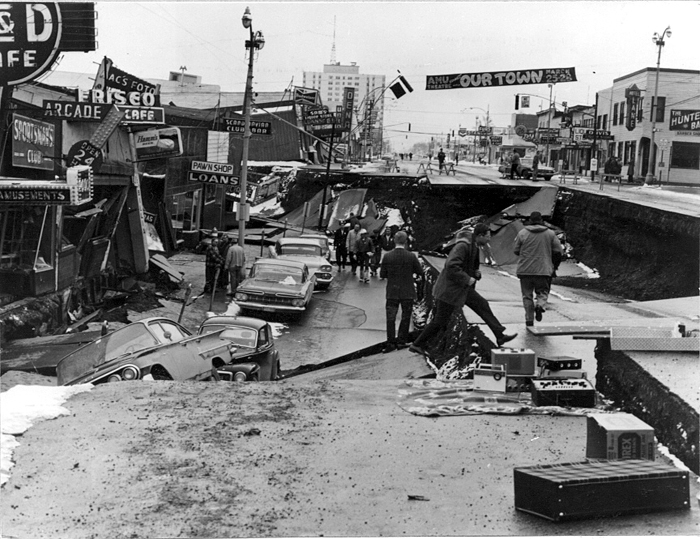
In the Ring of Fire, it’s only a matter of time before the next big quake—and its potentially resulting tsunami waves. But there are steps you can take to prepare your family to survive the shaking and subsequent damage until help arrives.
Earthquake preparedness
Since you can’t predict where you’ll be when a quake hits, the San Francisco Fire Department’s Neighborhood Emergency Response Team (NERT) training program advises that you create a disaster and reunification plan—sketching out what you’ll do in an emergency and where you’ll meet up with family if you’re not at home together—plus 3 earthquake kits: One for your home, one to carry in your car, and one to leave at work. (Have kids? Work with their teachers to create school kits with food, water, a comfort item, a family photo, and a note from you.)
Your work and car “go kits” can often fit in a backpack and are intended to get you safely to your reunion spot—and have a backup site in case the first one is damaged or inaccessible. Include:
- Sneakers
- A change of clothes
- Flashlight
- Portable radio
- First aid kit
- Some money (in small bills)
- Some food and water
Your main kit at home should contain a lot more food and water. Enough to last each member of your family—including pets—for 5 to 7 days, says NERT (not just
72 hours as the mantra of late has been). Take our
fire kit—designed for one of the West’s
other natural disasters—and augment it with food, water, and:
- Fire extinguisher
- Bleach or other water purification method
- Warm clothes
- Work boots and work gloves
- Can opener and a few pots and pans
- Dishes, cups, and utensils
- Wrench for turning off water and gas (if there’s a leak)
- Toilet paper, heavy-duty plastic bags, and duct tape (or store some of your kit in a small trash can that you can use as a “honey bucket”)
- Soap and other hygiene items
- Money (in small bills)
- Prescription medications and glasses
- Copies of insurance coverage and out-of-state emergency contact’s phone number
- Leash and pet carrier, plus pet photo in case you get separated
Store your kit in a big trash can or cooler on wheels near a ground-floor door or in your yard—or in a shed, so raccoons can’t break in and party with your supplies. Keep your camping gear nearby and you’ll have access to temporary shelter, sleeping bags, lanterns, and your gas camp stove.
And when a quake hits, NERT and many other earthquake-awareness groups still advise that you
drop, cover, and hold on.
Tsunami preparedness
This year’s Tsunami Preparedness Week intentionally coincides with the Alaska quake’s anniversary, with federal, state, and local agency–sponsored events in coastal towns. Check out the USGS and National Oceanic and Atmospheric Administration to learn when and how to head for the hills—and how long to stay away. As the Anchorage Daily News points out in an anniversary article about tsunami warning systems, warning sirens saved lives in Hawaii after the Great Alaska Quake, but residents of Crescent City, California, came back too quickly after the first and smaller waves hit—it was the fourth wave “that is estimated to have reached 22 feet,” according to a Humboldt State University geology professor in the Anchorage Daily News article. “More than 100 homes were destroyed. Eleven people died. Total damage was estimated at $23 million.”
If you live near the coast, don’t take chances—take steps to be prepared.