America Just Got a New National Park—Here’s How to Plan Your Visit
The Arizona land is the first national park to be designated in six years.
Getty Images
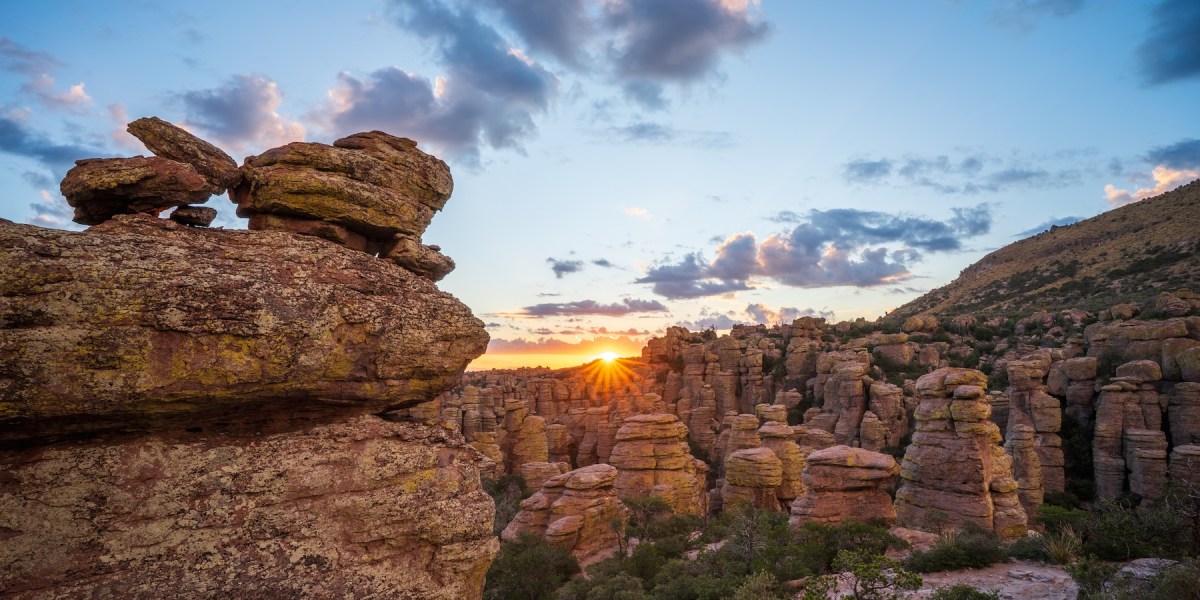
Awesome monsoon sunset over the rhyolite rock hoodoos of Chiricahua National Monument
Chiricahua National Monument, a landscape of volcanic rock spires in southeastern Arizona, is now Chiricahua National Park, the first new national park in the United States in six years. The Interior Department announced the change Wednesday, following the Chiricahua National Park Act, signed into law Oct. 20. The site, which covers about 12,000 acres near Willcox, was first protected as a national monument in 1924.
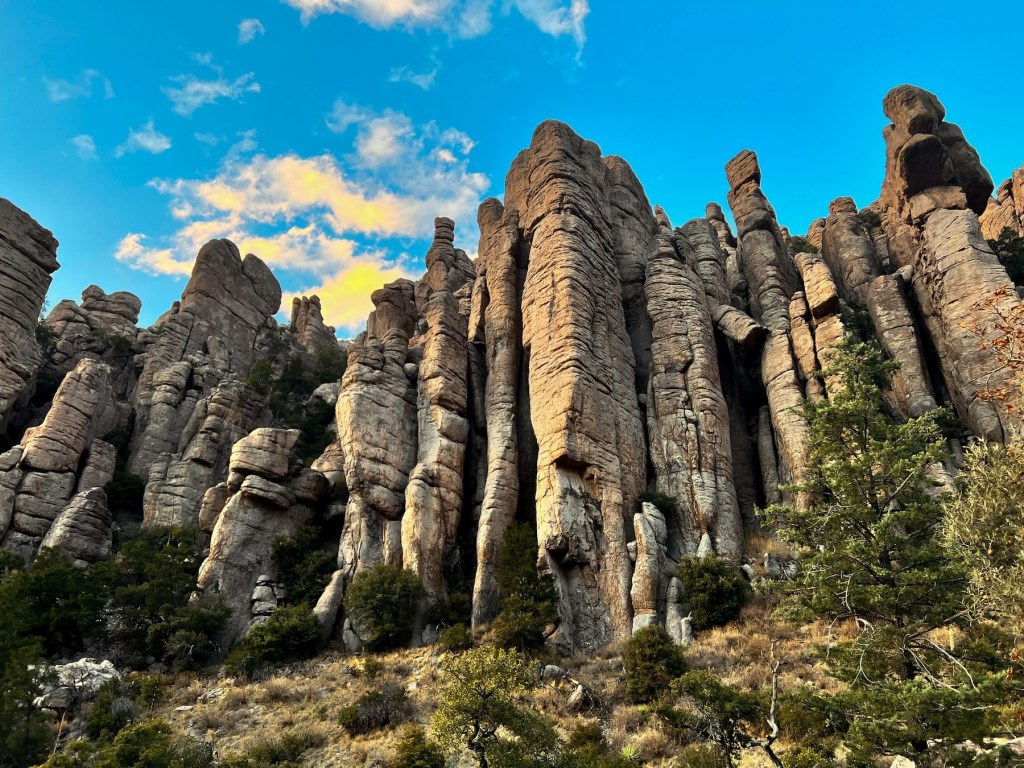
Chiricahua becomes Arizona’s fourth national park, joining Grand Canyon, Petrified Forest, and Saguaro. It is known for towering spires and balanced boulders formed from an eruption roughly 27 million years ago. The formations, often called the Wonderland of Rocks, rise from the Chiricahua Mountains, a “sky island” where desert, grassland and forest ecosystems meet. Sky islands are isolated mountain ranges that rise from surrounding lowlands and support species from distinct climates.
Interior Secretary Doug Burgum said the landscape, together with its Apache heritage and biodiversity, makes the area a major destination. He said the designation would put a spotlight on the park and bring more visitors and economic benefits.
Getty Images
The park is the homeland of the Chiricahua Apache and preserves thousands of years of human history, including the legacy of homesteading families at Faraway Ranch. The Chiricahua Apache leader Cochise is closely associated with the region.
For visitors, little changes immediately. The Interior Department said hiking, camping, scenic drives, wildlife viewing, birding, and stargazing will continue. Most visitors reach the best-known viewpoints along Bonita Canyon Drive, which climbs to the Massai Point overlook, where trails such as Echo Canyon wind among the formations. Birders find some of the park’s best viewing along Bonita Creek, and patient hikers sometimes spot coatimundi.
The announcement did not say whether the park will receive additional funding or staffing, or whether its boundaries will change. Jessica Bowron, who is exercising the delegated authority of the National Park Service director, said the park has been part of the National Park System for more than a century and that the name change does not alter the agency’s commitment to protecting its landscape and cultural heritage.