
5 Questions You Should Always Ask Yourself Before Booking a Spa Treatment
What to know before you go.

Anastasiia Krivenok/Getty Images
Consider this your sign you’re overdue for a spa day. It doesn’t matter if you need to decompress or alleviate sore muscles after a particularly grueling workout, a little bit of serenity can go a long way.
But for an activity that’s supposed to be relaxing, booking the right treatment is easier said than done. What does your body need? Are there any treatments you’re overlooking on a menu? And, really, what’s the difference between a Swedish and deep-tissue massage?
A few spa directors are sharing the questions you should always ask yourself before your next spa trip to keep your treatment as soothing as possible.

Thomas J. Story
“How much time do I have?”
If you ask Kayley King, spa director of Body Sage Spa at Rusty Parrot Lodge in Jackson, Wyoming, an hour-long treatment is a happy medium for the length of a treatment.
“It’s a good introduction to the spa and you can ask questions that will help you decide what you might prefer for a longer treatment or full spa day,” she explains.
Don’t have that much time to dedicate to the spa? No worries. Fortunately, a handful of locations offer expedited facials and massages that typically last 30 minutes.
That said, if you do have some time to indulge in a longer outing, Megan Driver of the Spa at Everline Resort in Tahoe encourages you to arrive early and enjoy the facilities. Utilizing the steam room, jacuzzi, and cold plunge not only promises the best bang for your buck, but it will help you find your calm.
“Spa treatments are ultimately about self-care and reconnecting with your body,” she says. “Most guests find that once they allow themselves to fully settle into the experience, they’re incredibly glad they stepped outside their comfort zone to prioritize themselves for a change.”
“How do I want to feel?”
According to Meagan Johnson—director of Wellbeing at The Inn at Mattei’s Tavern, Auberge Collection—your goals can inform when you should book your treatment.
“Morning treatments tend to feel more energizing and grounding, especially when paired with movement, hydrotherapy, or contrast therapies,” she explains. “Evening treatments are ideal for deeper relaxation and sleep support because the body is naturally beginning to slow down.”
Once you assess your needs, and book an appointment, Driver encourages you to plan your day around your spa schedule.
“Planning to fully unwind after a treatment is almost always the smarter approach,” she adds. “If someone books a deep tissue massage and then plans to do an intense workout, ski day, or long hike immediately afterward, they may end up prolonging soreness and recovery time.”
Aleksandra Sokolachko/Getty Images
“How far did I travel?”
While your spa treatment might be straightforward if you’re staying local, travelers should factor their voyage into the equation. “Travel impacts the body more than people realize,” Johnson says. “Long flights, disrupted sleep, dehydration, changes in altitude, and overstimulation can all affect the body’s circulation, digestion, inflammation, and nervous system.”
To help curb the woes of travel, she recommends circulation, lymphatic support, hydration, and nervous system regulation: Hydrotherapy, gentle stretching, and slow, rhythmic massages are all fair play here.
Craving an ultra-indulgent program? Yalda Teranchi, who is the wellness director of Stanly Ranch, an Auberge Collection property in Napa Valley, says to treat yourself to a moisturizing facial and nutrition injections, or oxygen intake in the hyperbaric chamber.
“What’s bothering me?”
“One misconception we often hear is ‘if it doesn’t hurt, it doesn’t work,’ but that’s absolutely not true,” Driver says. “Too much pressure can cause the body to tense up defensively, leaving guests feeling worse afterward.”
Instead, Teranchi insists communication is key. “Identify where the impact of pressure is needed as certain areas of the body do not necessarily need deep pressure to yield the results a guest is seeking,” she says. “It is key to communicate openly with your therapist during intake to ensure they have a deep understanding of your unique needs.”
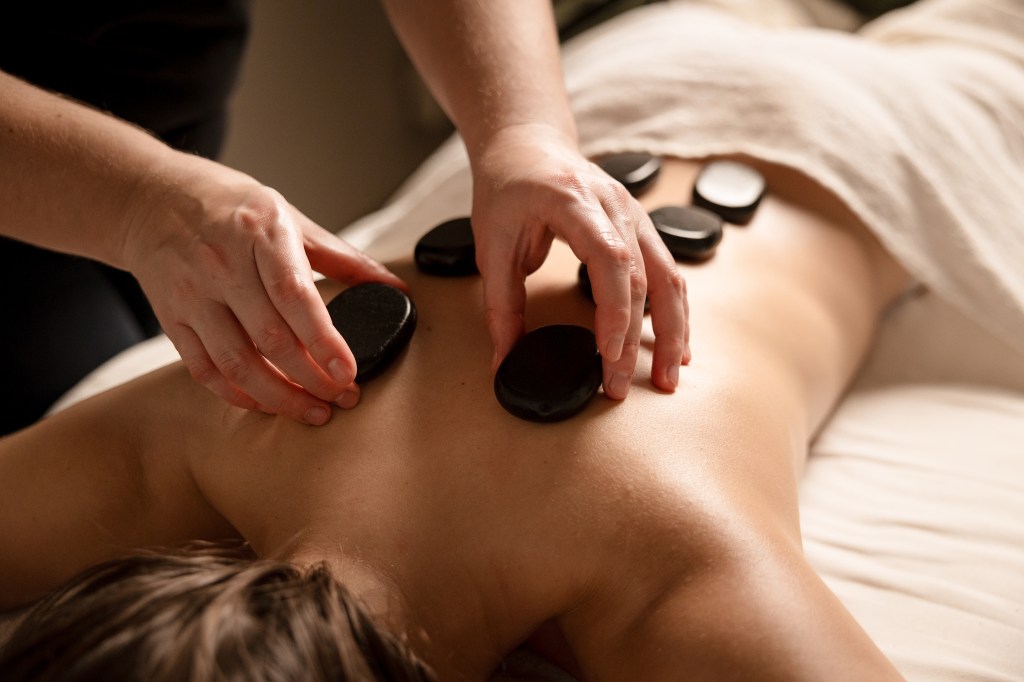
Driver says an athletic recovery massage is fitting for someone with chronic tightness, while a relaxing massage with extra focus on a targeted area can work for someone with sore shoulders.
“Am I feeling adventurous?”
Massages and facials might be status quo, but most spas have other treatments to offer. If you dare to try something new, Teranchi gives you her seal of approval. “It could be just what your body needs, and maybe you’ll even find a new go-to treatment,” she says. “Use your therapist as a resource and ask any questions you may have to ensure you are as comfortable as possible prior to, during and after the treatment.”