The Ultimate Guide to Visiting the Grand Canyon
The eternal yet ever-evolving Grand Canyon is as mystical and awe-inspiring as ever.
Thomas J. Story
“The sun, clouds, and sky changing constantly go and see it for yourself … Words are weak things with which to picture Paradise Unknown. Even Milton would have been stumped. The camera does it best, but the rainbow colors are lacking, and then, too the rain is no respecter of photographers. There’s in nothing like your own trusty auto and your own enchanted eyes.”
This was published in Sunset in 1931 in an article about taking a road trip to the Grand Canyon, and it still rings true today.
Thomas J. Story
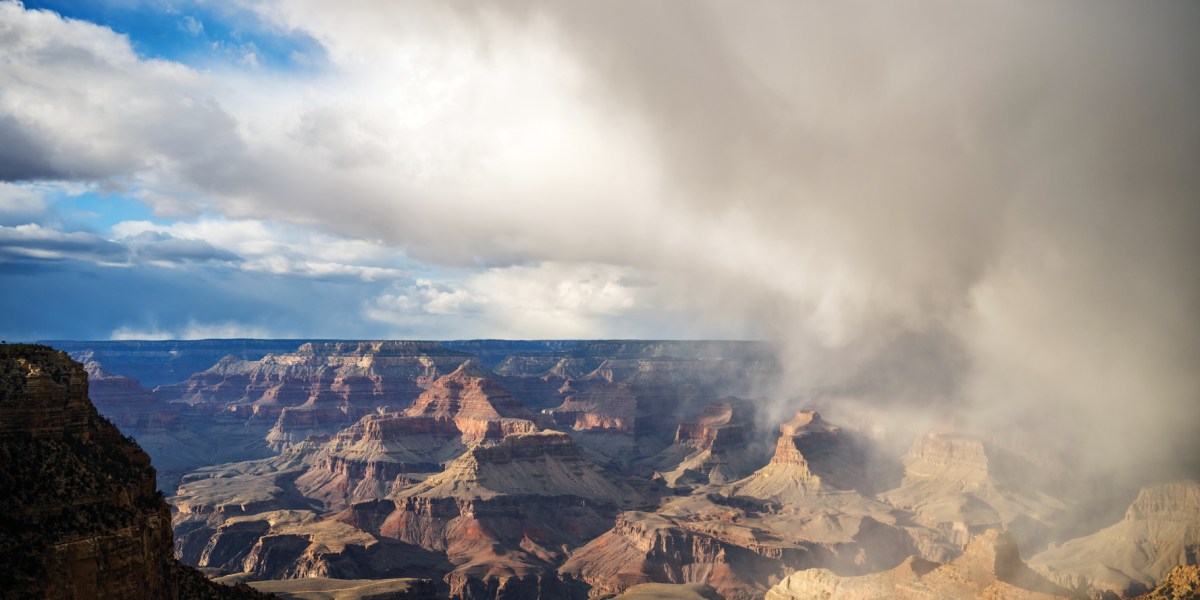
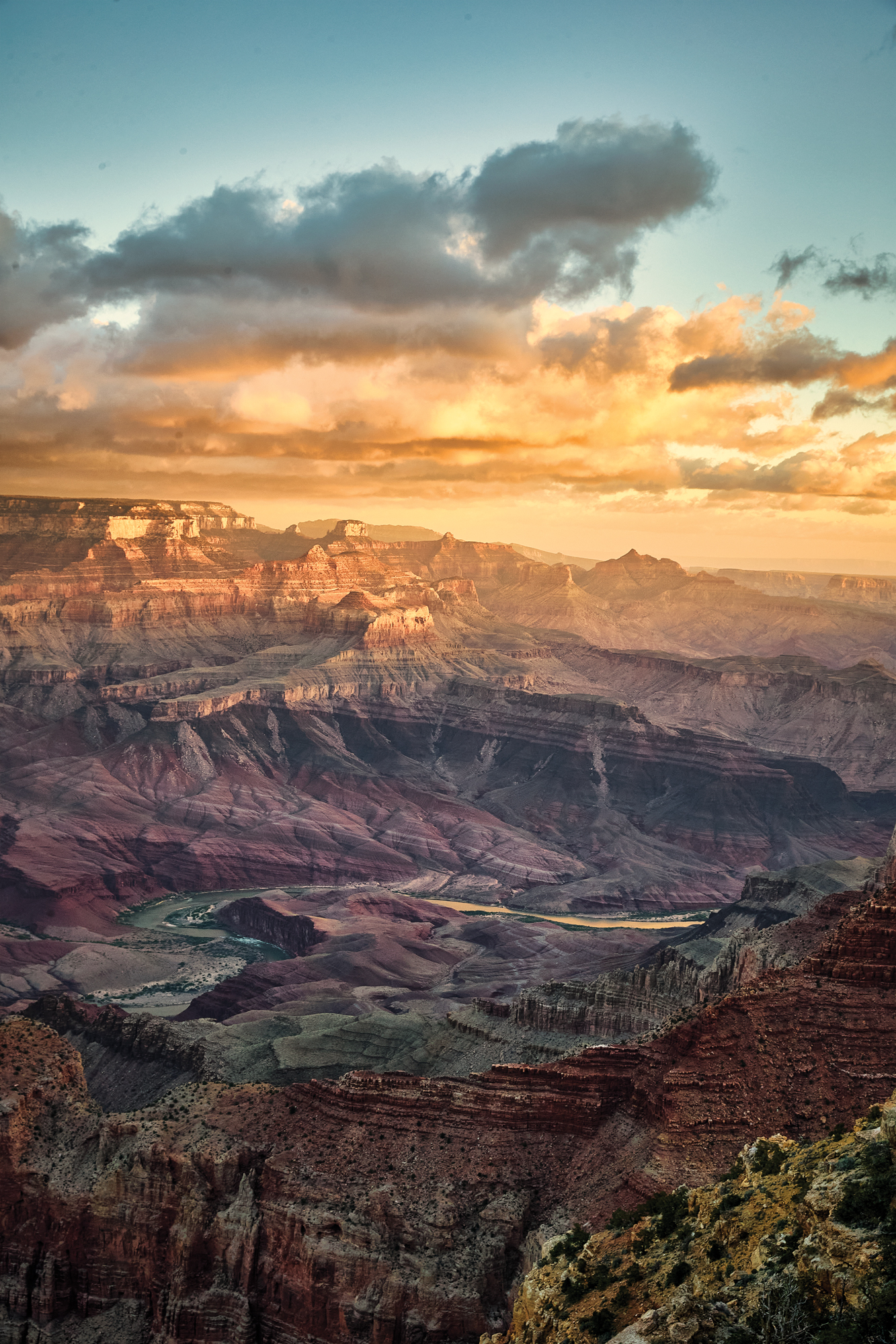
For over a century, Sunset has celebrated the Grand Canyon as one of the pinnacle experiences of the American West. That scale: a chasm stretching 277 miles long along the edges, 10 miles across at points, and more than a mile deep, revealing nearly two billion years of geologic history in layered bands of stone. From the rim, the view feels almost impossible to process—an immense sweep of mesas, buttes, ravines, and terraces carved by the Colorado River over eons.
But stay long enough, and the immensity begins to resolve into detail. Juniper and piñon pine cling to ridges. Hawks spiral on thermals. In the late light, distant canyon walls glow copper and violet. It’s overwhelming, yes. But it’s also strangely intimate. You can absorb it minute by minute, overlook by overlook. And right now, timing is on your side. While the North Rim just began reopening after devastating wildfires, the South Rim is thriving and offers an infinite array of experiences for travelers who come for a quick visit or linger and explore for days. With international travel still fluctuating, crowds at the Grand Canyon are a little lighter than usual. That means quieter overlooks, easier reservations at hotels, and space to experience the landscape the way it was meant to be experienced: slowly.
Courtesy of Xanterra Travel Collection
It also happens to be a milestone moment. The National Park Service continues to celebrate more than a century of protecting America’s greatest landscapes. Route 66 turns 100 this year. And the United States approaches its 250th anniversary. There’s a kind of naturalist patriotism that unites all visitors who become gobsmacked as the canyon comes into view, whether it’s their first or 15th visit. Few places bring those layers of history together like the Grand Canyon. Whether you approach from California, Nevada, or Arizona, the road to the rim feels like the ultimate Western journey.
Here’s What to Know When Planning Your Visit:
- How to Get There: Take the Train
- How to Get There: The Polar Express at Christmas
- How to Get There: Take Route 66
- Under-the-Radar Spots to Check Out
- 5 Views You Can’t Miss
- 3 Hikes That Offer Big Payoff
- Everything You Need to Know About Mule Rides
- Where to Stay in the Grand Canyon
- Where to Eat in the Grand Canyon
- The Grand Canyon’s Architectural History
Take the Train
Thomas J. Story
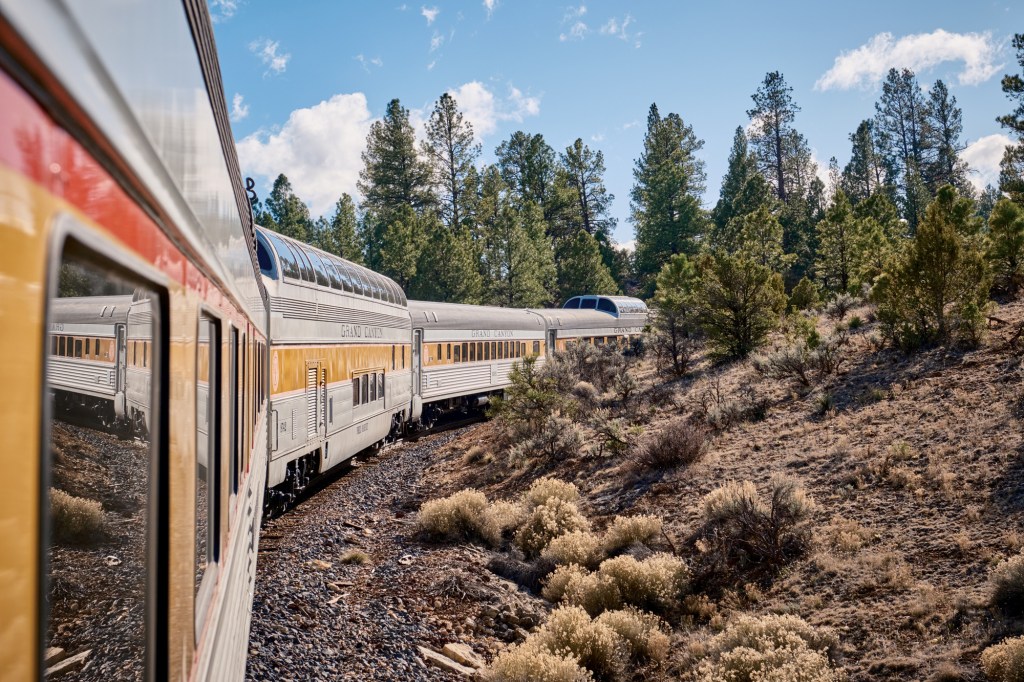
There is no more powerful way to get to the Grand Canyon than on the Grand Canyon Railway, which departs every morning from Williams, Arizona. Boarding the train, an amalgam of cars of various vintages—from classic Pullmans to luxurious lounge cars—is like stepping onto a two-hour time machine.
The experience begins at the Grand Canyon Railway Hotel in Williams, which serves as a base camp. Drive from Phoenix or Vegas, or points west or east, and stay the night. Guests can check in the night before, leave their bags at the hotel in the morning, and walk to the station (their bags will magically be awaiting them at the South Rim upon arrival). And on the train, the rhythm changes immediately. No highway speeds. No traffic. Just the gentle clank of couplings, a whistle blast, and a slow roll north toward the canyon.
Thomas J. Story
The train moves deliberately across high desert and pine forest. Through wide windows, the landscape unfolds gradually: open prairie giving way to ponderosa forest as the elevation climbs toward the Kaibab Plateau.
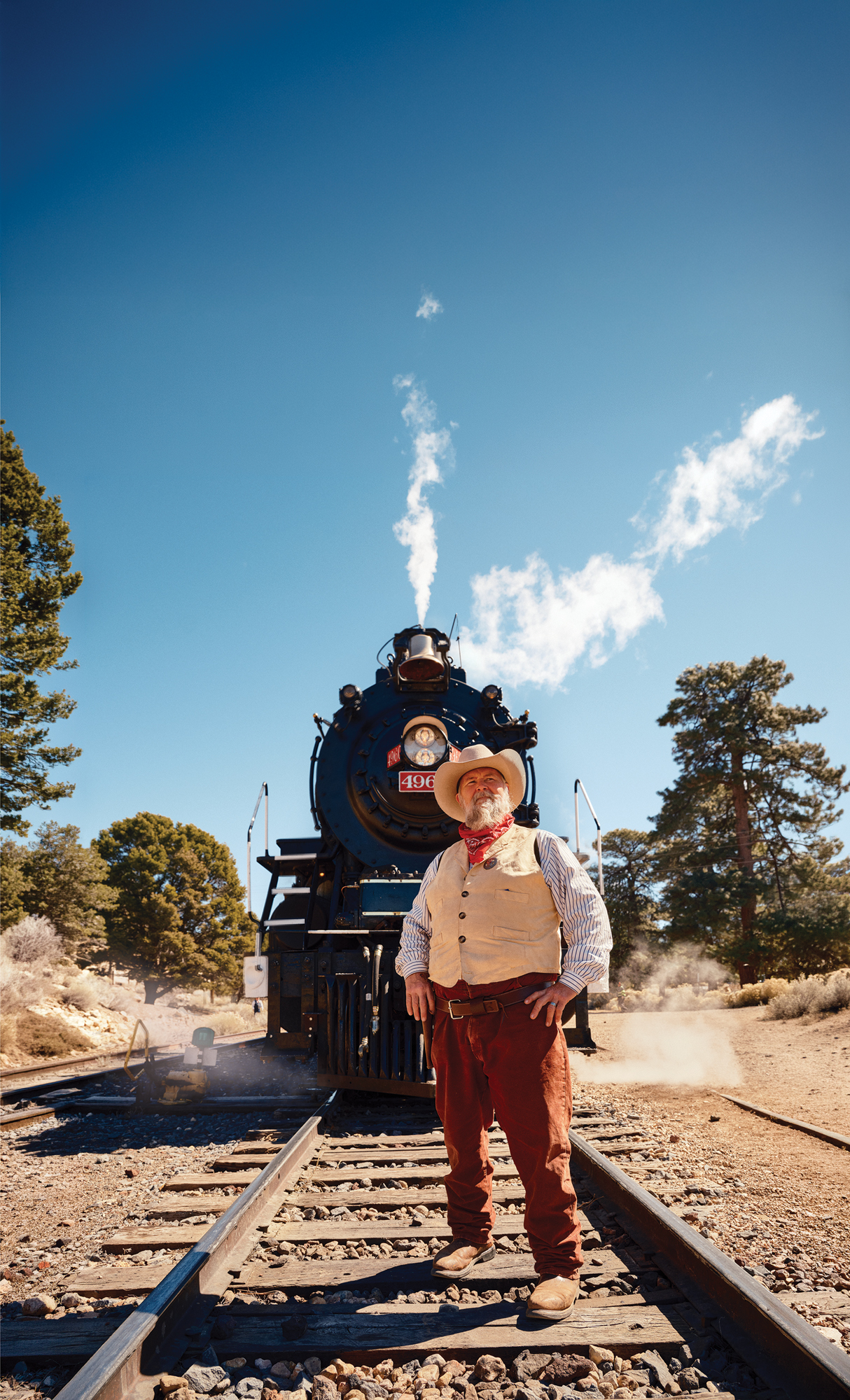
The cars themselves feel lifted from another era of travel. Some are beautifully restored vintage coaches with polished wood and oversize windows. Others are more indulgent luxury parlor cars where charcuterie boards appear on linen-covered tables and bartenders serve sparkling wine and mixed cocktails. A cafe car offers snacks and coffee, while an observation platform for those lucky enough to book the last car lets you step out and feel the high-country air. Along the way, musicians wander the aisles playing Western tunes, and actors portraying cowboys and bandits from the Wild West entertain passengers.
The arrival itself is one of the railway’s great pleasures. The train pulls directly into the historic depot at the South Rim, just steps from the canyon’s edge. From there, you’re free to explore however you like. Some passengers spend the day walking the rim and return on the afternoon train. Others stay overnight in the park’s historic lodges, letting the train simply be the beginning of a longer canyon stay.
Polar Express Perfection: Why the Winter Is a Wonderful Time to Visit

Courtesy of Xanterra Travel Collection
Each winter, the Grand Canyon Railway leans into nostalgia with its Polar Express package, a holiday experience that transforms the historic train into a rolling Christmas storybook. Departing from nearby Williams, Arizona, the evening ride recreates the beloved tale with hot chocolate, cookies, and readings from The Polar Express as the train rolls through the pine forests toward the “North Pole.” Families in particular love the theatrical touches—Santa boarding the train to greet children, carols sung along the route, and a festive glow that makes the journey feel like stepping inside the classic holiday book. Many visitors pair the ride with a stay at the Grand Canyon Railway Hotel, turning the experience into a full winter getaway. It’s a memory in the making: an old-fashioned train ride wrapped in holiday magic that taps into the canyon region’s railroad heritage.
Take Route 66
Heidi Kaden for Unsplash
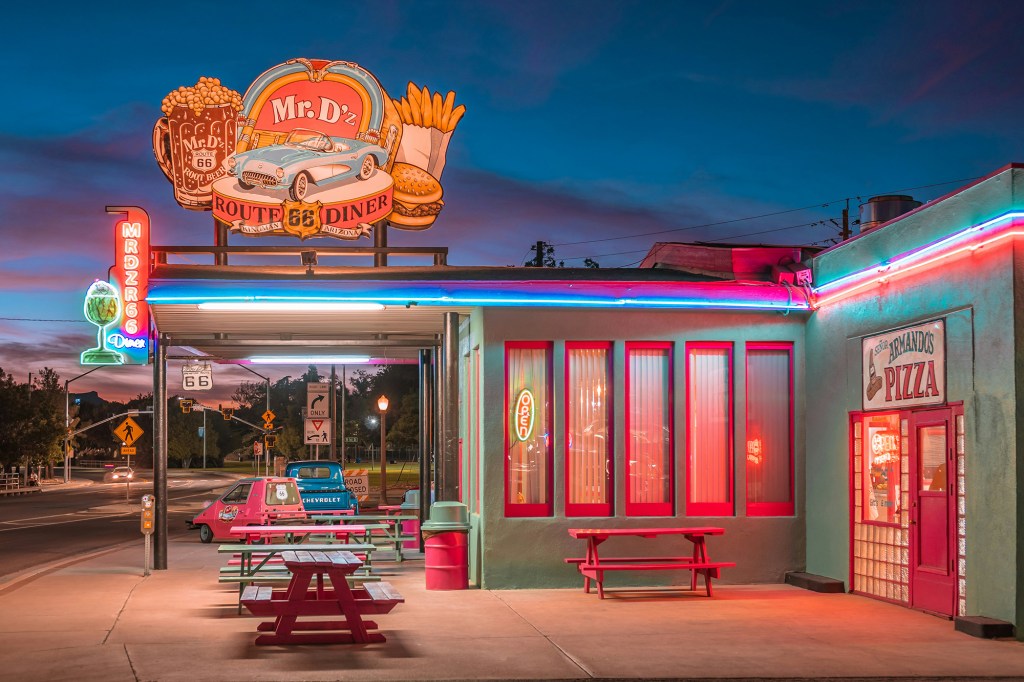
For travelers coming from California, there’s a classic way to approach the Grand Canyon: Historic Route 66, which is celebrating 100 years this year. This legendary highway once carried generations of Americans across the Southwest, linking desert towns, neon-lit diners, and roadside motels along a ribbon of asphalt that became a symbol of the open road.
Driving east across the Mojave Desert toward Arizona, you’ll pass through towns that feel suspended in midcentury Americana—places where vintage signage still glows at night, and diners still serve thick milkshakes beneath chrome counters.
The journey eventually leads to Williams, Arizona, the last town bypassed by Interstate 40 when Route 66 was decommissioned. Known as the “Gateway to the Grand Canyon,” it’s also one of the best-preserved Route 66 towns in America. Classic cars line the streets. Neon signs flicker at dusk. Walking through downtown feels like stepping into a living postcard. Restaurants serve hearty Western fare while jukeboxes spin rock ’n’ roll classics. The town becomes even more festive during Route 66 celebrations marking the highway’s anniversary. Festivals, car shows, and historic reenactments bring the old highway roaring back to life.
Change Your Perspective
Thomas J. Story
Spend some time, linger, and keep looking. Here’s how to dive deep and value more than just the view.
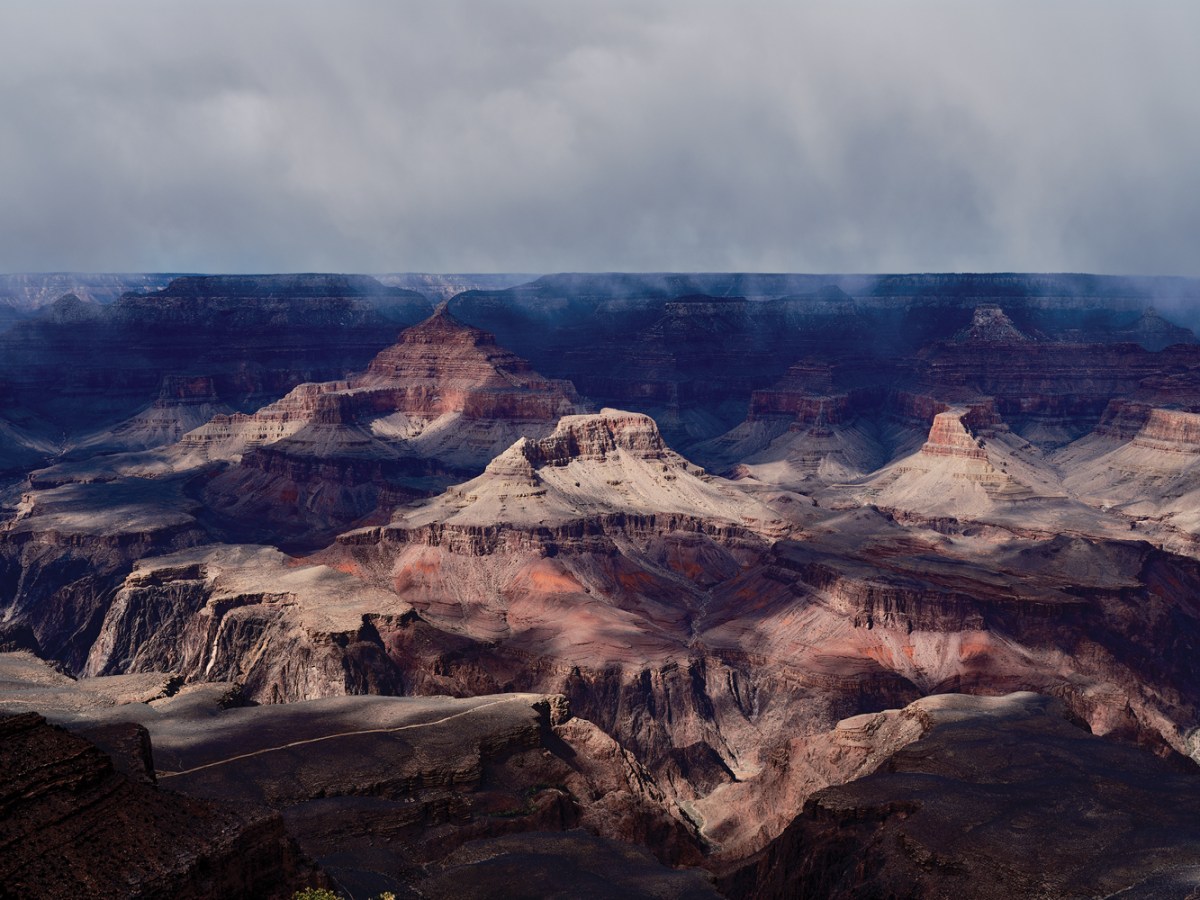
Yes, the Grand Canyon draws crowds to its greatest hits, but a short stroll along the Rim Trail at dawn often reveals empty overlooks and silent canyon views. Desert View, located east of the main village area, tends to feel quieter while offering sweeping panoramas. Even the porch outside the El Tovar bar can feel surprisingly peaceful in the evening, when the light fades and the canyon turns shadowy blue. Beneath the sweeping panorama lies a dense layering of plant life, wildlife, Indigenous history, and thoughtful architecture that rewards curiosity.
A Surprisingly Rich Desert Garden
At first glance, the canyon can appear stark, but it’s actually one of the most biologically diverse landscapes in the American West. Because the park spans more than 8,000 feet in elevation—from the river corridor to cool ponderosa forests on the rim—it contains multiple ecological zones stacked vertically.
Down in the inner canyon, hardy desert plants like brittlebush, Mormon tea, and claret cup cactus survive brutal heat and scarce water. Higher elevations support piñon pine, juniper, and Gambel oak, and in spring, slopes burst into color with Indian paintbrush, lupine, and primrose.
Wildlife thrives here, too. Bighorn sheep move with improbable grace along narrow rock ledges. Mule deer graze the rim forests. And if you’re lucky, you may spot the massive wingspan of a California condor, one of North America’s rarest birds, now soaring again over the canyon, thanks to a successful reintroduction program.
A Landscape of Living Cultures
Long before the canyon became a national park in 1919, it was home to Indigenous peoples whose histories stretch back thousands of years. Today, 11 tribes maintain cultural ties to the canyon, including the Hopi, Havasupai, Hualapai, Navajo, Zuni, and Southern Paiute.
For the Havasupai, whose name means “people of the blue-green water,” side canyons remain home territory. The Hopi regard the canyon as part of their ancestral migration route and spiritual landscape. Archaeological traces—granaries tucked into cliffs, petroglyph panels, ancient pottery—hint at many centuries of habitation.
Understanding these connections shifts the canyon from a scenic destination to a place of deep cultural continuity.
5 Views You Can’t Miss
Thomas J. Story
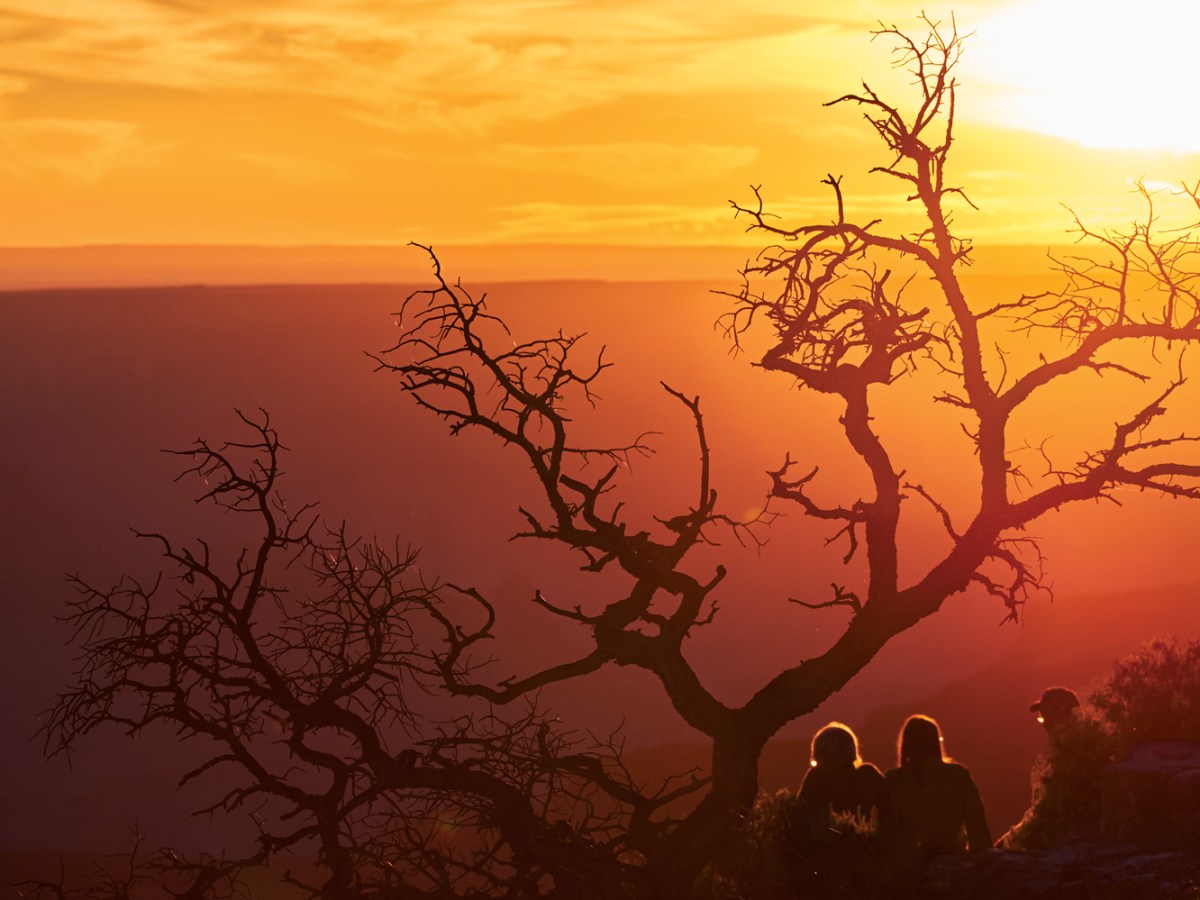
Yes, gazing wide-eyed into the unfathomable expanse of the canyon is an exquisitely powerful activity, but focusing on other facets of the location’s history, ecology, and culture can yield a much richer visit.
The Grand Canyon reveals itself differently from every overlook. Each vantage point emphasizes a different geological story—some highlighting the Colorado River, others the immense stair-stepped cliffs that descend toward the canyon floor. If you’re visiting for the first time, these viewpoints offer an unforgettable introduction.
Start with these five:
Hopi Point
GummyBone/Getty Images
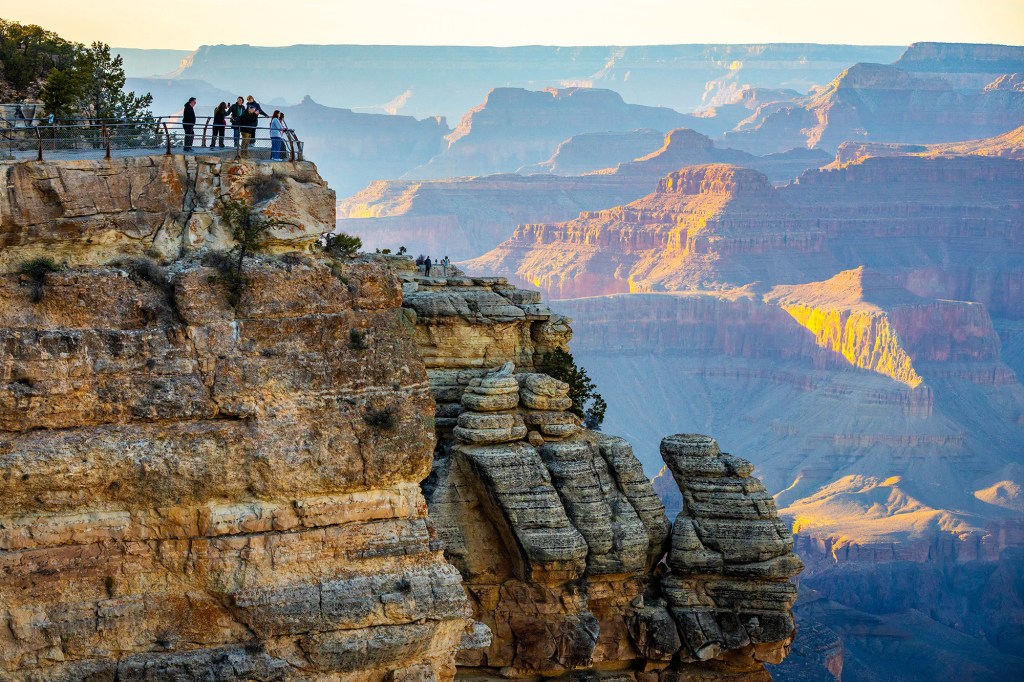
Perhaps the most celebrated sunset location in the park, Hopi Point offers a wide panorama where the canyon’s layers catch the evening light in dramatic bands of orange and crimson.
Mohave Point
Thomas J. Story
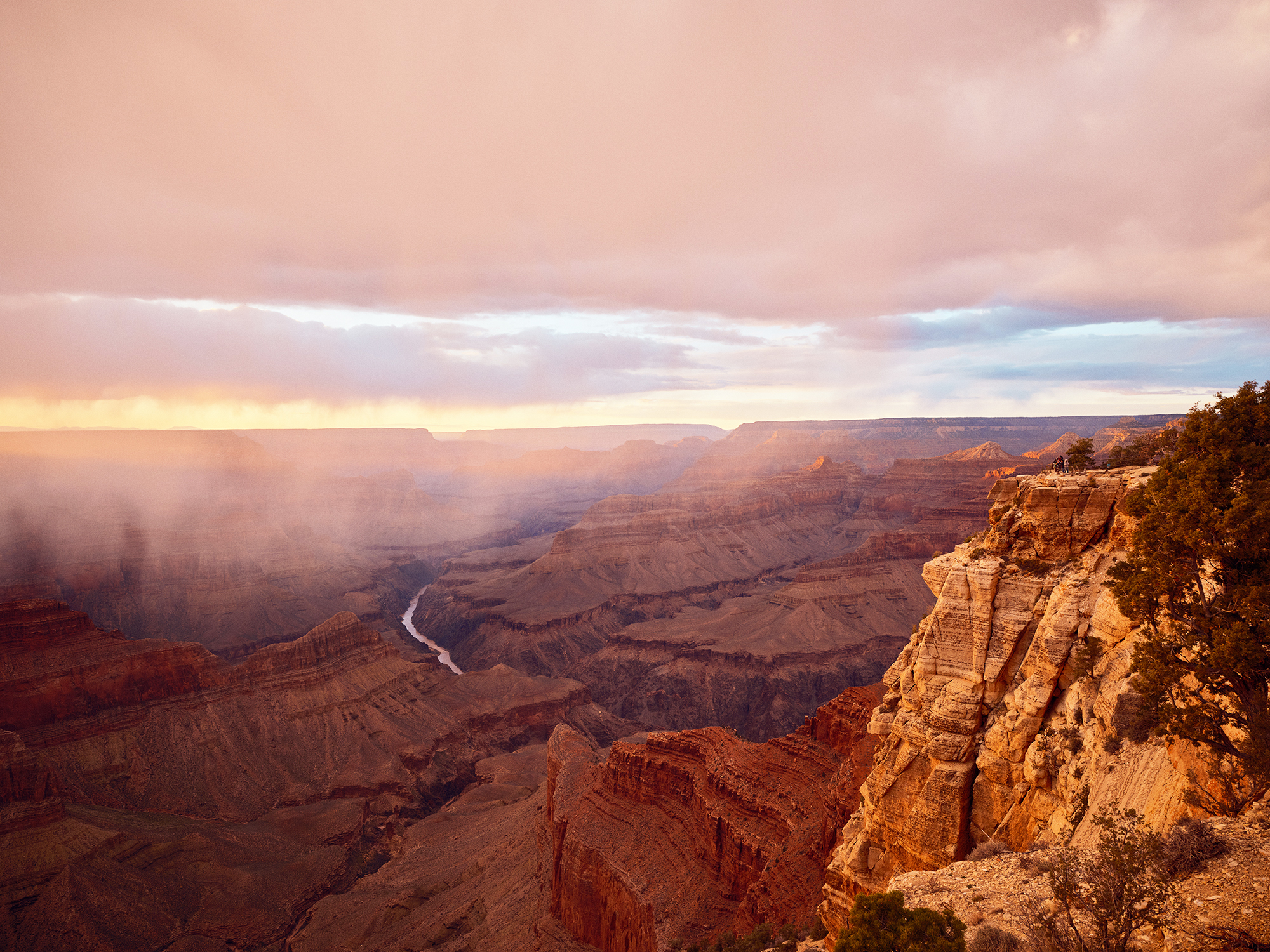
One of the best places to glimpse the Colorado River flashing through the canyon far below.
Lipan Point
Thomas J. Story
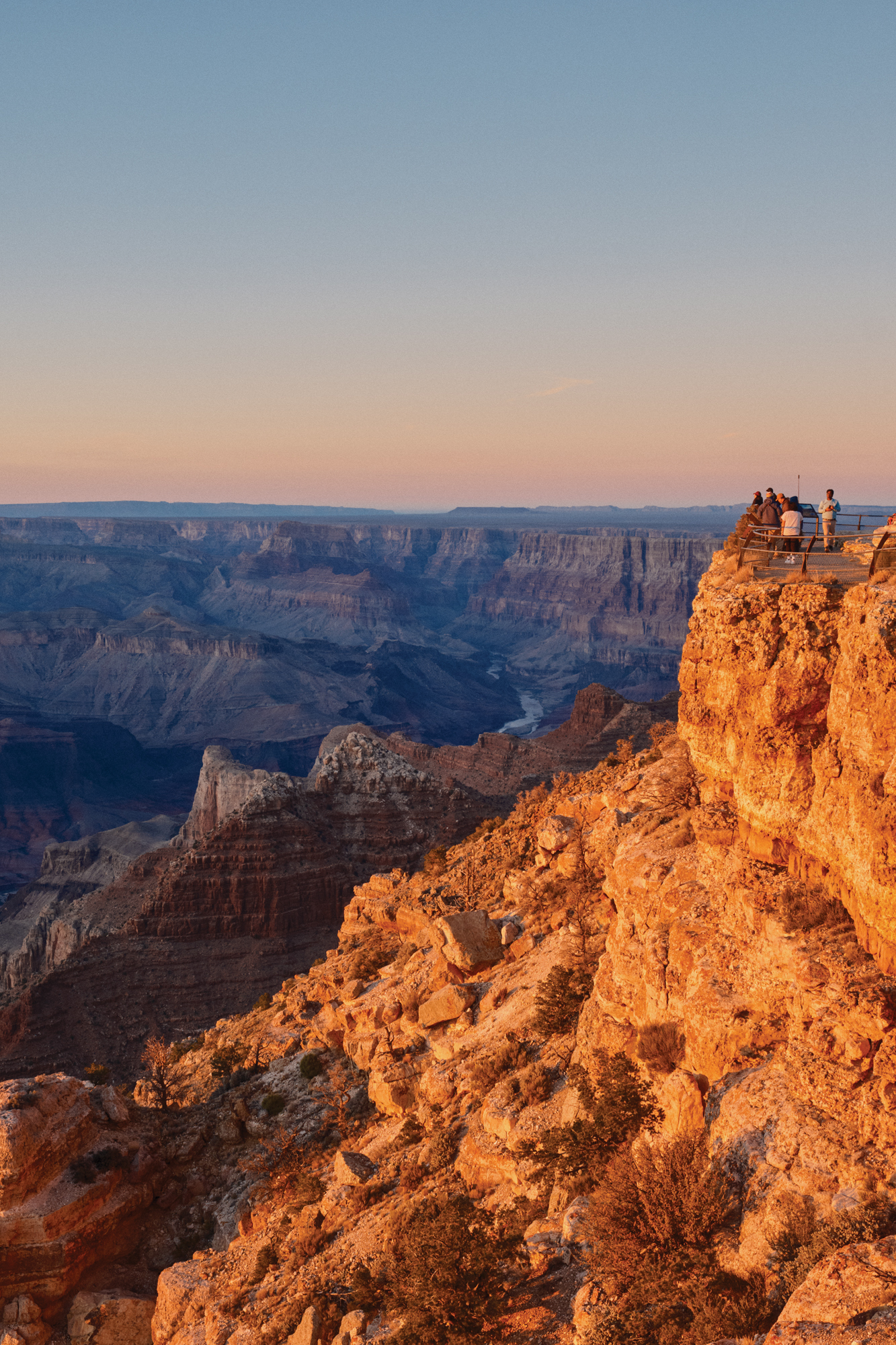
A sweeping view revealing distant side canyons and the winding path of the river.
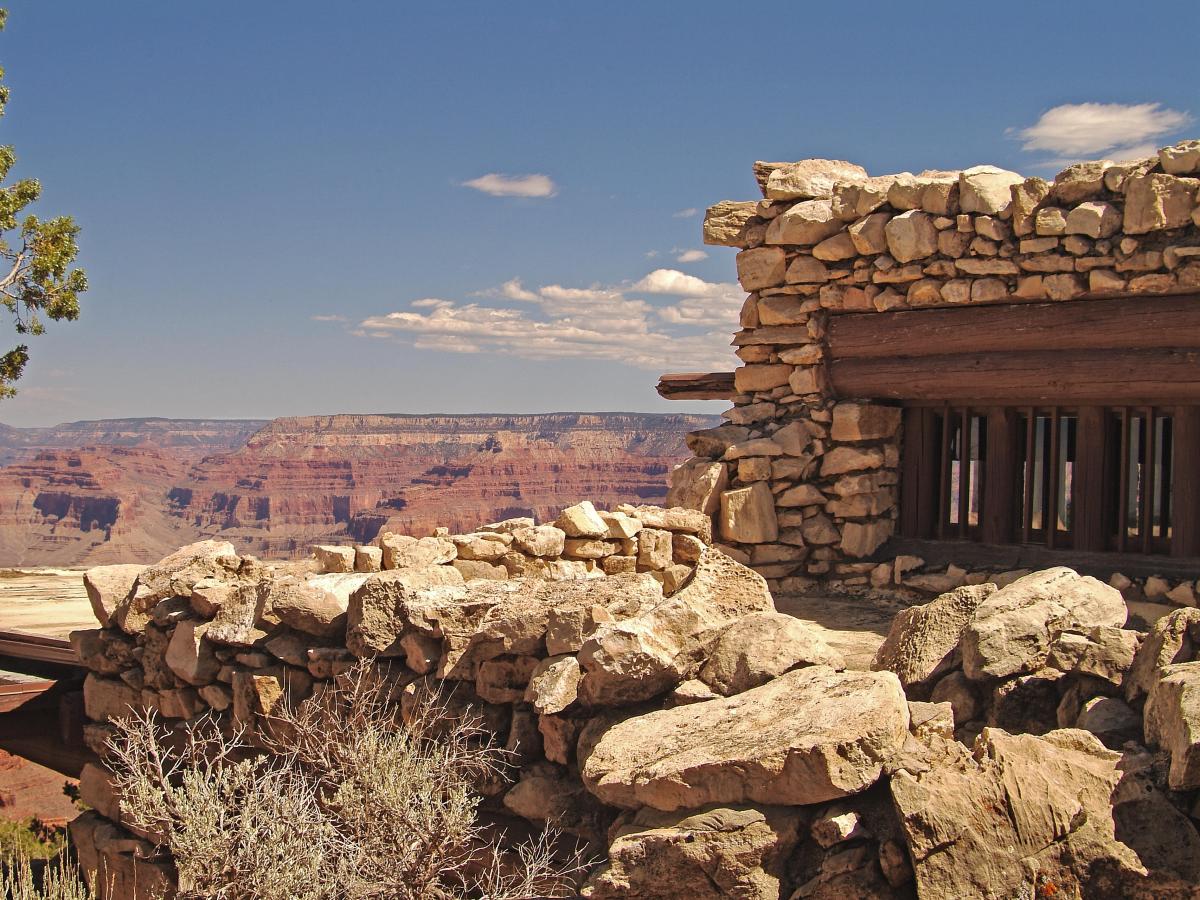
Hermits Rest
Courtesy of Xanterra Travel Collection
With a rustic stone structure designed by Mary Colter, canyon views stretch endlessly toward the western horizon here.
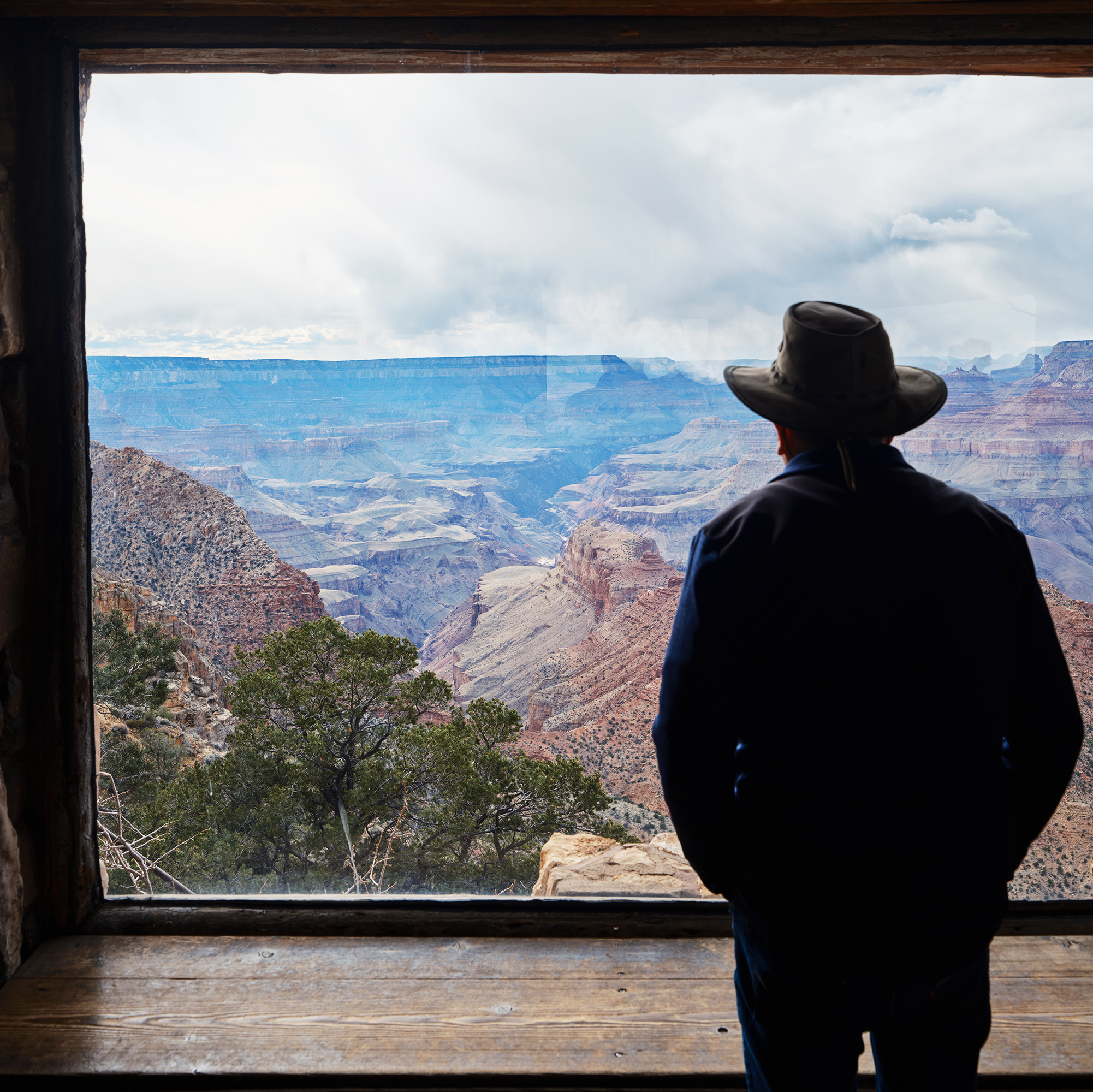
Desert View Watchtower
Thomas J. Story
Climb the tower for one of the park’s most expansive eastward vistas.
3 Hikes That Deliver Big Payoff
Courtesy of Xanterra Travel Collection
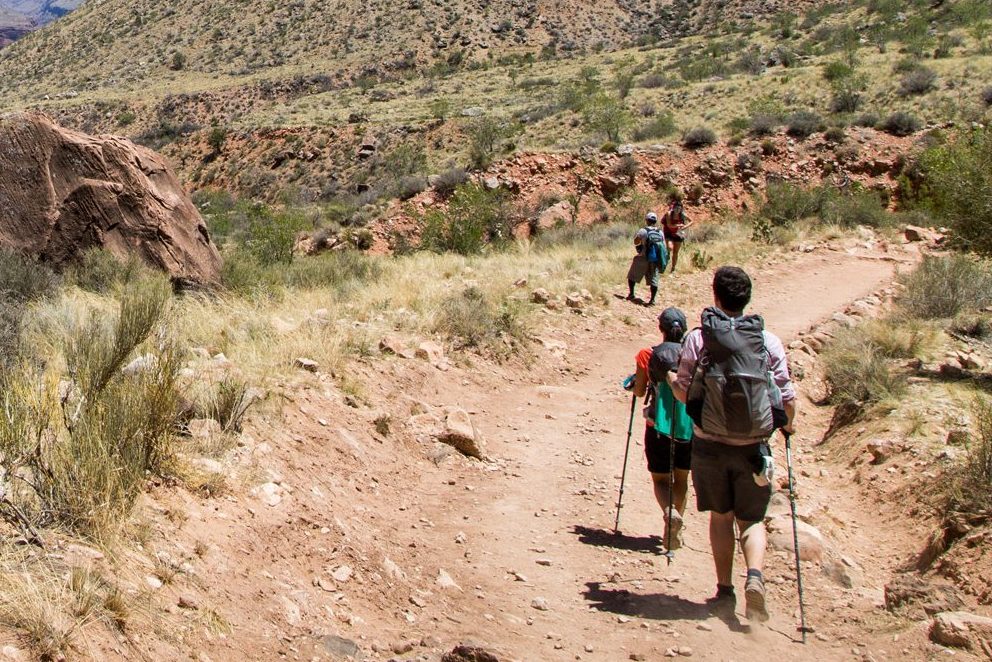
The Grand Canyon’s trails descend into the landscape rather than skimming its edges, which means even a short hike dramatically changes your perspective. The further you go, the more the canyon walls rise around you and the more the scale becomes real.
For first-time visitors, these three hikes offer memorable introductions.
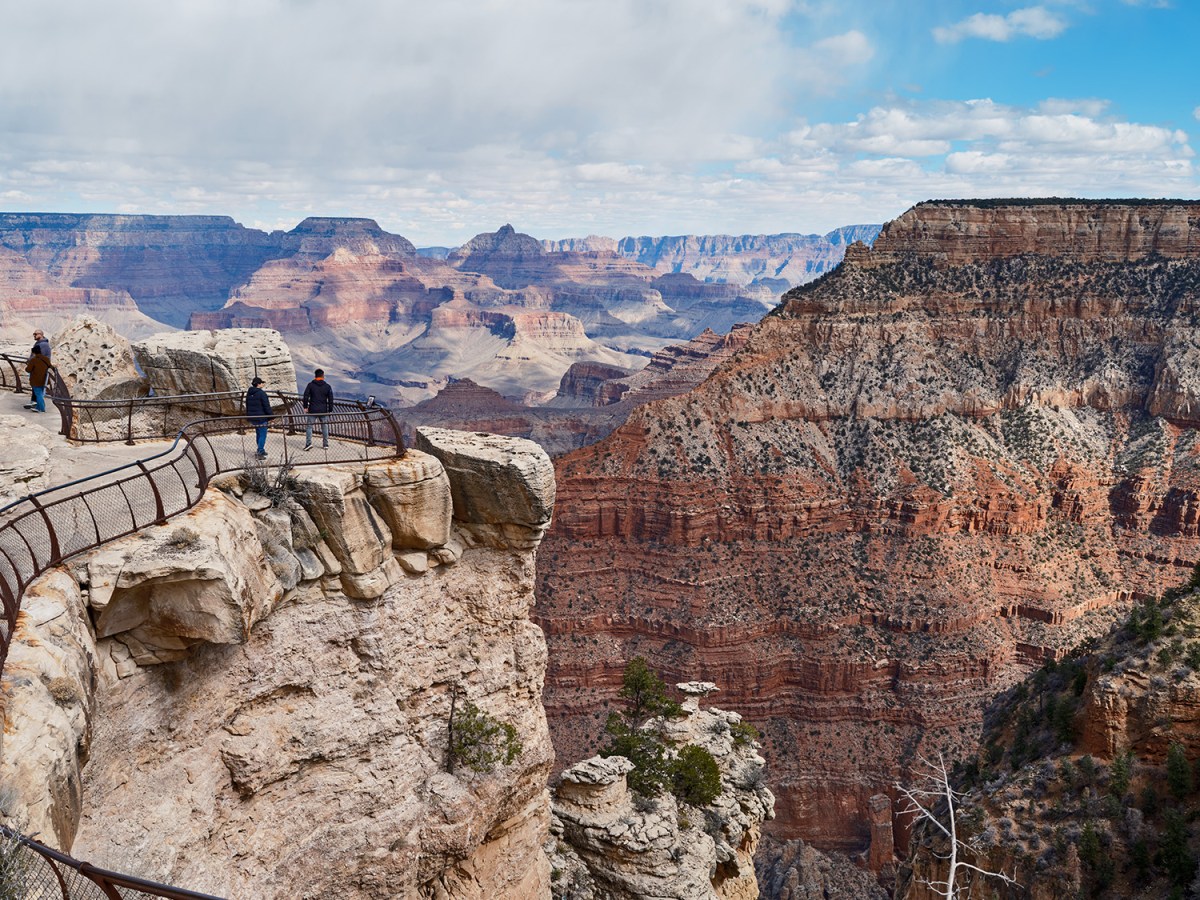
Rim Trail (Easy)
Thomas J. Story
A mostly level path connecting many of the park’s best viewpoints. It’s ideal for a relaxed stroll with constant canyon views.
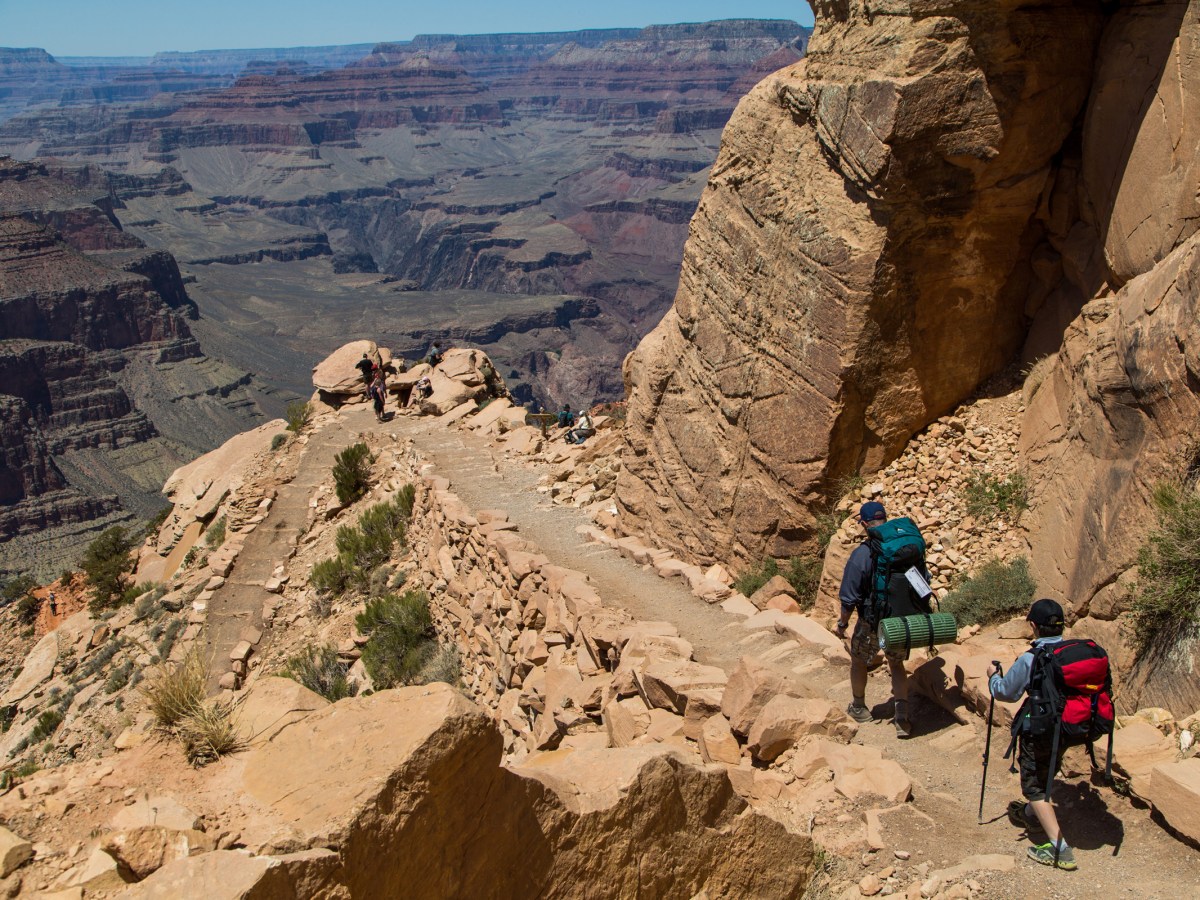
South Kaibab Trail to Ooh Aah Point (Moderate)
Courtesy of Xanterra Travel Collection
A short descent that quickly reveals dramatic canyon perspectives. The name says it all.
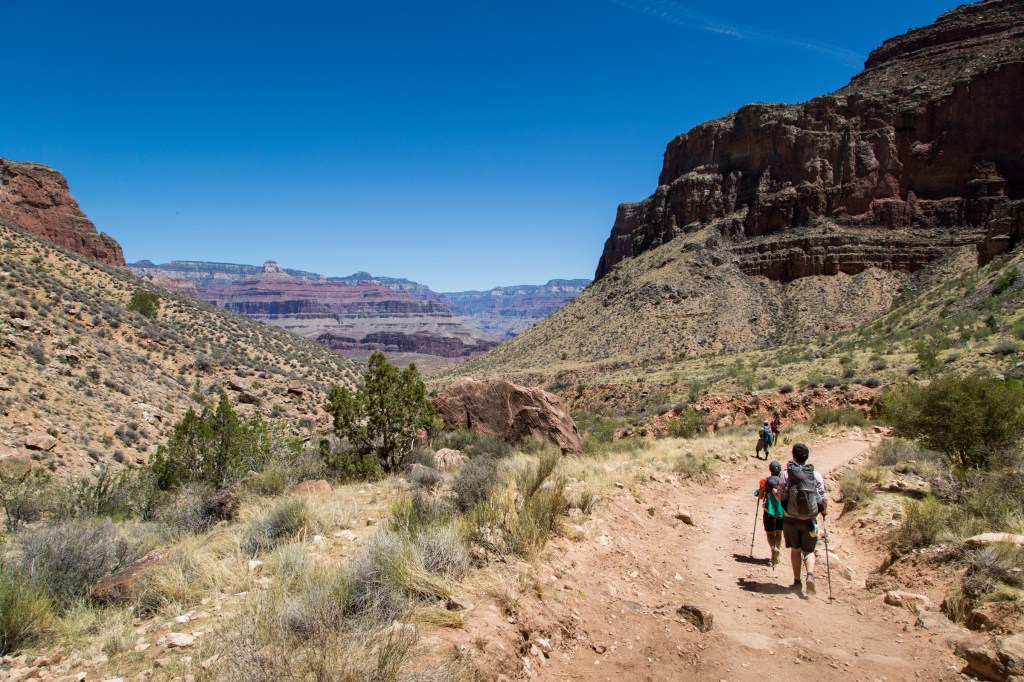
Bright Angel Trail to Havasupai Garden (Challenging)
Courtesy of Xanterra Travel Collection
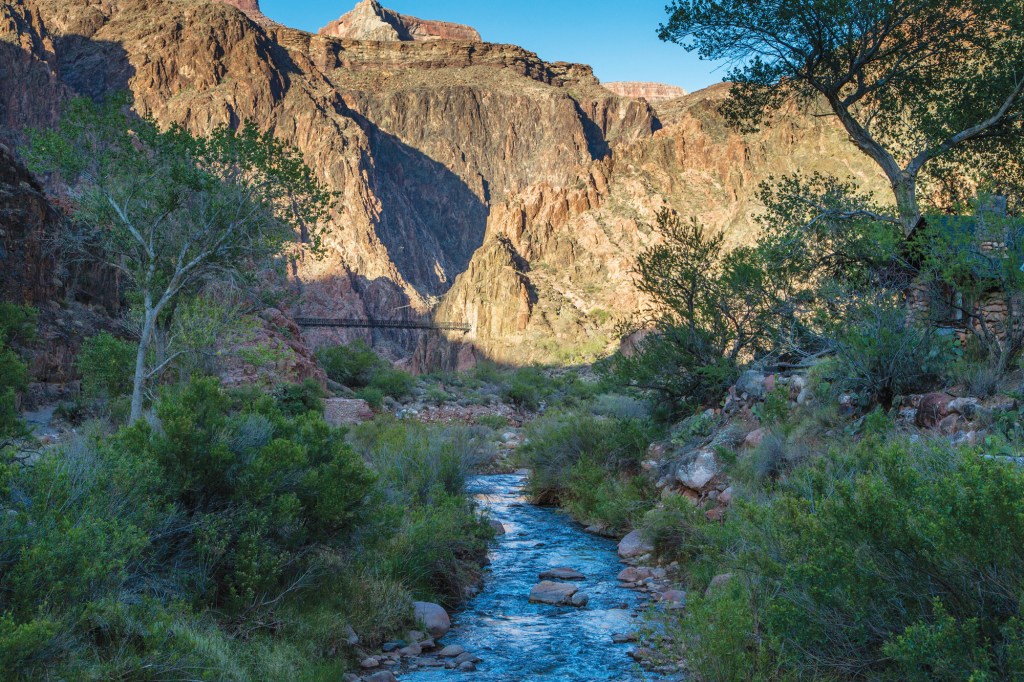
A classic canyon trek that reaches a shaded oasis deep within the canyon. One rule applies to every canyon hike: The journey down is optional. The climb back up is not.
The Marvelous Mule Rides
Thomas J. Story
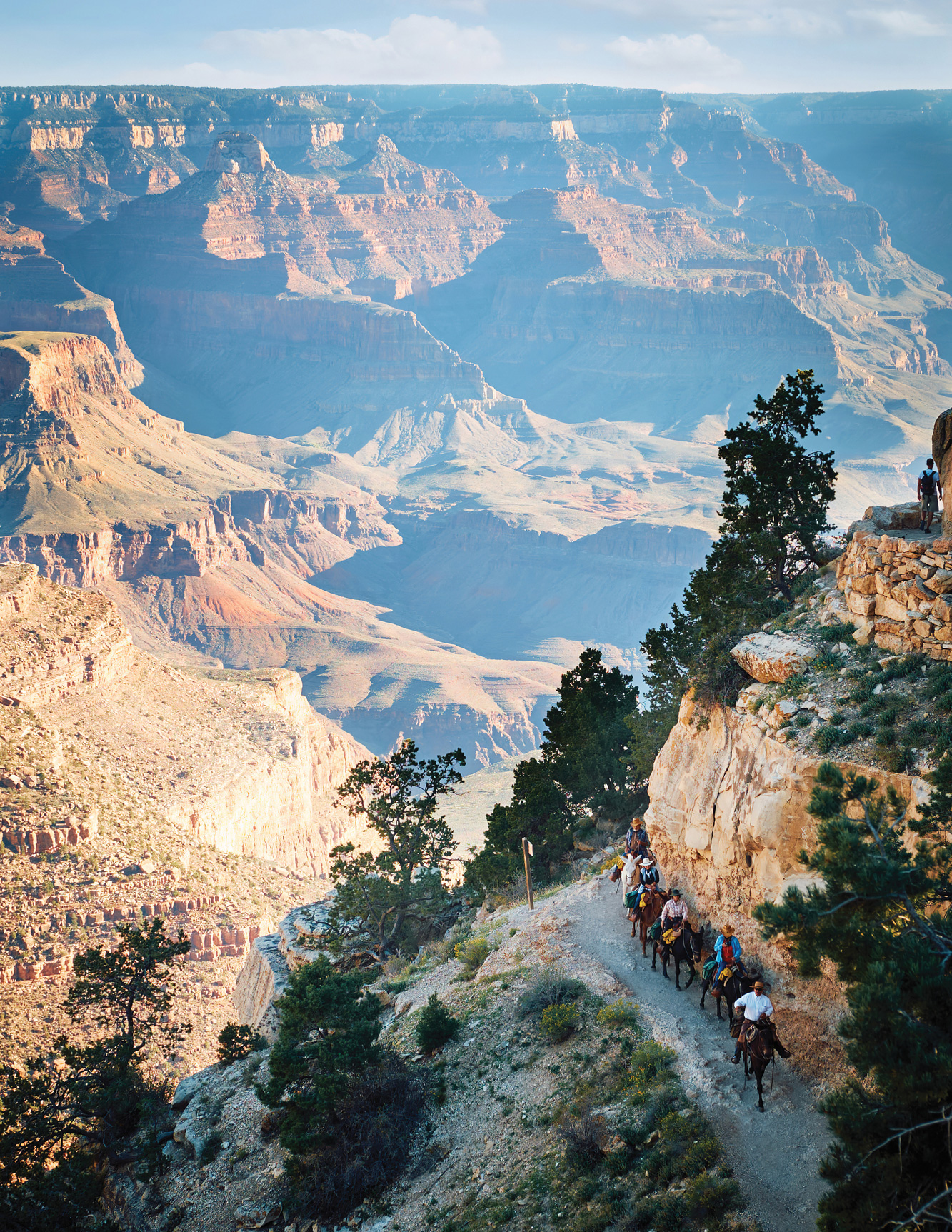
There’s no more iconic way to enter the Grand Canyon than on the back of a sure-footed mule. These guided rides—operated by Xanterra Travel Collection—follow historic trails like Bright Angel, dropping you into the canyon at a pace that lets the scale truly register. You’ll ride nose-to-tail, led by seasoned wranglers who share geology, lore, and the occasional dry joke. Options range from half-day rim rides to overnight trips to Phantom Ranch. Book far in advance, expect early mornings, and know this: It’s equal parts thrill, history lesson, and unforgettable rite of passage.
Donkey Business
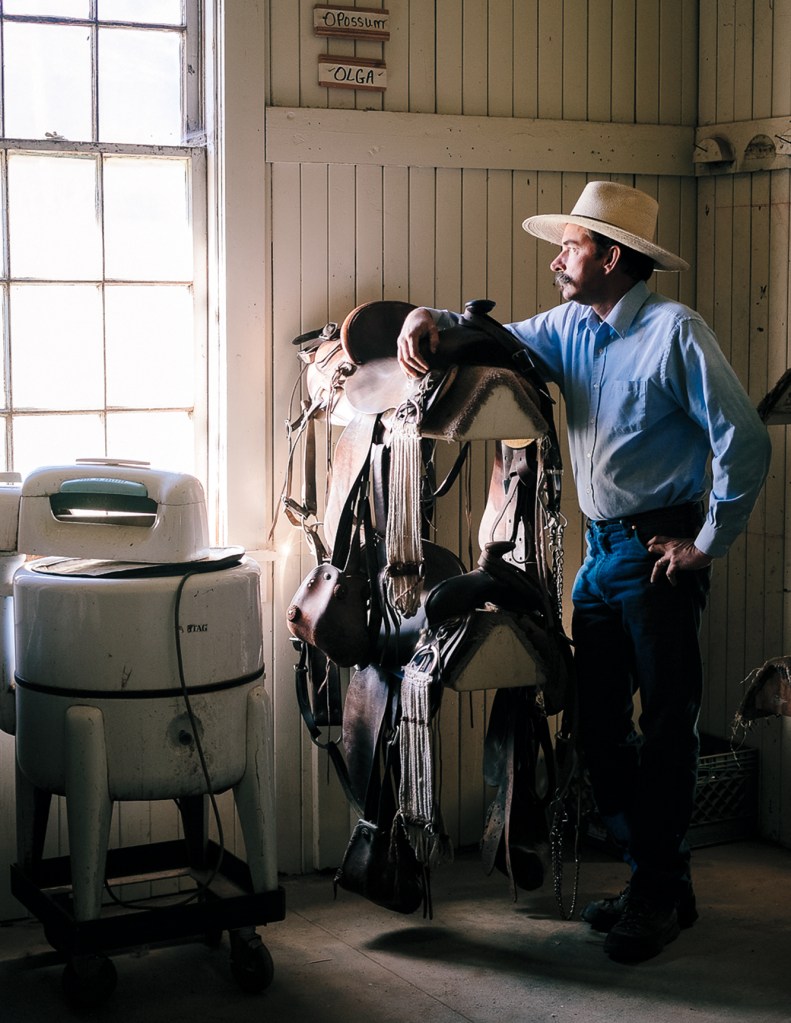
Photo by Thomas J. Story
John Berry is the Grand Canyon’s livery manager, and as such, he presides over the park’s 150 mules, which ferry supplies, wranglers, and tourists into the canyon. We chatted him up about life on the rim.
Advice for first-time riders?
People think riding a mule is easy. I tell them, “You’ll be sore in places you didn’t even know you had.” When you’re at the edge of a 1,000-foot cliff, you better be aware of your surroundings.
Are mules safe?
The mules have been taking people into the canyon for 100 years, and we’ve never lost a person because of a mule. If there’s a thunderstorm and the trail’s washed out, a good mule will stand there with you on its back and wait for things to get fixed.
Your first canyon ride?
It was early morning in winter, still dark, a little moon. The trails were iced over. When we first walked out on the trail, it took my breath away. It was like being on some ride at Disneyland—it almost didn’t look real when we dropped down into the canyon. It’s something that I’ll always remember.
Rooms with a View (to the Past)
Courtesy of Xanterra Travel Collection
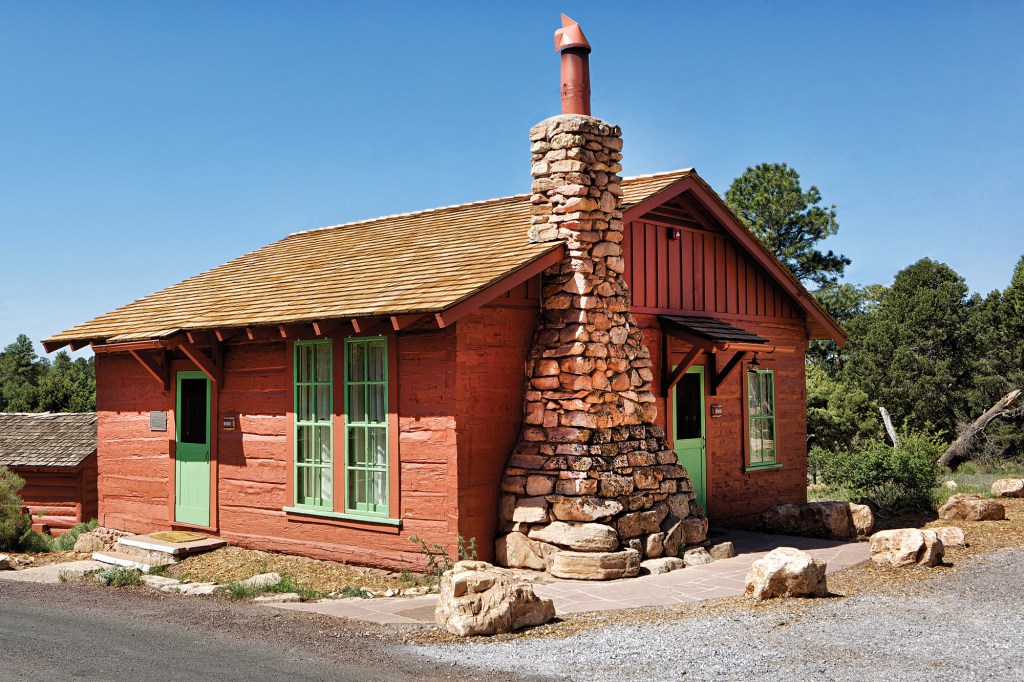
Staying overnight at the Grand Canyon transforms the experience. When evening settles across the canyon walls, the park becomes quieter and more contemplative. Lodges new and historic from the Xanterra Travel Collection offer visitors a variety of ways to rest and reset at the Grand Canyon.
Buckey O’Neill Cabin
Thomas J. Story
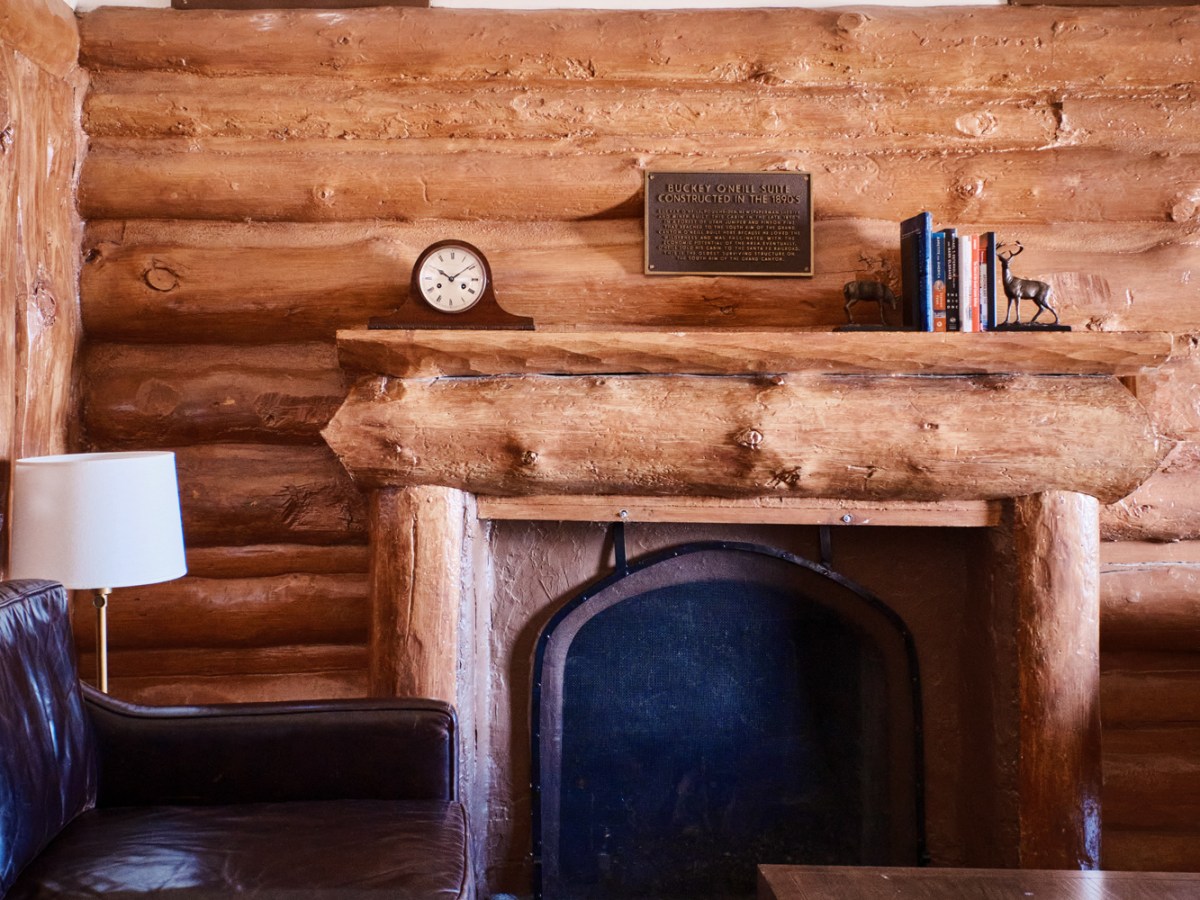
The Buckey O’Neill Cabin is a rustic stone-and-log structure dating to the 1890s. Named for William “Buckey” O’Neill—an Arizona sheriff, prospector, and Rough Rider—the cabin is one of the oldest surviving buildings at the canyon. Two Adirondack chairs perch outside the door and let you peer out into the canyon rim mere yards away.
The Mary Colter Suite
Xanterra Travel Collection
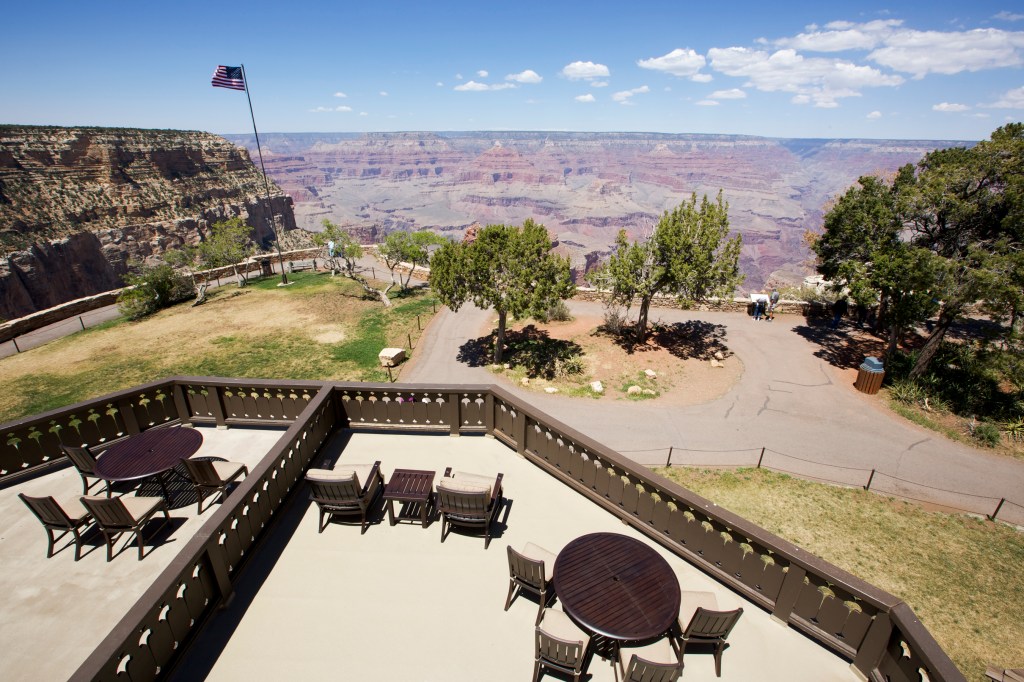
Named for the visionary designer who shaped much of the Grand Canyon’s architectural identity, the Mary Colter Suite at the El Tovar Hotel is one of the most distinctive stays on the South Rim. The spacious suite has a living and dining area that opens onto a second-floor balcony overlooking the South Rim. One of the best rooms at the canyon.
Red Horse Cabin
Thomas J. Story
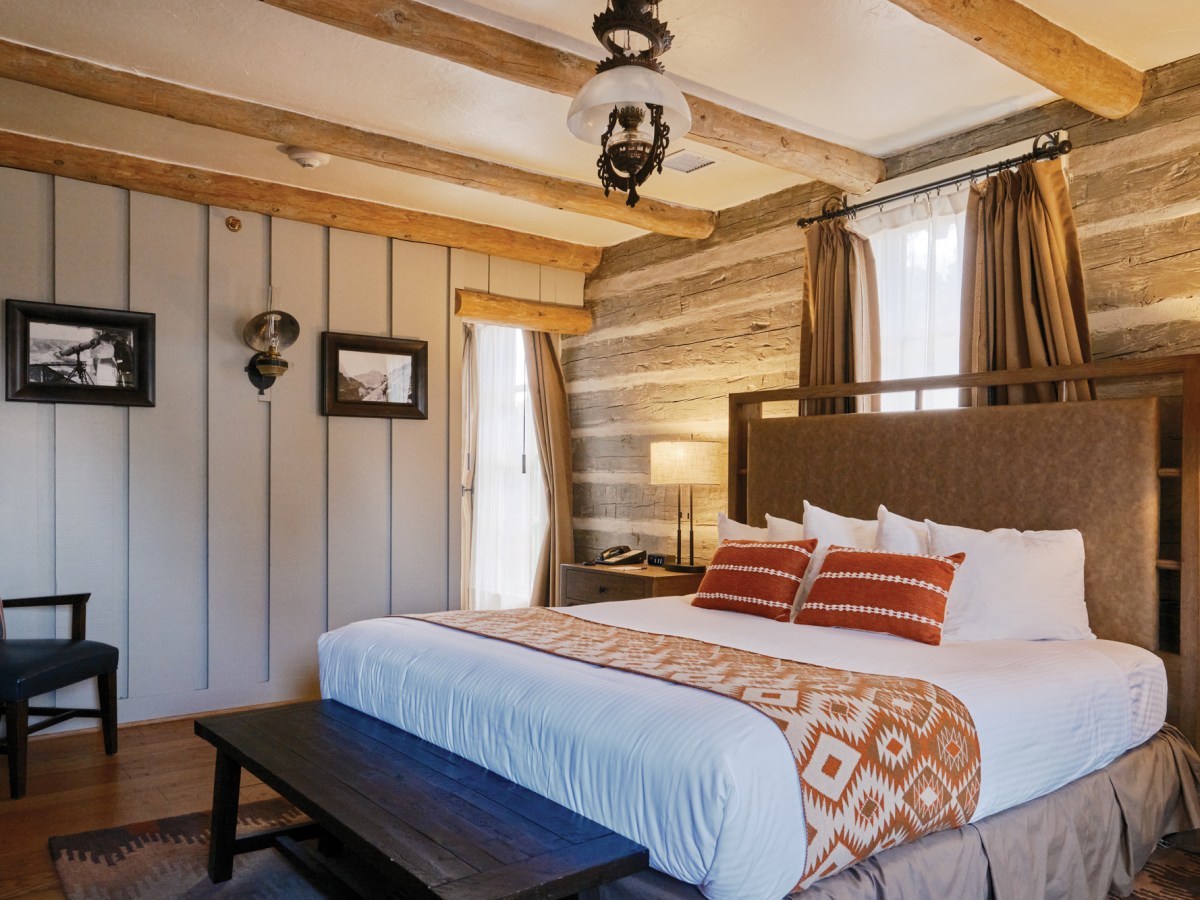
The most stylish roost at Bright Angel Lodge, the Red Horse Cabin features a cozy sitting area and separate bedroom—and operated as the Grand Canyon Village post office from 1910 to 1935. It has recently been updated with modern comforts, traditional Western textiles, warm wood tones, and a cozy fireplace.
Maswik Lodge
Xanterra Travel Collection
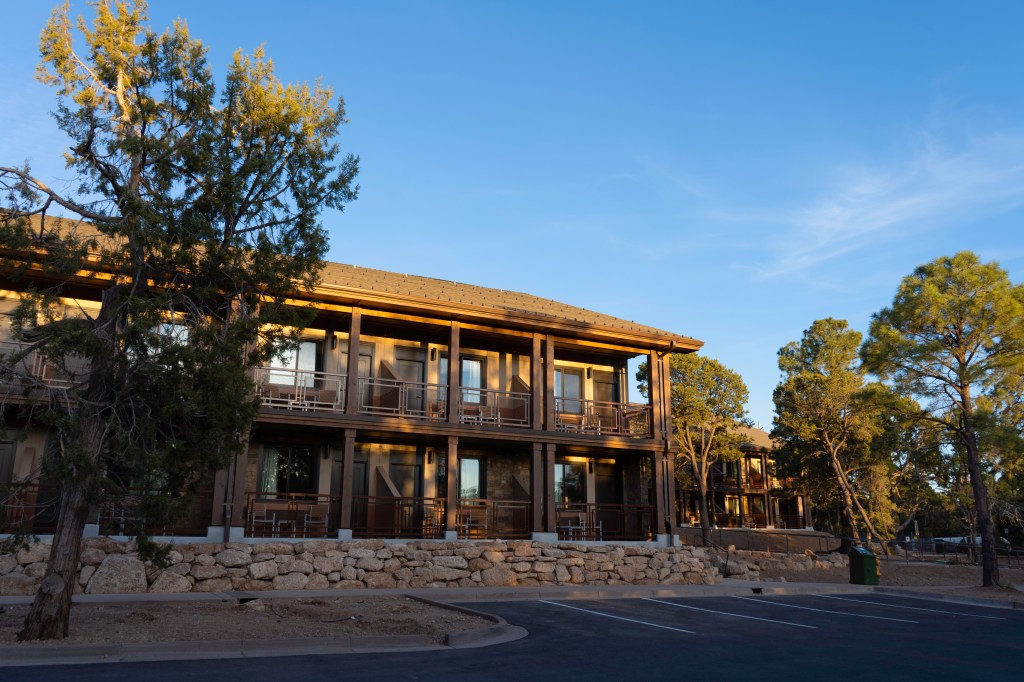
Maswik Lodge offers apartment-style rooms at rates lower than rooms by the rim. Stop at the Grand Canyon Village Market and stock your room with breakfast supplies, snacks, and drinks. When you do want something hot and easy, Maswik’s food court and pizza pub offer casual, affordable options.
Dine Grandly
Thomas J. Story
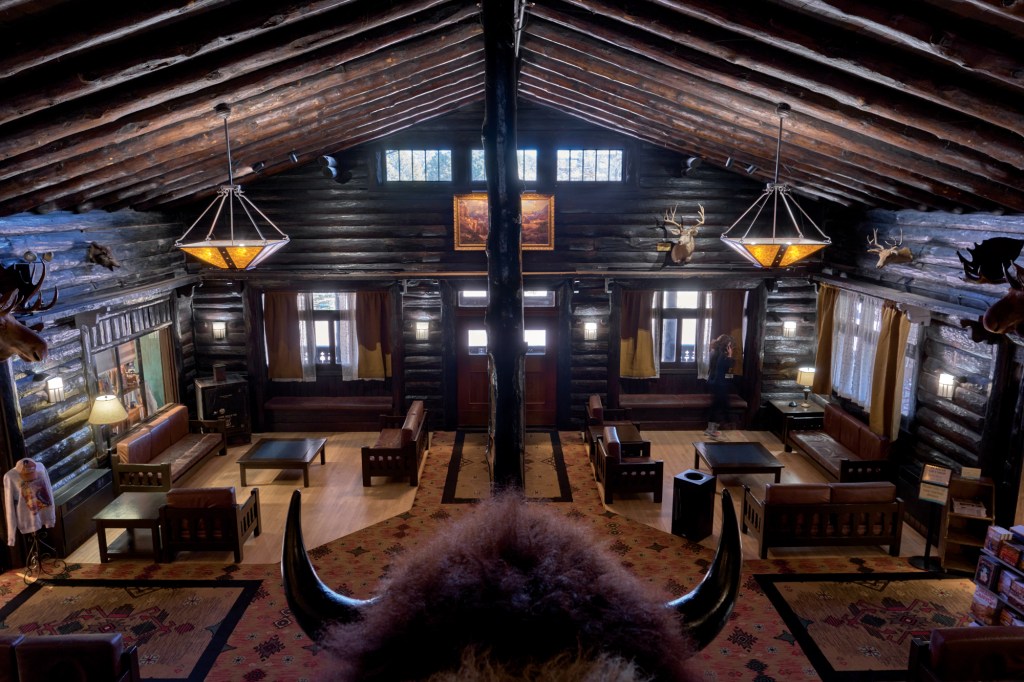
Dining at the Grand Canyon ranges from quick trail fuel to historic lodge elegance, and each option carries its own character.
The most iconic dining experience is El Tovar Dining Room, located inside the historic El Tovar Hotel, overlooking the canyon rim. Since opening in 1905, the restaurant has hosted presidents, explorers, and generations of travelers. Today, it serves refined Southwestern cuisine—think Arizona beef, regional trout, and seasonal ingredients—in a lodge dining room that still feels like the golden age of Western tourism. For a more contemporary option, Arizona Steakhouse pairs canyon views with modern Southwestern flavors and a relaxed atmosphere. And when the park is bustling, the Market Plaza food court offers the fastest route to a satisfying meal before heading back out to explore. Wherever you eat, the canyon itself tends to be the most memorable part of the meal.
The Legend of Mary Colter
Thomas J. Story
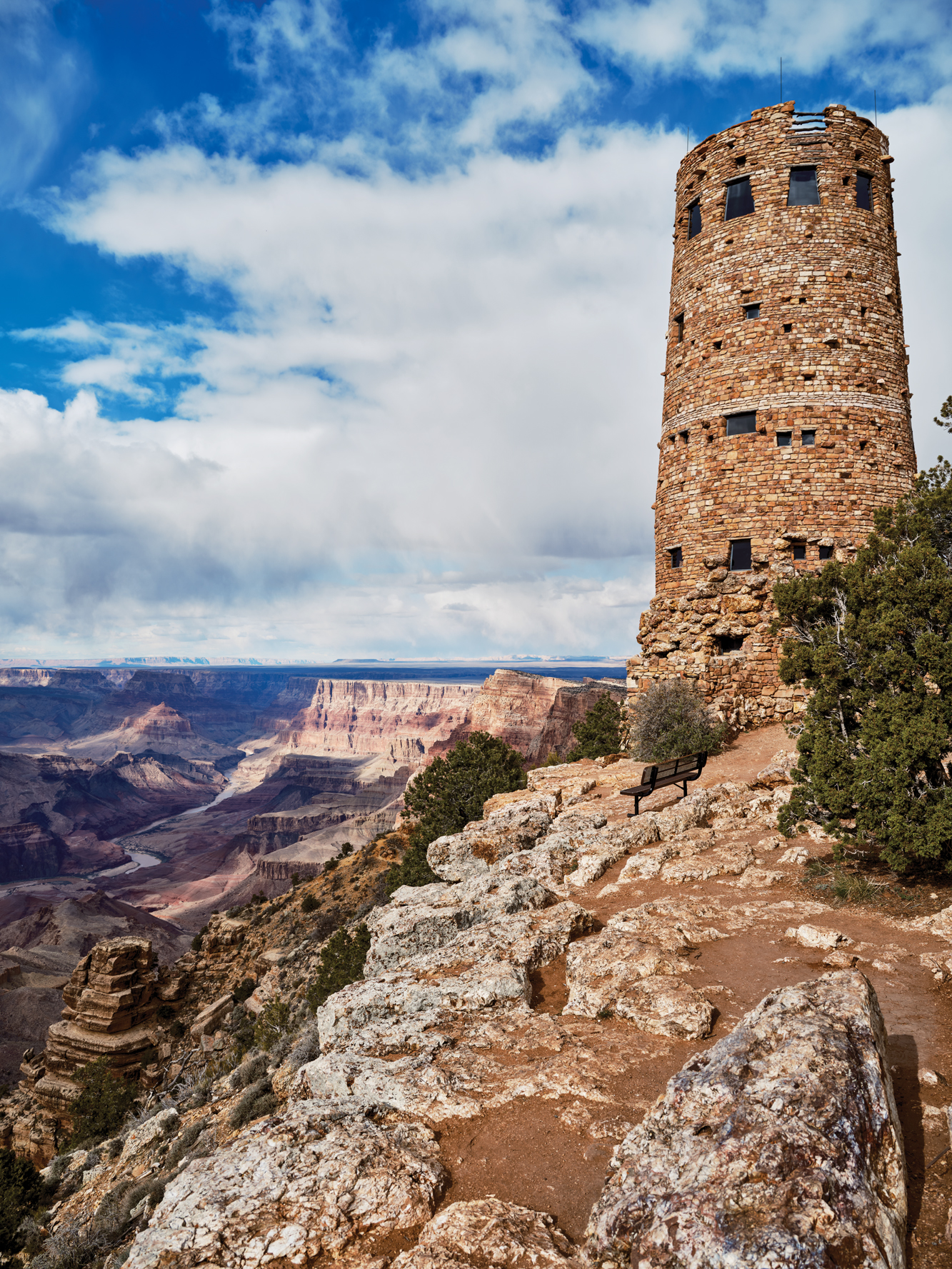
The Grand Canyon is famous for its natural architecture, but the buildings along the rim are nearly as legendary. Many were designed by Mary Colter, an architect whose vision helped define how visitors experience the park today. Working for the Fred Harvey Company in the early 1900s, Colter believed buildings should appear to grow naturally from the landscape. She studied Indigenous architecture and historic ruins to create her designs. She designed Hopi House, a structure modeled after a Pueblo village where Native artisans sold crafts; Hermits Rest, a rustic stone refuge at the end of Hermit Road; and Lookout Studio, a canyon-hugging building that seems carved from the rock itself. At a time when women rarely practiced architecture professionally, Colter became one of the most influential designers in the American West and still influences how people experience the canyon today. Her masterpiece is the Desert View Watchtower, a 70-foot stone tower (pictured above) perched on the canyon’s eastern edge. It appears to have stood there for centuries. Colter famously quipped, “You can’t imagine what it cost to make it look this old.”