5 Art-Filled Gardens Worth Strolling
Skip the gallery walls and explore sculpture installations surrounded by nature this season.
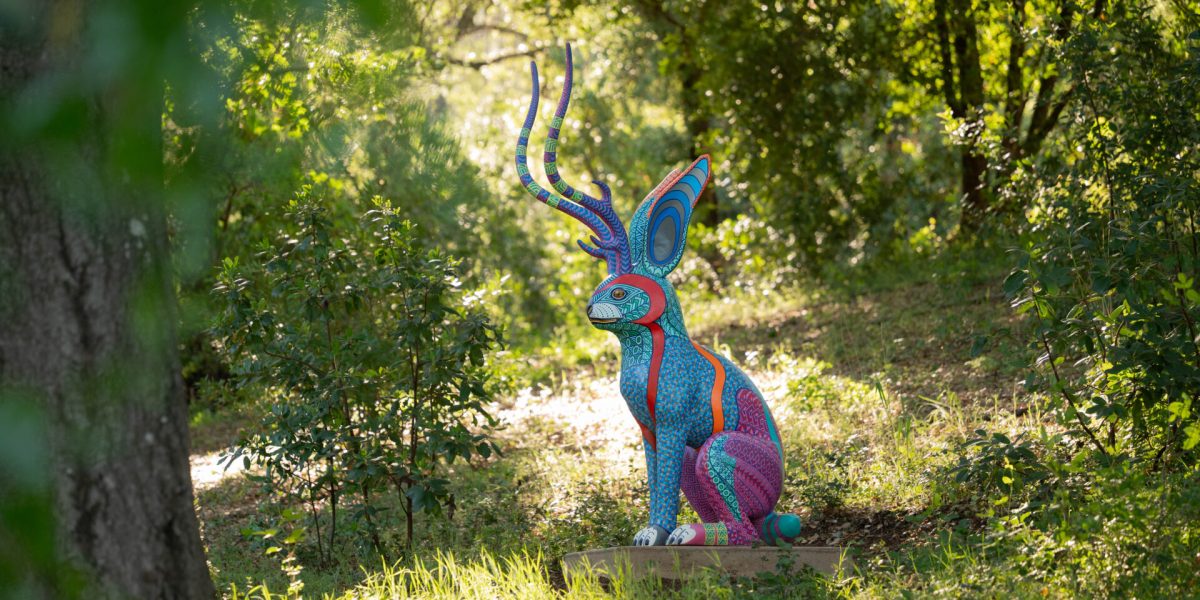
Jacobo and María Ángeles, Rabbit-Deer, fiberglass and acrylic paint, 2024. Artwork © Jacobo and María Ángeles. Photo by Daniel Perales.
Jacobo and María Ángeles, Rabbit-Deer, fiberglass and acrylic paint, 2024. Artwork © Jacobo and María Ángeles.
This time of year, the best gallery walls aren’t walls at all. They’re canopies of new leaves, windswept grasses, and that particular kind of spring light that makes everything feel quietly cinematic. Sculptures emerge where you least expect them, glinting after rain, tucked between native plantings, casting long shadows across desert paths.
We’re spotlighting five Western gardens where art doesn’t announce itself. It settles in. Pieces shift with the weather, catch the light differently by the hour, and feel in easy conversation with the plants around them. The experience is less about viewing and more about noticing, unfolding slowly as you wander, pause, and inevitably double back for another look.
Consider this your gentle nudge to take the longer route, the one where creativity and chlorophyll meet, and where the season does some of the curating for you.
Washington Park Arboretum
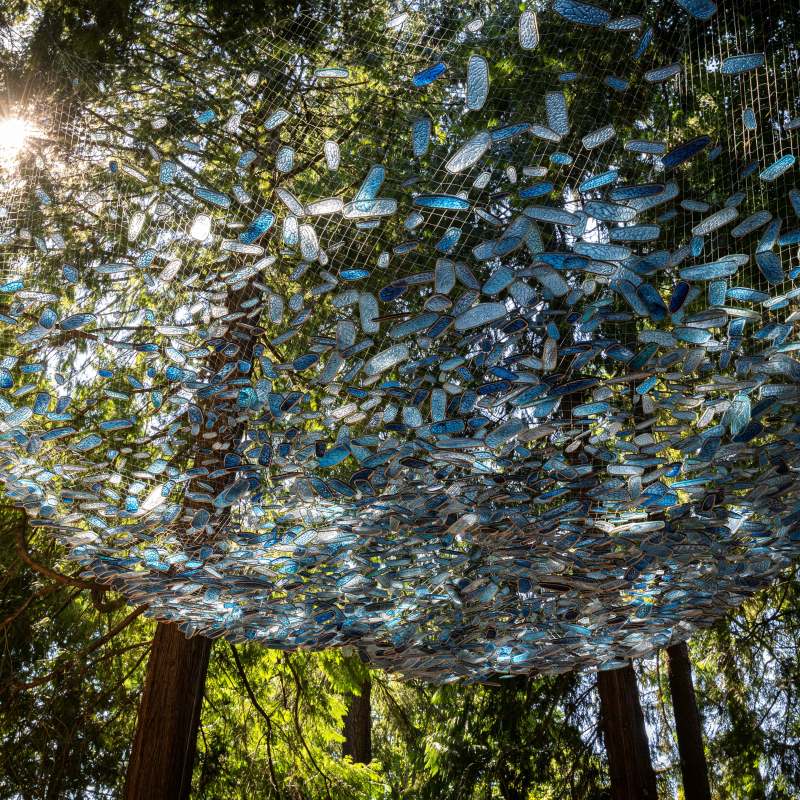
Courtesy of Washington Park Arboretum, Seattle, Washington
Where Trees Hold the Work
Suspended more than 100 feet between eight towering trees, Union, by John Grade, feels less like an installation and more like a phenomenon. The large-scale sculpture—composed of over 6,000 cast resin forms framed in laminated ceiba wood—hovers lightly in the canopy, shifting with wind, rain, and light above a tapestry of maples, magnolias, and understory ferns.
Inspired by a fallen western redcedar in nearby Discovery Park, the work splits into two elongated forms, each echoing the tree’s exposed growth rings. Look closely and the surface reveals itself in layers: cupped shapes that gather rainwater, translucent blues and greens that mirror the surrounding foliage, and cellular patterns that feel almost botanical themselves.
It’s a piece that doesn’t ask for attention so much as it rewards it—changing subtly with every passing cloud, every drop of rain, every pause beneath it.
Sonoma Botanical Garden
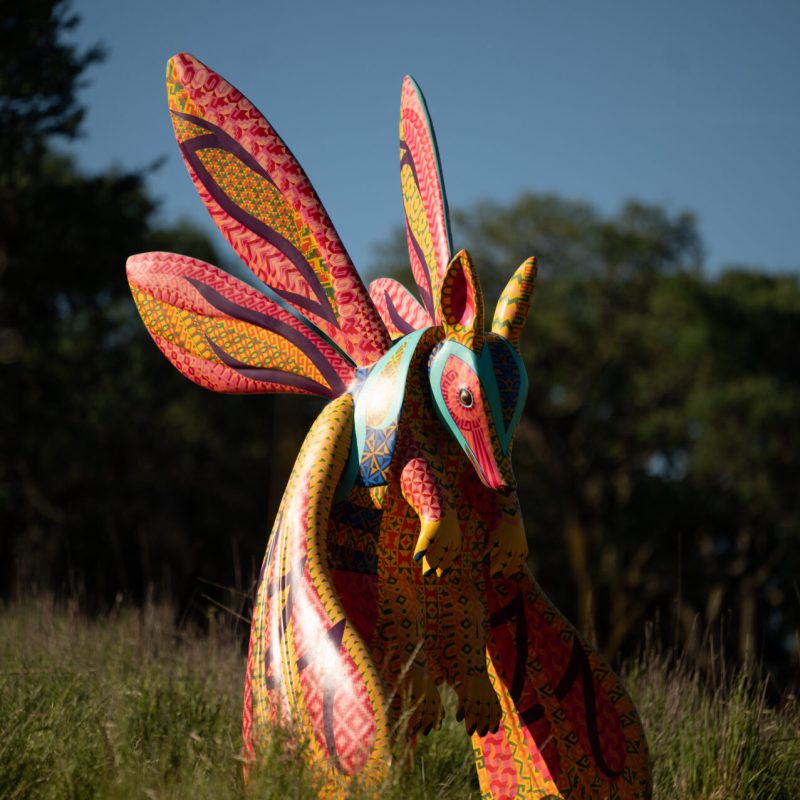
Photo by Daniel Perales
A Garden That Dances After Hours
Here, art arrives in vivid color—and stays for sunset. The exhibition Spirit Guides: Fantastical Creatures from the Workshop of Jacobo and María Ángeles transforms the garden’s oak-studded hillsides and manzanita-lined paths into something mythic, with monumental, joyfully patterned alebrijes peeking out from native bunchgrasses and spring wildflowers.
Rooted in Zapotec cosmology, each sculpture represents a hybrid animal tied to personality, spirit, and story. Their geometric patterns glow against the silvery greens of California natives and the deep shade of the Asian woodland collections, especially as the light softens toward evening.
On Wednesdays, the experience stretches even further. During Acoustic Sunsets, the garden hums with live music, picnics spread beneath valley oaks, and the easy rhythm of a long California evening—where art, culture, and landscape blur into one another in the most effortless way.
Palm Desert
Courtesy of the City of Palm Desert
An Open-Air Gallery in the Desert
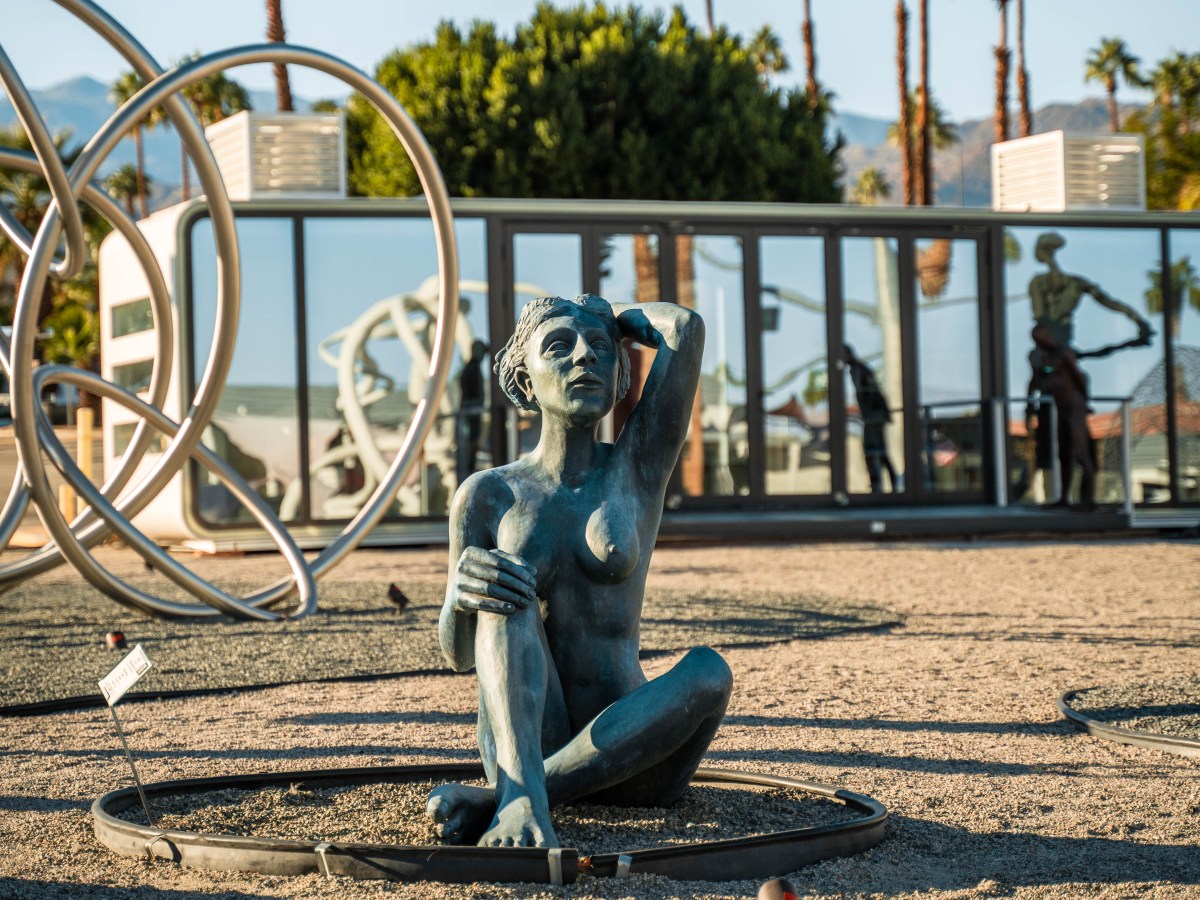
In Palm Desert, the garden isn’t confined by gates. Instead, it unfolds across sidewalks, medians, and sunlit plazas, where more than 150 public art installations rise out of a landscape of sculptural agave, feathery palo verde, and sky-punctuating palms.
Along El Paseo—often called the Rodeo Drive of the desert—sculpture becomes part of the daily rhythm: bronze figures in mid-stride, abstract forms casting long shadows across the pavement, and rotating exhibitions that keep the experience feeling fresh. Nearby, galleries like CODA Gallery and Melissa Morgan Fine Art deepen the dialogue between indoors and out.
It’s the contrast that makes it memorable—the clean lines of contemporary art set against rugged mountains, drought-tolerant plantings, and that unmistakable desert light.
Mendocino Coast Botanical Gardens
Courtesy of Mendocino Coast Botanical Gardens. Photo by Roxanne Perkins.
Where Dahlias Meet the Pacific
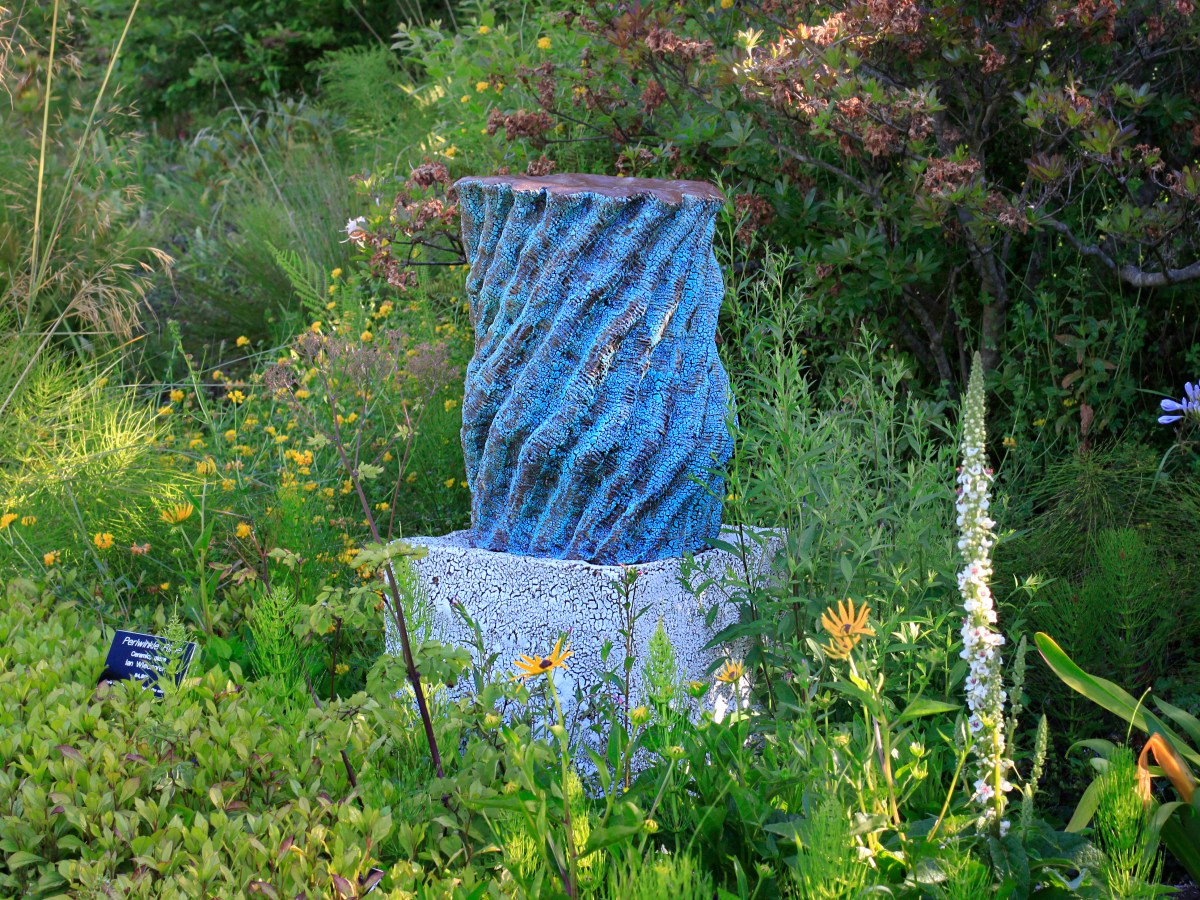
There is a moment on the Mendocino Coast when summer fully arrives. Dahlias open in saturated color, the marine layer lifts, and the Pacific stretches into uninterrupted blue. At Mendocino Coast Botanical Gardens, a rare oceanfront landscape spanning forested canyons and coastal bluffs, that moment becomes a celebration of art, bloom, and community.
On August 1–2, the Gardens will transform 47 acres into an open-air gallery for the 33rd annual Art in the Gardens. More than 50 artists present ceramics, jewelry, photography, woodwork, and sculpture along winding paths shaped by coastal light and breeze. Live music, local food, craft brews, and regional wines set an easy weekend rhythm.
Visitors drift between art and bloom, where peak-season dahlias, begonias, and perennials meet sweeping Pacific views. A working organic vegetable garden adds a quieter note, grounding the experience in cycles of cultivation and care.
More than a seasonal event, the gathering reflects the Gardens’ broader mission of conservation, education, and connection—supporting both plant life and the people who come to experience it.
Advance tickets are recommended.
Denver Botanic Gardens
© 2025 Artists Rights Society (ARS), New York / VEGAP, Madrid. Photo courtesy of Cheekwood Estate & Gardens.
Monumental Stillness, Human Scale
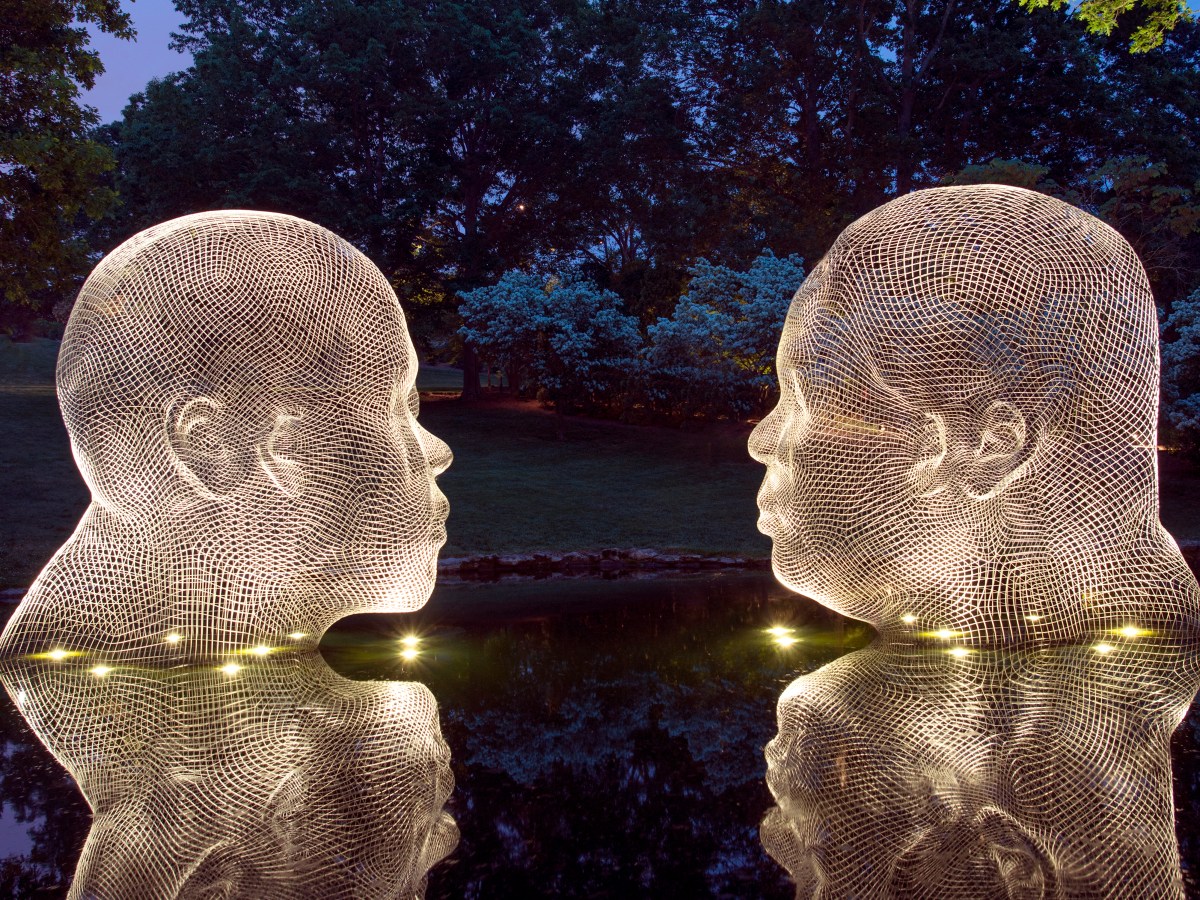
This season, the gardens host Jaume Plensa: A New Humanism, a sweeping retrospective of the internationally acclaimed Spanish artist Jaume Plensa. His towering figures—serene, elongated, often with eyes closed—rise quietly among beds of ornamental grasses, spring bulbs, and high-plains perennials, offering moments of reflection that feel both intimate and expansive.
Known for works like Chicago’s Crown Fountain, Plensa’s sculptures explore shared humanity through form and scale. Here, placed among curated plantings and open sky, they take on an added softness—less monument, more meditation.
It’s the kind of exhibition that slows your pace without asking, inviting you to linger a little longer between one garden room and the next.