
Don’t miss the Eta Aquarid meteor shower happening tonight
Your guide on when, where, and how to catch the natural phenomenon.
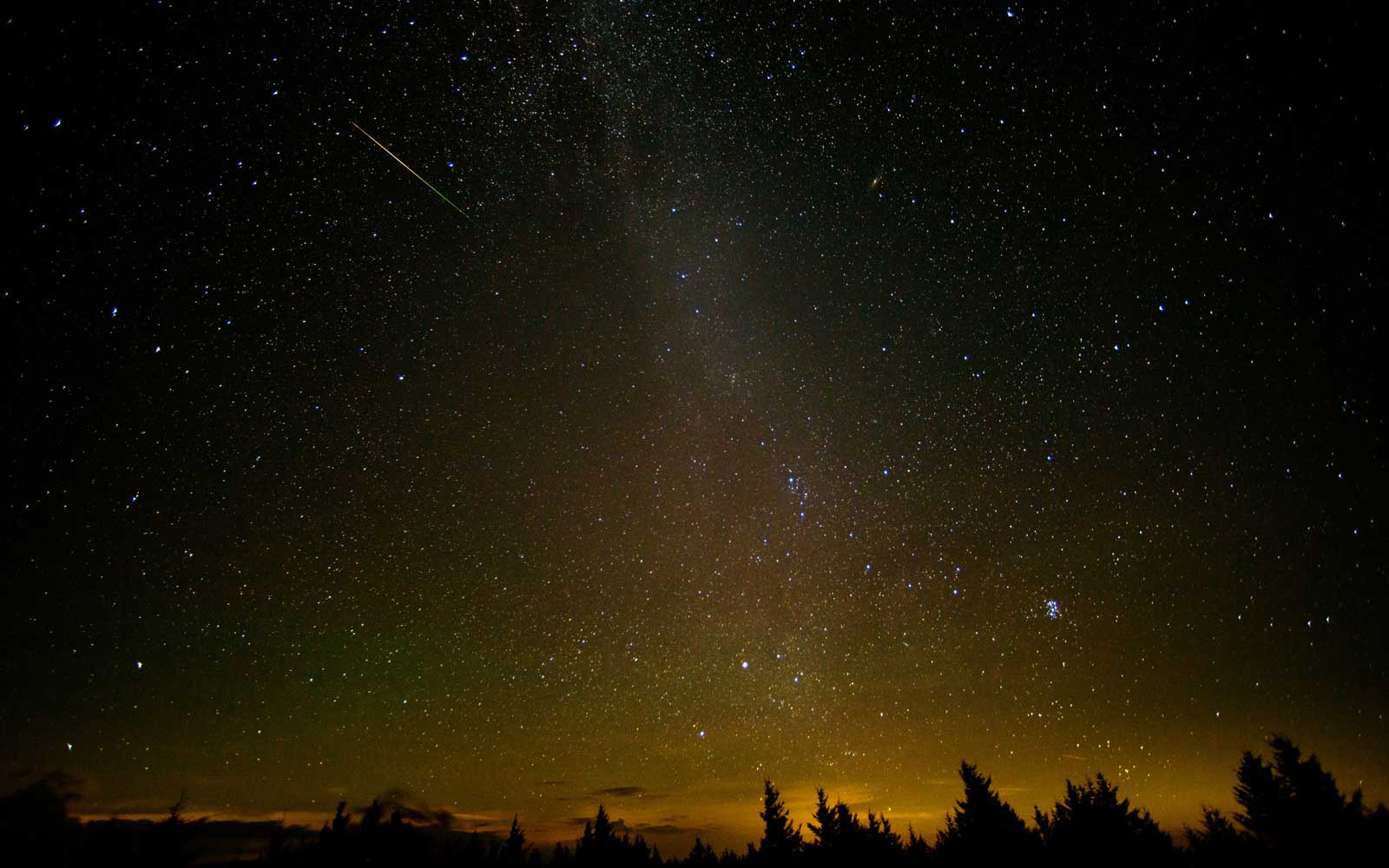
NASA/Bill Ingalls
Each year, as Earth crosses the orbital path of Halley’s Comet, stargazers are treated to a fantastic meteor shower known as the Eta Aquarid.
The shower takes place each year from April 19 through May 28, with this year’s forecast calling for the greatest peak before dawn on Saturday, May 6, according to Space.com.
A couple meteors caught by the roof top camera overnight. #EtaAquaridMeteorShower #wawx pic.twitter.com/AIA6Yovx7v
— NWS Seattle (@NWSSeattle) May 7, 2016
As EarthySky explains, when particles enter into Earth’s upper atmosphere, they produce persistent trains, or ionized gas trails that leave a lingering glow for a few moments, making for quite the sight.
For those who want to catch the glowing skies, your best chance will be a few hours before dawn, roughly around 4 a.m., while the late evening will give you a chance to catch earthgrazers, which are meteors that make particularly long streaks in the sky.
The showers are the most active in the southern hemisphere, with some 20 to 40 meteors shooting across the sky per hour, while those in the mid-northern latitudes should be able to see about 10 or so meteors per hour.
While you won’t need any special equipment to view the sight, you’ll want to give yourself an hour of viewing time to give your eyes a chance to adapt to the dark.