Chicken Inasal
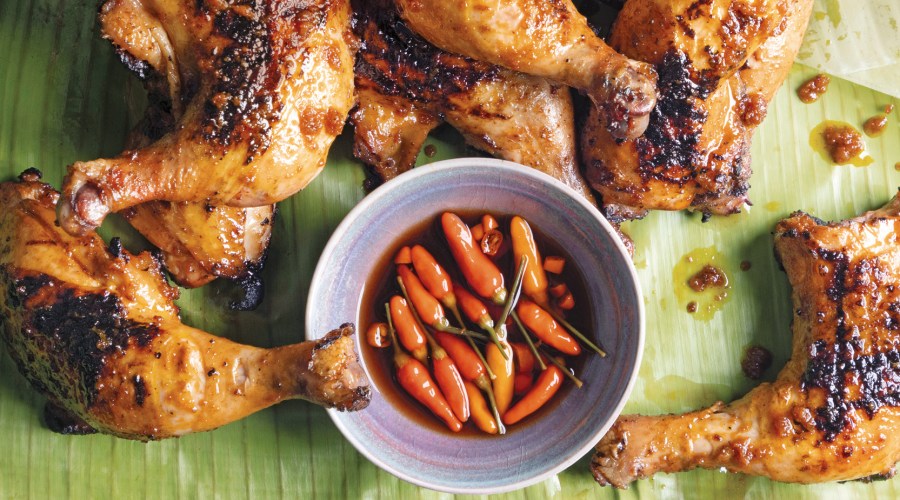

Reprinted with permission from Ohana Style: Food from Hawai'i, for Your Family by Sheldon Simeon, with Garrett Snyder, copyright © 2026. Photographs copyright © 2026 by Kevin Miyazaki. Published by Clarkson Potter Publishers, an imprint of Penguin Random House.
Filipinos—especially Filipinos in Hawaii—love grilling anything they can get their hands on. The sight of meat or fish charring over hot coals and that intoxicating smell that clings to your hair or clothes stir something in us. There’s rarely an occasion, big or small, where cooking “Filipino barbecue” isn’t just a welcome activity but an expected one. So when I describe chicken inasal as “grilled chicken,” that might be underselling it a bit. This isn’t just any old grilled chicken.
My favorite style of inasal is a famous Ilonggo dish from the islands of the Visayas. It’s marinated with layers of citrus, vinegar, lemongrass, garlic, and ginger that infuse a sweet and tangy brine into the meat, then it’s slowly grilled over charcoal and basted with achuete (also known as achiote or annatto) oil, which adds a subtle earthiness and a ruddy red color to the charred skin; it’s then served with chile-spiked toyomansi.
When firing up your grill (use charcoal for the best flavor), keep in mind the cooking surface will have hotter and cooler spots. I like to start over the hottest portion to develop some pleasant bits of char on skin, then transfer it to the cooler side and cover the grill so the meat cooks more quickly and evenly via oven-like indirect heat. That said, I always maintain there’s no such thing as turning and rotating your meat too much on the grill, so the important part is to watch your chicken, move it around the hot spots as needed, and just make sure it doesn’t burn.
The vinegar and citrus work to soften and break down all the connective bits and cartilage, and you’ll end up with a very succulent, juicy piece of grilled chicken. Feel free to serve a big bowl of rice on the side if you want—for me, though, the best partner for inasal is a cold beer.
Yield: 6 servings.
This recipe, and others like it, can be found in the article “Serve This No-Fuss, Family-Style Menu at Your Next Dinner Party.”
How to Make It
1
Marinate the Chicken: Mix all marinade ingredients together and pour the liquid over the raw chicken pieces. Note: The key ingredient in an excellent chicken inasal marinade is acidity (in this case, milder-tasting apple cider vinegar and citrus), which helps tenderize the meat while adding a tangy flavor complement from the floral aroma of lemongrass and the punch of black pepper, ginger, and garlic. There is a sweet spot to the marinade time—I aim for at least 4 hours to ensure absorption, but after 12 hours, the vinegar can start to break down the fibers in the chicken and turn the meat mushy. Basting the chicken often with the annatto oil is crucial, too, as it ensures the meat stays moist and develops a gorgeous glistening skin. More basting is better in this case.
2
Make the Toyomansi: While the chicken is marinating, in a small bowl, stir together the shoyu, citrus juices, and orange zest until combined. The ratio can vary depending on your taste, but I usually go with roughly 2 parts shoyu to 1 part juice. Adjust with more shoyu or juice to achieve your preferred balance of salty and tangy flavors. You can also add a touch of sugar or pepper for a boost of flavor, if desired. Store in a sealed container for up to 2 weeks in the fridge.
3
Prepare the Basting Oil: In a small pot, combine the oil and annatto and stir over medium heat until the powder has dissolved and the oil has turned a deep red color, about 1 minute. Add the butter and stir until melted, then remove the pot from heat and let cool. Once cooled to room temperature, stir in the shoyu, lime juice, and orange zest.
4
Make the Dipping Sauce: In a small bowl, mix the toyomansi with a few whole chiles to taste. Set aside until ready to serve.
5
Prepare a grill for high indirect heat (for a charcoal grill, push the coals to one side; for a gas grill, leave one or two burners off). Using tongs and an oil rag or paper towels, oil the grates of the grill.
6
When the grill is hot, set the chicken skin-side down on the direct heat side of the grill. Once the chicken has some char and grill marks and releases easily from the grates, 2 to 3 minutes, move the chicken over indirect heat, still skin-side down. Cover the grill and cook, turning the chicken every couple of minutes and basting frequently with the annatto oil, until the juices run clear or a thermometer inserted into the thickest part of the thigh registers 160°F, another 8 to 10 minutes. The chicken should spend about three-quarters of its grilling time skin-side down, which will create a nice, browned crust. If the skin is browning too quickly, move it farther away from the heat source.
7
Transfer to a serving platter (or cutting board) and let rest for 10 minutes. Serve warm with the dipping sauce.
Ingredients
For the Chicken
2 cups apple cider vinegar
juice of 1 orange
½ cup shoyu (soy sauce)
½ cup packed light brown sugar
12 cloves garlic, smashed and peeled
1 tbsp kosher salt
1 tsp freshly ground black pepper
4-in. piece fresh ginger, roughly chopped and smashed
2 stalks lemongrass, trimmed and smashed
6 skin-on chicken leg quarters
For the Toyomansi
½ cup shoyu (soy sauce), plus more to taste
2 tbsp fresh lime juice, plus more to taste
2 tbsp fresh lemon juice, plus more to taste
grated zest of 1 orange
sugar (optional)
freshly ground black pepper (optional)
For the Basting Oil
½ cup neutral oil
1 tsp ground annatto or smoked paprika
2 tbsp salted butter
2 tbsp shoyu (soy sauce)
2 tbsp fresh lime juice
grated zest of 1 orange
For the Dipping Sauce
Toyomansi (ingredients above, recipe above right)
small hot chiles, such as Thai or Hawaiian chiles, stemmed and lightly crushed (optional)
Search All of Sunset's Recipes
The Latest
Here’s How to Have the Most Fun Apple Picking in California This Fall