
100 Years of Los Angeles Architecture: Revisit the Most Popular Home Styles
From the Spanish Colonial style in the 1920s to sustainability focused new builds.
David Fitzgerald
Los Angeles is a vibrant, ever-evolving city. It’s served as the home to countless artists of all mediums, icons who left their own unique mark on the city and its history. Among the most tangible examples of this is the city’s architecture. Within one neighborhood, you can find mid-century modern abodes, ultra-modern glass houses, and cozy hideaways reminiscent of fairytale illustrations. Each one serves as a testament to the history and artistry that have come through L.A.
With these various eras come unique needs and styles that are reflected in the architecture. A look at the vastly different homes found on the city’s streets provides an understanding of the area’s development over the past century.
The Golden Age of Spanish Colonial and Storybook Styles
Going back to the 1920s, Hollywood was flourishing. Studio giants were forming, filmmaking techniques were evolving, and Hollywood glitz and glamour was at a high. The growing city soon became a romanticized place of fantasy and dreams of the silver screen.
More Videos From Sunset
According to Daria Greenbaum, a real estate agent and one of L.A.’s premier architectural specialists, this pull toward whimsy and imagination gave rise to two styles: Spanish Colonial and Storybook.
“People were arriving in California with this sense of possibility, and builders responded by creating homes that felt romantic, sun-soaked, and slightly mythic,” Greenbaum explains. “The Spanish Colonial and Storybook movements helped give a young city a sense of heritage–real or imagined. They set the tone for the idea of ‘California living:’ courtyards, indoor-outdoor flow, warm materials, and a touch of fantasy.”
Greenbaum describes the Spanish Colonial style as wanting to look as though it came from another time. The style includes red-tile roofs, arched doorways, carved wood, decorative ironwork, and “a kind of ‘old-world’ escape that feels warm and deeply textured.”


Spanish Colonial property at 5740 Los Feliz Blvd., currently listed for $4.5M with Carl Gambino and Alyson Richards of The Gambino Group at Compass.


Spanish Colonial property 5740 Los Feliz Blvd., currently listed for $4.5M with Carl Gambino and Alyson Richards of The Gambino Group at Compass.


Spanish Colonial property 5740 Los Feliz Blvd., currently listed for $4.5M with Carl Gambino and Alyson Richards of The Gambino Group at Compass.


Spanish Colonial property 5740 Los Feliz Blvd., currently listed for $4.5M with Carl Gambino and Alyson Richards of The Gambino Group at Compass.


Spanish Colonial property 5740 Los Feliz Blvd., currently listed for $4.5M with Carl Gambino and Alyson Richards of The Gambino Group at Compass.
Aspects of the style are still prominent throughout L.A. today, but the big names that shaped the Spanish Colonial architecture at the time were George Washington Smith, Wallace Neff, and Paul Williams, according to Greenbaum.
Similarly, Storybook was meant to feel romantic and fantastical with whimsical elements such as asymmetry and steep gables. Some quintessential examples of the style, says Greenbaum, include Harry Oliver’s Spadena House (also known as The Witch’s House) in Beverly Hills and the “Snow White Cottages” in Los Feliz.
The Glam and Geometry of Art Deco
The 1930s ushered in styles with a fresh perspective on fantasy, with a focus on technology and futuristic design. After the Great Depression, Hollywood was beginning the so-called “Golden Age of Cinema.” First came the Art Deco style, which mixed glamour with geometry. Greenbaum cites “strong verticals, and artisan materials like lacquer, chrome, and etched glass” as hallmarks of the style.


The Derby House—Frank Lloyd Wright, 1926 National Landmark. Sold, previously listed with Brian Courville, Compass.


The Derby House—Frank Lloyd Wright, 1926 National Landmark. Sold, previously listed with Brian Courville, Compass.


The Derby House—Frank Lloyd Wright, 1926 National Landmark. Sold, previously listed with Brian Courville, Compass.


The Derby House—Frank Lloyd Wright, 1926 National Landmark. Sold, previously listed with Brian Courville, Compass.
The Technologically Minded Streamline Moderne
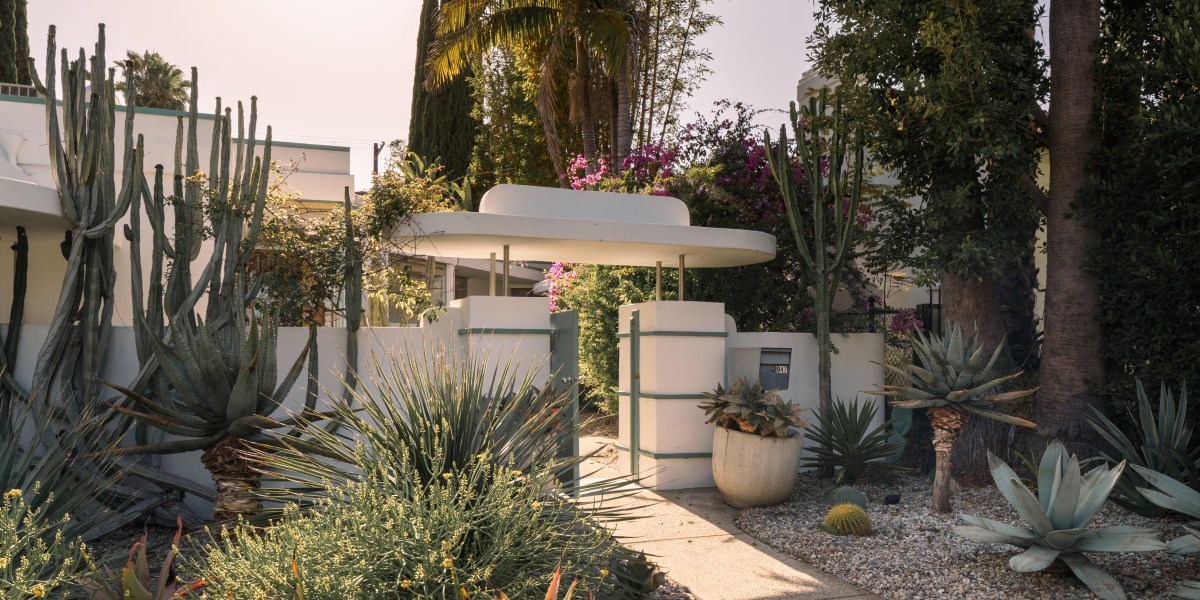
Then came Streamline Moderne, a style Greenbaum says was inspired by emerging technology for trains and ocean liners.
“Streamline simplifies everything: soft curves, aerodynamic lines, porthole windows, bands of glass block,” she says. “It’s still glamorous, but quieter, and driven by the idea of speed, efficiency, and the future. The design almost appears wind-tunnel tested. Today it represents the 1930s idea of what the future would look like.”
If the previous decade’s Spanish Colonial and Storybook styles were meant to take you to some sort of fairytale setting, Streamline Moderne was intended to transport you into an imagined future world.
According to Greenbaum, the Streamline Moderne style is a rare find for residences around L.A., since it was primarily used for civic and commercial buildings. She says the Eastern Columbia Building, Bullocks Wilshire, and the Pan Pacific Auditorium are primary examples of both Streamline Moderne and Art Deco.
Aspects of the 1920s and 1930s styles continue to pop up within design to this day. Greenbaum describes a current “craving for texture and authenticity” that may be pushing people toward true craftsmanship and vintage references with a modern twist. The through line of these eras goes to the heart of L.A.’s foundation as the ultimate dreamscape.
“In a way, L.A. is circling back to the styles that made it magical in the first place,” Greenbaum says. “These features weren’t just trends of their own time—they’re timeless ideas being rediscovered.”
The European Influences of Early Modernism and Minimal Traditional
Right before the 1940s, both the city and the nation saw a number of people immigrating from Europe. This brought over architectural ideas that began on the continent. Brian Courville, director of the Architectural Division at Compass, names Ludwig Mies van der Rohe and Walter Gropius as integral to the rise of early modernism and the Minimal Traditional style. Mies and Gropius served as director and founder of the Bauhaus School, respectively. The Bauhaus School “embraced the idea that form follows function,” according to Courville.
While war was raging and resources were limited, design turned away from the complexities of the previous decades and toward very functional or minimal design. Courville says Richard Neutra and Rudolph Schindler were important figures of the movement, and sought to discover materials and processes that made building and owning homes as cost-effective as possible.


1940s Minimal Traditional property at 6027 W 76 St. is listed for $1.895M with Stephanie Younger and Robert Lugari, Compass.


1940s Minimal Traditional property at 6027 W 76 St. is listed for $1.895M with Stephanie Younger and Robert Lugari, Compass.


1940s Minimal Traditional property at 6027 W 76 St. is listed for $1.895M with Stephanie Younger and Robert Lugari, Compass.
Courville says the design styles of the 1940s were also the “the design catalyst” of mid-century modern. Building on the simplicity of the early modernism and the Minimal Traditional style, this movement brought about simply designed homes with intentional connection to the surrounding landscape.
Brian Linder, a licensed architect and real estate broker, describes “open floor plans, large windows, the integration of indoor and outdoor spaces, and flat roofs” as primary features of the style. The recovery period following World War II meant people were still looking for the most cost-effective ways to live. The Case Study House program, which sponsored and commissioned architects to create inexpensive model homes, launched in 1945 but really took off in the 1950s.
The Decades-Long Reign of Mid-Century Modern
The general aesthetic of the mid-century modern style is simple and functional. Thus, its tenets are able to endure and show up frequently in contemporary style, particularly in Southern California due to its abundance of sunshine and landscape views. In fact, mid-century modern remained prominent well into the 1970s.
“The clean lines, functional design, the connection to the landscape, and the quality of the craftsmanship, are sort of, in a way, timeless ideals,” Linder says. “And so we still see, and especially in Southern California, that people want their homes to be connected to the landscape.”


The John Lautner-designed Jules Salkin Residence, 1948 mid-century modern property. Listed with Brian Linder, Compass.


The John Lautner-designed Jules Salkin Residence, 1948 mid-century modern property. Listed with Brian Linder, Compass.


The John Lautner-designed Jules Salkin Residence, 1948 mid-century modern property. Listed with Brian Linder, Compass.


The John Lautner-designed Jules Salkin Residence, 1948 mid-century modern property. Listed with Brian Linder, Compass.
The Artistry of Postmodernism and New Sculpturalism
The mid-century modern decades were all about simplicity and function, and the next popular style—postmodernism—was a complete departure: L.A. real estate agent Rob Kallick says these 1980s homes “stand out” among others as you drive down L.A. streets. Since more ideal lots were already occupied by that time, postmodernist homes in the 1980s were typically more visible and less private.
“This, combined with the architectural statements usually being made, led to a very prominent place in L.A.’s design landscape,” Kallick says.
Postmodernism involves elements like bold colors, glass blocks, large bedrooms and bathrooms, and eclectic shapes and forms. It aligns with the general theme of the decade: major cultural shifts, bold and excessive fashion, and a sense of rebellious optimism.
Taking notes from the bold expressiveness of postmodernism, New Sculpturalism began in the mid-1980s and continued well into the 1990s. Linder refers to it as a reaction to the earlier mid-century modern movement, and says the goal was to create homes that acted as “dynamic artistic objects.”


Patrick Tighe, FAIA Architect-designed home built in 2007. Sold, previously listed with Brian Linder, Compass.


Patrick Tighe, FAIA Architect-designed home built in 2007. Sold, previously listed with Brian Linder, Compass.


Patrick Tighe, FAIA Architect-designed home built in 2007. Sold, previously listed with Brian Linder, Compass.
“We’re in a more chaotic moment where things aren’t as clearly defined… there’s a chaos to the New Sculpturalism that is in keeping with the historical context of that architecture,” Linder says.
The Shift to Prioritizing Sustainability and Smart Home Features
Beginning in the 2000s, there was a growing focus among L.A. real estate buyers on sustainability. Andrew Buss of the David Kramer Group at Compass says these homes were built and run in a more eco-friendly way, but maintained “the same big ideas L.A. is known for: open layouts, indoor-outdoor flow, and those big glass walls that make the whole house feel connected to the outside.”
Some of the environment-focused features include “reclaimed/repurposed materials, low volatile organic compounds (VOC) products, bamboo and engineered flooring products, reflective roofing products, and more efficient window systems,” according to Buss. This way, the timeless style of the mid-century modern home could exist in alignment with contemporary views on sustainability.


2000’s High-End Contemporary home at 2207 Bowmont Dr. listed for $6.25M with Kennon Earl and Thomas Davila, Compass.
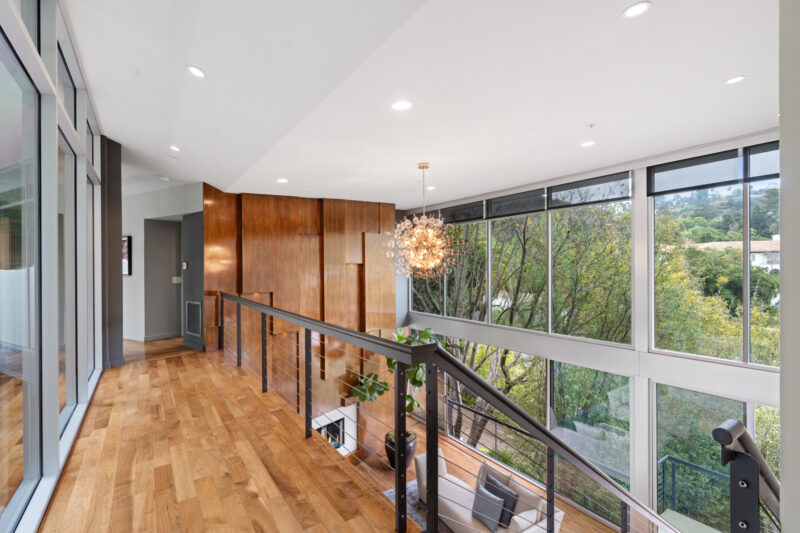

2000’s High-End Contemporary home at 2207 Bowmont Dr. listed for $6.25M with Kennon Earl and Thomas Davila, Compass.
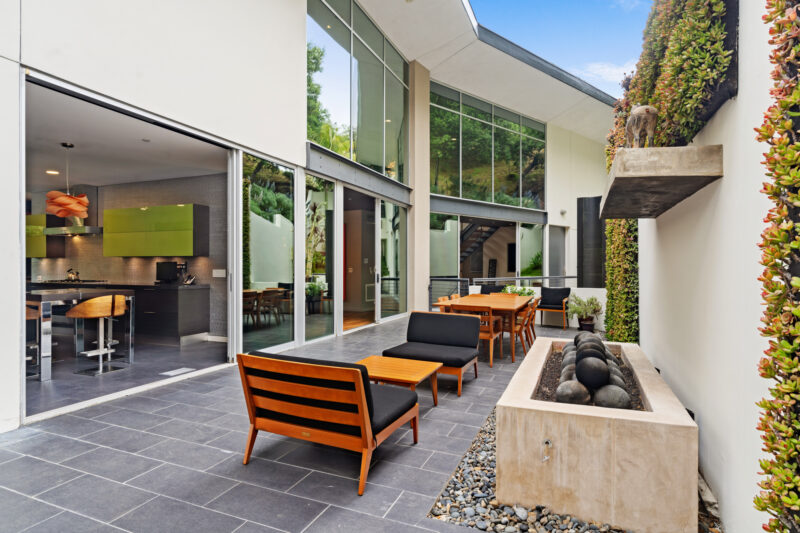

2000’s High-End Contemporary home at 2207 Bowmont Dr. listed for $6.25M with Kennon Earl and Thomas Davila, Compass.
The sustainability and “responsible living” practices continued into the 2010s.
“In the 2000s, it was more about environmental responsibility,” Buss says. “In the 2010s, it became more environmental and personal. Homes weren’t just efficient; they were built to enhance how people feel.”
“Smart” home systems and home automation became more common, and wellness amenities like saunas and cold plunges rose in popularly popular. Buss says that “adaptive reuse,” referring to when older structures get modern upgrades, started to and continues to be quite attractive to buyers because it combines character and charm with all the comforts we associate with a more modern, technologically advanced era.


6509 Colgate Ave: built in 2019, listed for $3.75M with Sally Forster Jones and Joshua F. Smith of Compass.


6509 Colgate Ave: built in 2019, listed for $3.75M with Sally Forster Jones and Joshua F. Smith of Compass.


6509 Colgate Ave: built in 2019, listed for $3.75M with Sally Forster Jones and Joshua F. Smith of Compass.
The New Tenets of Architecture
This brings us to current developments in L.A. architecture. Sally Forster Jones, a top Southern California real estate broker, says COVID-19 influenced new home builds to be designed with wellness in mind. Organic vegetable gardens, living moss walls, cold plunges, infrared saunas, oxygen rooms, and red light therapy are all examples of this trend. Additionally, she says changes in climate and the impact of the Palisades and Eaton fires have really cemented sustainability and safety as tenets of new builds.
“As weather systems become more extreme, architecture has also moved towards more fire-resistant materials and treatments, especially in Southern California where fire season is now considered to be year-round,” Forster Jones says.
Even with the classic indoor-outdoor living features in L.A., post-pandemic designs have sparked a return to additional compartmental spaces—such as offices or home gyms—that allow for more privacy as people spend more time in the home.


1108 Wallace Ridge listed for $46M offers a wellness center with gym, steam and sauna, home theater, and more. Listed with Ginger Glass and Alexandra Glass of Compass.


1108 Wallace Ridge listed for $46M offers a wellness center with gym, steam and sauna, home theater, and more. Listed with Ginger Glass and Alexandra Glass of Compass.


1108 Wallace Ridge listed for $46M offers a wellness center with gym, steam and sauna, home theater, and more. Listed with Ginger Glass and Alexandra Glass of Compass.


1108 Wallace Ridge listed for $46M offers a wellness center with gym, steam and sauna, home theater, and more. Listed with Ginger Glass and Alexandra Glass of Compass.


1108 Wallace Ridge listed for $46M offers a wellness center with gym, steam and sauna, home theater, and more. Listed with Ginger Glass and Alexandra Glass of Compass.
These residences serve as physical representations of where the city started and where it’s going in the future. They’re proof of L.A.’s resiliency and evolution, while also remaining true to the wonder and character that originally drew so many to move there.
Next time you’re taking a drive around the City of Angels, be sure to keep an eye out for these iconic design features.
Keep Reading:
The Latest