
‘Dancing with the Stars’ Host Julianne Hough’s Hillside Hideaway Is the Masterpiece of Rustic Design
The dynamic young designer Jake Arnold created the country-chic house of the dancer and TV personality’s dreams.
Gavin Cater
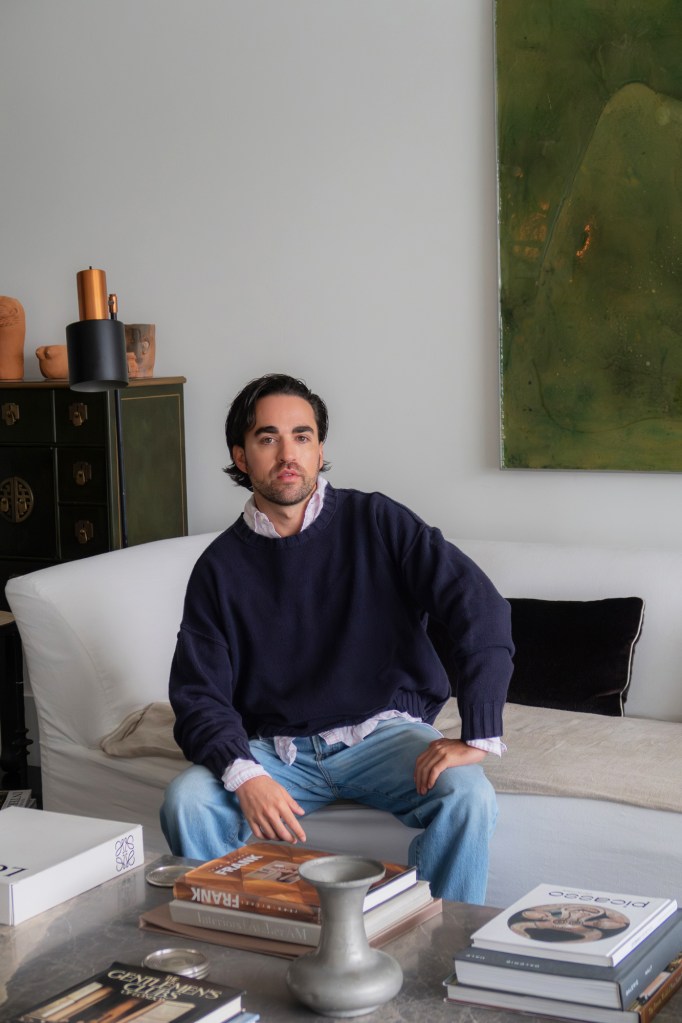
Once in a rare while, a design talent lands on the interiors scene with such a sure hand that you can’t believe they don’t have decades of experience behind them. Such is the case with Jake Arnold, the British designer who has taken both coasts (and everywhere in between) by storm in his brief five years as the principal of Studio Jake Arnold.
In the blink of an eye, he landed on the revered AD100 list; released collaborative lines with Crate and Barrel, Lulu and Georgia, and Parachute Home; and co-founded The Expert, the online platform that connects customers with the designers of their dreams for FaceTime-assisted decorating advice, with entrepreneur Leo Seigal. In his spare time, Arnold finesses the homes of a full squad of A-list celebrities, including Zendaya and Chrissy Teigen and John Legend’s family.
Gavin Cater
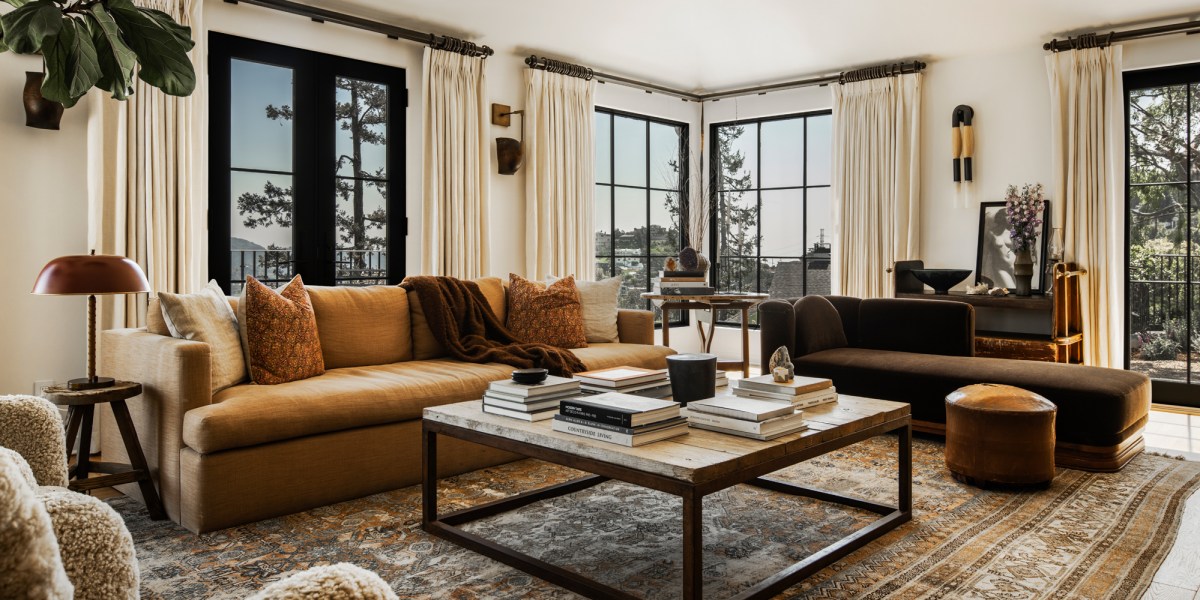
Take, for example, the very first project he designed on his own in 2020—after a stint as an intern at Woodson & Rummerfield’s and a few years working for designer Estee Stanley. It belongs to Dancing with the Stars alum and television personality Julianne Hough.
“It was one of those rare moments you appreciate hindsight, the kind you realize changed the trajectory of your career,” Arnold says. “This was the first time I stepped into a space as the sole creative lead responsible for the entire vision. The way we met was almost serendipitous. I was speaking with an architect I knew who mentioned that Julianne was looking for someone to help finish her house, and half-jokingly, I said, ‘I can do it.’ I didn’t have a significant portfolio at the time, nor a network of contacts, vendors, and contractors, but she trusted me. That trust became the foundation for everything we created together.”
Courtesy of Jake Arnold
Here, Arnold answers our questions about Hough’s home and how his style has evolved throughout his brief but spectacular career.
At what point did you come on board the project? Was it newly purchased and unfurnished? Or did Julianne have existing furniture to work with?
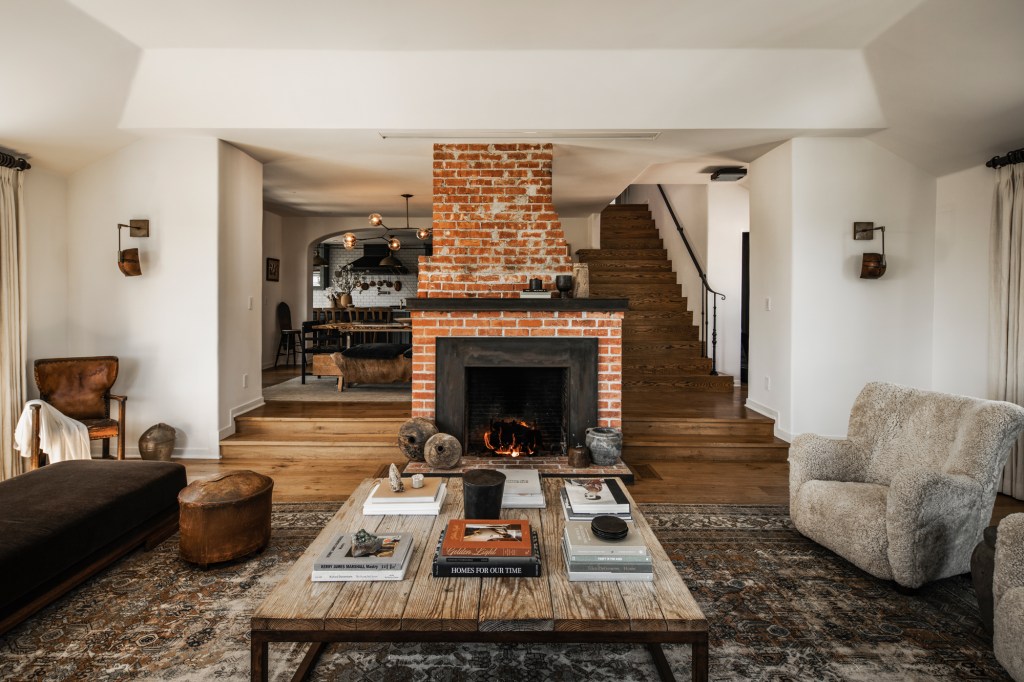
I joined the project after Julianne had purchased the home. It wasn’t a new build, but it was a charming house with great bones. There were pieces she already owned, but for the most part, we approached the home as a blank slate. What made the process fun was that she was incredibly open to exploring, curating, and discovering things with me. We sourced many of the pieces specifically for this home, choosing items that were beautiful but also flexible, such as furniture that could move between rooms and evolve with her lifestyle. She liked the idea of a home that felt collected rather than decorated, and that guided the choices we made together.
Gavin Cater
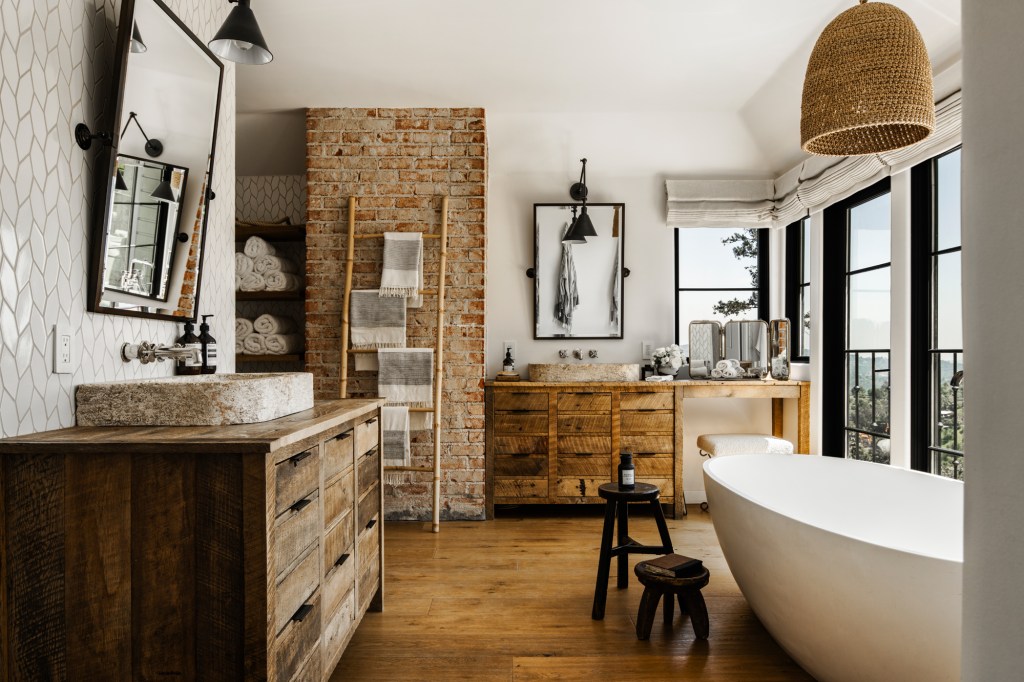
What were the design priorities for the house? What kind of home did Julianne want to live in?
From the start, the priority was to create a sanctuary, a place where she could retreat from her fast-paced life, slow down, and feel grounded. She’s deeply intuitive and values emotional connection to her environment, so the house needed to reflect that sense of safety and warmth. She wanted a home that didn’t shout for attention but quietly enveloped you. That meant a palette rooted in earthy, muted tones, organic textures, and pieces that carried a sense of timelessness. She wasn’t interested in design that felt trendy or overly new. Instead, she gravitated toward objects with soul, things that looked as though they could have existed for decades. Function was also essential. With her dogs, her routines, and her love of movement, fabrics needed to be durable; spaces had to be livable. The home ultimately became a physical manifestation of the calm she was seeking in her life at that time.
Gavin Cater
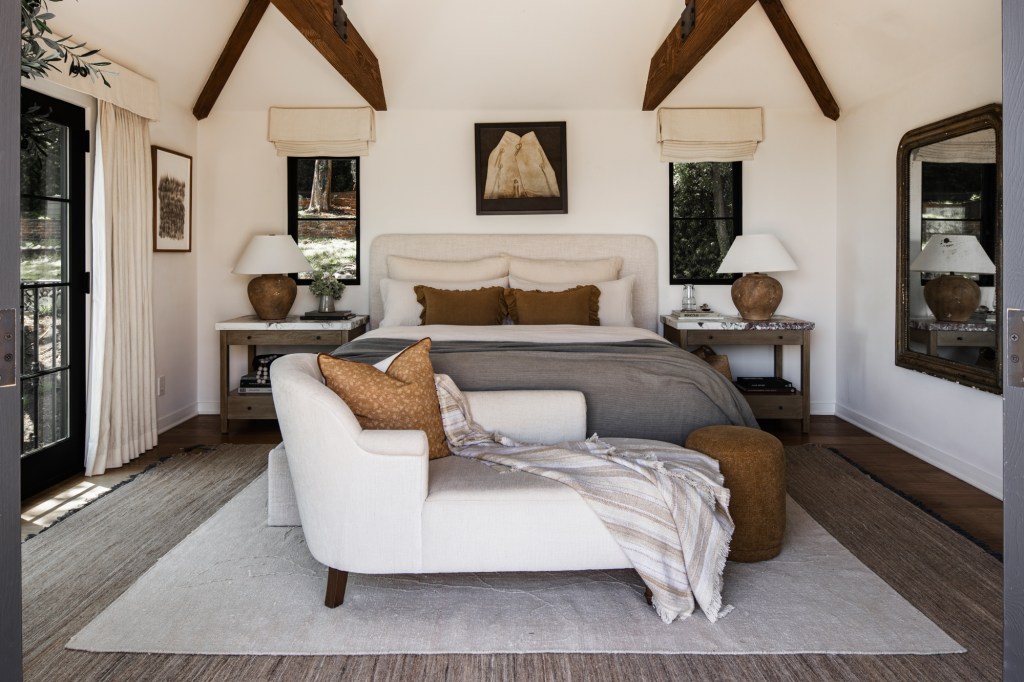
Looking back, how do you feel about the project? It’s a really confident first house to design. How has your work evolved since you finished this home? And how has it stayed the same?
Looking back, I feel an enormous amount of affection for that project. It was the first time I proved to myself what I was capable of creatively and technically. Designing someone’s home—for a public figure, no less—could’ve been intimidating, but instead it felt incredibly natural. That house opened so many doors for me, and I’m still grateful for the trust that allowed it to happen. My work has certainly evolved since then. I’ve become more confident in scale, more adventurous with materials, and more deliberate in the layering and patina that define my style. Yet the core of my approach hasn’t changed. I still believe in creating homes that feel deeply lived-in, personal, and emotionally resonant. Livability, warmth, and attention to the smallest tactile details—those values have stayed exactly the same.
Gavin Cater
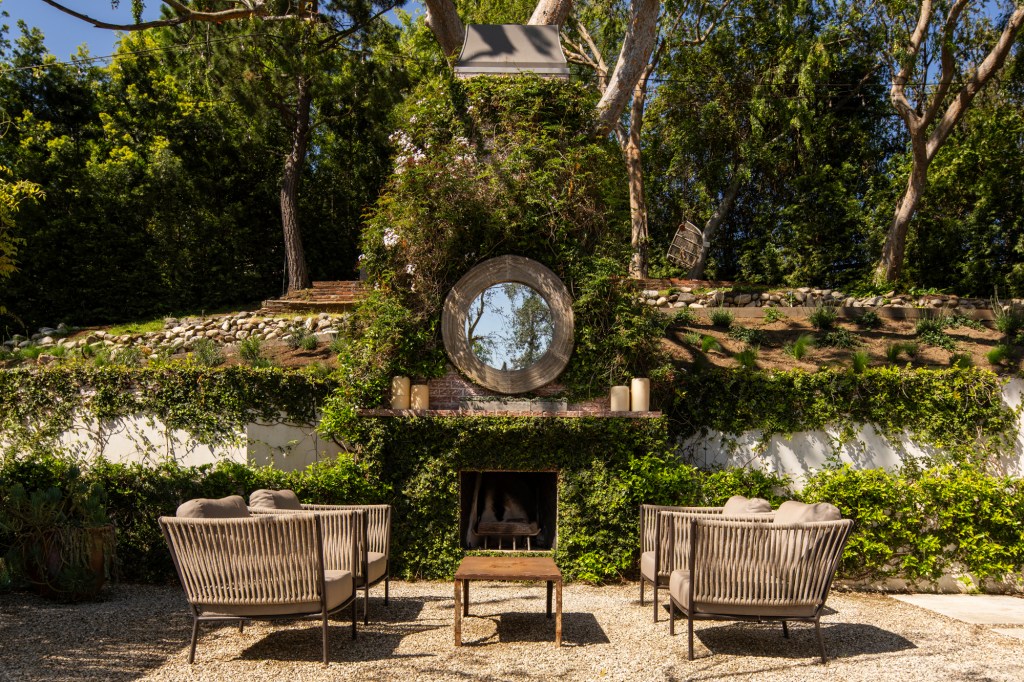
Can you talk a little about the design strategy for the outdoor spaces? They’re very much an extension of the interior and really expand the livable space.
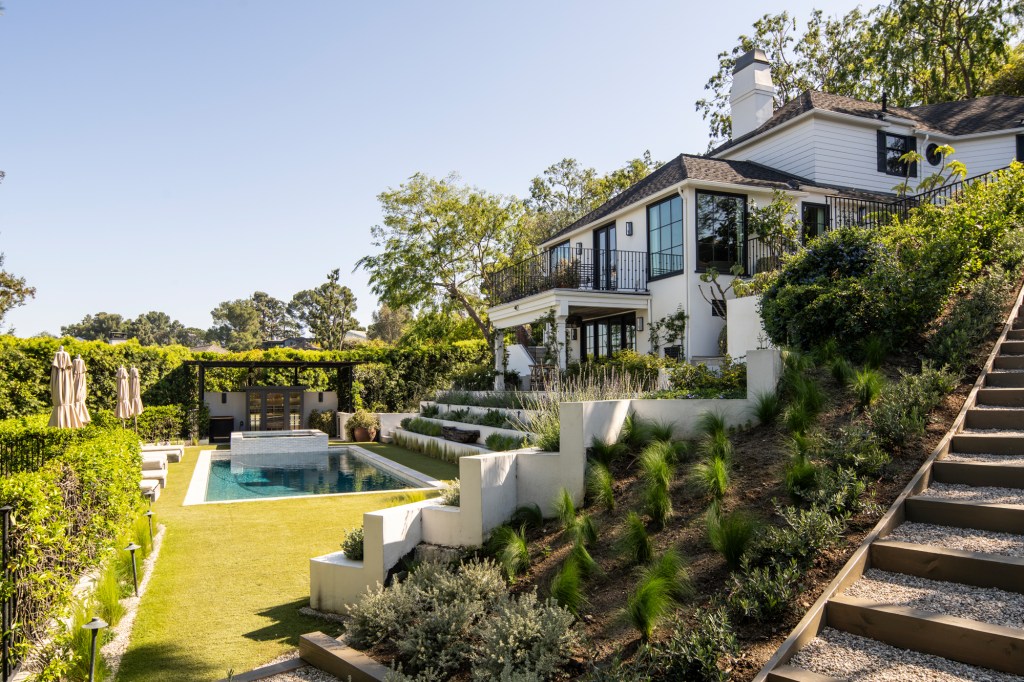
The outdoor areas are just as important to me as the interior, and for Julianne, they needed to feel like an extension of the home. We treated the terrace and garden areas with the same intentionality as we did the living spaces, echoing materials and tones so the transition felt seamless. The landscape design was soft and organic, something that felt natural, rather than overly formal. Once the doors were opened, the home expanded in the best way; the outside became a continuation of the sanctuary we built indoors, a place where she could entertain, meditate, or just breathe.
Gavin Cater
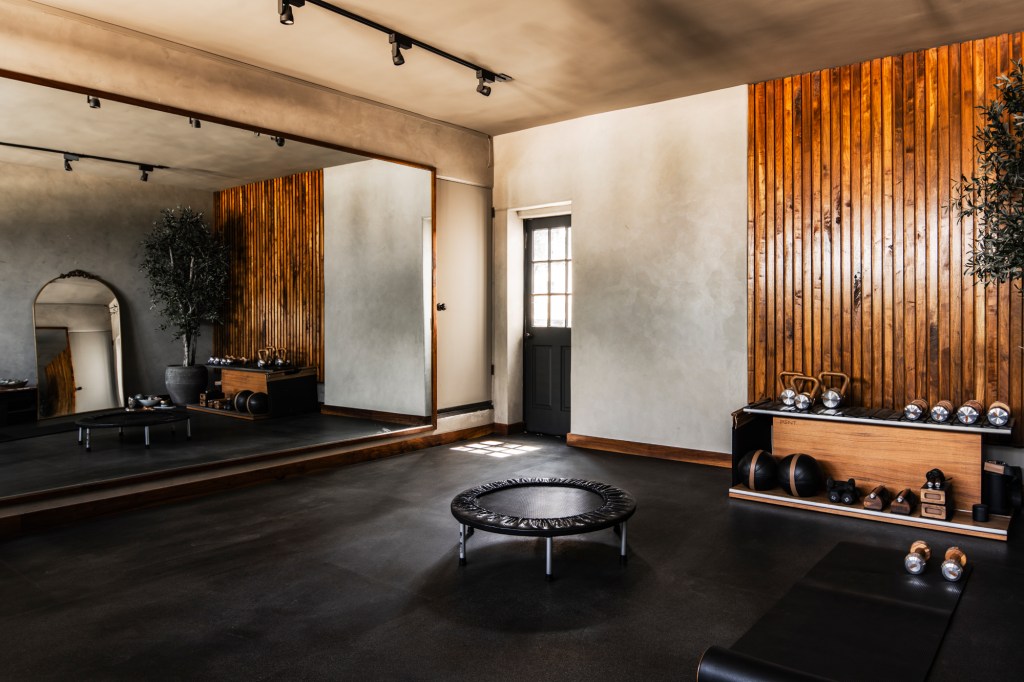
Any design tips for a home gym? Julianne’s is amazing.
When it comes to a home gym, the goal is to create a space that energizes you but still feels connected to the overall design of the home. With Julianne’s gym, we didn’t want a clinical-feeling workout room. Instead, we focused on bringing warmth into the space through thoughtful lighting, refined materials, and a layout that supported her routines without sacrificing comfort. Function always comes first in a gym—good flooring, clear zones for different types of movement, proper ventilation, etc.—but aesthetics do have a huge impact on how you feel when you’re there. If the space feels inviting and inspiring, you’re far more likely to use it. That balance between utility and beauty is what makes a home gym successful.
Gavin Cater
We only recommend things we love. If you buy something through our site, we might earn a commission.