
Bean
Fabaceae (Leguminosae) Annuals, Vegetables
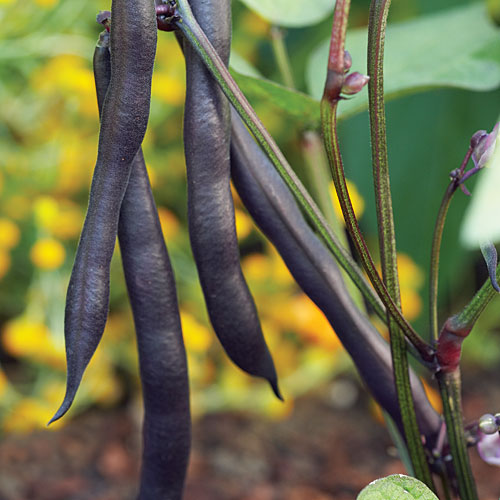
Photo courtesy of Kimberley Navabpou
Purple snap beans
Most beans are frost-sensitive heat lovers, easy to grow from seed. With all, moisten soil thoroughly before planting, then do not water again until seedlings have emerged.
Once growth starts, keep soil moist. Fertilize soil after plants are in active growth and again when pods start to form. Control aphids, cucumber beetles, spider mites, and whiteflies if any of these pests are problems in your garden.
Gardeners can choose from many types of beans, the most common of which are described below. These are New World plants belonging to the genus Phaseolus.
Dry bean. Same culture as bush form of snap bean. Let pods remain on bush until they turn dry or begin to shatter; then thresh beans from pods, dry, and store them to soak and cook later as needed. ‘Pinto’, ‘Red Kidney’, and ‘White Marrowfat’ belong to this group.
Some varieties are best when harvested at the green shelling stage and cooked like green limas. These include the flageolet bean (a French favorite) and ‘French Horticultural Bean’, also known as ‘October Bean’. Heirlooms such as ‘Aztec Dwarf White’, ‘Mitla White’, and ‘New Mexico Appaloosa’ were used by Native Americans of the Southwest and are very well adapted to that region.
Lima bean. Like snap beans (which they resemble), lima beans come in either bush or vine (pole) form. They develop more slowly than snap beans—bush types need 65 to 75 days from planting to harvest, pole kinds 78 to 95 days—and do not produce as reliably in very hot weather. Shell before cooking, a tedious chore but worth it if you like fresh limas. Grow like snap beans.