
The Ultimate Moving Day Survival Guide for Your Houseplants
Because your plants feel the move, too.
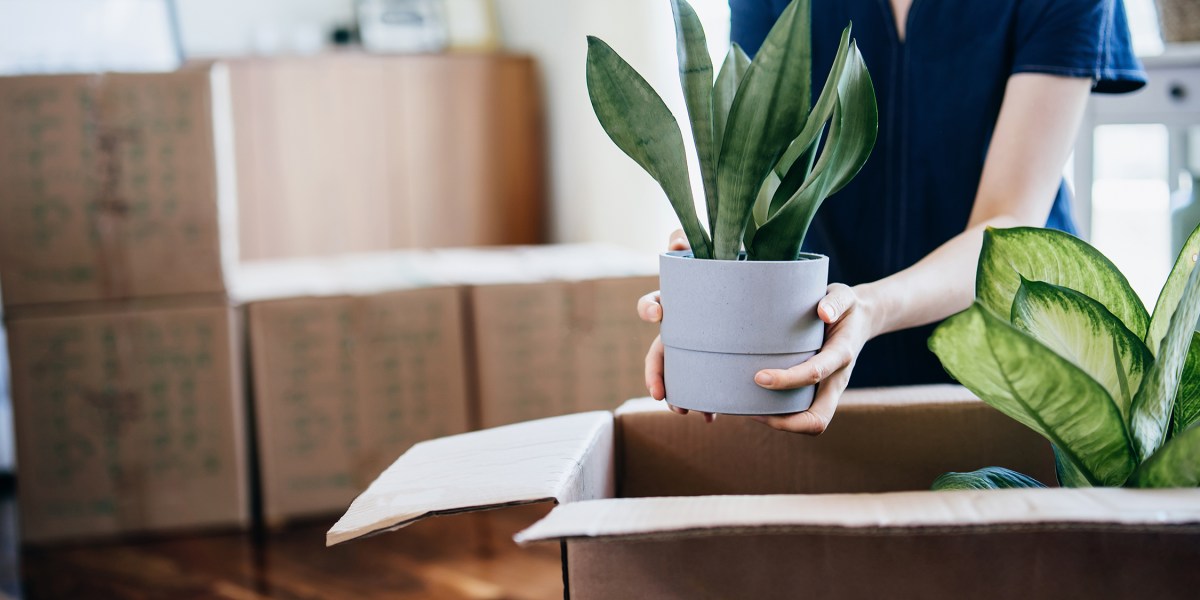
d3sign/Getty Images
I thought I had it handled. Plants grouped, pots secured, a mental checklist that felt (if not calm) at least competent. And still, somewhere between the last box and the first night in my new home, a few leaves yellowed, others dropped, and one particularly dramatic plant quietly gave up the ghost.
Moving, it turns out, isn’t just a logistical headache—it’s a full environmental reset. Not just for us, but for the plants that have spent months (or years) calibrating themselves to one exact corner of our homes: the light that hits at 10 a.m., the draft that never quite reaches the shelf, the watering rhythm we don’t even realize we’ve perfected.
It’s the kind of nuance you don’t fully appreciate until something goes wrong, which is exactly why, in hindsight, I found myself wishing I’d called in an expert before the boxes came out. So now I’m turning to plant stylist, educator, and creator Jon Perdomo of Plant Man P, whose work centers on helping everyday plant owners create (and keep) thriving indoor ecosystems to guide them and their plants through any major future transitions.
Because if there’s one thing moving taught me, it’s this: Plants don’t just come with you. They have to relearn everything on the other side.

Courtesy of Jon Perdomo/Plant Man P
What Actually Goes Wrong
When plants decline after a move, it’s rarely random. More often, it’s a mismatch—between what the plant had and what it suddenly gets. “The primary cause for a plant’s decline after a move is a bunch of things but the two biggest are lighting and temperature/drafts,” Perdomo says.
A shift in light is often the first domino. “Say the plant goes from medium/bright indirect to medium/low indirect, that can cause a lot of leaves falling and new growth not being as consistent,” he says.
Temperature changes are quieter, but just as disruptive. “Say you now have a plant by a window that wasn’t by one before, that can cause some shock to the plant,” he explains. “Also any new drafts can play a big role in the decline as well. A/C, high traffic areas, doors, etc.”
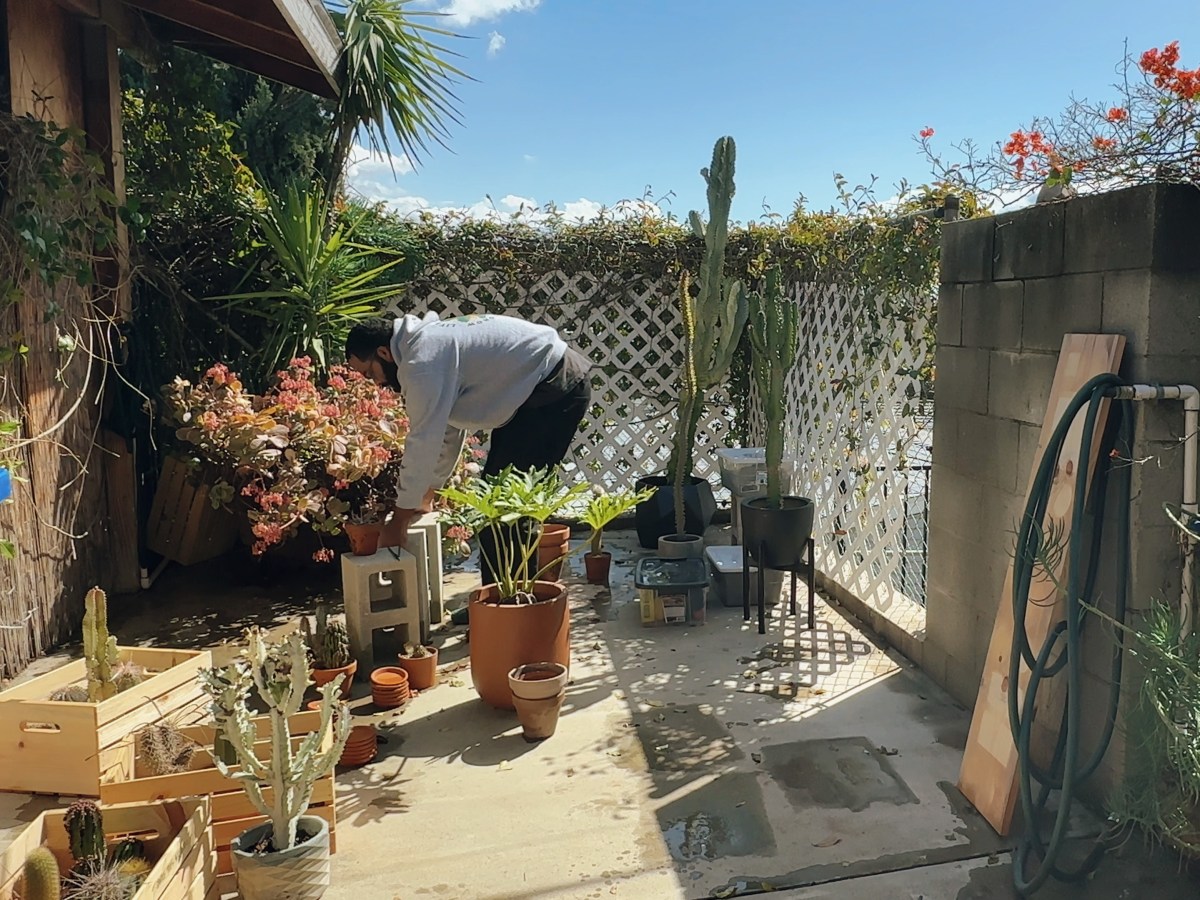
In a new home, those variables are easy to overlook—but they’re exactly what plants notice first. If you’re unsure how things are going, look to the leaves. “The leaves will tell you everything you need to know. That’s how your plant communicates,” he says. “If you see the leaves looking deflated or shriveled up, they need water or to be placed in a cooler area immediately.”
Jon’s Tip: Before changing care routines, read the plant. It’s already telling you what’s off.
Courtesy of Jon Perdomo/Plant Man P
Before the Move: Control What You Can
The week before a move is when plant care tends to slip—but it’s also when small decisions matter most. “A major key, if possible, would be to move them into their new space before you actually move in,” Perdomo says. “Let them adjust on their own while you’re getting ready for the move.”
It’s a strategy rooted less in convenience and more in stability. “I truly think plants feed off the energy in your space and let’s be real… it’s total chaos in any home a week from moving day!” he says.
Even if that’s not possible, maintaining familiar groupings can help soften the transition. “Grouping them by plant type is important. Especially if they’ve been next to each other in your current home,” he adds.
Jon’s Tip: Preserve what’s familiar—whether that’s light, proximity, or timing.
Courtesy of Jon Perdomo/Plant Man P
Moving Day: Think Like a Plant
On moving day, plants aren’t just cargo—they’re climate-sensitive passengers. “Succulents, cacti, etc., you could pack them anywhere and any way and they’ll survive,” Perdomo says. “As for the smaller-sized plants and even bigger-leaf plants, that would require a lot more care.”
The biggest risk? Heat and cold. “If you’re hot/cold, your plants are even hotter/colder. Do not leave them in a really hot car for a long period of time,” he warns. “The leaves will shrivel up due to too much heat and there won’t be any way to come back from that!”
A few strategic moves can make all the difference. For example, “Watering them a few days prior to the move,” says Perdomo. “Place them in really sturdy cardboard boxes. Placing them to where they could be taken out first is also important… and unpack them immediately!”
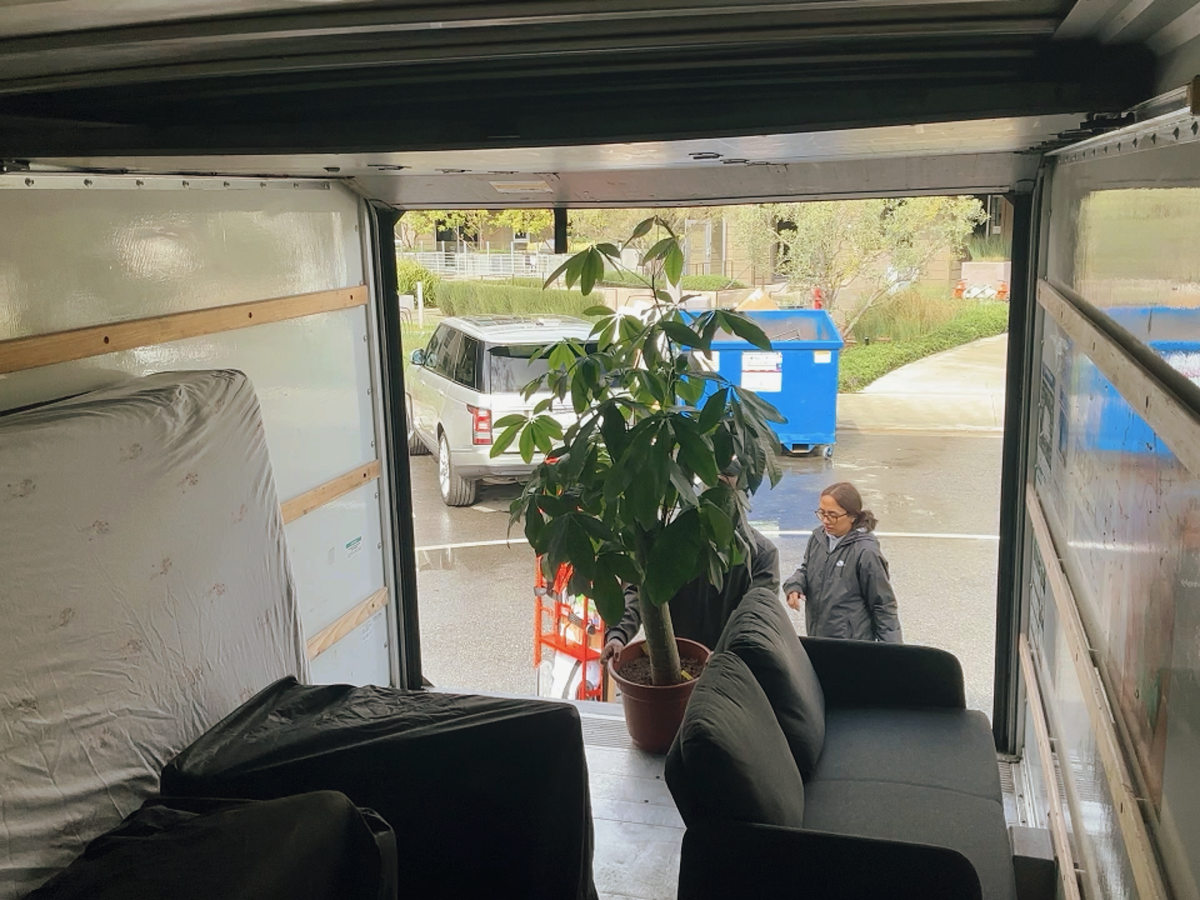
And for larger plants, reducing strain—on both you and the plant—is part of the equation. Get a dolly to help move the big and heavy ones. Your back will thank you and the process will be much quicker and easier.
Jon’s Tip: Minimize extremes—temperature, movement, and time in transit.

Courtesy of Jon Perdomo/Plant Man P
After the Move: Do Less, Observe More
Once everything is inside, the instinct is to fix what looks off. But plants don’t respond well to urgency—they respond to consistency. “You always want to keep lighting as close to their previous conditions as possible,” Perdomo says. Too much light too quickly can burn or dry out a plant, while too little can slow growth and lead to excess moisture in the soil.
Watering follows the same logic. “While the plants get situated in their new home, it’s always better to take a step back from watering and see what the soil and the leaves are telling you,” he explains.
That pause matters. “If the soil is drying out faster, you’ll have to water more,” he says. “If the leaves are drooping or curling in more frequently, you’ll also have to water more.”
For tropical plants, humidity is often the fastest way to stabilize the environment. “All your tropical plants are going to require an immediate humidity boost. A humidifier will do that perfectly,” he suggests.
Jon’s Tip: Resist the urge to fix everything—observe first, then adjust.
What’s Normal—and When to Step In
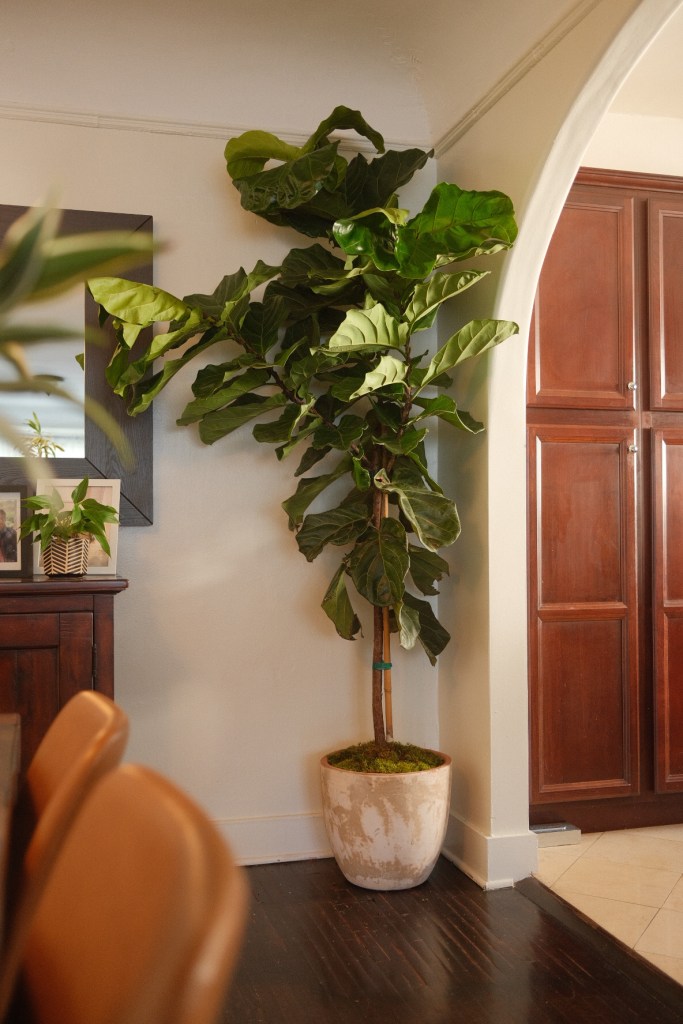
Some leaf drop is part of the transition. “Honestly, 3-5 leaves dropping is completely normal after a move,” Perdomo says. Beyond that, it may be a signal that something in the environment needs adjusting—most often light.
If you don’t see any new growth, droopy leaves, and consistent leaf dropping, Jon says it’s time to move it to another space in your home.
Jon’s Tip: A little decline is expected—ongoing decline is information.
Courtesy of Jon Perdomo/Plant Man P
The Biggest Mistake? Doing Too Much
If there’s one mistake that compounds all others, it’s overcorrecting. “Panicking and doing too much all at once,” Perdomo says. “Watering them, pruning them, repotting them, and moving them around too much all while they’re still trying to adjust to their new home.” Instead, simplify. Do one thing at a time and see if that fixes the issue, Jon recommends. Because while moving day is abrupt, plant recovery is not. It happens gradually—through small adjustments, steady observation, and a return to balance.
Jon’s Tip: The best thing you can do for a stressed plant is give it space to recover—on its own timeline.