5 Kitchen Layout Mistakes Designers Want You to Stop Making
How to keep your kitchen’s design stylish and functional.
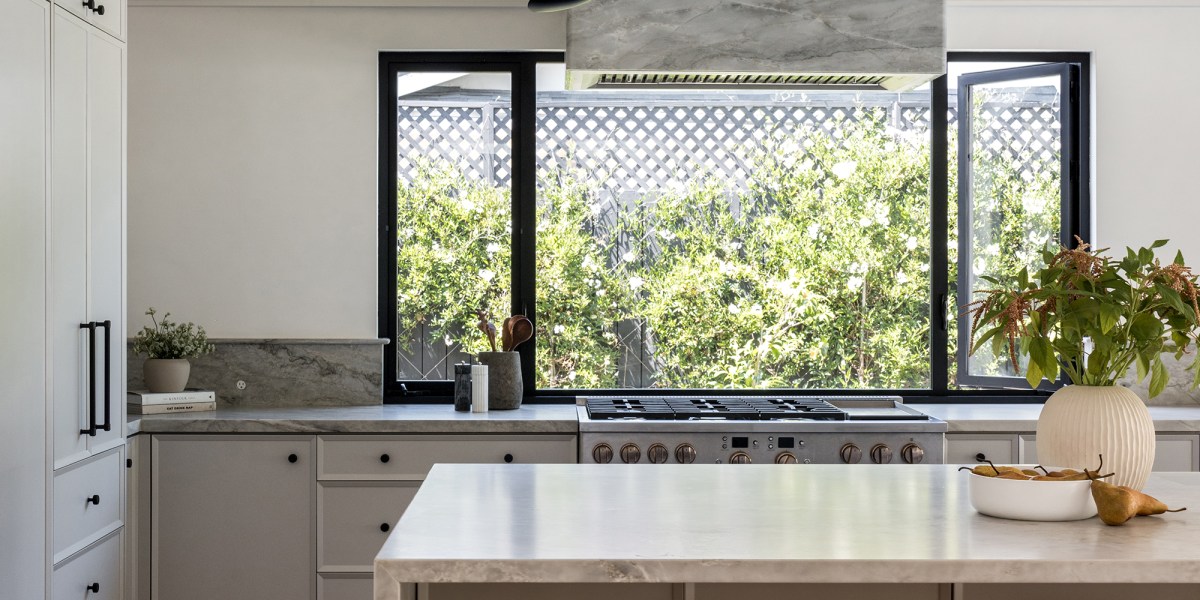
Design by Selena Michele Interiors; Photo by Charlotte Lea Photography
If you want to create a kitchen that’s both functional and fashionable, you have to nail the layout. Wood-drenched cabinets and built-in bars might warrant a lot of compliments, but if you have a hard time going from the stovetop to the dishwasher? Forget about it.
Some of the West Coast’s chefs shared their hottest takes on common kitchen design trends, but we couldn’t help but wonder what professional decorators thought. After all, it’s their job to create culinary spaces for everyone: Burgeoning home chefs, avid entertainers, and, yes, those who rely on food deliveries.
From nonsensical storage to “eyesore” islands, dodging these kitchen don’ts will yield a space that’s delicious and design-minded in equal measure.
Say Goodbye to Superfluous Seating
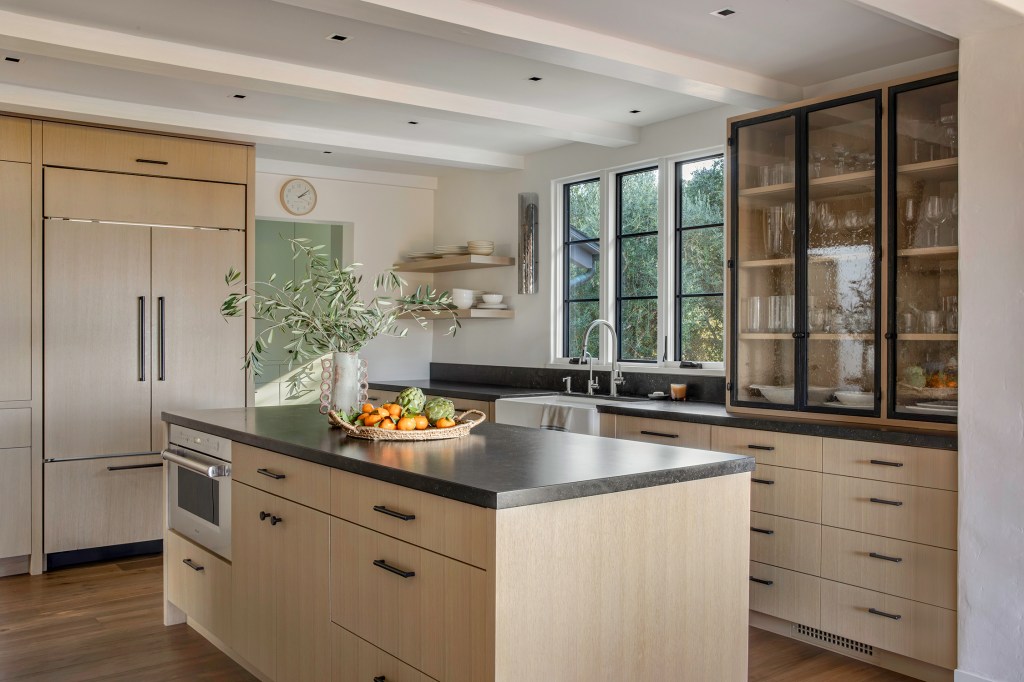
Design by Jessica Risko Smith; Photo by Chad Mellon
One of the biggest configuration faux pas, Jessica Risko Smith says, is designing a kitchen around a feature you’re really not going to use. And more times than not? That’s the stools that flank an island. “If your family gathers around a breakfast table just outside the kitchen, those stools become expensive, space-stealing obstacles,” says the Santa Barbara-based designer. “Every inch of island perimeter that goes to seating is an inch lost to storage or prep surface.”
Instead, Smith prefers to use this space for items her clients will actually enjoy such as an integrated microwave or coffee station.
Choosing Symmetry over Function
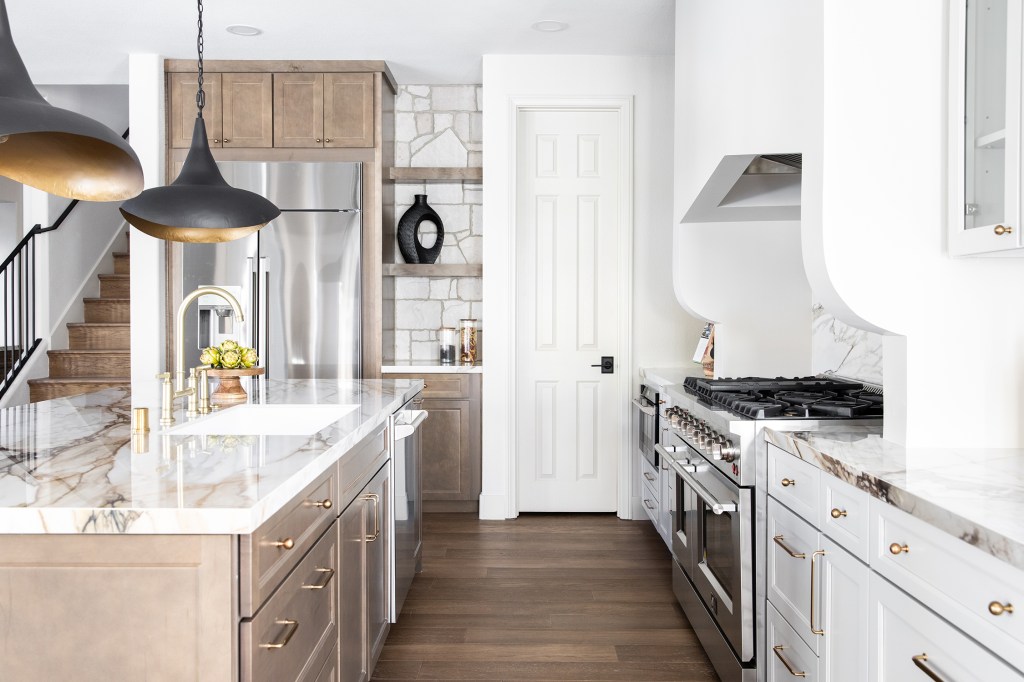
Design by Dezirae Bruni; Photo by Kayla Bowen
“Kitchens start to fall short when they are designed for symmetry instead of routine,” says Dezirae Bruni, an interior designer based in Las Vegas. “The best layouts today are not just about chasing a perfect work triangle, but about making daily life feel easier, more intuitive, and ultimately more enjoyable.” The biggest culprit: Your cabinets.
“The most functional kitchens are planned in zones,” she says. “Prep, cooking, cleanup, and storage, so that everyday items live exactly where they are needed.” For example, glasses should be near the dishwasher whereas spatulas and tongs will work nicely by the stovetop.
Awkwardly Placed Appliances
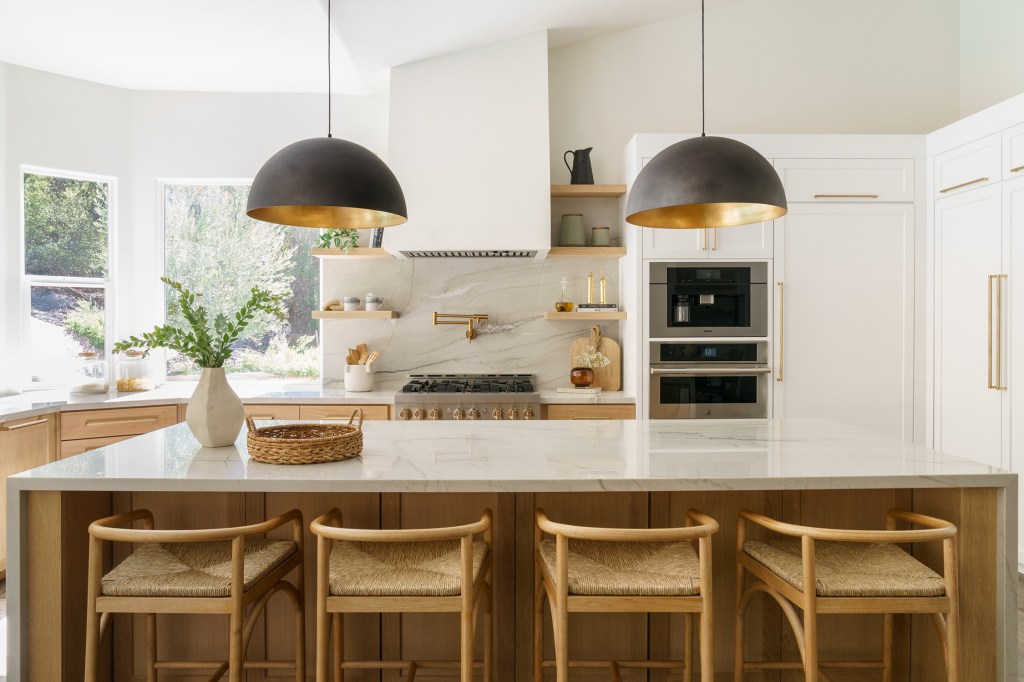
Design by Élan Design House; Photo by Charlotte Lea Photography
For both practical and appearance purposes, Alison Greene of Élan Design House is begging you to examine how your appliances co-exist with your kitchen cabinetry. “When appliances protrude from the cabinets instead of being installed so the appliance front is flush with the cabinets,” explains the San Diego decorator.
Her design partner, Kilian Camp, says sinks are often the biggest problem areas. Sinks are either overhung or cut back too far so you see the top edge of the sink—both of which make them particularly difficult to clean. “The countertop overhang should be about an eighth of an inch over the edge of the sink to give a clean look and also be easily cleanable.”
No Clearance Zone
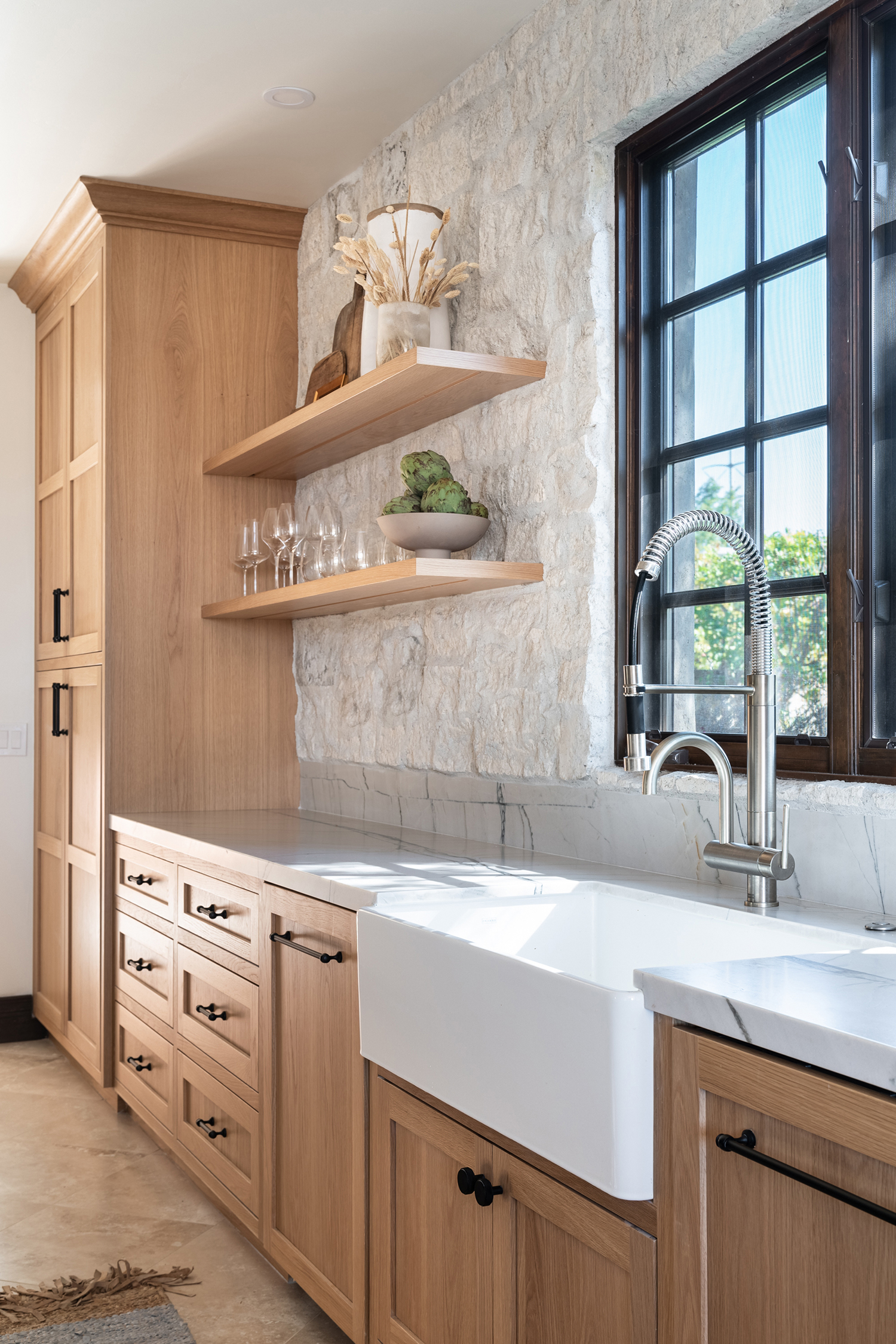
Design by Selena Michele Interiors; Photo by James Furman Photography
Speaking of your appliances? They have to open and close properly. “Too many times I’ve walked into a kitchen where the fridge is all the way in a corner, so much so that you can’t actually open the door all the way,” explains Selena Reif of Selena Michele Interiors in San Diego. “Make sure there is enough space to stand at your range and have the room for traffic to move behind you.”
While meticulously measuring can solve potential layout problems, she also encourages you to map out your daily routine. Her biggest piece of advice? “Make sure you can have your dishwasher and range open at the same time so you’re not limited to one cook in the kitchen or one task at a time!”
An Obtuse Island
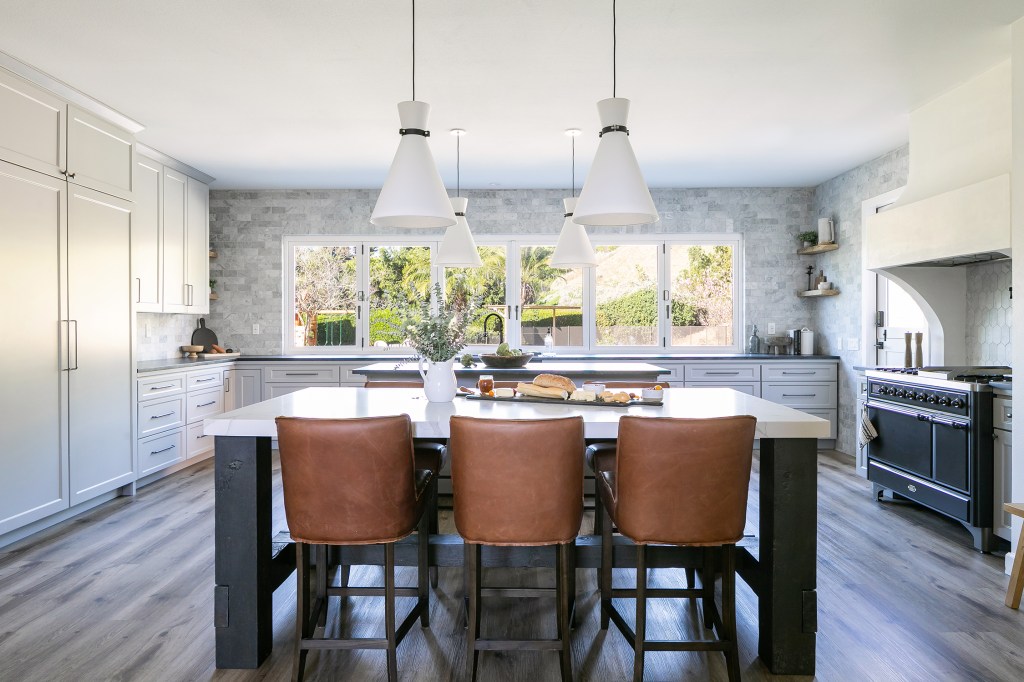
Design by Grounded Homes; Photo by Ryan Garvin Photography
At some point, an oversized island became one of the most popular kitchen features around, but the pros aren’t exactly sold on them. “The kitchen is arguably the hardest working room in your home, so why fill it with a huge block right in the center, just because your neighbor did?” asks Alex Kinion, a California-based designer and founder of Grounded Homes. “Kitchens should be planned intentionally, with consideration for where guests sit, where the chefs of the house stand, and how everything flows together just right. “
If you’re working with a generous footprint, Kinion recommends adding dual islands to beef up your counter space without sacrificing flow. Meanwhile, small space dwellers can trade in that big island energy for compact setups or a multipurpose dining room table.
“Think more about how the layout and number of seats work for their family and their life,” she says. “Less about having the longest island of all of their friends.’