
From The Cook’s Garden © 2025 by Kevin West. Excerpted by permission of Alfred A. Knopf, a division of Penguin Random House LLC. All rights reserved.
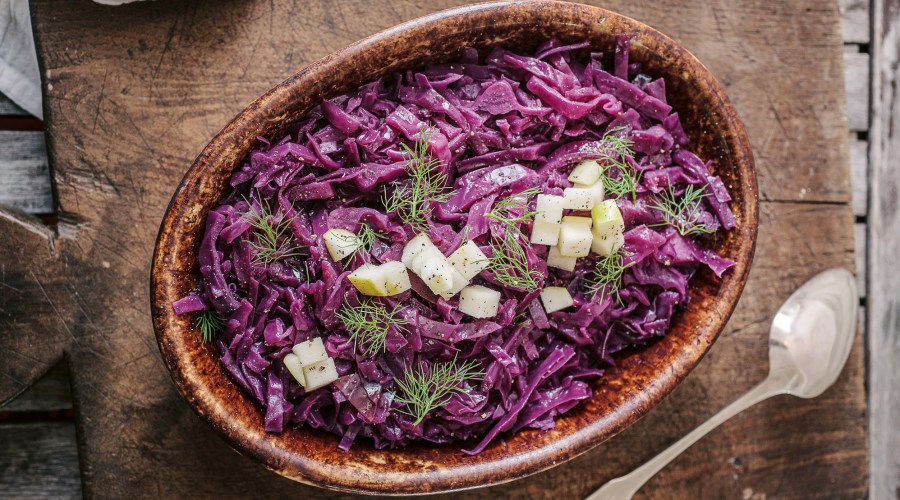
Braising red cabbage in wine preserves the color, but the flavor is reason enough. Here, I use Riesling because its residual sugar balances the acid, but other wines would work as well, including light, fruity reds. Or, improvise a nonalcoholic braising liquid with 1 pint of water, 1 tbsp red wine vinegar, and 1 tsp honey. Red cabbage is spicier and firmer than green. The densest fall-harvested varieties will require considerable cooking time. Like potatoes, cabbage absorbs fat as it cooks, becoming silky and luxurious. The sweet white miso stirred in at the end falls into the category of sneaky umami ingredients. You can do without, but it’s an ingredient worth getting to know. Here, the Granny Smith isn’t stewed but rather diced raw for a garnish.
This recipe, and others like it, can be found in the article “We Can’t Stop Making This Easy Whole-Roasted Cauliflower.”
In a 6-quart Dutch oven, render the bacon over medium heat, if using. Remove the lardons and save for another use, such as snacking while the cabbage cooks.
Add the butter to the bacon fat. When foamy, add the cabbage, salt, and pepper. Stir to coat and cook down for 5 to 7 minutes. Add the wine. It should not quite submerge the cabbage. Cover the pot, reduce the heat to maintain a steady simmer, and braise for 1 hour.
Check the cabbage to gauge how much longer it needs, but don’t rush it. Red cabbage cooked this way doesn’t turn mushy but silky—eventually. Keep going until the texture relents, about 1 hour longer. Cooking time can vary depending on the variety, the season, and how the cabbage is cut. There should be a little braising liquid left at the end. Add water by the ¼ cup, if necessary.
Just before serving, stir in the miso and honey. Turn the cabbage over several times to coat. Transfer to a serving bowl. Top with the diced apple and fennel fronds. Finish with generous grinds of black pepper.
Note: For a vegetarian option, omit the bacon and increase the butter by 1 ½ tbsp. Adjust salt to taste. Proceed with the recipe. Drizzle with walnut oil before serving.
6 servings