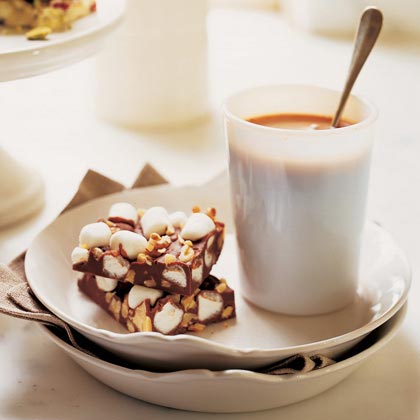

James Carrier
Line a 12- by 15-inch baking sheet with cooking parchment; butter parchment. Chop 2 pounds milk chocolate and place with 1 tablespoon solid vegetable shortening in a heatproof bowl that will nest in a 3- to 4-quart pan. Heat 1 inch of water in the pan just until steaming. Remove from heat and place bowl over water (bowl shouldn't touch water). Stir occasionally just until mixture is melted and smooth. Remove bowl from over pan.
Stir in 2 cups each mini marshmallows and coarsely chopped walnuts. Using a flexible spatula, scrape mixture onto buttered parchment and spread 3/8 to 1/2 inch thick (mixture should almost cover sheet). Sprinkle with 1 more cup each marshmallows and walnuts; gently press into chocolate.
Let stand at cool room temperature until completely firm, 4 to 6 hours, or overnight. Break or cut bark into pieces. Store airtight in a cool place up to 2 weeks.
Nutritional analysis per ounce.
0 servings
* The % Daily Value (DV) tells you how much a nutrient in a serving of food contributes to a daily diet. 2,000 calories a day is used for general nutrition advice.